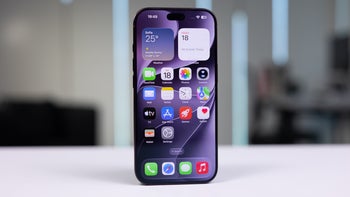
Apple's brand-spanking-new CEO, John Ternus, debuted during the company's September 9 event and announced Cupertino's first foldable iPhone and the iPhone 18 Pro Max candy bar at the event. The latter is the best conventional iPhone released in 2026, with the best battery life, best performance, and most certainly, the most intriguing camera upgrades.
Apple has given us a main camera with variable aperture, the largest battery ever on an iPhone, and the most efficient Apple A20 Pro chip. While it might not be a perfect upgrade option for iPhone 17 Pro Max users as it still feels like an "s"-year upgrade, those using much older iPhones will certainly get much better value when they upgrade. A stretch in this economy, but if you're using an iPhone 14 Pro Max or older, you'll be hard-pressed to find a better option for your $1,299.
One of those from the Android side is Samsung's current flagship, the Galaxy S26 Ultra. With a built-in stylus, a quad-camera, and a cool privacy screen feature, it's definitely a phone that could sway many iPhone users over from the Apple side. It also has a completely different and way more customizable Android interface, as well as all the goodies of the Android side.
The perfect juxtaposition between equal forces of tech which are the perfect rivals.
iPhone 18 Pro On Us with T-Mobile:
iPhone 18 Pro $1,000 off at T-Mobile
$199
$1199
The On Us promo is over, but you can still save $1,000 with iPhone 18 Pro from T-Mo!
Expired
iPhone 18 Pro Max - $1,000 off at T-Mobile
$299
$1299
The On Us promo is over, but you can still save $1,000 with iPhone 18 Pro from T-Mo!
Expired
iPhone 18 Pro Max vs Galaxy S26 Ultra differences:
iPhone 18 Pro Max
Galaxy S26 Ultra
Aluminum design language with an expansive camera plateau in the back
Aluminum frame and glass back with a compact quad-camera setup
Narrower second-gen Dynamic Island at the front
A small camera punch-hole
2 nm Apple A20 Pro chip
3 nm Snapdragon 8 Elite Gen 5 for Galaxy
12 GB of RAM on board
12GB of memory in the starting model, Galaxy AI support
Starting at 256 GB and up to 2 TB of storage
Starts at 256 GB and maxes out at 1 TB
Variable aperture (f/1.48-f/4.0) on the 48MP main camera
A 200 MP main camera with fixed F1.4 aperture
Periscope with 4X optical zoom
5X periscope camera and shorter 3X telephoto
Larger 5,567 mAh battery for the eSIM model (5,391 mAh one in the international one)
A 5,000 mAh battery (reminder that it's been six years already, Samsung)
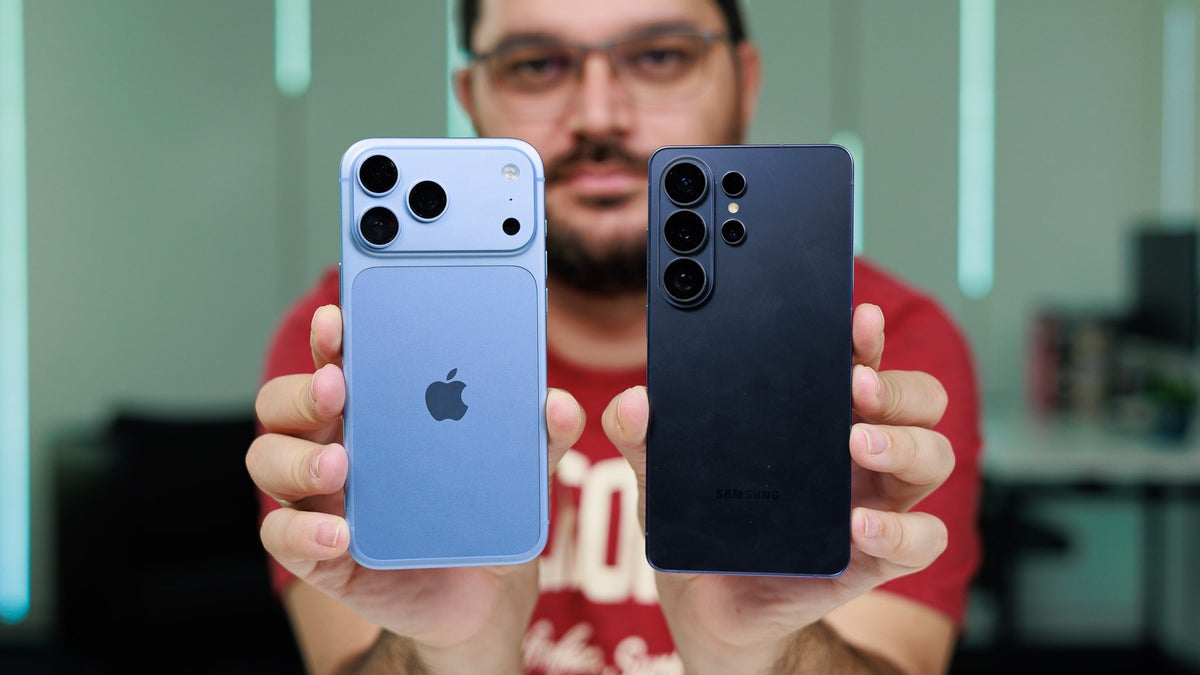
The best of Apple and Samsung in late 2026. | Image by PhoneArena
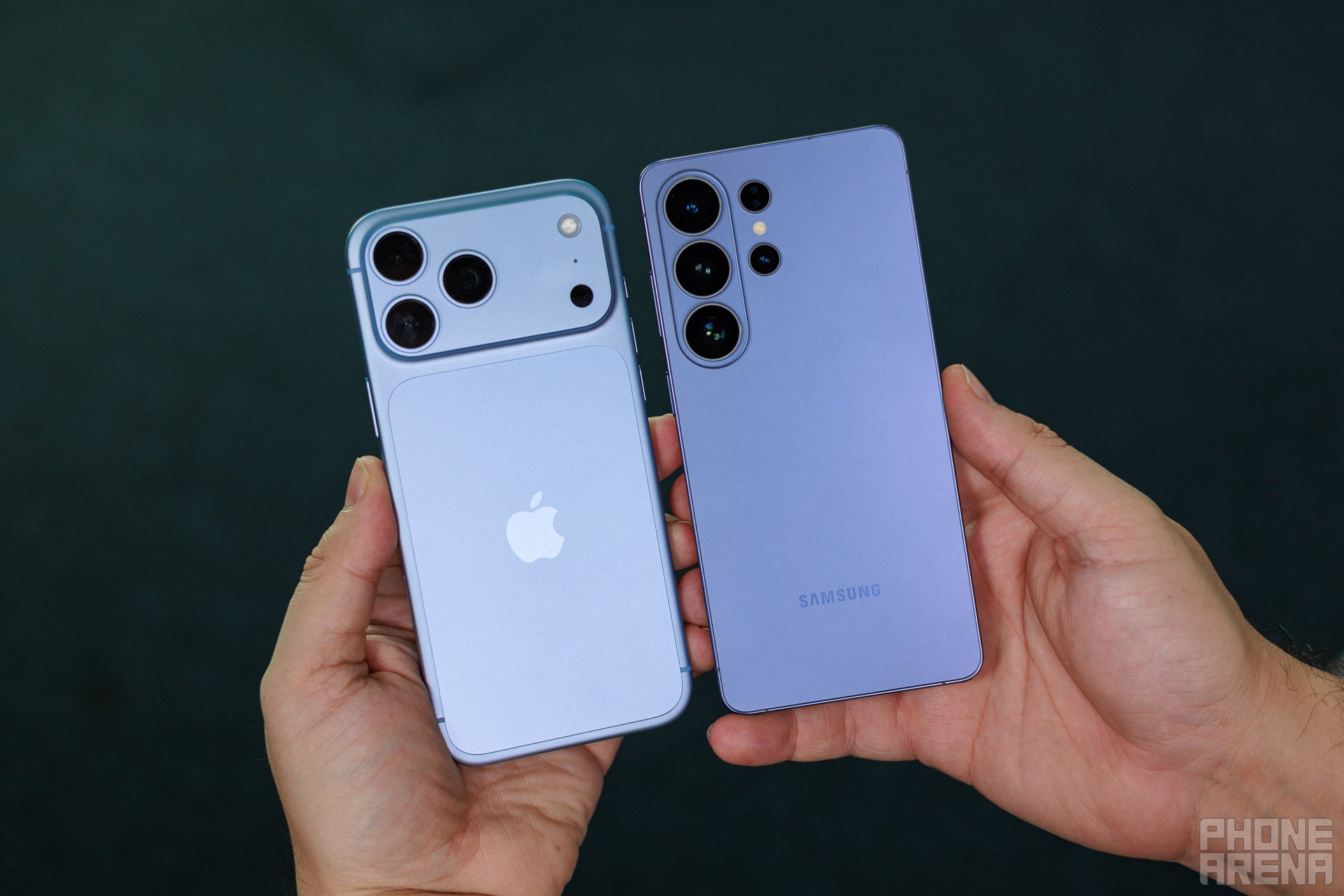
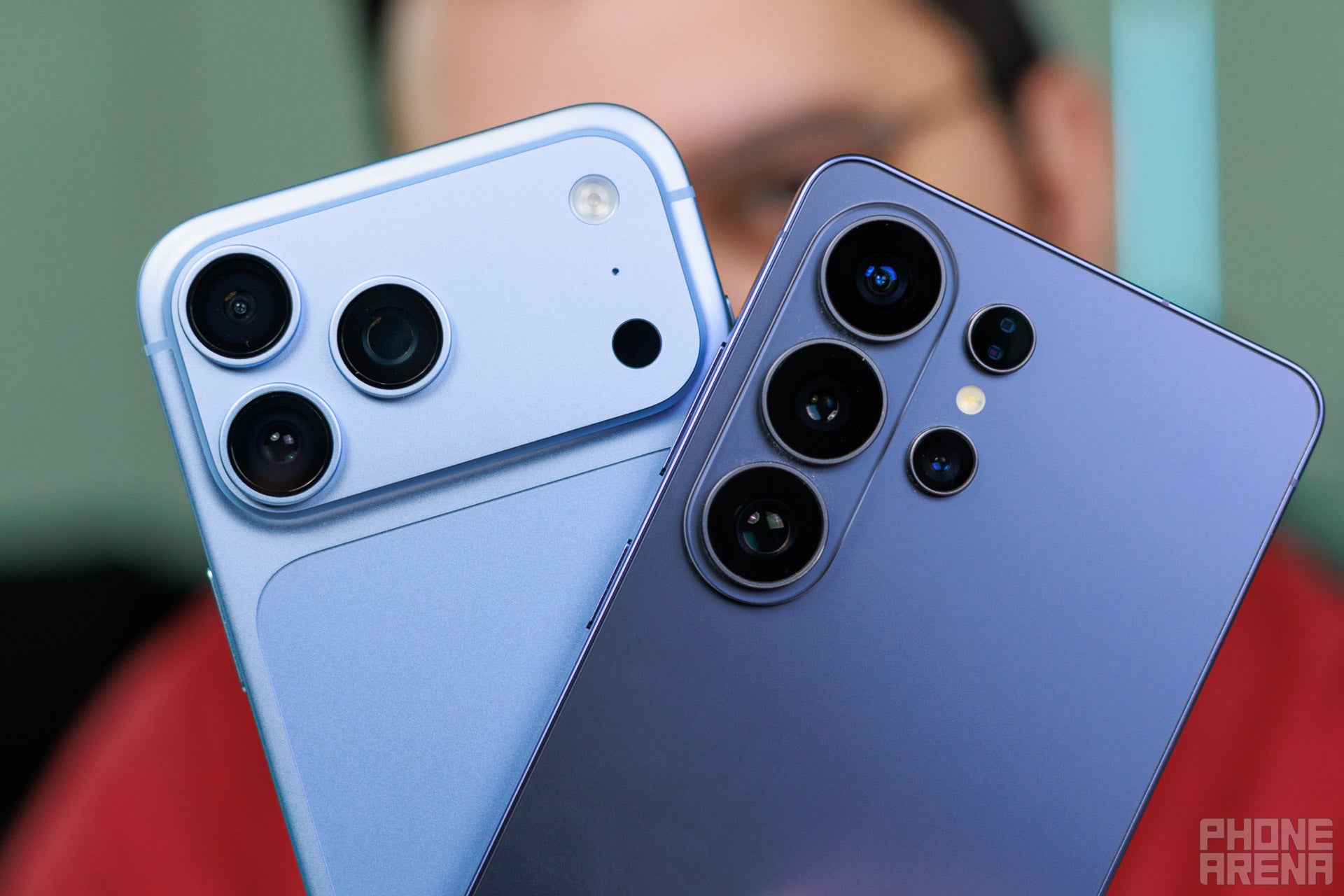
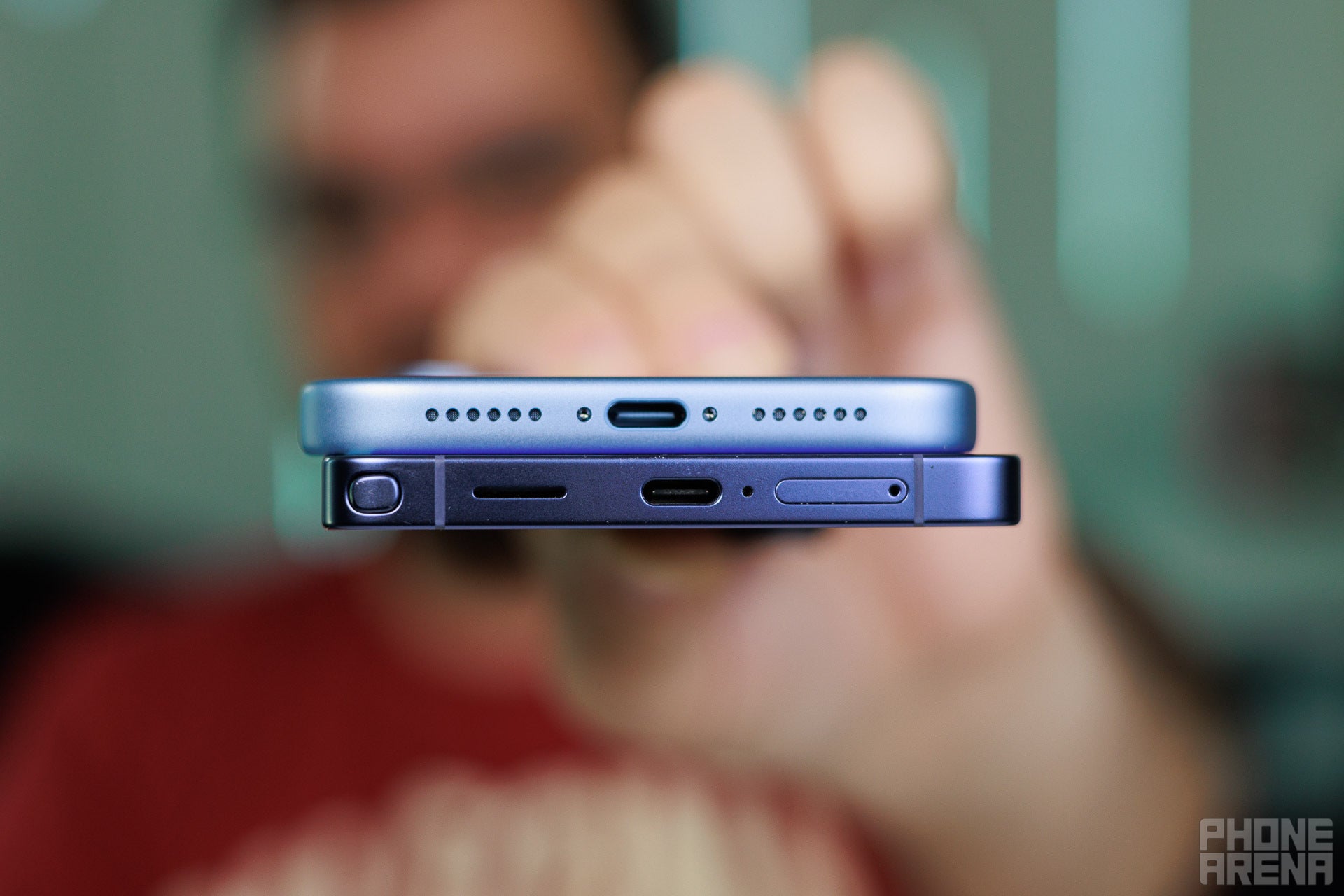
Save for the color options, the iPhone 18 Pro Max is pretty much similar to the iPhone 17 Pro Max in terms of looks, with an aluminum build and the oversized camera plateau in the back.
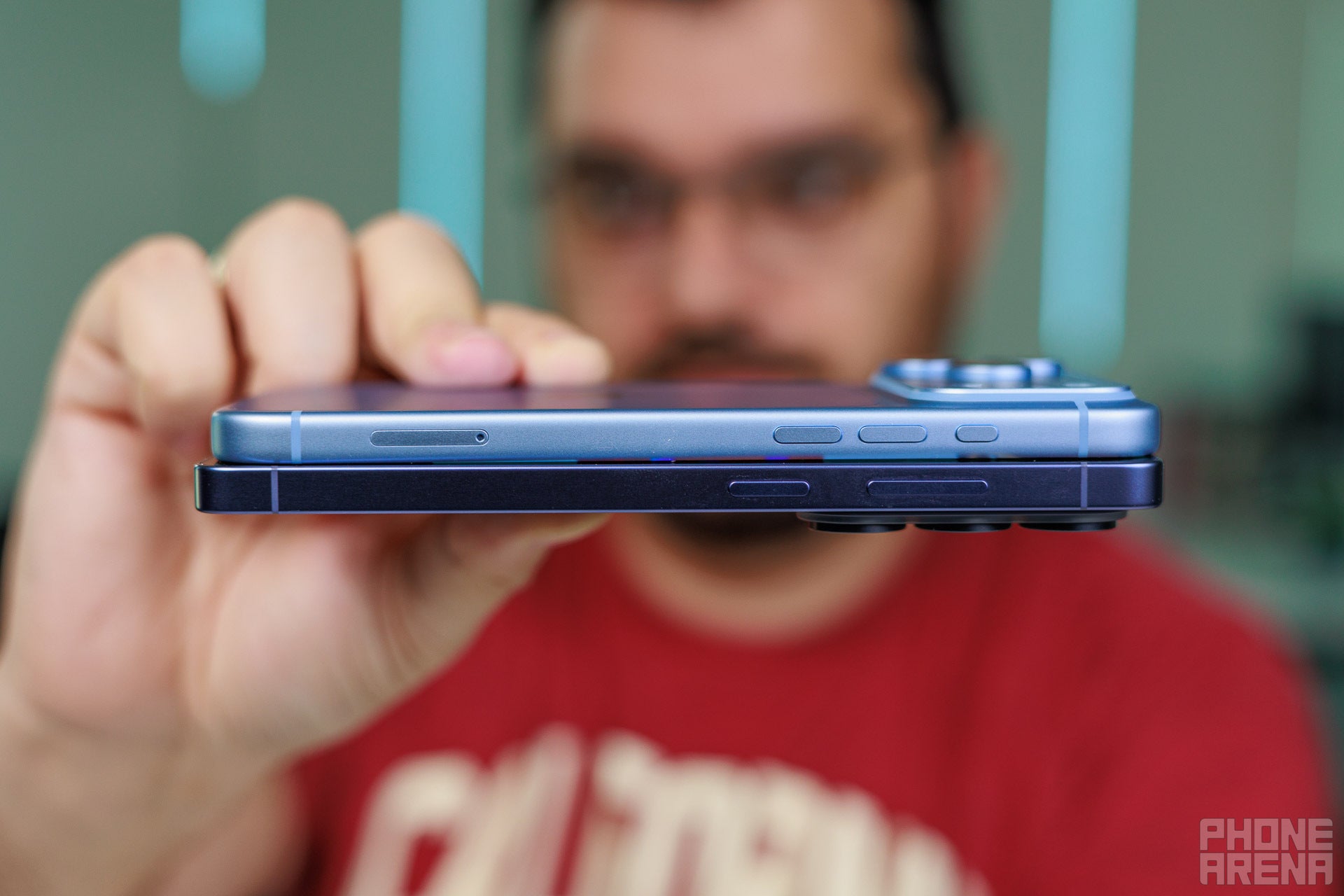
The dimensions are also identical with 8.75 mm thickness, though the weight of the iPhone 18 Pro Max has skyrocketed to 249 grams, which is certainly a change nobody had hoped for. Phones are supposed to become lighter, not heavier.
With a customizable Action button and Camera Controls keys, the iPhone is a very different phone from Apple devices just a few years back. At the same time, it's painfully familiar to anyone who has used one recently.
Neither of these two goes for the ultra-thin crown, thankfully. | Image by PhoneArena
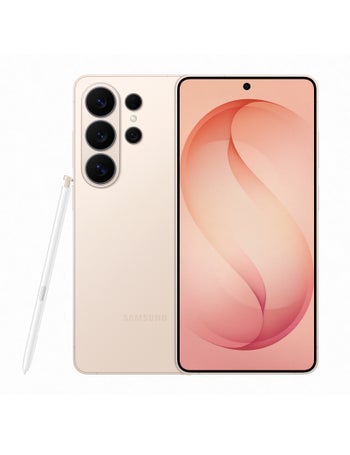
The Galaxy S26 Ultra relies on the same all-flat design language that appeared on the Galaxy S25 Ultra. However, titanium was switched for aluminum, and the S Pen stylus now features a slightly different design. The camera island is now slightly more pronounced, but overall, the Galaxy S26 Ultra is a safe choice in terms of design.
Both devices feel quite solid in the hand, and which one's better in terms of ergonomics is mostly subjective given that these are pretty similar to one another.
It is dramatically lighter than the iPhone 18 Pro Max at around 214 grams while being thinner, too. Let's hope Samsung doesn't take this the wrong way: heavier tech definitely feels arbitrarily more premium, but in this case, I'd take lighter any day of the week.
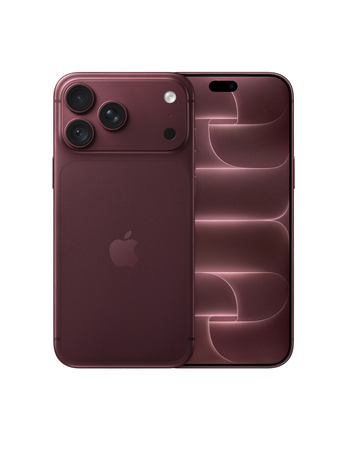
In terms of colors, the Samsung device is available in Cobalt Violet, Sky Blue, Black, White, Silver Shadow, and Pink Gold colors. The iPhone 18 Pro Max, on the other hand, launches in Black, Glacier, Silver, Burgundy.
Display Differences
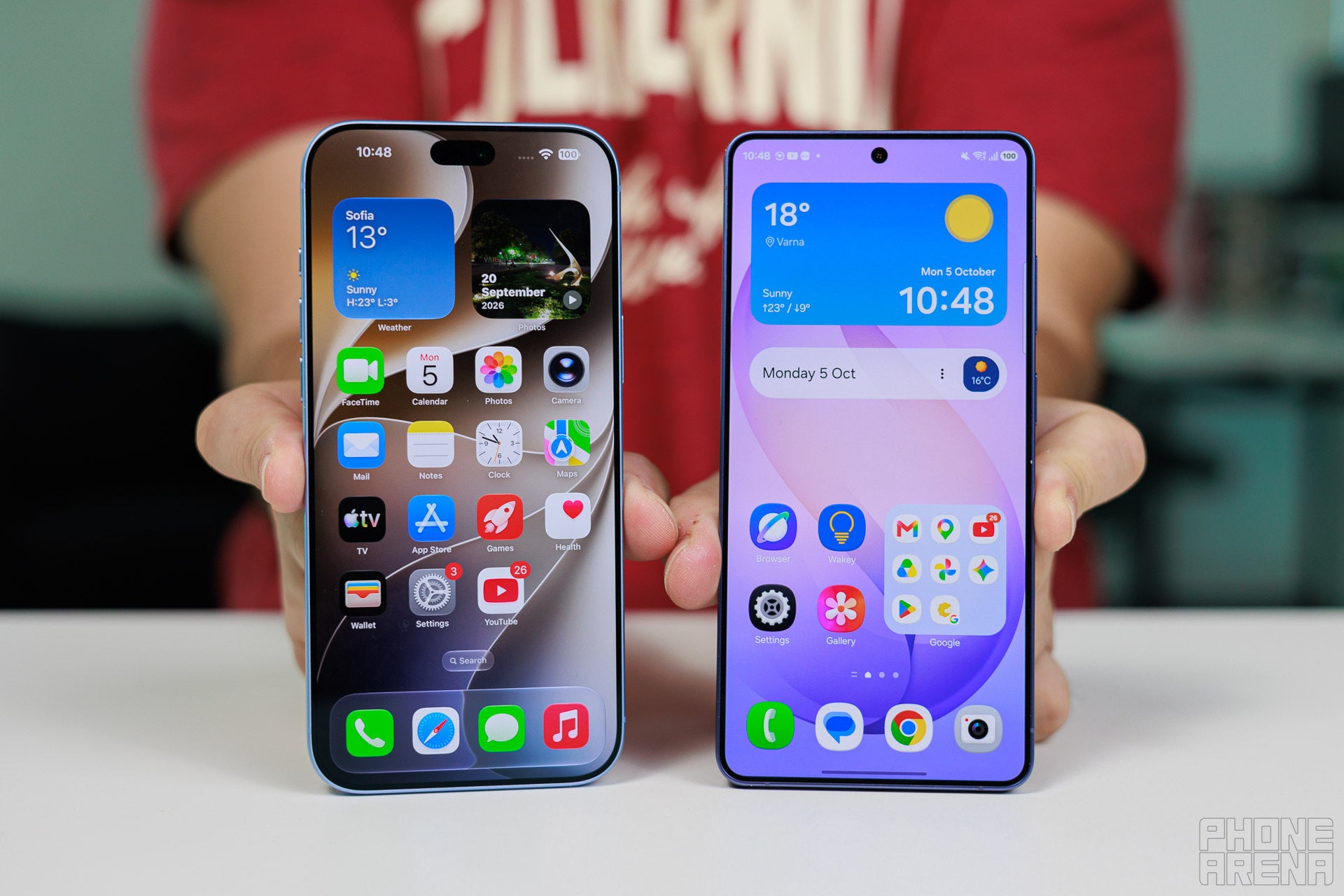
The Galaxy S26 Ultra has a couple of extra tricks up its sleeve. | Image by PhoneArena
The iPhone 18 Pro Max is equipped with the same 6.9-inch Liquid Retina XDR display with ProMotion as the iPhone 17 Pro Max, and the peak brightness once again hits 3,000 nits. No privacy display tech or anything, just the standard anti-glare coating. So, generally, not a very different display from the ones on previous iPhone Pro Max models.
One major change with the screen is the smaller Dynamic Island notch. The size has been reduced by roughly 35% thanks to putting some Face ID components underneath the screen. Thanks to this, you can now fit up to three Live Activities on the Dynamic Island side by side.
The Galaxy S26 Ultra comes with a 6.9-inch Dynamic AMOLED 2X screen with a slightly lower peak brightness of 2600 nits. The highlight feature here is the Privacy Display feature, which protects sensitive data on the display from prying eyes. There is a layer of narrower pixels in the display assembly that have a much narrower field of view, making an area or the whole screen appear dark when viewing it from the side.
In our experience, it's a decent feature that works in some scenarios, but not-so-well in others. Overall, it's a net gain for the range. Coupled with the anti-reflective coating, it delivers a pretty exciting set of display features that offer an edge over the iPhone.
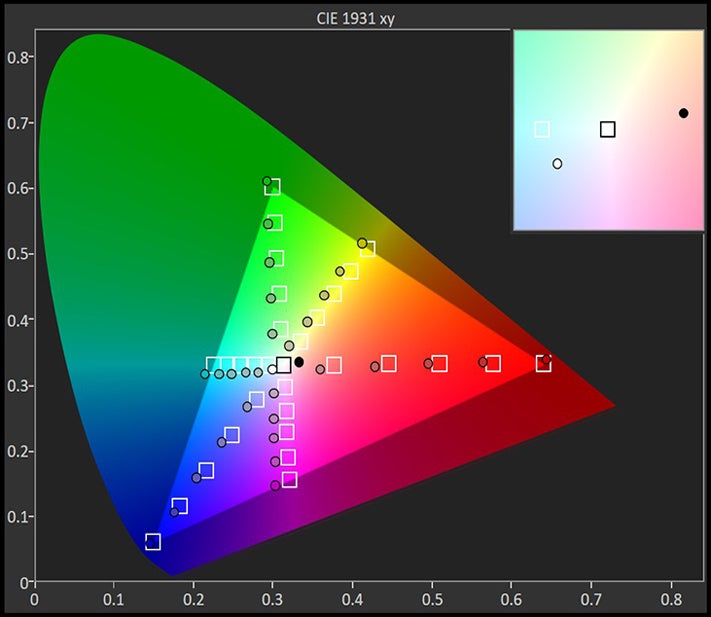
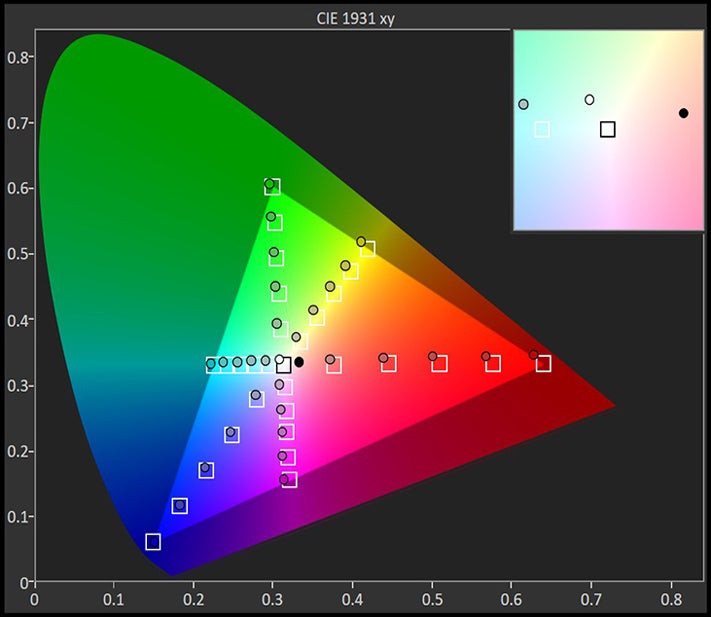
The CIE 1931 xy color gamut chart represents the set(area)of colors that a display can reproduce,with the sRGB colorspace(the highlighted triangle)serving as reference.The chart also provides a visual representation of a display's color accuracy. The small squares across the boundaries of the triangle are the reference points for the various colors, while the small dots are the actual measurements. Ideally, each dot should be positioned on top of its respective square. The 'x:CIE31' and 'y:CIE31' values in the table below the chart indicate the position of each measurement on the chart. 'Y' shows the luminance (in nits) of each measured color, while 'Target Y' is the desired luminance level for that color. Finally, 'ΔE 2000' is the Delta E value of the measured color. Delta E values of below 2 are ideal.
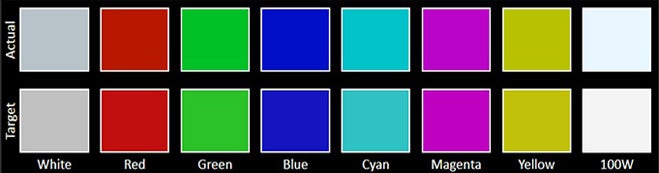
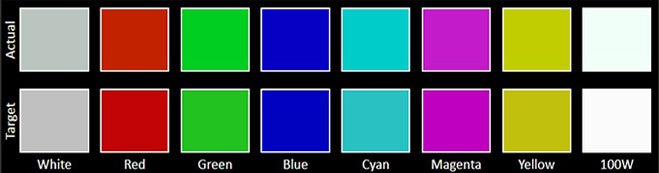
The Color accuracy chart gives an idea of how close a display's measured colors are to their referential values. The first line holds the measured (actual) colors, while the second line holds the reference (target) colors. The closer the actual colors are to the target ones, the better.
The Grayscale accuracy chart shows whether a display has a correct white balance(balance between red,green and blue)across different levels of grey(from dark to bright).The closer the Actual colors are to the Target ones,the better.
In our tests, the Galaxy S26 Ultra proves it has the brighter screen, but the iPhone beats it in terms of accuracy. The Apple device has lower color and grayscale delta E readings, which means that it's technically the better device if you crave the ultimate in accuracy.
Would you notice any of that in real life, though? Probably not.
While the iPhone will rely on Face ID for biometrics, the Galaxy S26 Ultra has an in-screen ultrasonic fingerprint sensor. It's a toss-up which one's the better choice for convenience. I guess Face ID requires one less interaction.
Performance and Software
Thouroughbreds
You won't catch any of these two lacking in the performance aspect. | Image by PhoneArena
The iPhone 18 Pro Max arrives with the A20 Pro chip, which is built on a 2 nm manufacturing node. This means significantly improved performance that will translate to better real-life battery life, but more on that later.
The Galaxy S26 Ultra comes with the Snapdragon 8 Elite Gen 5 for Galaxy chip, built on a 3 nm process. It's one of the better-performing chips around, but the Apple one will likely have the upper hand in the fall.
AI Quantized: This test measures how efficiently your phone's 'brain' handles AI tasks, ensuring that features like live translation and smart photo editing feel instant and fluid without draining your battery.
Both perform excellently, but the iPhone has an advantage in both single-core and multi-core tasks as demonstrated by our Geekbench 7 results, where the Apple device truly shines in terms of performance. Of course, the Galaxy S26 Ultra will never feel slower in real life, it's just a synthetic benchmark difference that shouldn't affect your buying decision.
GPU Performance
3DMark Extreme(High)Higher is better
Apple iPhone 18 Pro Max8378
Samsung Galaxy S26 Ultra7801
3DMark Extreme(Low)Higher is better
Apple iPhone 18 Pro Max5137
Samsung Galaxy S26 Ultra3741
Wild Life Extreme is a heavy graphics workload used to measure a device's sustained GPU performance and thermal throttling. It uses older mobile rendering techniques and is friendly to older or lower-end mobile devices.
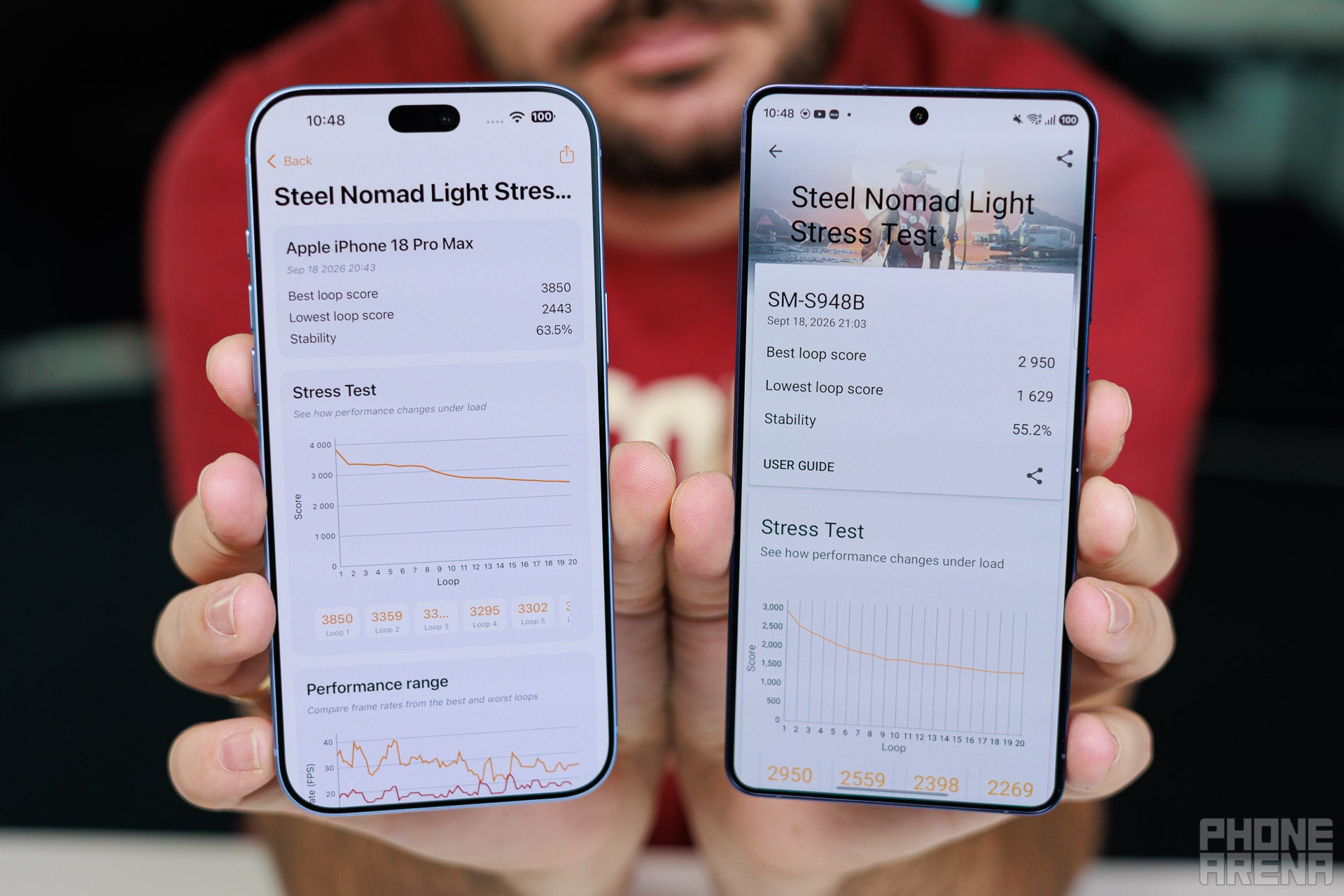
Steel Nomad Light Stress Test: Measures your phone's 'gaming stamina' by comparing its peak speed (High) against its throttled speed after it heats up (Low), revealing whether your performance will stay smooth or start lagging during a long session. It loads heavier, more modern effects than Wild Life Extreme and is more in line with current games.
Ray Tracing: The test measures Ray Tracing performance because this advanced technology creates the hyper-realistic reflections and shadows found in next-gen titles like Arena Breakout. Even if you don't play games with ray tracing, a high score here means your phone has a 'best-in-class' cooling system.
In terms of graphics performance, the iPhone also impresses. While the two phones are fairly close in the relatively "easy" 3DMark Wild Life Extreme test, the iPhone pulls away in the heavier Steel Nomad and Solar Bay tests, where it easily dominates the Galaxy. This means it would give you a slightly better experience in heavier games and not throttle as much after longer loads.
Storage speed
The iPhone 18 Pro Max is available in 256 GB, 512 GB, 1 TB, and also has a 2 TB version. The Galaxy S26 Ultra comes with 256, 512, or 1 TB of storage on board. In our tests, the Galaxy delivers faster storage speeds. Aside from pure I/O speed when transferring files, faster storage speed aid the snapiness of a system.
Random Read(MB/s)Higher is better
Apple iPhone 18 Pro Max57.40
Samsung Galaxy S26 Ultra92
Random Write(MB/s)Higher is better
Apple iPhone 18 Pro Max34.13
Samsung Galaxy S26 Ultra100.60
Sequential Read(MB/s)Higher is better
Apple iPhone 18 Pro Max3084
Samsung Galaxy S26 Ultra2440
Sequential Write(MB/s)Higher is better
Apple iPhone 18 Pro Max2709
Samsung Galaxy S26 Ultra1430
Storage tests measure how quickly your phone can move data. Random read and write show how fast your phone can find and move thousands of tiny, scattered files. This is the most important metric for an average user because it's what happens when you open an app, check your notifications, or search through your photo gallery. Sequential read and write measure the speed of moving one giant, continuous file. You'll notice this when you are saving a 4K video you just recorded or downloading a massive game update.
In terms of memory, both are equal, with 12 GB of RAM on either device. We've definitely seen devices with more, but right now, 12 GB of RAM appears to be the perfect amount you can expect to get on a modern phone when you factor in the pricing as well.
The iPhone 18 Pro Max launches with iOS 27, which comes with upgrades to Siri and the overall performance of the operating system. Meanwhile, the Galaxy S26 Ultra currently runs Android 17 with One UI 9, which brings extra customization and some small quality-of-life additions like a network speed gauge in the status bar.
Camera
Triple 48 MP versus a quad-camera setup
Two of the finest camera systems in the US. | Image by PhoneArena
The iPhone 18 Pro Max flaunts the same camera setup as the iPhone 17 Pro Max, so a triple 48 MP selection in the back with a long 4X periscope camera.
The big upgrade here would be the main camera, which now employs the Sony IMX905 sensor with a six-blade aperture that can intelligently switch between f/1.4, f/1.8, f/2.8, or f/4.0 apertures.
Photo
Video
Phone
Camera Score
Photo Score
Main (wide)
Ultra Wide
Selfie
Zoom
Apple iPhone 18 Pro Max
156
162
85
24
28
26
Samsung Galaxy S26 Ultra
157
165
86
23
28
28
Phone
Camera Score
Video Score
Main (wide)
Ultra Wide
Selfie
Zoom
Apple iPhone 18 Pro Max
156
150
77
23
26
24
Samsung Galaxy S26 Ultra
157
149
76
22
26
26
Find out more details about photo and video scores for all phones we have tested on our PhoneArena Camera Score page
This allows the camera to switch to a wider aperture in lower-light conditions or when you need a shallow depth of field (most often when taking portraits). In other scenarios with better lighting, the lens will close down so that you get better sharpness and detail. The iPhone 18 Pro series also score manual controls in the camera app that will give you more creative control over the camera performance.
The Galaxy S26 Ultra comes with a familiar setup: a 200 MP main camera with a 50 MP ultrawide, a 10 MP telephoto, and a 50 MP periscope. The brunt of improvements is thanks to software upgrades.
The iPhone 18 Pro Max will launch with the 18 MP Center Stage camera, while the Galaxy S26 Ultra relies on a 12 MP one.
Main camera
< iPhone 18 Pro MaxGalaxy S26 Ultra >
< iPhone 18 Pro MaxGalaxy S26 Ultra >
Photos taken in standard conditions reveal Samsung's tendency to overexpose most scenes and often create washed-out images that don't look so great. For example, a black shirt turns into a very dark gray one, and so on. Nothing that you can't fix with manually dialing down the exposure, but after a while, this will get old. The iPhone delivers a more dramatic look that I like a bit more here. However, default iPhone photos traditionally appear a bit warmer than real life, which is by now a creative choice most people have gotten used to.
Zoom quality
< iPhone 18 Pro MaxGalaxy S26 Ultra >
< iPhone 18 Pro MaxGalaxy S26 Ultra >
At the native telephoto lengths for each zoom camera, both devices deliver excellent detail and sharpness, but I have to give it to the Galaxy here, it's a bit sharper.
Portrait
< iPhone 18 Pro MaxGalaxy S26 Ultra >
< iPhone 18 Pro MaxGalaxy S26 Ultra >
Portraits are splendid on both phones, with lovely subject separation and great colors, but the subject exposure is entirely different on either device. The Galaxy tends to expose for the highlights, thus achieving a brighter and more inviting portrait. The iPhone, on the other hand, delivers a more realistic image in terms of exposure.
Ultrawide
< iPhone 18 Pro MaxGalaxy S26 Ultra >
< iPhone 18 Pro MaxGalaxy S26 Ultra >
Selfies
< iPhone 18 Pro MaxGalaxy S26 Ultra >
< iPhone 18 Pro MaxGalaxy S26 Ultra >
On the ultrawide front, the Galaxy S26 Ultra exhibits slightly better dynamics and a bit more detail, even though it almost tries to turn night into day. During the day, the iPhone delivers slightly better dynamics and a more realistic picture.
Battery Life and Charging
Apple has the upper hand
And the iPhone has done it again: after lagging behind the Galaxy S Ultra for years in terms of battery capacity (but not in battery life), it's finally the iPhone Pro Max lineup's time to shine.
With the iPhone 18 Pro Max, Apple's largest iPhone is beating the Galaxy S26 Ultra in terms of raw battery capacity as it will arrive with a 5,567 mAh battery in the US, eSIM-only model. Even the international model with a physical nano-SIM card will feature a larger 5,391 mAh battery.
At the same time, the Android champ features a 5,000 mAh battery for a sixth year in a row. It's high time for a change, and Samsung fans should demand more of their favorite Android manufacturer.
And our battery tests confirm what I already suspected: the iPhone 18 Pro Max delivers significantly better battery life than the Galaxy thanks to the unbeatable combination between a larger battery and a way more efficient chip. The iPhone pulls away in the web browsing test where it achieves nearly 30 hours versus the Galaxy's 20 hours. It also beats the Galaxy in the other two tests by a couple of hours, delivering the final blow to the S Pen monster.
Image by PhoneArena
Apple has upgraded the charging as well, so the iPhone 18 Pro Max now charges at 60 W, allowing it to score 50% charge in just 15 minutes. Wireless charging is similar on both at 25 W. The Galaxy charges faster: it takes it just 49 minutes to fully fill that battery, while the iPhone does the same in 68 minutes. However, a half-an-hour charge will get you a very similar battery level on either phone. That's because the iPhone is trickling slower after it achieves an 80% charge.
Specs Comparison
Here's how the iPhone 18 Pro Max compares against the Galaxy S26 Ultra specs.
Apple iPhone 18 Pro Max
Samsung Galaxy S26 Ultra
Apple iPhone 18 Pro Max
Samsung Galaxy S26 Ultra
Design
Dimensions
163.4 x 78.0 x 8.75 mm (~13.49 mm with camera bump)
163.6 x 78.1 x 7.9 mm (~12.33 mm with camera bump)
Weight
249.0 g
214.0 g
Display
Size
6.9-inch
6.9-inch
Type
OLED, Variable 1-120Hz
Dynamic AMOLED, 120Hz
Hardware
System chip
Apple A20 Pro (2 nm)
Snapdragon 8 Elite Gen 5 for Galaxy SM8850-1-AD (3 nm)
With the iPhone 18 Pro Max, Apple isn't changing the winning team; it's merely improving it. However, these improvements are already beating the Galaxy S26 Ultra in terms of raw hardware, and Samsung is definitely feeling the heat.
Better performance, promising camera upgrades, and all the benefits of living in the iOS ecosystem are a challenging foe to go against.
Meanwhile, the Galaxy S26 Ultra is one of the better Android phones, with exceptional hardware, software, and the unmatched flexibility added by the S Pen stylus. Sadly, instead of sensible upgrades, Samsung gave us a mostly gimmicky Privacy Display feature, which has its uses, but also introduces some drawbacks.
Samsung has been resting on old laurels for a while, which has allowed Apple to surpass it in many areas, and the iPhone 18 Pro Max widens the gap.
Why you can trust PhoneArena
25+Years of Experience
4266Product Reviews
Every product we review or recommend is thoroughly tested by our in-house experts in real-world conditions, following our
review methodology
and
ethics statement
to ensure honest, independent, and data-driven results.
Peter is a skilled writer with over 13 years of experience at PhoneArena. He has published nearly 300 phone reviews and comparisons. This vast experience helps him navigate the mobile tech landscape with ease. He enjoys everything Android but relies on a MacBook Pro daily.
A discussion is a place, where people can voice their opinion, no matter if it
is positive, neutral or negative. However, when posting, one must stay true to the topic, and not just share some
random thoughts, which are not directly related to the matter.
Things that are NOT allowed:
Off-topic talk - you must stick to the subject of discussion
Offensive, hate speech - if you want to say something, say it politely
Spam/Advertisements - these posts are deleted
Multiple accounts - one person can have only one account
Impersonations and offensive nicknames - these accounts get banned
To help keep our community safe and free from spam, we apply temporary limits to newly created accounts:
New accounts created within the last 24 hours may experience restrictions on how frequently they can
post or comment.
These limits are in place as a precaution and will automatically lift.
Moderation is done by humans. We try to be as objective as possible and moderate with zero bias. If you think a
post should be moderated - please, report it.
Have a question about the rules or why you have been moderated/limited/banned? Please,
contact us.

























Things that are NOT allowed:
To help keep our community safe and free from spam, we apply temporary limits to newly created accounts: