While we're still months away from the release of the Google Pixel 11 series, a leak about the Pixel 12 lineup has already surfaced online. It concerns the processor that will power the upcoming Google phones.
Tensor SoCs will continue to power the phones
Google used Qualcomm Snapdragon processors on its phones until the Pixel 5 series. Then, in 2021, the company switched to custom Tensor chips for the Pixel 6 lineup and has continued to use them in every Pixel family since then. For instance, the Pixel 10 phones feature the Tensor G5 SoC, and the upcoming Pixel 11 line is expected to run on the Tensor G6 chipset.
The tech giant will reportedly continue to rely on these chips in Google phones that will be released in 2027. According to a reliable tipster, Mystic Leaks, the Tensor G7 SoC will power the Pixel 12 lineup.
In addition to claiming that the Pixel 12 phones will be powered by the Tensor G7 processor, the tipster also revealed the chip's internal codename. It is reportedly Lajolla. While not confirmed, this may refer to the La Jolla area in San Diego.
Having an internal codename for a smartphone component isn't anything new. For instance, the Tensor G6, which will arrive this year, is being referred to as Malibu internally. Similarly, last year's Tensor G5 was called Laguna.
Other details of Tensor G7
Unfortunately, no other details besides the internal codename have surfaced about the Tensor G7. However, I expect two things could happen with the upcoming processor.
Recommended For You
First, I strongly believe that Google will continue using the 2 nm process node. Other than that, the Mountain View giant is reportedly using the same GPU variant in the Tensor G6 of the Pixel 11 series as it used in its predecessor.
Because of this, I think there's a possibility we could see the same GPU used in the Tensor G7 as well. If this turns out to be true, as a Pixel user, I'll be really disappointed to know the company is using the same years-old component even in its latest chips.
Do you want Google to continue using Tensor chips?
177 Votes
Tensor chips are great on Pixel phones.
41.81%
They're as good as Snapdragon and MediaTek.
8.47%
Google should ditch Tensor chips.
49.72%
What's the problem with Google maintaining its loyalty to Tensor SoCs
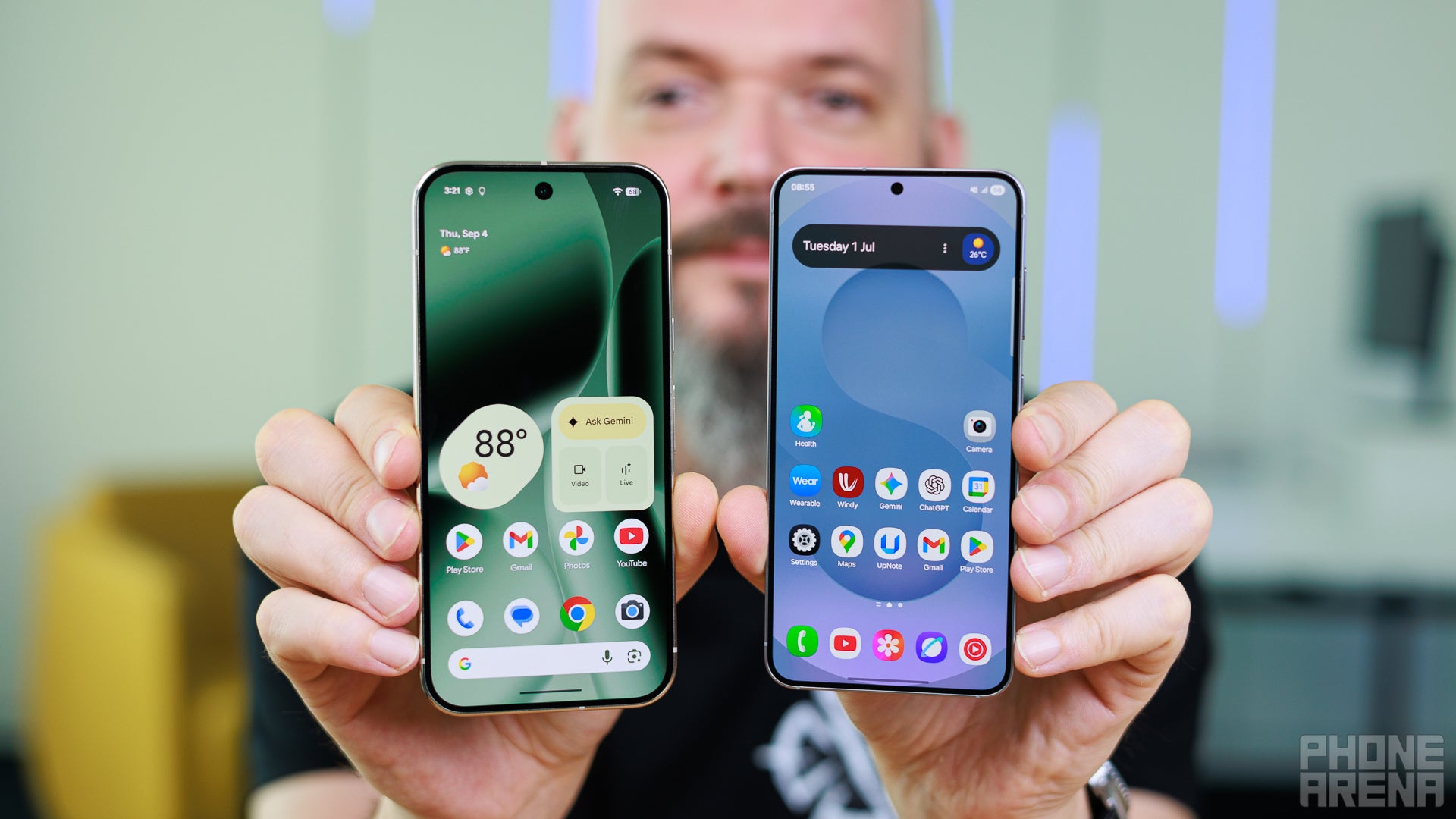
Pixel 10 and Samsung Galaxy S25. | Image by PhoneArena
Performance – that's the only reason I want Google to ditch the Tensor chipset and switch to Snapdragon or MediaTek. I switched from an iPhone to a Pixel, and I'll be honest with you, I noticed a very significant decline in raw performance. I'm a hardcore mobile gamer, but all the games that used to run smoothly on my iPhone experience frame drops on my Pixel 10.
Some of you might argue that Pixels are not known for gaming. Fair point. But why are they being marketed as flagship products?
The least you expect from an $800 flagship phone is to deliver good performance – something you get from devices like the iPhones or the Galaxies in the same range. But unfortunately that isn't the case with Pixel phones. The latest Pixel 10 scored 2,298 in our in-house Geekbench 6 testing, which is way less than the 3,031 and 3,527 scores of the Galaxy S25 and iPhone 17, respectively.
A similar result was experienced in GPU testing as well, with the Pixel 10 scoring 3,368, whereas the iPhone 17 scored 5,172. These results clearly suggest that Tensor chips are way behind the latest Snapdragon and Apple processors.
So, why is even Google sticking with the Tensor chipset?
You might wonder that if Snapdragon or MediaTek processors are so powerful, then why isn't Google ditching Tensor and switching to either of them? The reason behind this is that Tensor chips actually have certain benefits. First up, they better support the AI features that have been the highlight of Pixel phones recently.
It also makes sure that Pixel phones can deliver the post-processing effects on images for which their cameras are famous. Voice recognition and a few other Pixel-exclusive tools like Call Screening work well because of the Tensor processor. Along with all this, I also believe the use of this chipset allows Google to have control over both hardware and software departments, just like Apple.
But the main question here is that for how long will Google be able to sell its phones on these features? Snapdragon-powered phones are also coming with plenty of AI capabilities and delivering great camera performance. So, these two reasons are slowly becoming less compelling for Google to continue sticking with the Tensor SoC.
I believe performance is one of the main selling points of smartphones these days, and it's high time that Google needs to accept this as well. Again, I'm not saying the performance of Pixel phones is bad, but I really feel let down when I compare my Pixel's performance with phones in the same price range.
Get iPhone 18 Pro with Visible, get $480 off!
$719
/mo
$1199
$480 off (40%)
On the Visible+ Pro plan, you get access to 5G Ultra Wideband data on Verizon's fastest network. Along with unlimited roaming across Mexico and Canada, 2 days of Global Pass per month, 3x hotspot speeds, 4K streaming, and Smartwatch service.
Aman Kumar is a news writer at PhoneArena covering Google Pixel phones, Android features, AI-powered smartphone tools, and mobile tech news. Before joining PhoneArena, he spent over five years writing about consumer technology for publications like MakeUseOf, How-To Geek, and Guiding Tech. His current daily drivers are the Pixel 10 and Samsung Galaxy S26 Plus, while his red iPhone SE (2nd gen) remains a personal favorite. Aman also appreciates bold smartphone experiments and still considers the Nokia N-Gage one of the industry’s most iconic designs.
A discussion is a place, where people can voice their opinion, no matter if it
is positive, neutral or negative. However, when posting, one must stay true to the topic, and not just share some
random thoughts, which are not directly related to the matter.
Things that are NOT allowed:
Off-topic talk - you must stick to the subject of discussion
Offensive, hate speech - if you want to say something, say it politely
Spam/Advertisements - these posts are deleted
Multiple accounts - one person can have only one account
Impersonations and offensive nicknames - these accounts get banned
To help keep our community safe and free from spam, we apply temporary limits to newly created accounts:
New accounts created within the last 24 hours may experience restrictions on how frequently they can
post or comment.
These limits are in place as a precaution and will automatically lift.
Moderation is done by humans. We try to be as objective as possible and moderate with zero bias. If you think a
post should be moderated - please, report it.
Have a question about the rules or why you have been moderated/limited/banned? Please,
contact us.










Things that are NOT allowed:
To help keep our community safe and free from spam, we apply temporary limits to newly created accounts: