If I have to point to one technology that has been hampering our development over the past decades, that would be batteries. The lithium-ion battery dates back to the 1960s, and the main principle has stayed the same ever since.
However, we're on the verge of a big shift in battery tech, as the wide adoption of electric vehicles, along with new advances in material science, is finally promising to remove this bottleneck from our battery-powered gadgets.
I'm following closely the new and quite hyped solid-state battery from Donut, but there are other approaches that can offer an alternative to our old lithium-ion batteries. And just mere hours ago one such alternative reached a crucial milestone. Calcium-ion batteries.
What is a battery, and how does it operate?
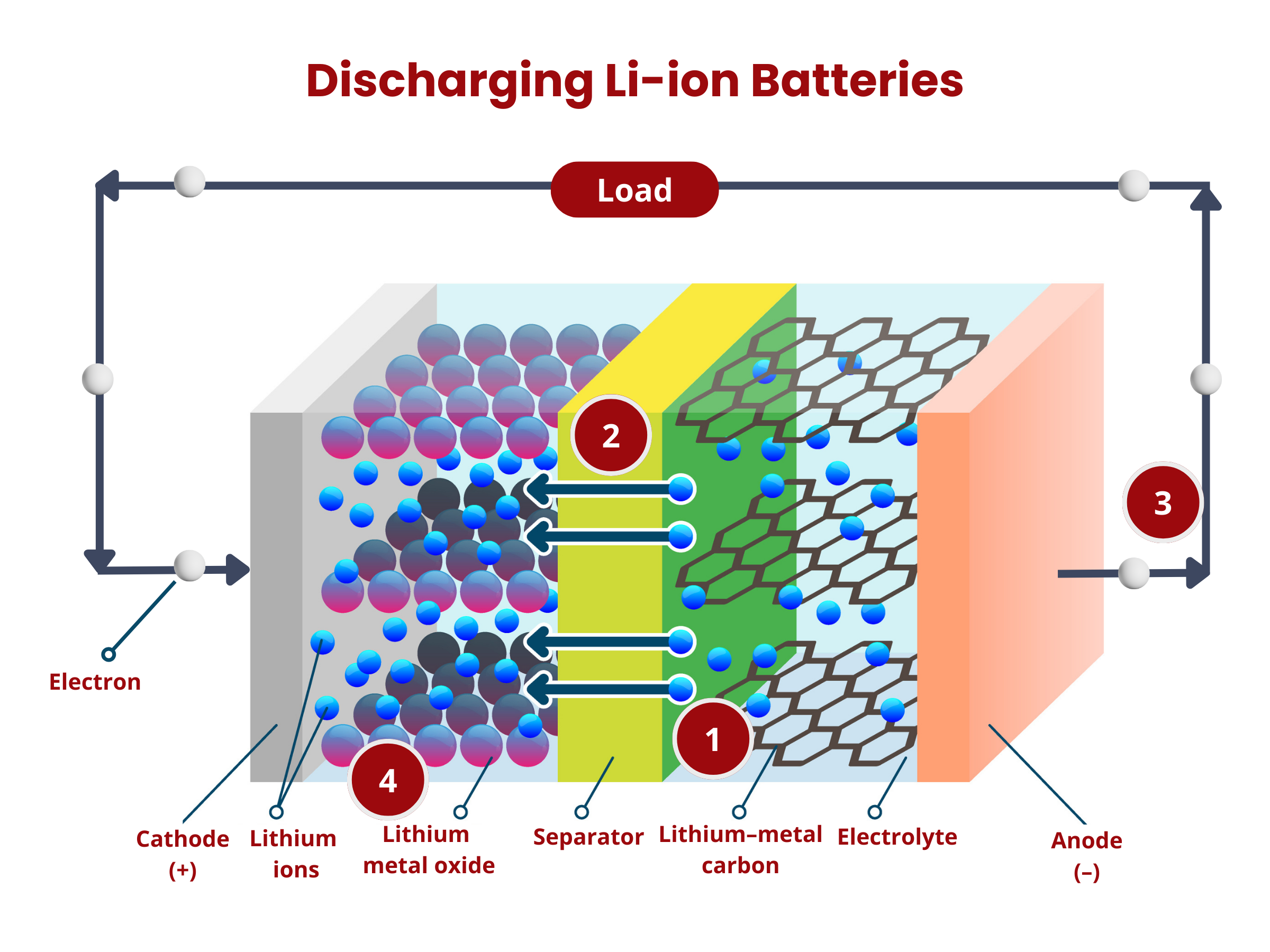
A typical lithium-ion battery discharge cycle | Image by CAPLINQ
Without getting too technical (there's a separate article for that), let's quickly go through what a battery is and how it operates. Put simply, a battery is a device that stores energy through electrochemistry. There are three main components involved — an anode, a cathode, and an electrolyte.
It's all about moving charged particles (electrons and ions) from the anode to the cathode and vice versa. When you charge a battery, you connect an external source to the anode and cathode and make charge particles flow from the cathode, through the electrolyte, and to the anode, bunching up there waiting to power your gadget.
Recommended For You
When you connect an external load to the battery, let's say your smartphone, stored charged particles start flowing from the anode through your smartphone and back to the cathode of the battery. This electron flow effectively powers your device.
What's the problem with lithium anyway?
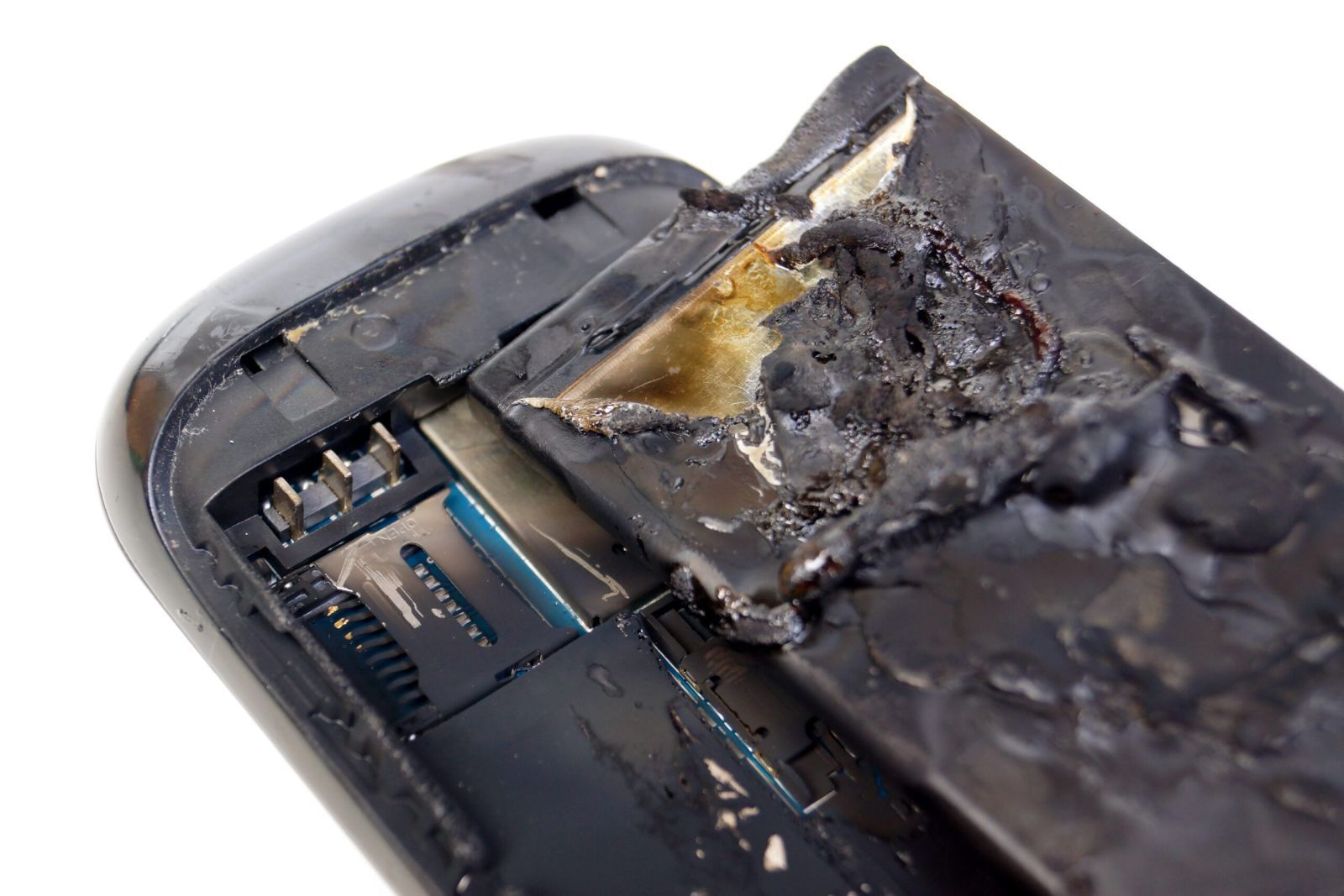
Just a small puncture can turn your smartphone into charcoal | Image by Clemson University
We've been using lithium as a main component in the cathode and electrolyte parts of batteries for decades. There are certain pros and cons to this element. Lithium-ion batteries offer good energy density, relatively fast charging, and decent longevity.
However, lithium reacts violently with air, making lithium-ion batteries unsafe when damaged. If you puncture a lithium ion battery, it can combust and even explode, and these fires are notoriously hard to put out.
Lithium-ion batteries also require a narrow temperature and voltage range to operate properly, and finally, we're close to reaching the theoretical limit of the energy density of the lithium-ion battery.
Today we're using tricks such as imbuing the anode with silicon to increase the energy storage capacity, but this approach can only delay reaching the inevitable ceiling of this technology. Lithium is also kind of rare, and mining it creates political rivalry and other geopolitical issues.
Enter the calcium-ion battery.
Calcium-ion batteries
Calcium is the fifth-most abundant mineral in the Earth's crust. It can be found in milk as well! | Image by Pixabay
I've covered briefly sodium-ion batteries in a separate article, but the star of today's article is calcium. The same material that makes up your bones and the one found in milk, among other places. Calcium is the fifth-most abundant mineral in the Earth's crust. It's abundant!
There are other benefits to using calcium in batteries. Calcium metal has high conductivity, and its high melting point (1547.6 F) makes calcium metal a safer choice for batteries. Calcium is also non-toxic and generally environmentally safer.
Furthermore, it has a higher theoretical energy density ceiling than lithium-ion batteries — 3202 Wh/L versus 2800 Wh/L for silicon-carbon lithium-ion batteries that currently sit at the top of the battery food chain.
Okay, so calcium is good, lithium — not so much. Why haven't we moved to calcium batteries already? What's the problem?
Calium-based electrolytes face electrode dissolution, basically degrading the capacity of the battery with every charge-discharge cycle. Here's where the new milestone comes into play.
A research team from the Hong Kong University of Science and Technology, led by Professor Yoonseob Kim, has managed to create a quasi-solid calcium electrolyte that offers better ion transport and limits wear during repeated cycles.
The resulting battery achieves a reversible specific capacity of 155.9 mAh g⁻¹ under low current. This corresponds to an energy density between 280 and 320 Wh/L, close to standard lithium-ion batteries (250-400 Wh/L).
The real milestone is that the team was able to achieve 1000 cycles of charge and discharge with the battery retaining 74% of its capacity. This result already outperforms some lithium-ion batteries, and with higher voltages (3.6 V, for example), the capacity of this calcium battery ramps up significantly to around 1,800 Wh/L.
Are we getting calcium batteries in our smartphones anytime soon?
That's the million-dollar question. Calcium-ion batteries are a strong candidate to replace our standard lithium-ion battery tech, but there are some limitations when it comes to smartphone applications.
Calcium ions are physically bigger than lithium ions, which means they have different requirements for fast transport inside the battery. In layman's terms, these batteries currently don't charge very fast.
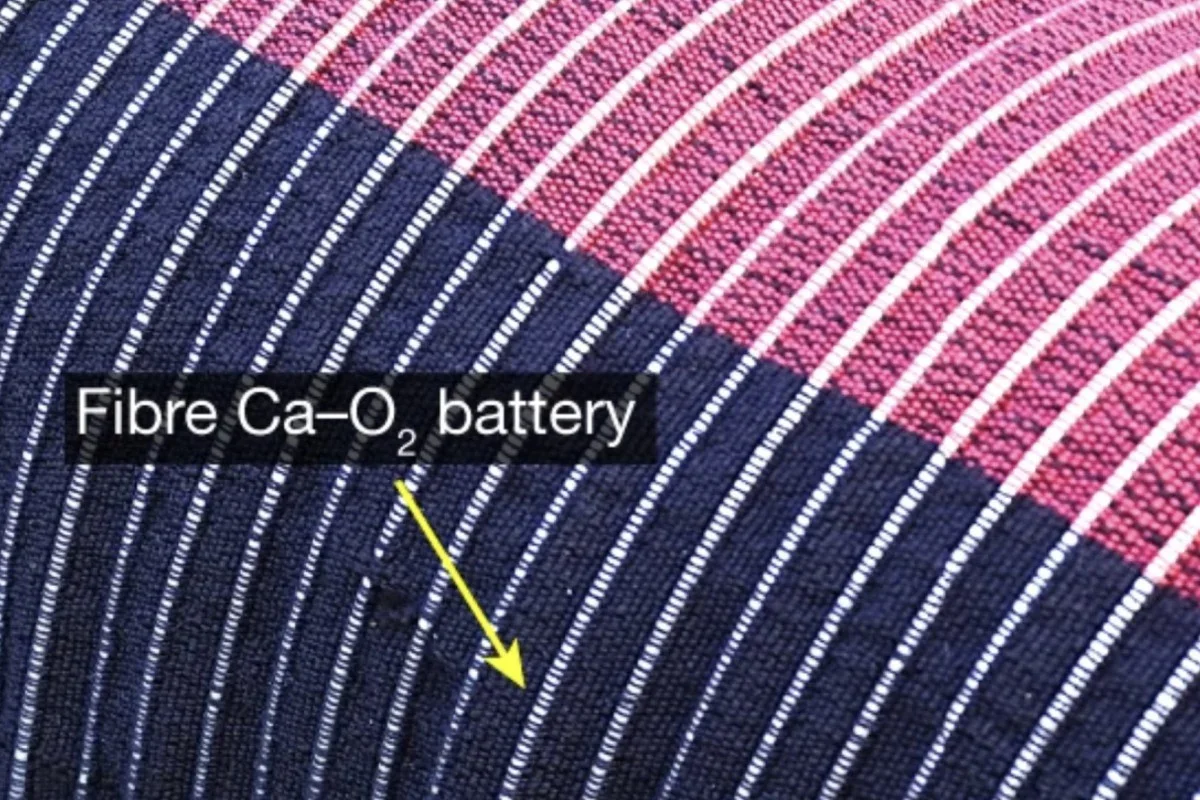
A fiber-based calcium-oxygen battery | Image by South China Morning Post
Another issue is that the infrastructure is missing and has to be built from scratch. Mining operations, purification facilities, factories for the batteries, etc. This will take time and money, so commercial availability might be years away (5-10 years with the most optimistic estimates).
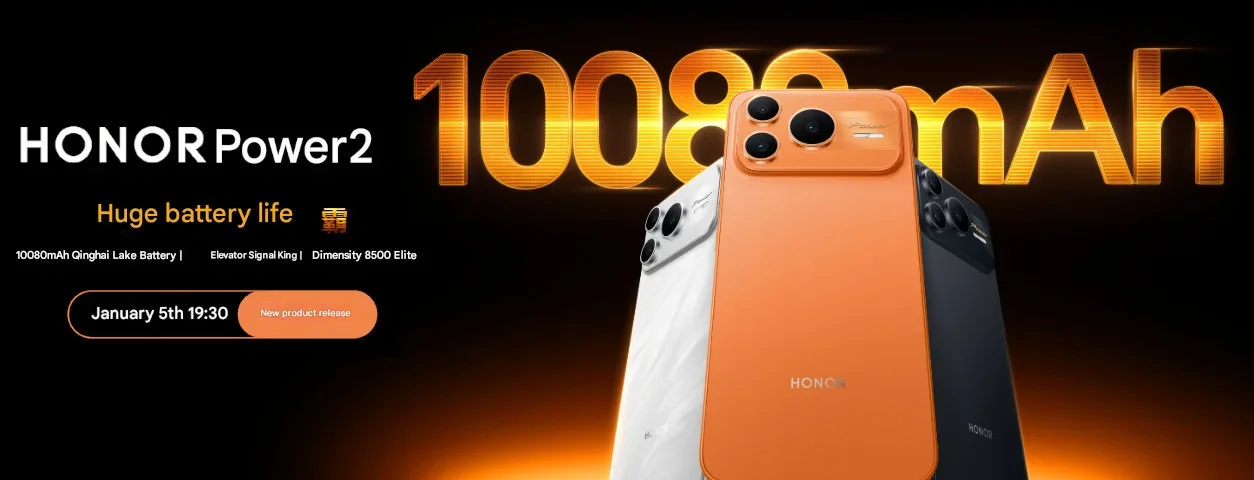
Silicon-carbon batteries are your best bet to get days of smartphone use | Image by Honor
"Where's my five-day smartphone?" you may ask. A valid question. At the end of the day, what's important is the real-life implication of any technological breakthrough. Sadly, calcium-ion batteries are not there yet, so to speak.
I'll be following the advancements in this technology closely and reporting any major milestones in this battery series. Meanwhile, your best bet for a two-to-three-day-battery smartphone is one with a silicon-carbon battery.
Mint Mobile is celebrating its 10-year anniversary with a special offer on its six-month subscription plans. For a limited time, you can get your preferred tier (6GB, 17GB, 23GB or unlimited) for just $10/mo. That saves you between 50% and 71% on the carrier's mobile plans, making it way easier to recommend.
Mariyan, a tech enthusiast with a background in Nuclear Physics and Journalism, brings a unique perspective to PhoneArena. His childhood curiosity for gadgets evolved into a professional passion for technology, leading him to the role of Editor-in-Chief at PCWorld Bulgaria before joining PhoneArena. Mariyan's interests range from mainstream Android and iPhone debates to fringe technologies like graphene batteries and nanotechnology. Off-duty, he enjoys playing his electric guitar, practicing Japanese, and revisiting his love for video games and Haruki Murakami's works.
A discussion is a place, where people can voice their opinion, no matter if it
is positive, neutral or negative. However, when posting, one must stay true to the topic, and not just share some
random thoughts, which are not directly related to the matter.
Things that are NOT allowed:
Off-topic talk - you must stick to the subject of discussion
Offensive, hate speech - if you want to say something, say it politely
Spam/Advertisements - these posts are deleted
Multiple accounts - one person can have only one account
Impersonations and offensive nicknames - these accounts get banned
To help keep our community safe and free from spam, we apply temporary limits to newly created accounts:
New accounts created within the last 24 hours may experience restrictions on how frequently they can
post or comment.
These limits are in place as a precaution and will automatically lift.
Moderation is done by humans. We try to be as objective as possible and moderate with zero bias. If you think a
post should be moderated - please, report it.
Have a question about the rules or why you have been moderated/limited/banned? Please,
contact us.












Things that are NOT allowed:
To help keep our community safe and free from spam, we apply temporary limits to newly created accounts: