The iPhone 17 just put Apple back on top — is it enough?
Apple has reclaimed the smartphone throne! After 14 years of chasing Samsung’s tail, the company from Cupertino is once again the world’s largest smartphone manufacturer.
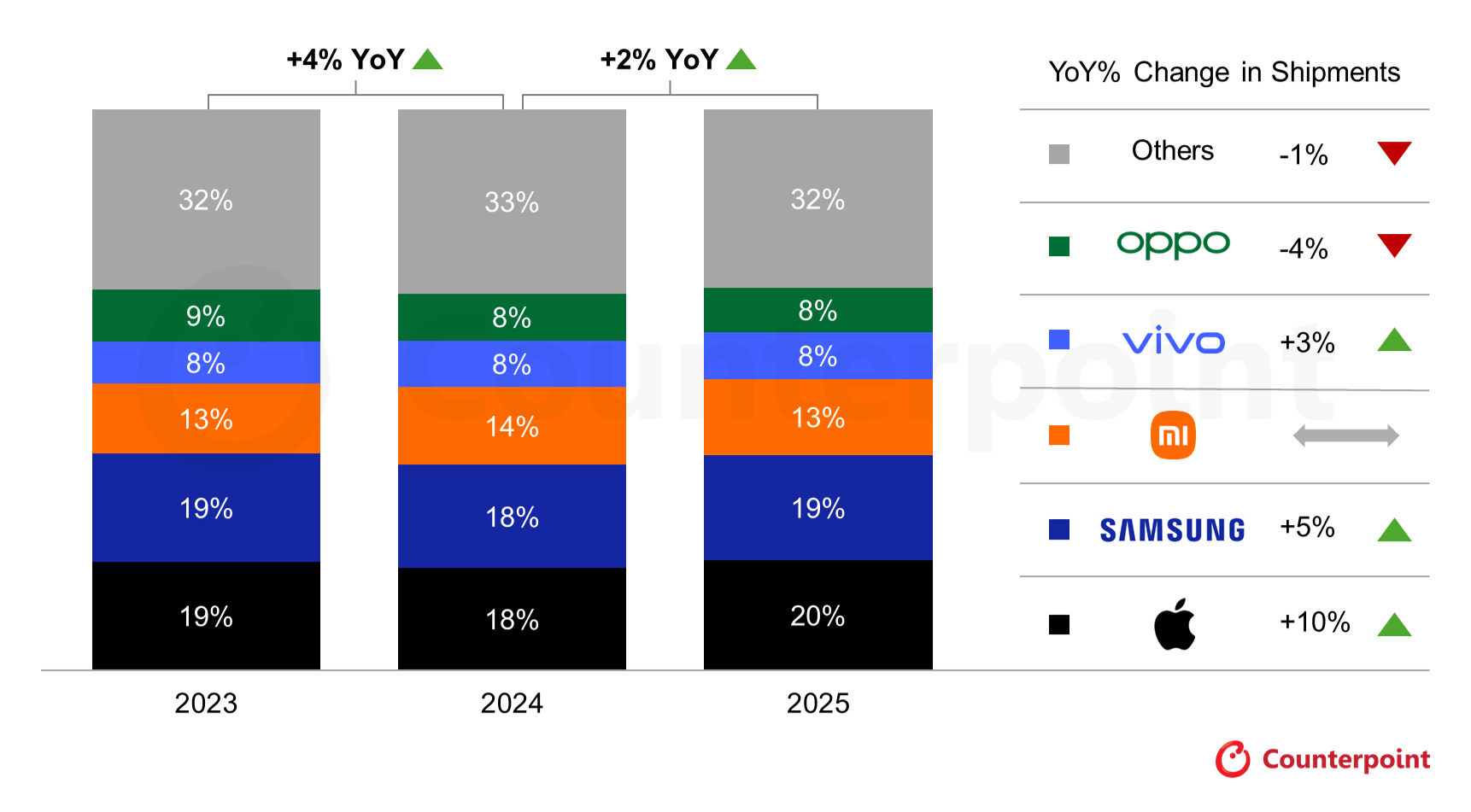
Apple has reclaimed the smartphone throne! After 14 years of chasing Samsung’s tail, the company from Cupertino is once again the world’s largest smartphone maker. According to the latest data from IDC and Counterpoint, Apple now has a 20% global market share by volume of devices shipped in 2025.
This marks a 10% YoY shipment growth for the Cupertino company, and a very tight lead of 1% over Samsung. The Korean smartphone manufacturer scored 19% market share in 2025 with a 5% YoY growth, which wasn’t enough to hold the top spot in smartphone shipments.
Apple emerged as a global smartphone leader pipping Samsung by only 1% | Image by Counterpoint
This is the first time in history, since the iconic iPhone 4, in which Apple takes the lead globally, and this also comes at a time when there are economic headwinds, RAM shortages, and inflation ramping up the prices of pretty much everything.
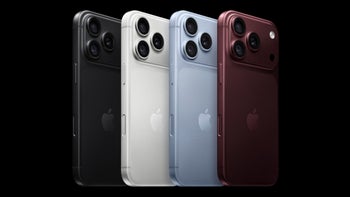
What gave Apple the competitive edge in these troubled times? The answer might lie in the iPhone 17 series. Which device is the unsung hero? Is it the iPhone Air? Or maybe the redesigned iPhone 17 Pro models? What about the vanilla iPhone 17? Let's find out!
The iPhone Air (failed) experiment
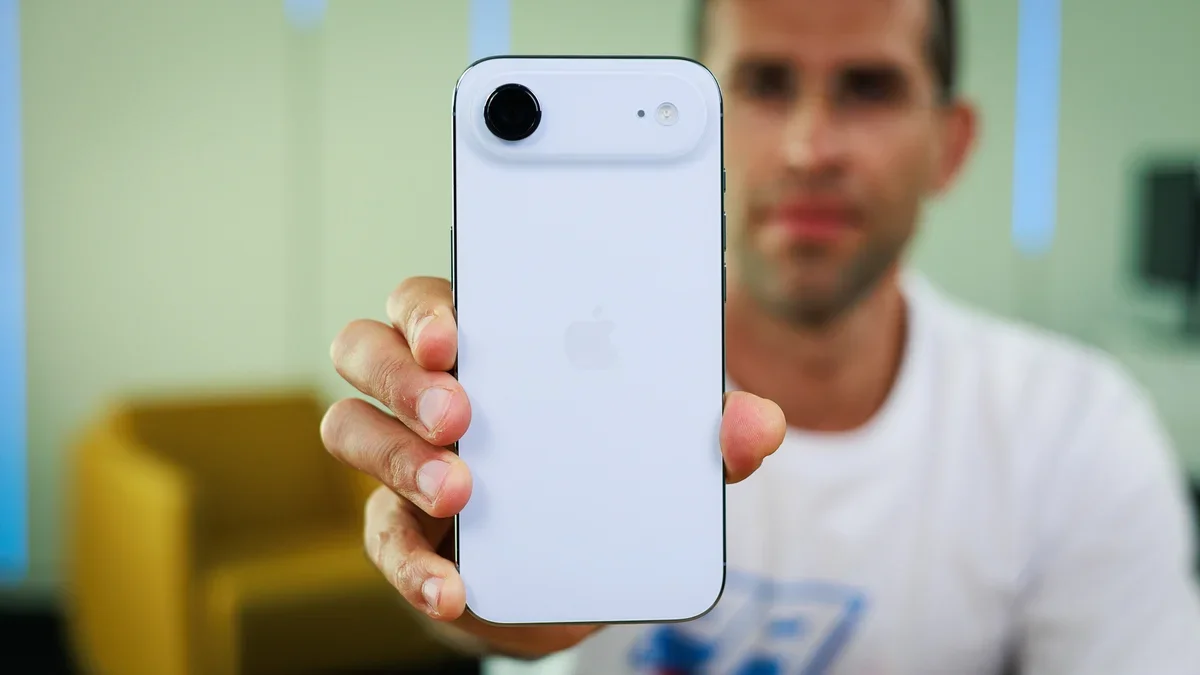
The iPhone Air is a marvel to hold in your hand | Image by PhoneArena
Recommended For You
When the iPhone Air was first announced, people went crazy. It was a polarizing model, to say the least. I remember my time queuing in front of the Apple store to get the new devices and thinking, "Wow, that iPhone Air queue is twice as long as the other ones."
There was a lot of hype in social media, too. During my time with the iPhone Air, it became apparent that it's a proof-of-concept device more than anything else. There were too many compromises, from the battery life to the single camera on the back and the slightly underpowered chipset.
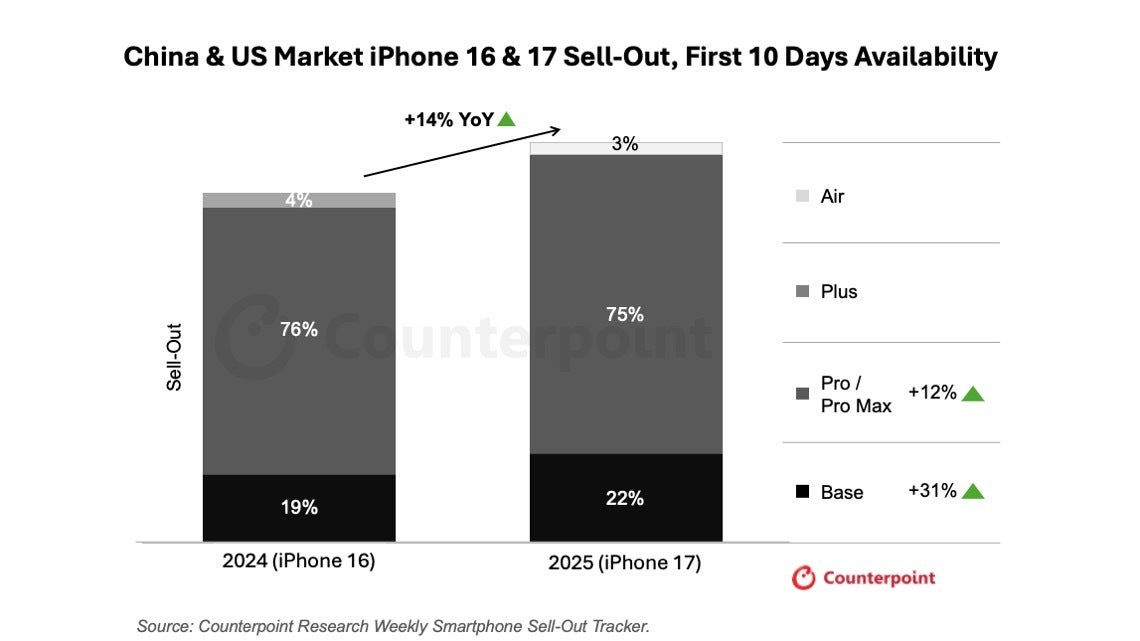
The iPhone Air accounted for just 3% of all iPhone 17 series sales | Image by Counterpoint
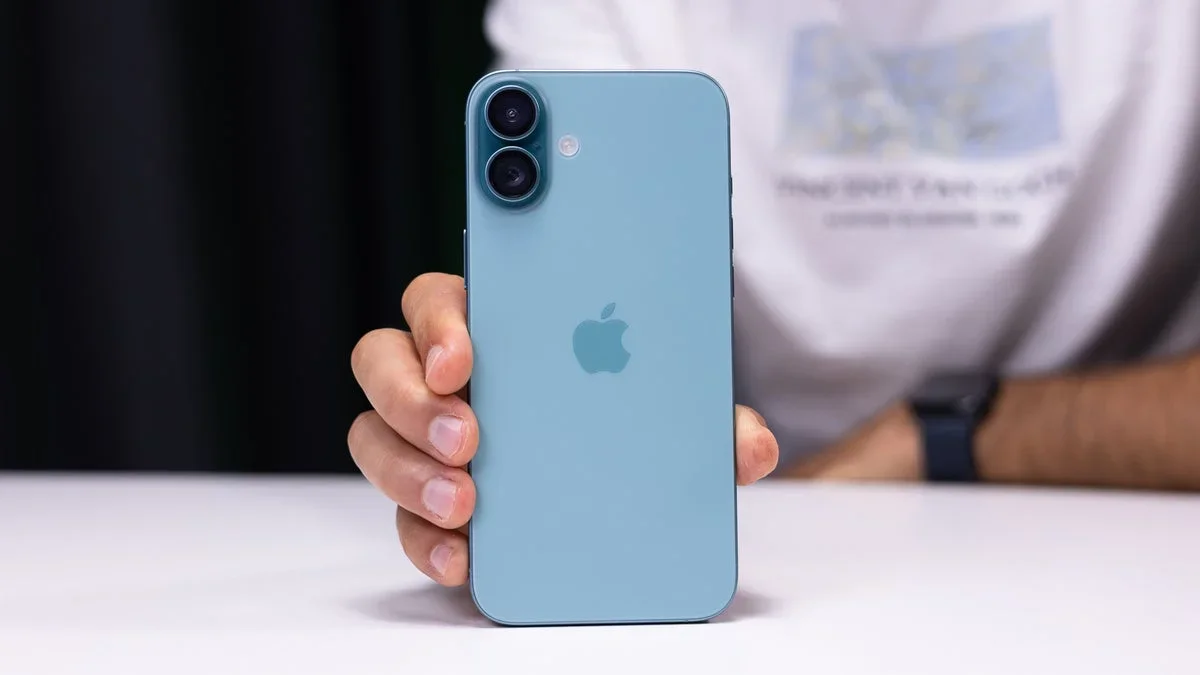
The best bargain in years - the vanilla iPhone 17 | Image by PhoneArena
The base iPhone 17 marks a huge milestone for Apple. Finally, the ProMotion 120 Hz display trickled down to the non-pro model. I've been criticizing Apple for years and years—the vanilla iPhone kept that choppy 60Hz refresh rate, while much cheaper $200 phones were launching left and right with 120Hz panels.
Apple fans' prayers have been answered with the iPhone 17—not only did this model fix the refresh rate problem, but it also updated the camera system with a new 48MP ultrawide and got a bigger battery.
The best part? The iPhone 17 kept its $799 price, which for sure contributed to the 31% increase in demand compared to the iPhone 16 (19% for the iPhone 16 vs. 22% for the iPhone 17). And even though the iPhone 17 Pro models are responsible for 76% of all the sales, the jump there is not as significant; last year it was 75%.
This signifies a paradigm shift, the lead and the growth Apple scored in 2025 comes from expanding the appeal at the entry level, and not selling more Pro models to loyal fans.
The success of the iPhone 17 was not confined to the US market, the model shapes up to be a hit around the globe. In China, the iPhone 17 series outsold the previous generation with 14%, with the vanilla iPhone 17 cited as the main driver.
In Europe, the iPhone 17 sold out in many countries in the first couple of days, including Germany, Switzerland, and the UK.
The iPhone 17 Pro and its extended plateau
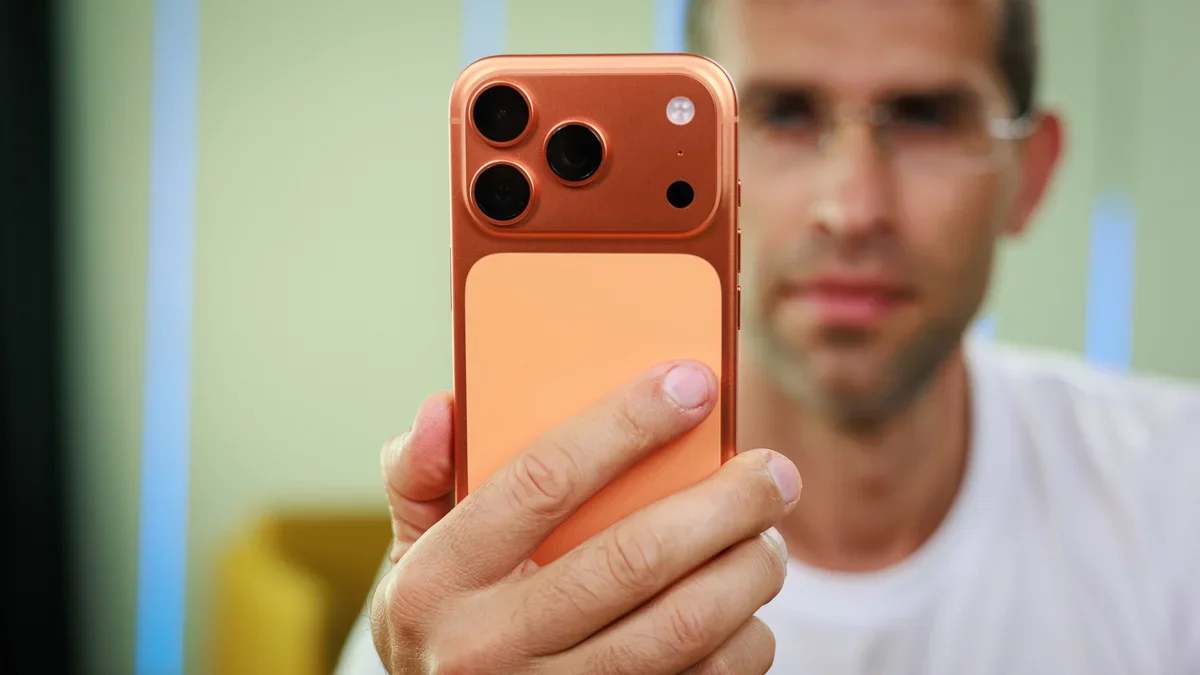
The iPhone 17 Pro models are selling well, despite some durability issues | Image by PhoneArena
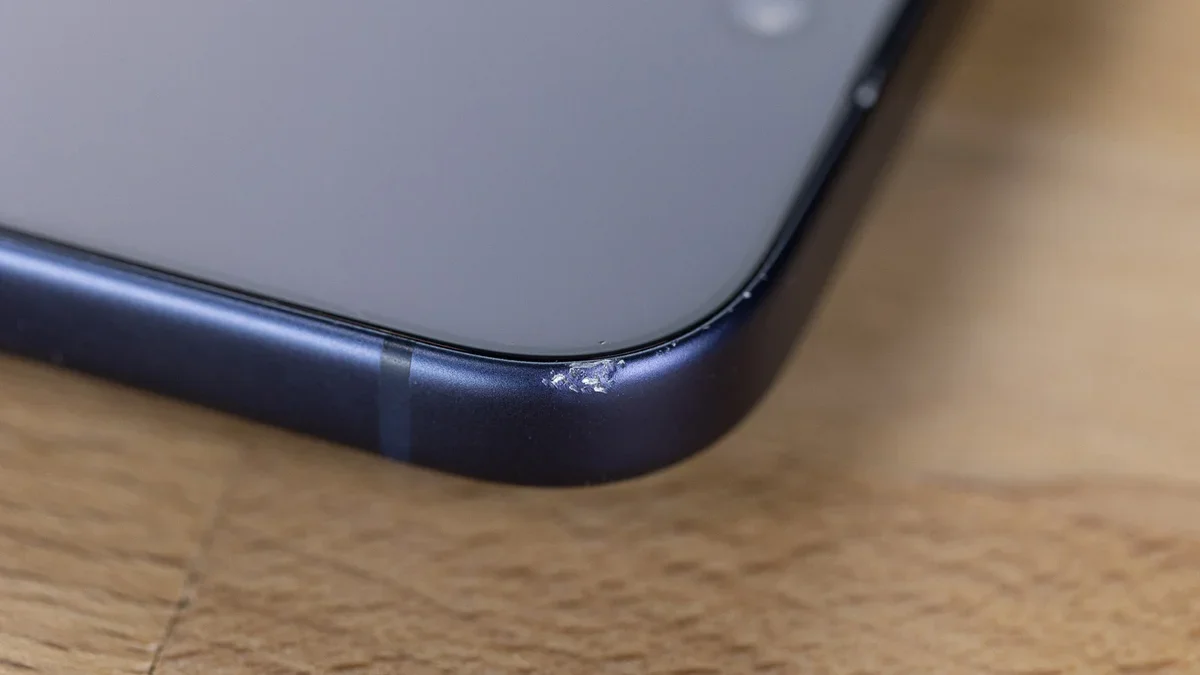
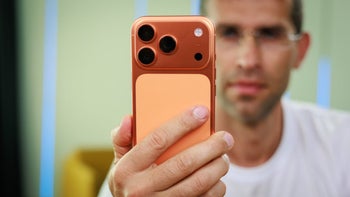
We can't dismiss the aforementioned iPhone 17 Pro lineup, despite all the worrisome reports that have been coming since the official launch. It turns out the extended plateau that stretches from side to side has too sharp of a corner, and the paint starts falling off quite easily.
It's down to the anodizing process that requires a certain radius for the paint particles to stick to the aluminum, and when there's a sharp edge, it's prone to wear.
We saw our review samples getting scratched in mere hours | Image by PhoneArena
There were other issues with the durability of the Pro models as well—people reported dings, scratches, and bumps all around the chassis of the new models. These issues might’ve hindered the growth in the Pro segment.
Nevertheless, sales were still strong with a 13% increase compared to the last generation of iPhone Pro devices. So, even though the iPhone Air is turning into a massive flop, strong performance from the vanilla iPhone 17 and the Pro models gave Apple a competitive advantage.
How and why Samsung lost the lead?
Unfortunate events and lack of camera innovation dragged Samsung down in 2025 | Image by PhoneArena
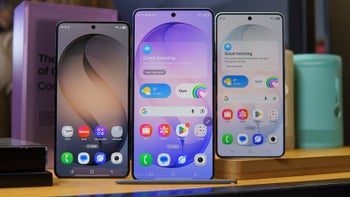
Apple claiming the top spot in smartphone market share wasn’t just about the iPhone 17 series being strong. There was a “perfect storm” hitting Samsung and even though some of the reasons could be attributed to the company paying it safe with the Z Fold 7 and the Galaxy S25, some were just unfortunate and unforeseen events.
The passing of Samsung’s co-CEO Han Jong-hee in early 2025 created a temporary leadership vacuum in the mobile and consumer electronics divisions at a very critical moment. The lack of hardware innovation, especially in the camera department, coupled with the leadership struggles inside the company, lead to Samsung sales stagnating just enough to let Apple take the lead. Will it last?
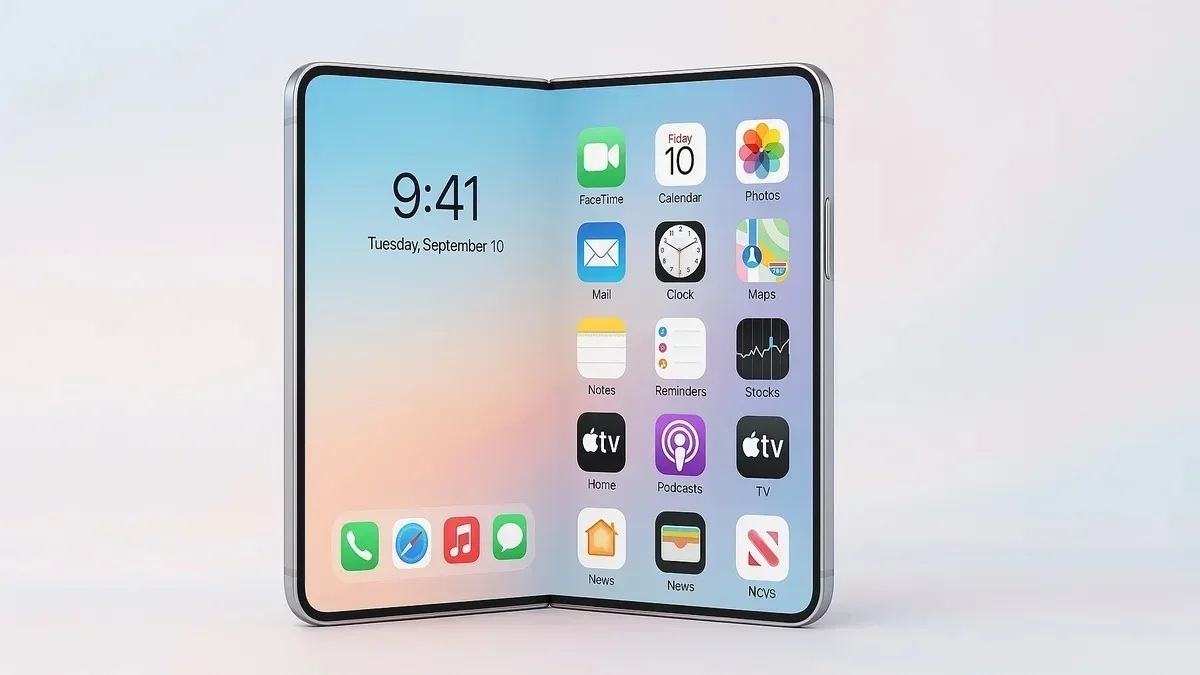
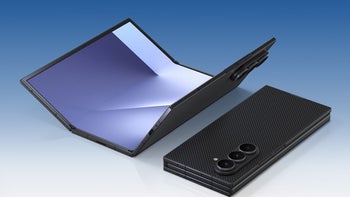
Can Apple hold the throne with the upcoming iPhone Fold?
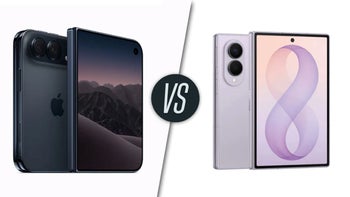
Can the iPhone Fold help Apple stay on top? | Image by Front Page Tech
Things aren't looking great at the moment for the whole industry. Tech analysts from major firms, such as IDC, are warning of a market slowdown. Memory prices (DRAM and NAND) are skyrocketing because chipmakers would rather sell silicon to AI data centers than to phone manufacturers.
ChatGPT and Gemini need bigger "brains" to cope with the demand (everybody seems to be using these chat platforms for all kinds of things), and this hurts our precious smartphones. So much so that Apple is planning a two-part launch for the iPhone 18 series.
According to industry insiders, the company plans to first launch the iPhone 18 Pro devices in September 2026, while the iPhone 18, iPhone 18e, potentially the second-generation iPhone Air, and the iPhone Fold could be delayed until early 2027. Some even thing that the whole iPhone 18 lineup could be delayed until 2027.
With the Galaxy S26 on the horizon and the next Galaxy Fold and Flip coming later this summer, it's unlikely that Apple will be able to maintain the lead.
What do you think? Did Apple earn the top spot more permanently, or is Samsung just having an "off" year?
Trade in your old phone for cash at ecoATM!
Recycle your used phone and get instant cash. Find out how at ecoATM!
Mariyan, a tech enthusiast with a background in Nuclear Physics and Journalism, brings a unique perspective to PhoneArena. His childhood curiosity for gadgets evolved into a professional passion for technology, leading him to the role of Editor-in-Chief at PCWorld Bulgaria before joining PhoneArena. Mariyan's interests range from mainstream Android and iPhone debates to fringe technologies like graphene batteries and nanotechnology. Off-duty, he enjoys playing his electric guitar, practicing Japanese, and revisiting his love for video games and Haruki Murakami's works.
A discussion is a place, where people can voice their opinion, no matter if it
is positive, neutral or negative. However, when posting, one must stay true to the topic, and not just share some
random thoughts, which are not directly related to the matter.
Things that are NOT allowed:
Off-topic talk - you must stick to the subject of discussion
Offensive, hate speech - if you want to say something, say it politely
Spam/Advertisements - these posts are deleted
Multiple accounts - one person can have only one account
Impersonations and offensive nicknames - these accounts get banned
To help keep our community safe and free from spam, we apply temporary limits to newly created accounts:
New accounts created within the last 24 hours may experience restrictions on how frequently they can
post or comment.
These limits are in place as a precaution and will automatically lift.
Moderation is done by humans. We try to be as objective as possible and moderate with zero bias. If you think a
post should be moderated - please, report it.
Have a question about the rules or why you have been moderated/limited/banned? Please,
contact us.







Things that are NOT allowed:
To help keep our community safe and free from spam, we apply temporary limits to newly created accounts: