Your phone may have the best camera out there. The brightest display, the loudest (and clearest) speakers, the fastest chip or the most terabytes in storage. But if you're fiending for a charger to plug your phone in – because its battery is depleting – you've got nothing.
What's up, fellow Pixel phone users?
It's not fun. | Image by PhoneArena
As a former Pixel user myself, I'm puzzled by what's been happening with recent flagships by Google:
There was a recent software update. It apparently caused numerous Pixel units (across generations from the Pixel 6 to the current Pixel 10) to lose battery life faster than a president losing touch with reality.
Furious users are reporting rapid battery loss even during light use, with some devices struggling to last half a day and others draining significantly while idle… or even in airplane mode.
But wait, there's more. In some cases, phones are also heating up, reinforcing the sense that something fundamental has broken.
The Apple Batterygate memories kick in
While I was reading all about Google's latest screw-up, my mind started playing the Apple Batterygate scandal in the background.
As I'm sure most of you remember well, the Cupertino giant faced global backlash when it was revealed that iOS updates were deliberately throttling performance on older iPhones to prevent unexpected shutdowns because of aged batteries.
Recommended For You
Yes, Apple defended this move later. It called it a stability measure ("It's a feature, not a bug!") and introduced battery health tools and replacement programs. Whatever – the reputational damage was significant.
Battery-related issues were now OK to be discussed under the lamp of conspiracy theory. Hence, there's that long-term sensitivity and suspicion that'll plague any software update that affects power performance from now on.
Is that a deliberate move by Google?
Some people swear by the Pixel. | Image by PhoneArena
I highly doubt it. It's not that Google is my favorite brand and I want to excuse its wrongdoings.
It's just that… why would Google deliberately attack its Pixel 10 and Pixel 9 devices? Sure, we'll have the Pixel 11 in some months' time, but the 10 and 9 models are still new. Even the Pixel 6 isn't "old" – quite the contrary; our very own Alan has explained in detail why he has chosen the Pixel 6 Pro over the iPhone 15 Pro Max.
Nobody knows what really happened – not even folks at Google, as it seems – but this is one nasty bug, that's what I think.
This doesn't make it any lighter, though.
Google has reportedly acknowledged the complaints but has not yet identified a root cause or delivered a fix, with users still reporting severe drain weeks after the initial update.
For a company that positions Pixel as its showcase for Android excellence, this is a shocking credibility problem. I'd understand if, say, the Now Playing feature was bombed by a software update and didn't function properly for 3–4 weeks.
But battery? Come on.
The sensitive topic
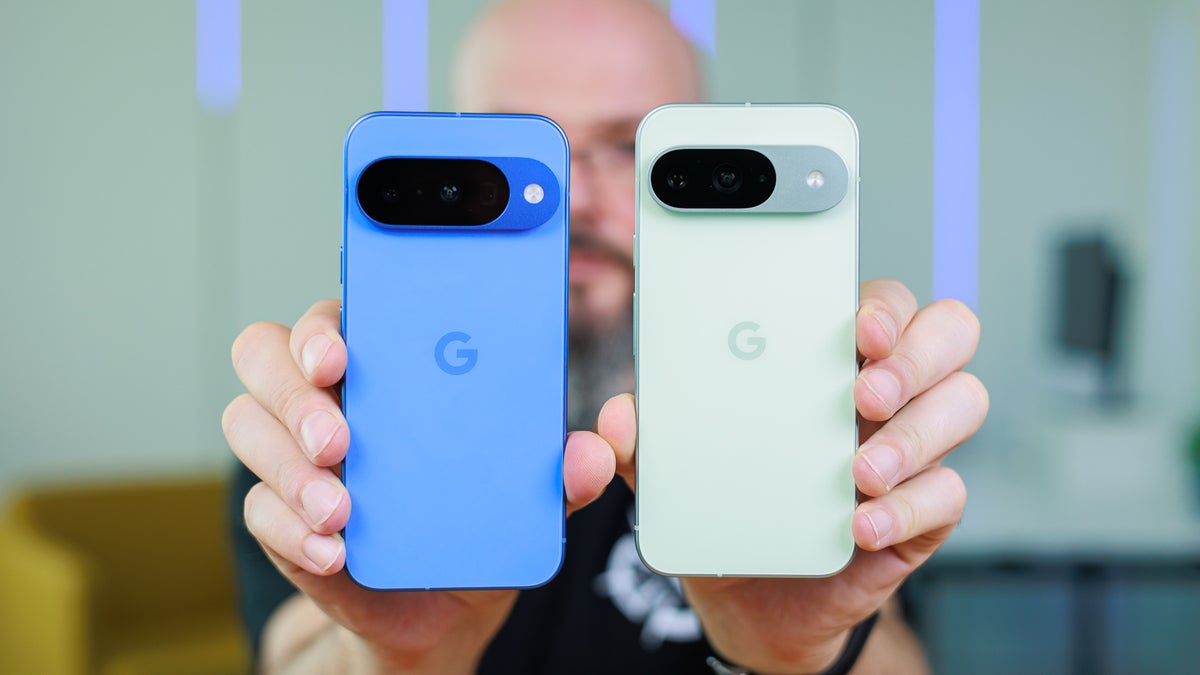
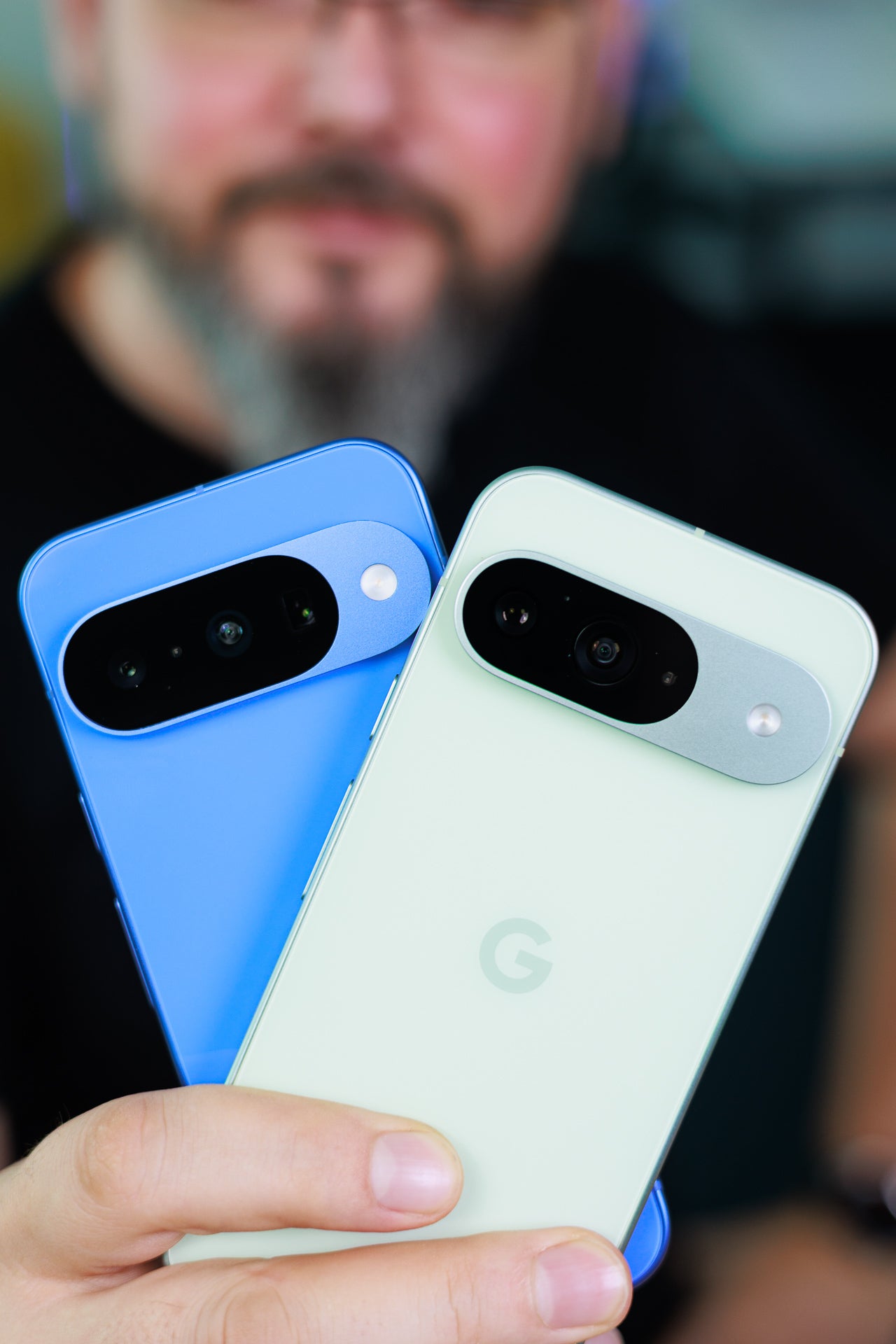
The Pixel 10 and the Pixel 9. | Image by PhoneArena
Like I said in the beginning, battery performance is one of the most sensitive parts of smartphone ownership because it directly determines whether a phone can last through a normal day.
Unlike cameras or AI features, it is not abstract or optional, but tied to basic daily usability.
When users feel like their battery life has suddenly been "taken away", everything else (trust above all) collapses quickly.
What are Google's rivals doing?
Chinese smartphone makers are increasingly pushing battery capacities into the 8,000–10,000 mAh range in some models. That's the silicon-carbon revolution for you.
Meanwhile, devices made by Apple, Samsung, and Google lag behind in the roughly 4,500–5,500 mAh range.
Bigger battery numbers are increasingly being seen as a straightforward indicator of a better phone, often outweighing performance upgrades or AI features.
The Galaxy S27 Ultra is rumored to be adopting a silicon-carbon battery, and that's great news.
After all, Sammy has been using the same capacity battery (5,000 mAh) for seven (!) consecutive years, starting with the Galaxy S20 Ultra all the way to (and including) the Galaxy S26 Ultra.
Six-month unlimited plan is now 57% off
$90
$210
$120 off (57%)
Mint Mobile is now allowing you to get whichever plan you like for either three, six, or 12 months for just $15/mo. If you go for the six-month unlimited service, for instance, you'll now have to pay just $90 upfront instead of $210.
Sebastian is one of PhoneArena’s senior opinionators. A veteran news writer with almost 20 years of experience in media and technology, he not only covers all the hot news about Galaxies and iPhones, but often provides hot takes on industry trends. He’s fascinated with camera-focused flagships from the likes of Oppo and Vivo, as well as foldable phones.
A discussion is a place, where people can voice their opinion, no matter if it
is positive, neutral or negative. However, when posting, one must stay true to the topic, and not just share some
random thoughts, which are not directly related to the matter.
Things that are NOT allowed:
Off-topic talk - you must stick to the subject of discussion
Offensive, hate speech - if you want to say something, say it politely
Spam/Advertisements - these posts are deleted
Multiple accounts - one person can have only one account
Impersonations and offensive nicknames - these accounts get banned
To help keep our community safe and free from spam, we apply temporary limits to newly created accounts:
New accounts created within the last 24 hours may experience restrictions on how frequently they can
post or comment.
These limits are in place as a precaution and will automatically lift.
Moderation is done by humans. We try to be as objective as possible and moderate with zero bias. If you think a
post should be moderated - please, report it.
Have a question about the rules or why you have been moderated/limited/banned? Please,
contact us.










Things that are NOT allowed:
To help keep our community safe and free from spam, we apply temporary limits to newly created accounts: