After years of letdowns, Samsung may finally be on the path to redemption with its in-house mobile processors. We’ve already seen some initial leaks about the upcoming Exynos 2700 chipset, and now it's time for even more details.
Exynos 2700 appears in a Geekbench benchmark
Samsung is testing an early version of the Exynos 2700 chipset, as its CPU has shown up in the Geekbench database for the first time. The benchmark, which was spotted by Abhishek Yadav, was run on the same deca-core configuration we’ve seen in the earlier tests.
The Exynos 2700 CPU has reached 2,603 points in the single-core test and 10,350 points in the multi-core benchmark. While that’s not a very impressive score, it’s a clear sign that Samsung is moving forward at a steady pace with the development of the new chip.
Those results are achieved with a prototype device running Android 16 with 12 GB of RAM and an Exynos 2700 with the specs:
1 prime core at 2.78GHz
4 performance cores at 2.88GHz
1 low-power core at 2.30GHz
4 efficiency cores at 2.40GHz
Xclipse 970 GPU
It’s an early test
The test includes an ERD identifier at the end of the chipset’s name, which implies that Samsung has used an engineering board to run it. That’s one of several signals that the company is running a very early version of the Exynos 2700 and potentially an early Galaxy S27 software build.
Recommended For You
By the time the chipset reaches its final version, we’re almost certainly going to see much higher clock speeds and vastly improved performance of its CPU. The performance of the Xclipse 970 GPU should also exceed the 15,618 score it achieved in a separate OpenCL test earlier this year.
A challenge for Samsung
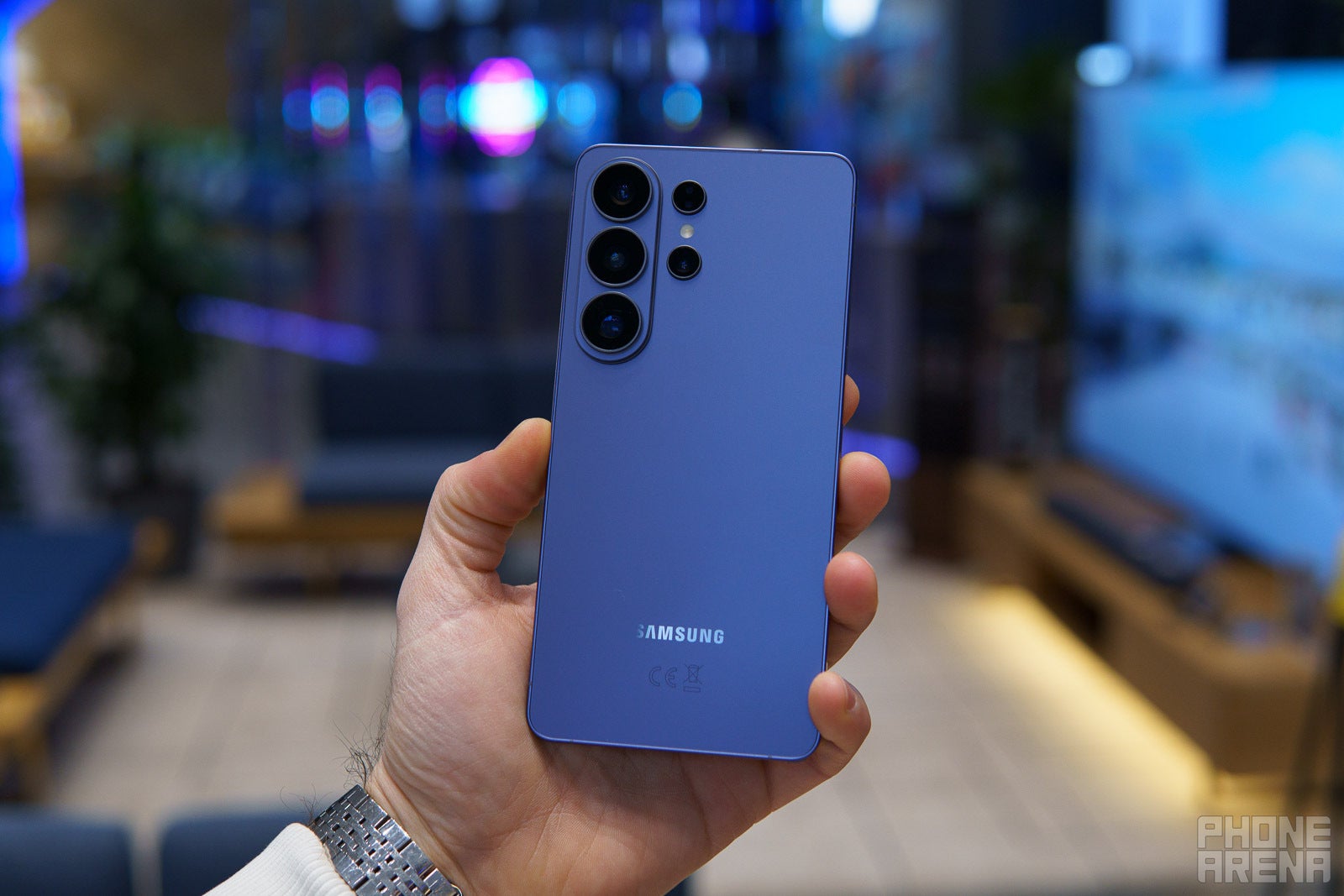
The Galaxy S26 Ultra only featured Qualcomm chipsets. | Image by PhoneArena
Samsung is expected to manufacture the Exynos 2700 on an improved 2nm process node, following the 2nm Exynos 2600. That new process is expected to give the Galaxy S27’s chipset a 12% boost in performance and a 25% reduction in power consumption compared to this year’s silicon.
Beyond the CPU, Samsung is also expected to improve the GPU of the upcoming chip. The company is rumored to rely completely on its own resources for the development of the Xclipse 970 and not use any assistance from AMD.
Those improvements and the long testing period could be the key to living up to the expectations for the Galaxy S27 series. While the Exynos 2600-powered Galaxy S26 devices performed better than expected, customers are still skeptical about Samsung’s in-house chips.
Would you buy an Exynos-powered Galaxy S27?
64 Votes
No, I want a Qualcomm chipset
29.69%
Maybe, if the performance matches that of a Qualcomm chip
31.25%
Only if its faster than the best Snapdragon
12.5%
Yes, all chips are fast enough nowadays
26.56%
This year, Qualcomm is expected to launch the Snapdragon 8 Elite Gen 6, while Apple will release the iPhone 18 Pro with the A20 Pro processor. Both chipsets will be follow-up models that have been outperforming Samsung’s best for years.
That lagging performance is part of the reason the Galaxy S26 series features Exynos chips only on some models and in some markets. Samsung’s best device for this year, the Galaxy S26 Ultra, like the whole Galaxy S25 series before it, uses Qualcomm’s top-tier processor.
This is the year
Having one more supplier of cutting-edge mobile processors would be great for the entire market. Qualcomm has been the default for all Android flagship smartphones for years, and I’d love to see how the company would perform under the pressure of a competitor as mighty as Samsung.
Spend $100 and save $25 on Otterbox cases and screen protectors
Flash sale: Cover your device with brand new styles and reliable safety. Spend $100 on Otterbox cases and screen protectors and save $25 instantly. Exclusions may apply. Valid 10/6-10/11
Ilia, a tech journalist at PhoneArena, has been covering the mobile industry since 2011, with experience at outlets like Forbes Bulgaria. Passionate about smartphones, tablets, and consumer tech, he blends deep industry knowledge with a personal fascination that began with his first Nokia and Sony Ericsson devices. Originally from Bulgaria and now based in Lima, Peru, Ilia balances his tech obsessions with walking his dog, training at the gym, and slowly mastering Spanish.
A discussion is a place, where people can voice their opinion, no matter if it
is positive, neutral or negative. However, when posting, one must stay true to the topic, and not just share some
random thoughts, which are not directly related to the matter.
Things that are NOT allowed:
Off-topic talk - you must stick to the subject of discussion
Offensive, hate speech - if you want to say something, say it politely
Spam/Advertisements - these posts are deleted
Multiple accounts - one person can have only one account
Impersonations and offensive nicknames - these accounts get banned
To help keep our community safe and free from spam, we apply temporary limits to newly created accounts:
New accounts created within the last 24 hours may experience restrictions on how frequently they can
post or comment.
These limits are in place as a precaution and will automatically lift.
Moderation is done by humans. We try to be as objective as possible and moderate with zero bias. If you think a
post should be moderated - please, report it.
Have a question about the rules or why you have been moderated/limited/banned? Please,
contact us.














Things that are NOT allowed:
To help keep our community safe and free from spam, we apply temporary limits to newly created accounts: