Early Exynos 2700 listing on Geekbench shows big changes
Maybe, just maybe, Samsung will finally lift the Exynos curse!

The Samsung Galaxy S25 FE comes with an Exynos 2400 chip. | Image credit — PhoneArena
Geekbench shows an Exynos 2700 listing
First noticed by reliable X leaker Abhishek Yadav, the leaked Geekbench result reveals an unusual architecture. Instead of relying on a 1+3+6 architecture — the one used in the Exynos 2600 (model S5E9965 ERD) — the supposed successor (model S5E9975) will rely on a different 1+4+1+4 core cluster.
Early Geekbench spotting
— Abhishek Yadav (@yabhishekhd) January 27, 2026
Looks like Samsung Exynos 2700 has already appeared on Geekbench — likely an early listing
Exynos 2700 (Deca-core CPU architecture):
• Cluster 1: 1 core @ 2.30GHz
• Cluster 2: 4 cores @ 2.40GHz
• Cluster 3: 1 core @ 2.78GHz
• Cluster 4: 4 cores… pic.twitter.com/KAWNv5AAP1
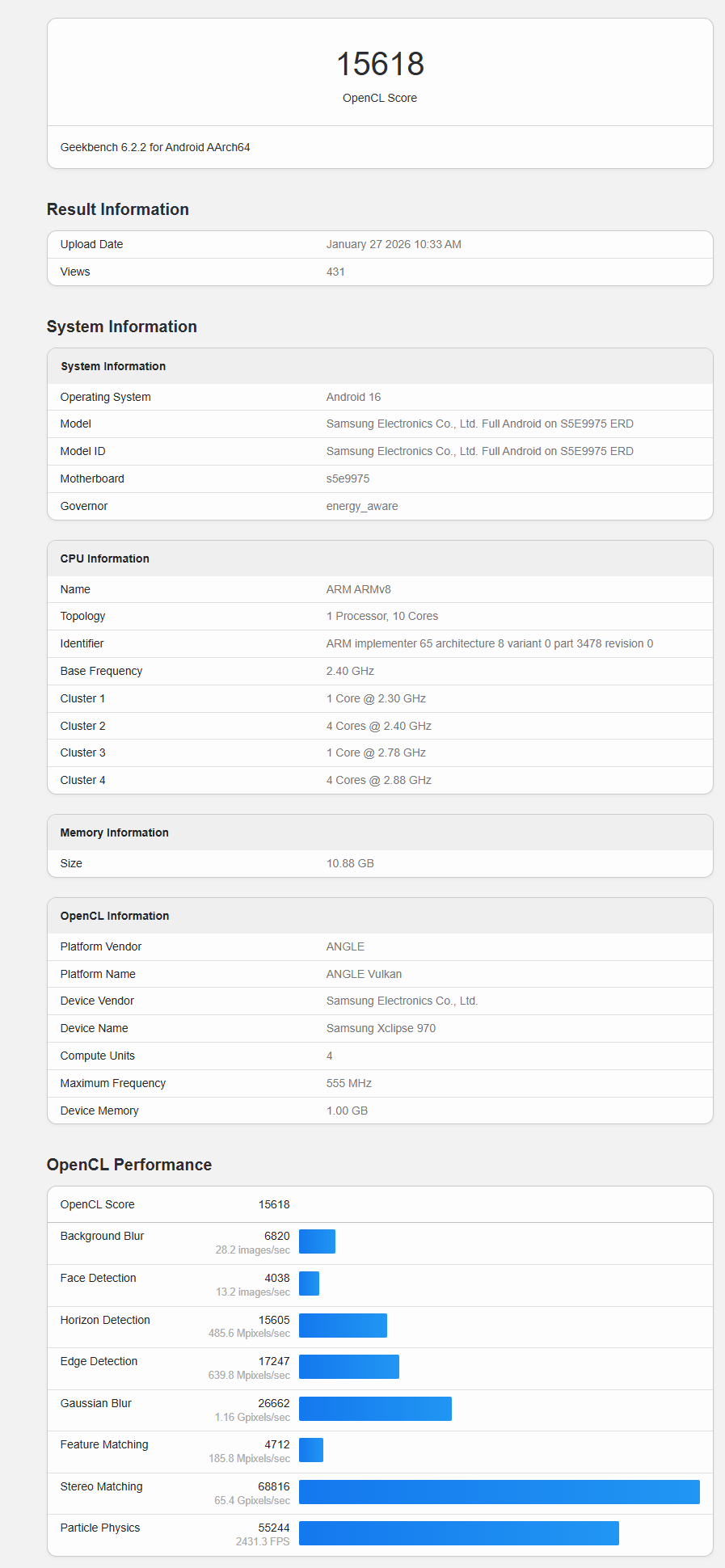
Leaked early Exynos 2700 chip on Geekbench | Image by Image credit—Geekbench
All cores have a rather modest clock speed: 2.30 GHz, 2.40 GHz, 2.78 GHz, and 2.88 GHz. No need for panic, of course — those clock speeds are highly unlikely to stay unchanged. They only indicate that Samsung is currently trying to get the new design to work before amping up speeds.
Why the quad-cluster design experiment?
First introduced with the MediaTek Helio X20, the first tri-cluster smartphone chip has been widely used for the better part of a decade. So, why did Samsung go for a quad-cluster design?
In your opinion, will the Exynos 2700 be a success?
58 Votes
The Exynos has so many flaws that it can't be fixed.
20.69%
This quad-cluster design is interesting, but it won't work.
3.45%
It might, as long as its optimized well.
43.1%
I'm sure it will, and I can't wait to see it.
32.76%
If it materializes, the new layout could have a dramatic impact on how the Exynos 2700 manages power. By utilizing a 2nm SF2P process, Samsung could be working on creating a 'bridge' between efficiency and power.
How does it compare to Qualcomm?
If Samsung is actively working on a 1+4+1+4 deca-core for the upcoming Exynos 2700, expected to debut in 2027, how will it compare to the latest Qualcomm processor? Let's explore Geekbench listings of the OnePlus 15, powered by the Snapdragon 8 Elite Gen 5.
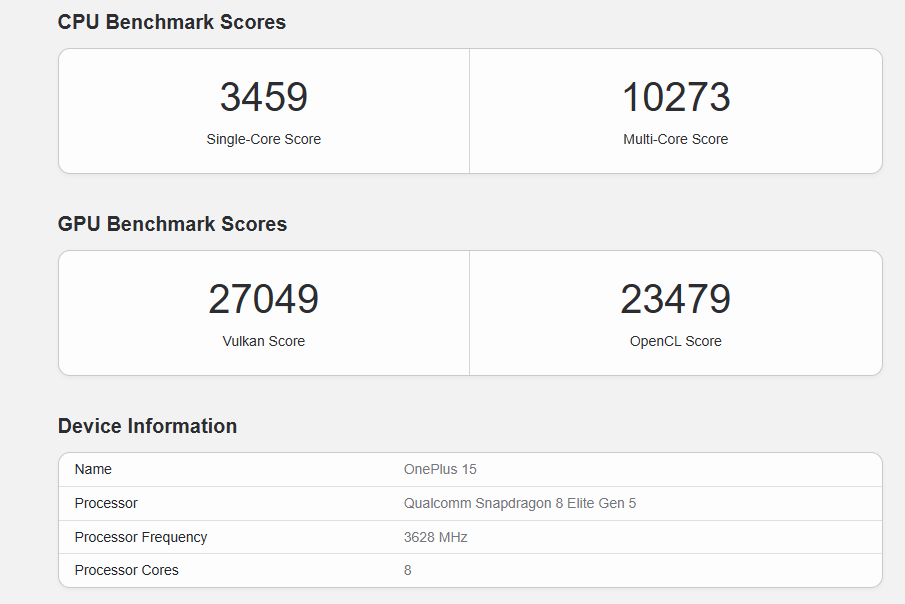
Geekbench listing of the OnePlus 15 | Image by Image credit—Geekbench
As you can see, the 8 Elite Gen 5 achieves a single score of 3,459 and multi-core score of 10,273. Moreover, it hits 23,479 OpenCL score. On paper, that makes it significantly more powerful than Samsung's supposed Exynos 2700 (OpenCL score 15,618).
Could Samsung fix Exynos?
The question I immediately ask myself is this: is Samsung simply experimenting with this quad-cluster design architecture, or is it trying to fix its flagship processor for good? To me, the latter seems the more logical answer.
By introducing a new core cluster design, Samsung may be addressing efficiency and heat issues that have been plaguing the Exynos. If it sticks to it, we might finally have an answer to the "Which chip will it be" question — one that's not disappointing for everyone.


Popular stories





Latest News





Things that are NOT allowed:
To help keep our community safe and free from spam, we apply temporary limits to newly created accounts: