The best mid-range phones to buy in 2026
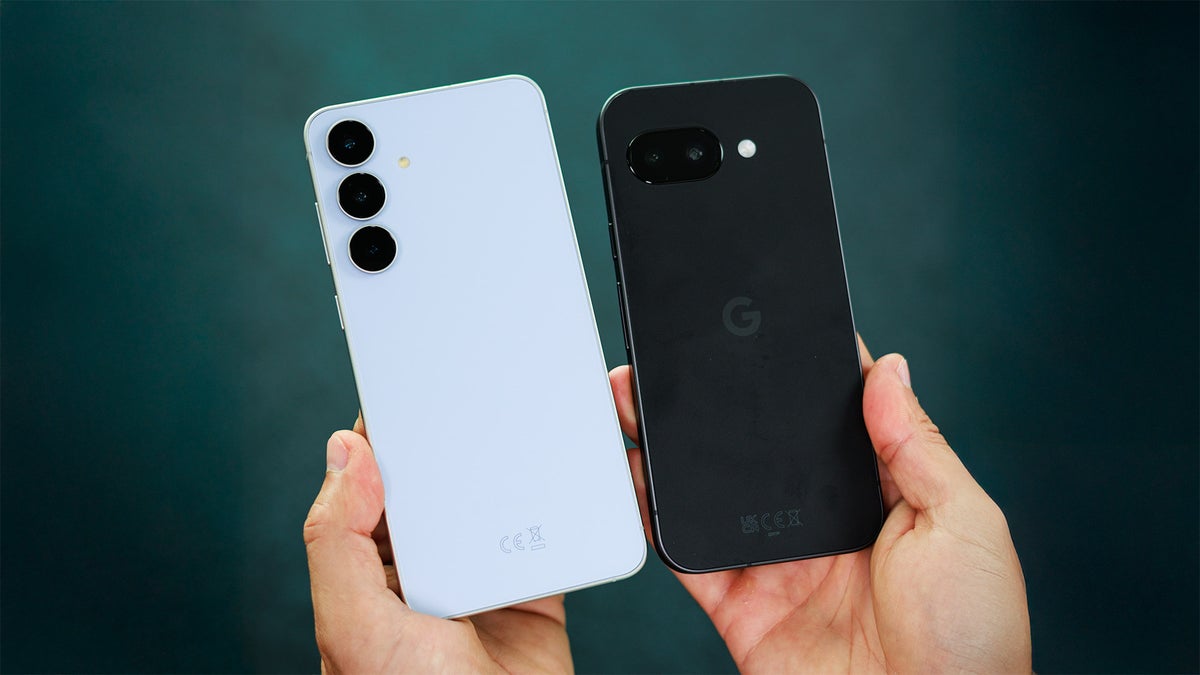
Mid-range phones have continued to close the gap with flagships the past few years, so what was once a compromise-driven category is now filled with devices offering polished designs, strong performance, capable cameras, and long software support, all without flagship pricing.
In fact, this category might just become even more popular in 2026. Many phone manufacturers are expected to raise the prices due to rising component costs, potentially making flagship phones even less accessible.
“Mid-range” still means different things to different people, but today it generally spans the $400 to $700 range. Phones in this bracket are expected to feel premium, last a full day or more, and remain reliable for years, even without cutting-edge extras.
With that context, here are our picks for the best mid-range phones you can buy in 2026, based on hands-on experience, lab testing, and long-term value.
“Mid-range” still means different things to different people, but today it generally spans the $400 to $700 range. Phones in this bracket are expected to feel premium, last a full day or more, and remain reliable for years, even without cutting-edge extras.
Also check out our best budget phones picks if you want even more affordable options.
Jump to:
- Galaxy S25 FE — A flagship in mid-ranger's clothing
- Pixel 9a — Exceptional battery life and the Pixel camera experience
- Galaxy A36 5G — Excellent value and Samsung's core user experience
- iPhone 16e — The best balance between price and user experience from an Apple phone right now
- OnePlus 13R — Flagship-level performance, a versatile camera system, and premium design
- Motorola Edge (2025) — Awesome display and thin form factor
- Nothing Phone (3a) Pro — The boldest design and fastest charging under $500
Galaxy S25 FE
A flagship in mid-ranger's clothing
Samsung refined the Fan Edition even further with the Galaxy S25 FE, giving it an even more S-series feel this year. It uses the full-fledged Exynos 2400 chip this time (not the downgraded Exynos 2400e) which definitively beat Google's Tensor G4 in our testing.
The 6.7-inch AMOLED screen is also quite impressive, managing 1761 nits (20% APL) and 1090 nits (100% APL). That's bright enough for outdoor use, and you get the added benefit of great contrast levels and good color accuracy.
As usual, the cameras are reliable and versatile. Our PhoneArena Camera Score for the S25 FE is 143, with the strongest performers being the 50MP main and the new 12MP selfie camera; the 12MP ultra-wide and 8MP 3x telephoto are fine, though weaker in low light. Video lags behind a bit compared to photo quality, but it is still good enough for social and family clips.
Battery life takes a small step forward over last year: 6h 59m overall estimate in our tests. It’s not the best in this class (Pixel 9a lasts longer), but charging is definitely a plus, as it comes with 45W of wired charging speeds, which got us to 64% in 30 minutes. There's also 15W wireless charging support.
As usual, the cameras are reliable and versatile. Our PhoneArena Camera Score for the S25 FE is 143, with the strongest performers being the 50MP main and the new 12MP selfie camera; the 12MP ultra-wide and 8MP 3x telephoto are fine, though weaker in low light. Video lags behind a bit compared to photo quality, but it is still good enough for social and family clips.
Battery life takes a small step forward over last year: 6h 59m overall estimate in our tests. It’s not the best in this class (Pixel 9a lasts longer), but charging is definitely a plus, as it comes with 45W of wired charging speeds, which got us to 64% in 30 minutes. There's also 15W wireless charging support.
One of the strongest perks of the Samsung's Fan Edition phones is also their 7 years of OS and security updates (up to 2032 for this model). There's also the One UI 8 software built on Android 16 that includes Samsung’s 2025 AI features like Now Bar, Now Brief, Circle to Search, and 6 months of Google AI Pro.
At a $649.99 starting price, the S25 FE comes very close to an actual flagship without breaking the bank. It comes with solid performance, has a bright display, capable cameras, fast charging, and long support. Definitely worth your consideration if you are looking for the best bang for your buck.
At a $649.99 starting price, the S25 FE comes very close to an actual flagship without breaking the bank. It comes with solid performance, has a bright display, capable cameras, fast charging, and long support. Definitely worth your consideration if you are looking for the best bang for your buck.
Read more: Galaxy S25 FE review
Pixel 9a
Exceptional battery life and the Pixel camera experience
The Pixel 9a keeps Google's promise of high-value phones alive with a bright OLED display, excellent camera system, and Google's fun and practical software features.
The 9a comes with the same Tensor G4 chip found in the flagship Pixel 9, and while it doesn’t get the full Gemini AI experience, it still features Circle to Search, Magic Compose, and many other exclusive tools.
What stands out most is its massive 5,100mAh battery, which delivered an estimated 8 hours and 11 minutes in our battery tests — better than the iPhone 16e and Galaxy A56.
What stands out most is its massive 5,100mAh battery, which delivered an estimated 8 hours and 11 minutes in our battery tests — better than the iPhone 16e and Galaxy A56.
Camera performance is also solid, with realistic colors and strong HDR, even if image sharpness and contrast aren’t flagship-grade. The display gets super bright at 2,700 nits, and the Actua tuning ensures it remains color-accurate even under direct light.
Plastic materials and thick bezels make it feel a bit less premium, but at $499 and with seven years of updates promised, the Pixel 9a is a smart, futureproof choice for those who value clean Android and great battery life.
Plastic materials and thick bezels make it feel a bit less premium, but at $499 and with seven years of updates promised, the Pixel 9a is a smart, futureproof choice for those who value clean Android and great battery life.
Read more: Google Pixel 9a review
Samsung Galaxy A36 5G
Excellent value and Samsung's core user experience
Samsung's Galaxy A36 midranger comes in at just $400, making it one of the most affordable phones on this list. It's lower price does mean it comes along with some sacrifices, like a mediocre camera system, but it also has a lot going for it.
For starters, the A36 comes with a stunning 6.6-inch AMOLED display with a 120Hz refresh rate. It's performance is also quite good, so much so that the A36 scored above the average (for its price) in our benchmark tests.
Also, while the battery life is not as great as on the Pixel 9a, the Galaxy A36 got an admirable 6 hours and 58 minutes of estimated battery life after our tests.
So, for its price tag, you are getting a pretty well-rounded phone with the A36, and having six years of software support is not a bad perk either.
iPhone 16e
The best balance between price and user experience from an Apple phone right now
The iPhone 16e replaces the SE and 14 models, ushering in the "e" series.
While "e" has no official meaning, the phone is designed for everyone. It features a modern design similar to the iPhone 14, including a 6.1-inch OLED screen, Face ID, USB-C, and the Action Button.
While "e" has no official meaning, the phone is designed for everyone. It features a modern design similar to the iPhone 14, including a 6.1-inch OLED screen, Face ID, USB-C, and the Action Button.
Key upgrades include the A18 chip (same as the iPhone 16), 8GB RAM, a 48MP main camera, and significantly improved battery life. It runs iOS 18 with new Apple Intelligence features.
However, it has some drawbacks: a single rear camera (no ultra-wide), no Cinematic or Action video modes, no MagSafe, and a higher price of $600 compare dto the $500 of the SE series from past years.
While the iPhone 16e excels in performance and video quality (4K60), the lack of MagSafe and an ultra-wide camera are notable omissions. It's positioned against phones like the Galaxy S24 FE and Pixel 8a, both of which offer a second camera. But the neat thing about the 16e represents a shift away from truly budget iPhones, offering flagship-level performance at a mid-range price.
OnePlus 13R
Flagship-level performance, a versatile camera system, and premium design
The OnePlus 13R strikes a sweet spot for anyone wanting a near-flagship smartphone experience without breaking the bank. With its 6.78-inch ProXDR AMOLED display, it’s a real standout. During our hands-on use, the colors were vibrant, the 2800 x 1260 resolution looked razor-sharp, and the 120Hz refresh rate made everything feel smooth as butter. Features like TÜV Rheinland Eye Care 4.0 and Aqua Touch 2.0 were a pleasant bonus, making it just as comfortable to use outdoors as it is indoors.
Under the hood, the Snapdragon 8 Gen 3 chipset powers this phone, and it really delivered during our time with it. Whether it was juggling multiple apps or running demanding games, the 13R handled everything with ease. Honestly, it even outperformed a few competitors, like the Pixel 8a, in most of our tests. The option for up to 16GB of RAM ensures that multitasking is snappy, and the performance overall feels surprisingly close to what we’ve seen in last year’s flagship phones.
Now, let’s talk cameras. The 13R’s main 50MP Sony LYT-700 sensor (with OIS) paired with a 50MP telephoto lens with 2x zoom delivers sharp, detailed images, especially when lighting conditions are good. That said, the 8MP ultrawide camera was a bit underwhelming, and video stabilization could’ve been better—it wasn’t bad, just not great. Still, considering the price point, the camera setup as a whole is solid.
Battery life was another highlight for the most part. The 6,000mAh battery held up well during daily use, although it didn’t last quite as long as its predecessor, the OnePlus 12R. But here’s the thing: the 80W fast charging more than makes up for it. We got from 0 to 62% charge in just 30 minutes during our tests, which is super convenient if you’re always on the go. Plus, OxygenOS 15 adds a layer of smart features, like Task Prediction and real-time translations, which we found useful without being intrusive.
At $599, the OnePlus 13R feels like a great deal. You’re getting a stunning display, solid performance, and a sleek design—all for a fraction of what some flagship phones cost. If you’re thinking about upgrading and want something high-performing but affordable, this phone deserves a serious look.
Under the hood, the Snapdragon 8 Gen 3 chipset powers this phone, and it really delivered during our time with it. Whether it was juggling multiple apps or running demanding games, the 13R handled everything with ease. Honestly, it even outperformed a few competitors, like the Pixel 8a, in most of our tests. The option for up to 16GB of RAM ensures that multitasking is snappy, and the performance overall feels surprisingly close to what we’ve seen in last year’s flagship phones.
Battery life was another highlight for the most part. The 6,000mAh battery held up well during daily use, although it didn’t last quite as long as its predecessor, the OnePlus 12R. But here’s the thing: the 80W fast charging more than makes up for it. We got from 0 to 62% charge in just 30 minutes during our tests, which is super convenient if you’re always on the go. Plus, OxygenOS 15 adds a layer of smart features, like Task Prediction and real-time translations, which we found useful without being intrusive.
Read more: OnePlus 13R review
Motorola Edge (2025)
Awesome design and fast charging
The Motorola Edge (2025) continues the series’ focus on sleek design and comfort, and it’s easily one of the best-looking mid-range phones on the market. The 6.7-inch curved OLED feels premium, runs at 120 Hz, and delivers accurate colors. The caveat is that it doesn't get as bright as its competitors and suffers from some reflections due to its curved nature.
Motorola expands the camera setup this year with a dedicated 3x telephoto alongside the 50 MP main and 50 MP ultrawide. Image quality is decent overall, and the telephoto is a welcome addition, but heavy processing and limited dynamic range keep it behind the Pixel 9a in this department.
The Edge comes with solid battery life thanks to its 5,200 mAh battery. We gave it an estimate of 6 hours and 45 minutes in our tests, which is a decent result by modern standards. It's main streangth is its fast 68 W wired charging, which can fully charge the Edge (2025) in under an hour. You also get 15 W wireless charging, which is still rare at this price.
Performance is where the Edge (2025) struggles the most, though. The MediaTek Dimensity 7400 is fine for most tasks, but it sits behind rivals like the Pixel 9a, Galaxy A56, and especially the iPhone 16e. This isn’t a phone built for gaming or demanding apps.
At $550 with 256 GB of storage, the Motorola Edge (2025) makes the most sense for users who value design, fast charging, and comfort over raw performance or top-tier camera quality.
Motorola expands the camera setup this year with a dedicated 3x telephoto alongside the 50 MP main and 50 MP ultrawide. Image quality is decent overall, and the telephoto is a welcome addition, but heavy processing and limited dynamic range keep it behind the Pixel 9a in this department.
Performance is where the Edge (2025) struggles the most, though. The MediaTek Dimensity 7400 is fine for most tasks, but it sits behind rivals like the Pixel 9a, Galaxy A56, and especially the iPhone 16e. This isn’t a phone built for gaming or demanding apps.
At $550 with 256 GB of storage, the Motorola Edge (2025) makes the most sense for users who value design, fast charging, and comfort over raw performance or top-tier camera quality.
Read more: Motorola Edge (2025)
Nothing Phone (3a) Pro
The boldest design and fastest charging under $500
The Nothing Phone (3a) Pro is a unique take on the mid-range formula. With a striking transparent back, a simplified Glyph lighting interface, and a Snapdragon 7s Gen 3 chip, it’s all about flair without going over budget. The phone may not be a performance leader, but it is reliable and smooth for most daily tasks.
Its OLED display peaks at 3,000 nits and holds its own in terms of color accuracy and brightness. The camera setup is versatile, with a 50 MP main, 50 MP 3x zoom, and 8 MP ultra-wide sensor, though results in low light and video zoom are its weak spots. It received a 135 Camera Score in our tests, beating many phones in its price class.
Battery life is solid, with over 11 hours of gaming and over 10 hours of video playback in our tests. What’s even better is its 50W fast charging — we got a 70% charge in 30 minutes, and a full charge in under an hour.
Its OLED display peaks at 3,000 nits and holds its own in terms of color accuracy and brightness. The camera setup is versatile, with a 50 MP main, 50 MP 3x zoom, and 8 MP ultra-wide sensor, though results in low light and video zoom are its weak spots. It received a 135 Camera Score in our tests, beating many phones in its price class.
For $459, and with 6 years of promised software support (3 years OS + 6 years security), the Phone (3a) Pro has definitely earned its place in this list.
Read more: Nothing Phone (3a) Pro review
Read more: Nothing Phone (3a) Pro review

Follow us on Google News






 FCC OKs Cingular\'s purchase of AT&T Wireless
Things that are NOT allowed:
To help keep our community safe and free from spam, we apply temporary limits to newly created accounts: