Samsung Galaxy S26 Ultra vs Galaxy S25 Ultra: All the differences
Slight design changes, faster charging, new display features and new camera optics.

We may earn a commission if you make a purchase from the links on this page.
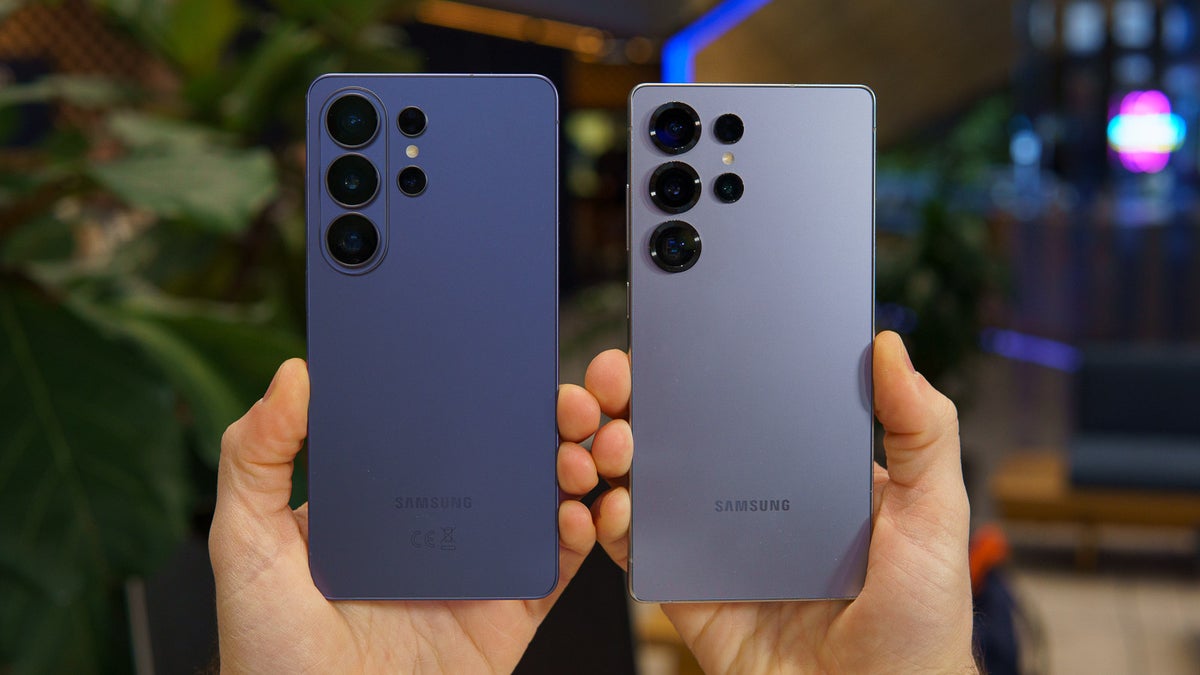
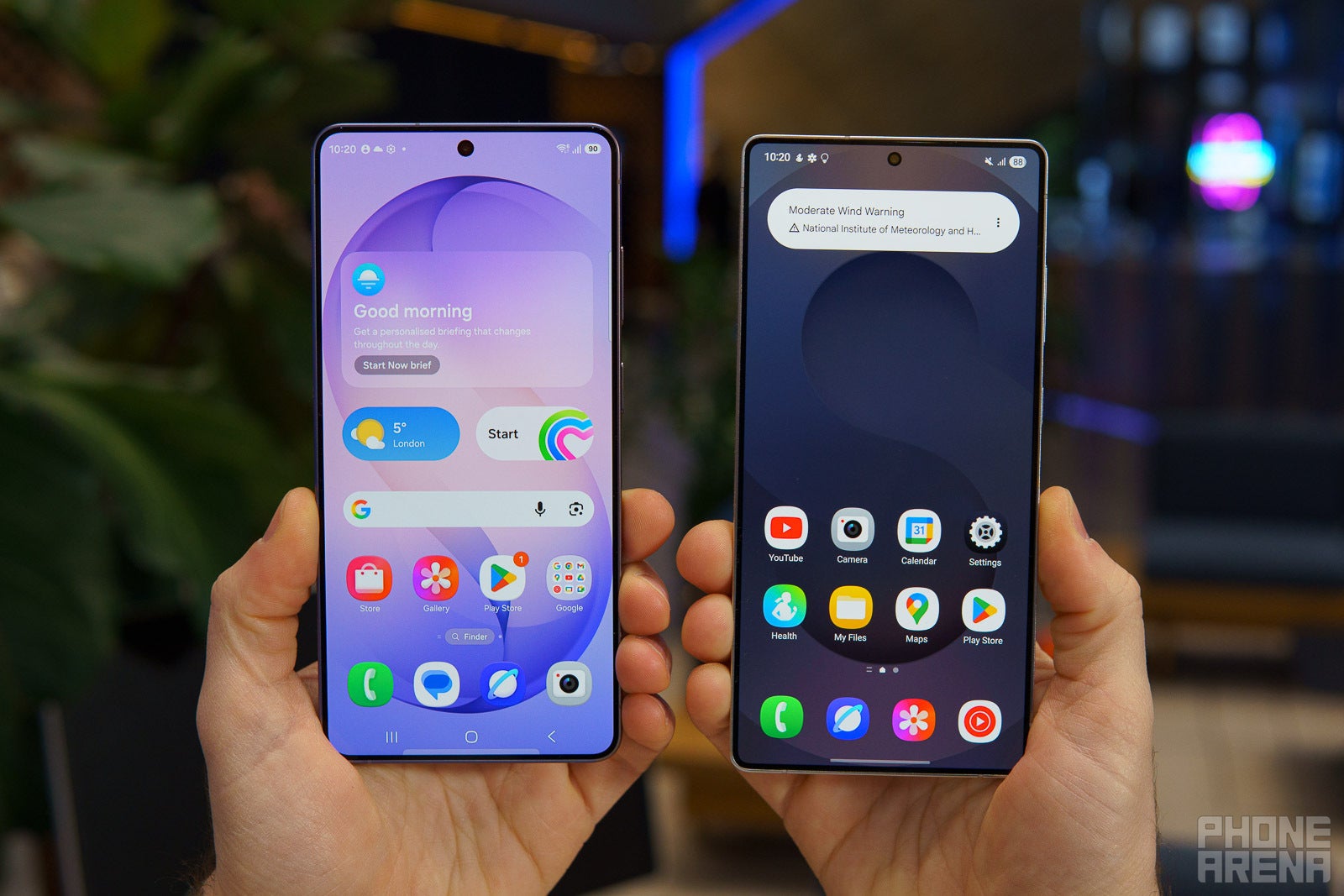
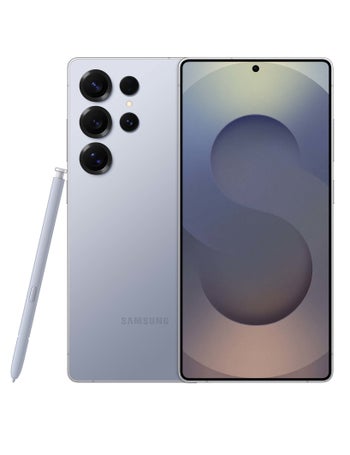
The Galaxy S26 Ultra on the left and S25 Ultra on the right. | Image by PhoneArena
Samsung's new Galaxy S26 Ultra comes with a more powerful chipset, a built-in privacy display, faster charging and improved camera optics, but are those changes enough to interest Galaxy S25 Ultra owners?
The Galaxy S25 Ultra is no slouch itself. It remains one of the strongest Android flagships on the market, not that far behind its successor. The Snapdragon 8 Elite is more than capable, the display is one of the best and the brightness numbers have not changed, plus it has reliable battery life, and it tops the camera performance charts.
So, is the S26 Ultra worthy of being next in line?
Galaxy S26 Ultra vs Galaxy S25 Ultra differences:
| Galaxy S26 Ultra | Galaxy S25 Ultra |
|---|---|
| Snapdragon 8 Elite Gen 5 for Galaxy (all regions) | Snapdragon 8 Elite for Galaxy |
| 6.9" Dynamic AMOLED 2X, up to 2,600 nits | 6.9" Dynamic AMOLED 2X, up to 2,600 nits |
| Gorilla Glass Armor 2 | Gorilla Glass Armor 2 |
| Built-in Privacy Display mode | No Privacy Display mode |
| 200 MP wide with updated optics | 200 MP wide |
| 50 MP 5x captures more light with an f/2.9 aperture | 50 MP 5x with f/3.4 aperture |
| Up to 60W (Super Fast Charging 3.0) | 45W |
| Up to 25W (Super Fast Wireless Charging) | 15W |
| 7.9 mm, 214 g | 8.2 mm, 218 g |
| Aluminum frame | Titanium frame |
Table of Contents:
Read more:
Design and Size
A lighter build and a new look for the cameras
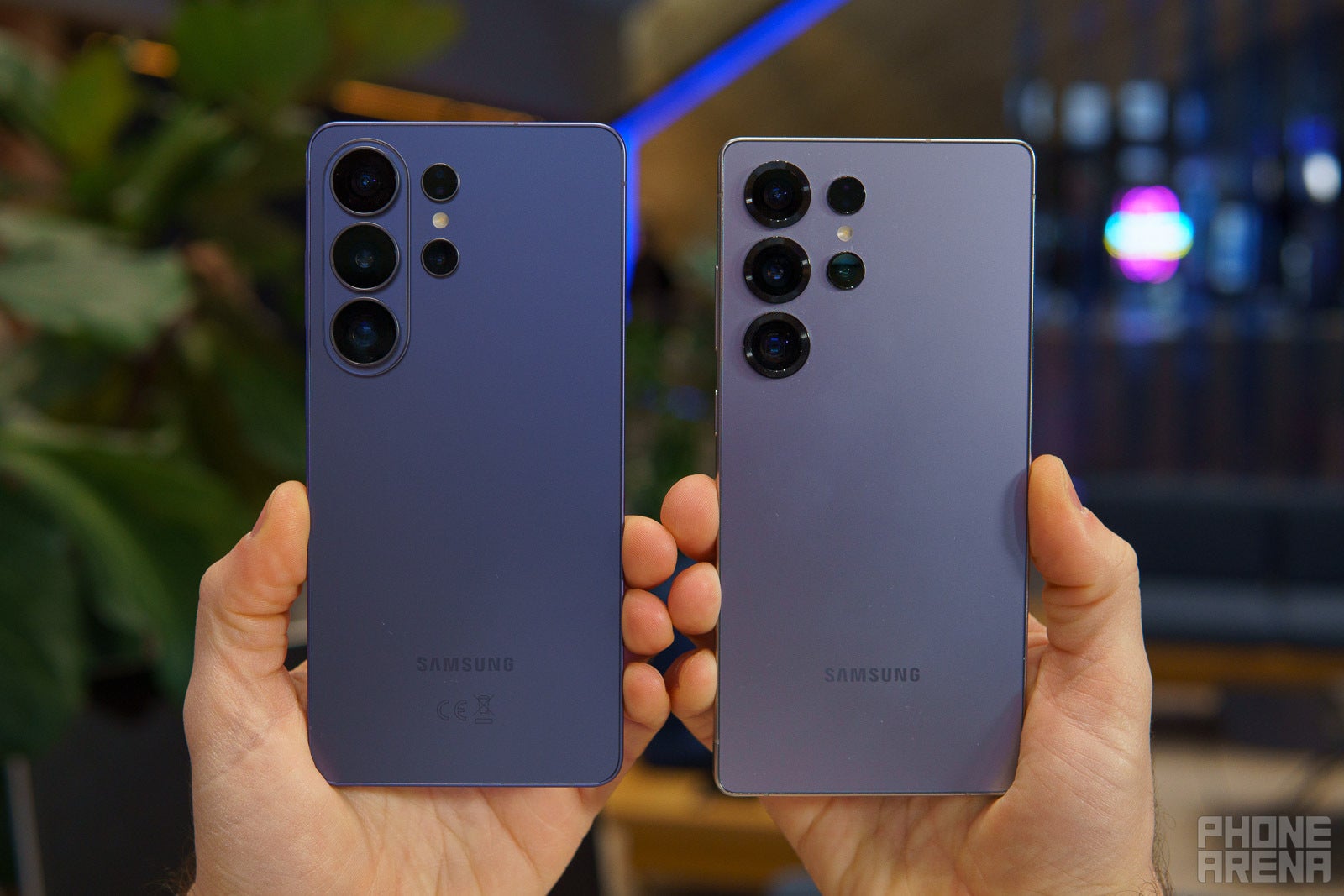
Thinner, lighter, and cleaner on the back. The S26 Ultra makes better what was already great. | Image by PhoneArena
Last year, Samsung massively reduced the thickness and weight of the Ultra model, so I didn’t expect the company to push even further on that front with this year’s model. Yet it has. Samsung has managed to reduce the thickness to just 7.9 mm, down from 8.2 mm on the S25 Ultra (8.6 mm on the S24 Ultra). The new model also weighs only 214 grams, 4 grams less than the S25 Ultra.
All of these reductions might not sound impressive at first, but keep in mind that these changes were one of the S25 Ultra’s strongest selling points back in 2025, and already massively impressive.
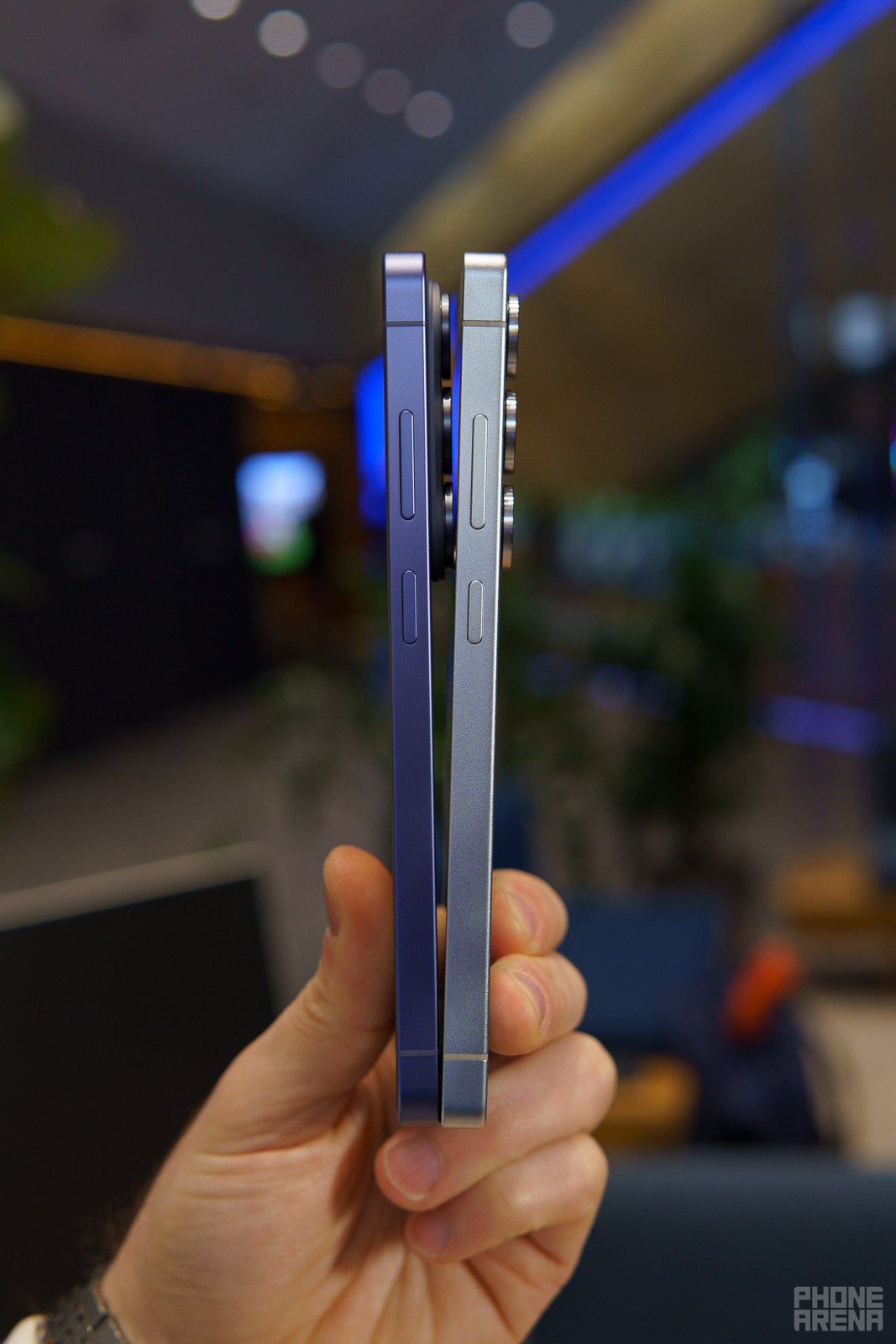
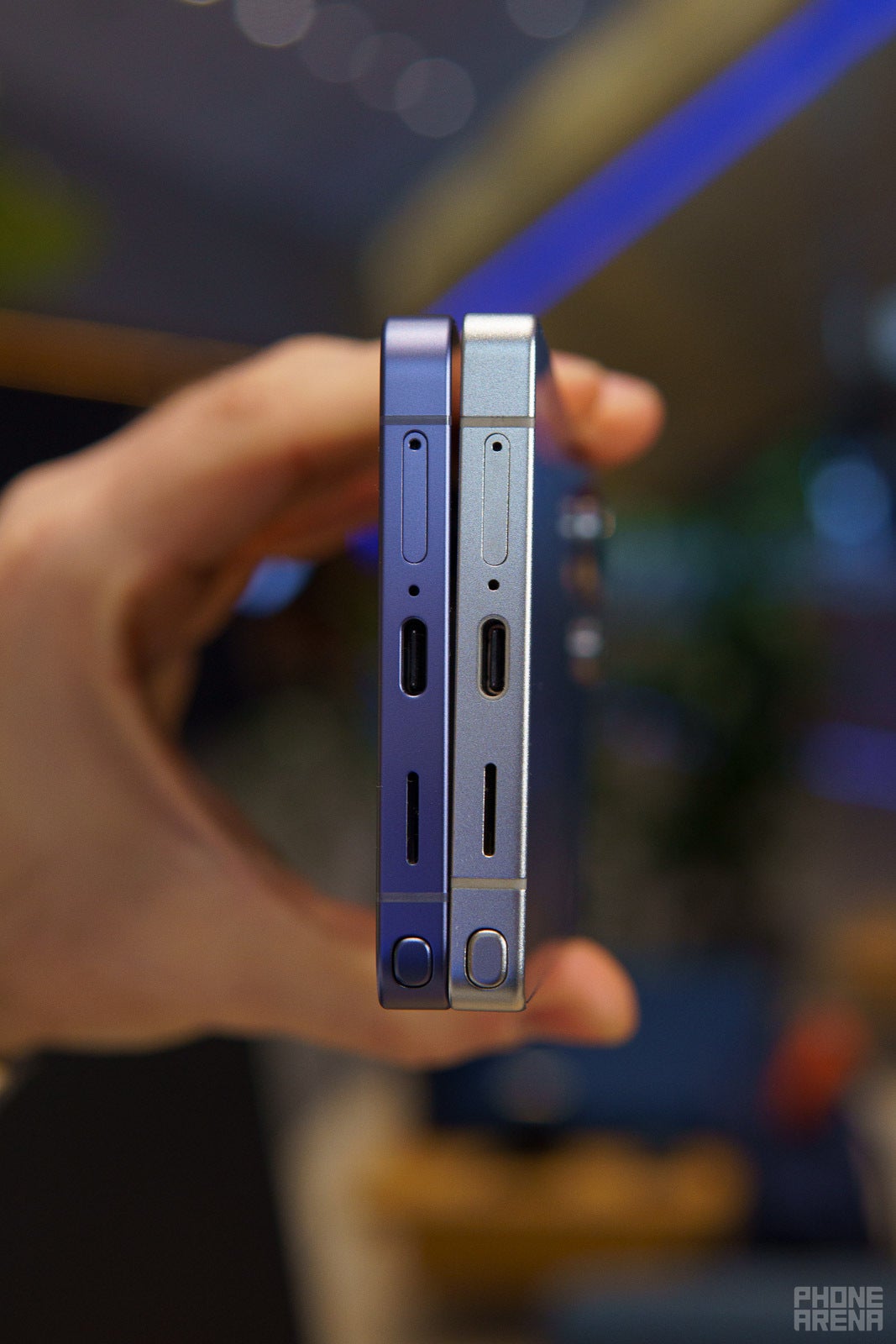
| Galaxy S26 Ultra | Galaxy S25 Ultra |
|---|---|
| Thickness 7.9 mm | Thickness 8.2 mm |
| Dimensions Around 163.6 x 78.1 mm | Dimensions 162.8 x 77.6 mm |
| Weight Around 214 grams | Weight 218 grams |
However, the more visibly striking change will be the new design of the back panel. More specifically, the cameras are not inside a camera island, distinguishing the new model from the S25 Ultra, which comes with the “floating” cameras.
If you are an avid fan of the S Pen, rest assured—it is still here. Also, the frame keeps its squared-off profile with rounded corners, and the phone remains IP68-rated for water and dust resistance.
Display Differences
Same 2,600 nits, but Privacy Display adds a real hardware shield for your screen. | Image by PhoneArena
It is great for marketing when you can boast about higher numbers, like 3,000 nits of peak brightness, for example. But Samsung is not doing that with the S26 Ultra. While the phone comes with the same peak brightness as its predecessor, it introduces a cool new feature—Privacy Display.
| Galaxy S26 Ultra | Galaxy S25 Ultra |
|---|---|
| Size 6.9" | Size 6.9" |
| Brightness 2600 nits (peak) | Brightness 2600 nits (peak) |
When enabled, Privacy Display narrows side viewing angles so the screen is harder to read from off-axis while keeping the image clear head-on. Samsung positions this as a built-in privacy layer rather than a software trick, and it can be customized to activate in specific moments like typing a PIN or when opening specific apps. Users can also choose between different strengths.
Everything else about the Ultra’s display will sound familiar to fans: 1440 x 3120 pixel resolution, adaptive 1 to 120 Hz refresh rate, and the same anti-reflective coating that the Ultra is now known for.
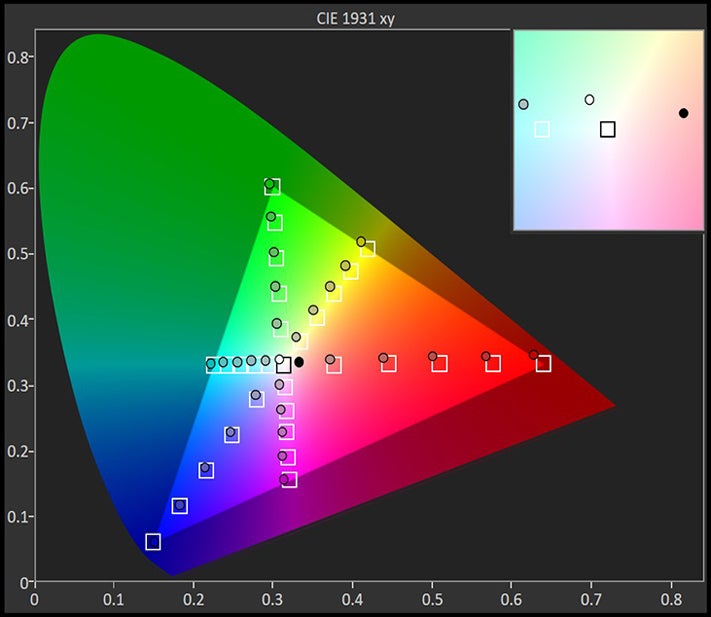
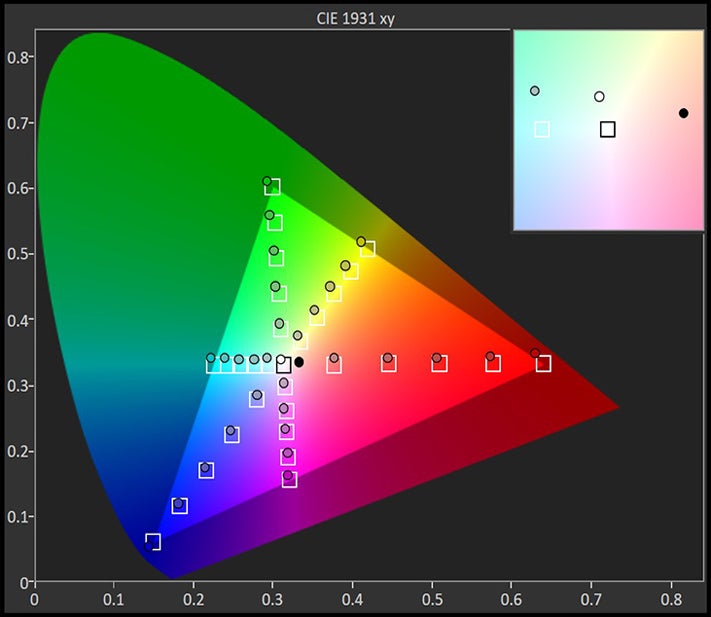
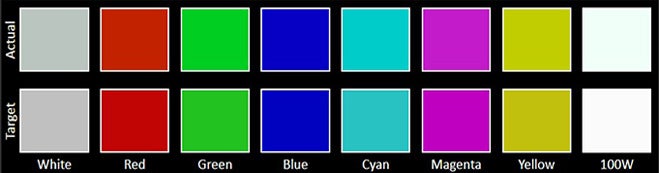
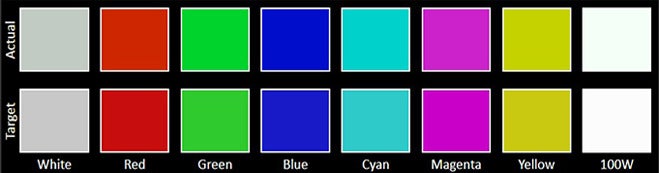


One slight disappointment is the unchanged peak screen brightness. Samsung claims the screen reach 2,600 nits, but we guess that's tested against a tiny white spot. On our standardized 20% white level test (the rest of the screen is black), the S26 Ultra scored in the 2,400 nits vicinity, on par with the S25 Ultra. However, other phones like the Pixel 10 Pro XL can hit noticeably higher numbers, reaching 2,800 nits or even higher, which helps for outdoor use.
Performance
Snapdragon for all regions, better heat management
The S26 Ultra comes with Qualcomm’s Snapdragon 8 Elite Gen 5 for Galaxy no matter where you buy it from. Samsung still refrains from splitting the chipsets with Exynos versions for the Ultra. That’s not the case with the S26 and S26 Plus, which are Snapdragon in the US, China, and Japan, and Exynos 2600 in Europe.
There is also a redesigned vapor chamber and other small improvements to help the S26 Ultra maintain peak performance levels for longer than the S25 Ultra.
| Galaxy S26 Ultra | Galaxy S25 Ultra |
|---|---|
| Chip Qualcomm Snapdragon 8 Elite Gen 5 (for Galaxy) | Chip Qualcomm Snapdragon 8 Elite (for Galaxy) |
| Process 3 nm | Process 3 nm |
| RAM, Storage 12/256 GB 12/512 GB --- 16/1 TB LPDDR5X RAM UFS 4.0 storage | RAM, Storage 12/256 GB 12/512 GB 12/1 TB 16/1 TB LPDDR5X RAM UFS 4.0 storage |
When it comes to software, the S26 Ultra launches with Android 16 and One UI 8.5, backed by Samsung’s seven-year OS and security update commitment.
CPU Performance Benchmarks:
The S26 Ultra scores a nearly 20% improvement in single-core CPU performance, the type of benchmark that corresponds closest to app launch times and perceived daily use speed. That's a big improvement. Multi-core CPU performance, which is responsible for more demanding tasks, is also up by a similar margin.
Geekbench 6: A high single-core score is what makes your phone feel snappy during everyday tasks like opening apps, typing and browsing. The multi-core score matters most when doing heavier work like video editing or gaming.
The Galaxy S26 Ultra performs noticeably better than the Galaxy S25 Ultra in the Geekbench 6 test, achieving a serious advantage in both the single- and multi-core tests. This lead in raw performance means that the Galaxy S26 Ultra will feel faster and smoother for longer, making it the more future-proof device.
AI Quantized: This test measures how efficiently your phone’s 'brain' handles AI tasks, ensuring that features like live translation and smart photo editing feel instant and fluid without draining your battery.
The Galaxy S26 Ultra also performs significantly better than the Galaxy S25 Ultra in AI-processing. As indicated by the Geekbench AI results above, the Galaxy S26 Ultra is much better in on-device processing, reaching well over 6,000 points in the test, while the Galaxy S25 Ultra achieves less than 5,000 points.
GPU Performance:
Wild Life Extreme is a heavy graphics workload used to measure a device's sustained GPU performance and thermal throttling. It uses older mobile rendering techniques and is friendly to older or lower-end mobile devices.
The Galaxy S26 Ultra is also a true gem for mobile gamers, as it achieves some of the highest results we've seen in the 3D Mark Extreme stress test. The S26 Ultra starts with a burst of performance, hitting nearly 8,000 points on 3DMark Wildlife Extreme, but it also quickly throttles to less than half that score. After 20 minutes of heavy-duty gaming, the S26 Ultra is down to 3,741 points. That's still a solid score compared to the nearly 3,000 points of the previous generation, a leap of nearly 20%.
Steel Nomad Light Stress Test: Measures your phone’s "gaming stamina" by comparing its peak speed (High) against its throttled speed after it heats up (Low), revealing whether your performance will stay smooth or start lagging during a long session. It loads heavier, more modern effects than Wild Life Extreme and is more in line with current games.
When we move to a more demanding test like Steel Nomad, the Galaxy S26 Ultra continues its dominance over the Galaxy S25 Ultra. Both the peak performance of the new phone and its sustained, throttled performance are better than the ones achieved by the Galaxy S25 Ultra, revealing that the newer phone is logically a better choice for heavier games and more demanding graphics tasks.
This measures Ray Tracing performance because this advanced technology creates the hyper-realistic reflections and shadows found in next-gen titles like Arena Breakout. Even if you don't play games with ray tracing, a high score here means your phone has a "best-in-class" cooling system.
In our final test, Solar Ray, which also happens to be the most demanding one thanks to its reliance on hardware ray tracing, the Galaxy S26 Ultra unsurprisingly achieves a better result than the Galaxy S25 Ultra. This is important if you play the latest and heaviest 3D games available out there.
Storage speed
Both the Galaxy S26 Ultra and the Galaxy S25 Ultra arrive with the same memory/storage combinations. The 256 GB and 512 GB models come with 12 GB RAM, while the 1 TB model comes with 16 GB RAM.
Storage tests measure how quickly your phone can move data. Random read and write show how fast your phone can find and move thousands of tiny, scattered files. This is the most important metric for an average user because it’s what happens when you open an app, check your notifications, or search through your photo gallery. Sequential read and write measure the speed of moving one giant, continuous file. You’ll notice this when you are saving a 4K video you just recorded or downloading a massive game update.
In terms of speed, the Galaxy S26 Ultra achieves higher random read and write speeds, which helps it feel generally snappier, but mostly when accessing files on your phone, opening an app, or multitasking quickly. In sequential reading and writing, both devices perform quite similarly; you wouldn't notice a massive difference when interacting with large files.
Software
One UI 8.5 is the software of choice on the Galaxy S26 series, and besides seven years of software support, this one comes with many key new features, including important visual changes.
First, the software scores a new floating app bar at the bottom, which should improve the readability. Next up, One UI 8.5 now offers even more customization options and lets you personalize the Quick Settings panel even more by reordering and removing existing controls.
If you set a picture of a person or a pet as your lock screen wallpaper, the layout will automatically move around so that neither the clock nor the widgets obscure key parts of the image. There are a few extra customization options for the lock screen clock, too.
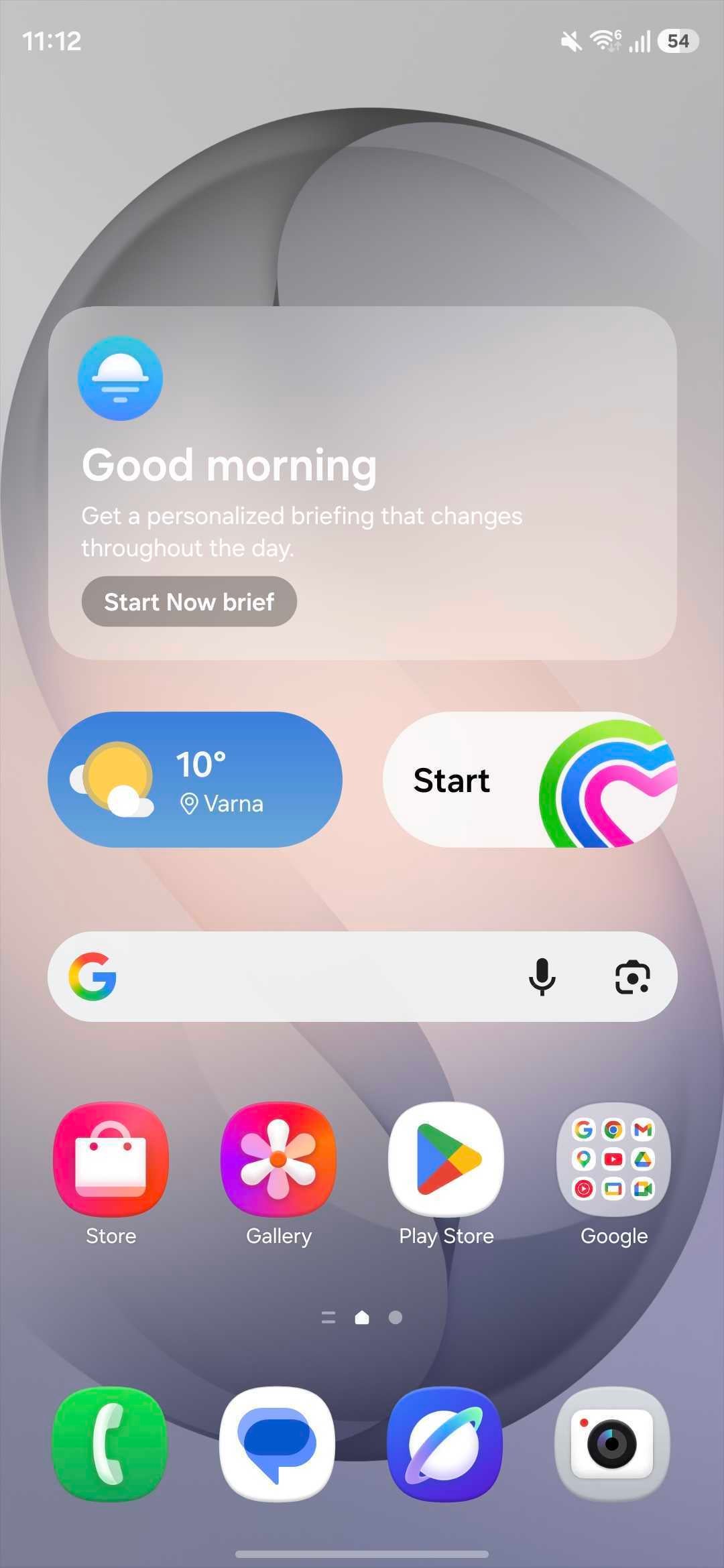
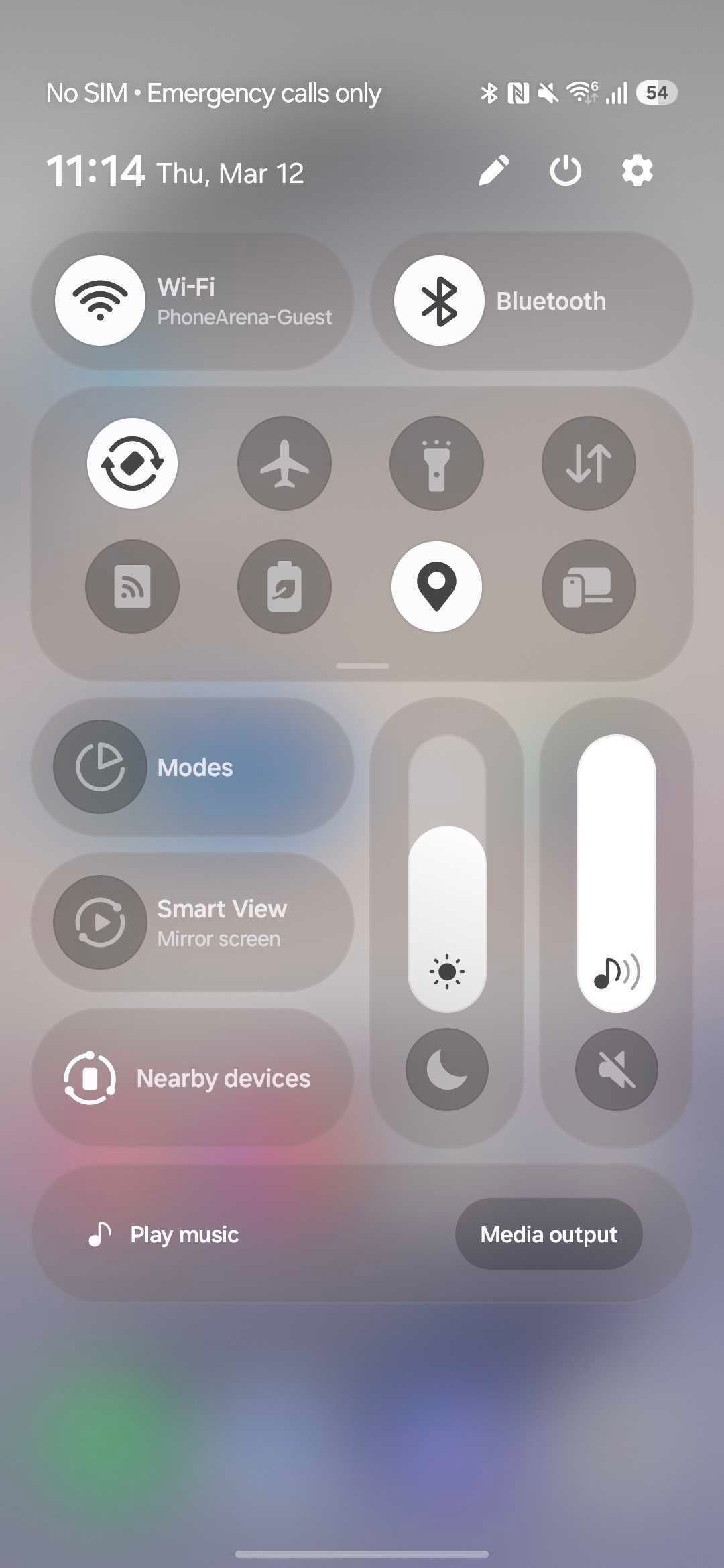
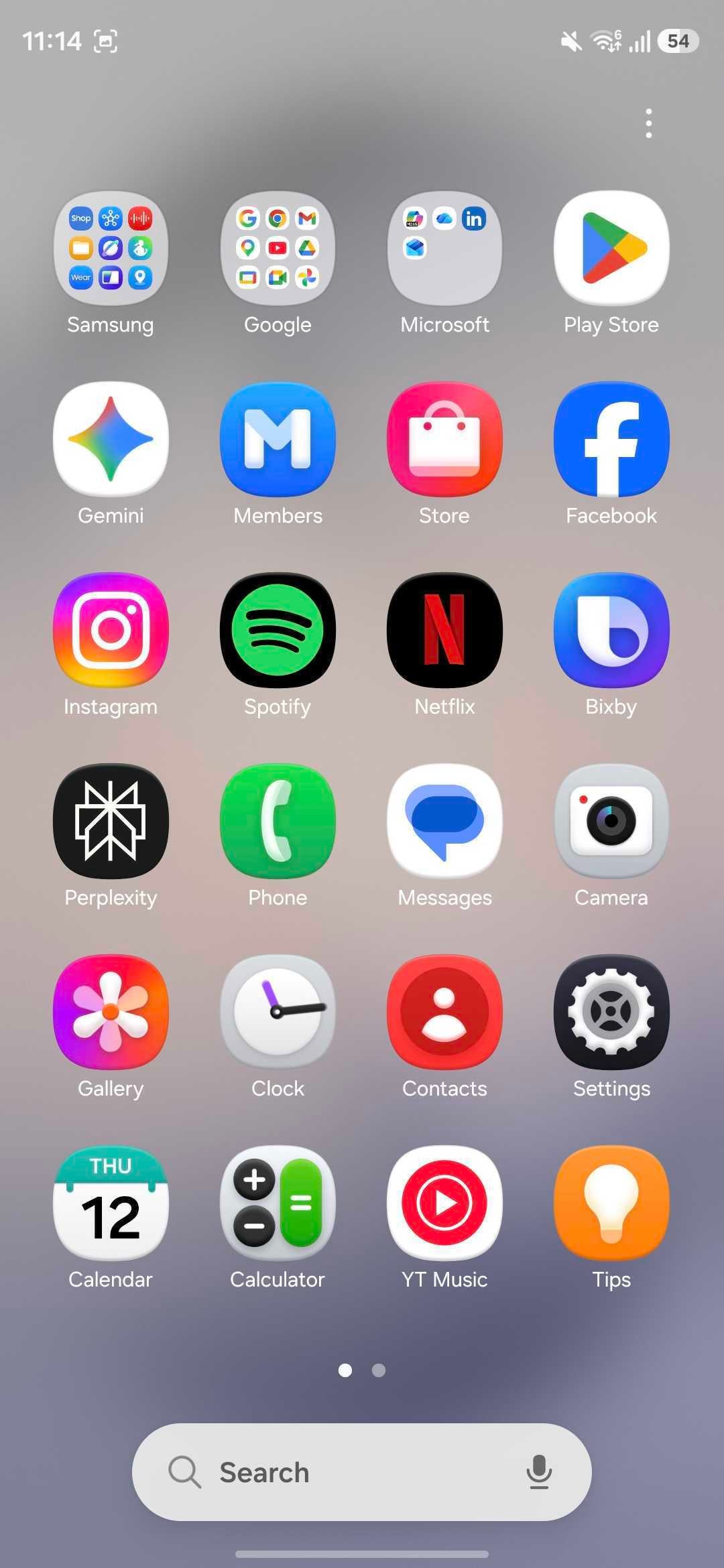
One UI 8.5 screenshots | Images by Screenshots by PhoneArena
One UI 8.5 screenshots
Galaxy AI has been upgraded with continuous image generation, which lets you generate several images without stopping and pick from the ones you want afterward.
Call Screening is another new feature that will let Galaxy AI answer calls for you and see who's calling and for what reason. You will be provided with a transcript and only then decide if you want to answer the call.
Bixby can now understand you better when you talk to the assistant in your own words. This lets you use it to find specific settings or features without having to sift through numerous menus. It now has an easy way of accessing your conversation history with Bixby.
The Weather app has scored a more detailed new widget that will showcase a graph of any upcoming precipitation that is expected. Your daily alarms can also show the current weather as a background when they ring, which is a neat quality-of-life upgrade.
Samsung has also enhanced the battery info menu, making it easier to check the remaining battery life left, the battery usage, as well as your charging status. There are also two power-saving modes now: Standard, which is more temperate, and Maximum, which disables all non-essential features to boost battery life.
Camera
Same image sensors but with more capable optics
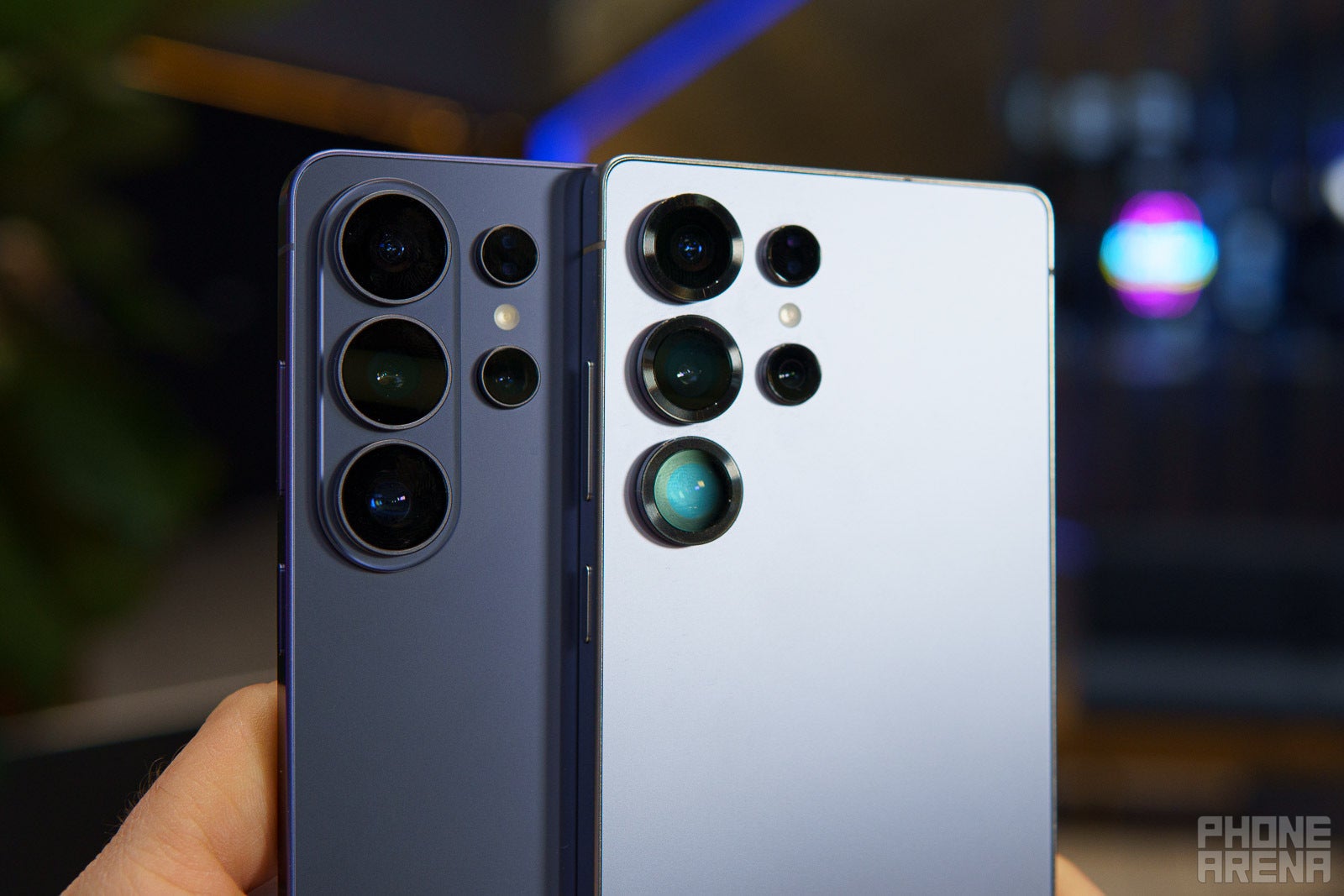
Same camera layout, brighter lenses and stronger video tools make the S26 Ultra a creator upgrade. | Image by PhoneArena
The S26 Ultra’s cameras will sound very familiar: a 200 MP main camera, a 50 MP ultrawide, a 10 MP 3x telephoto and a 50 MP 5x telephoto.
But don’t be quick to judge Samsung for not changing anything. The 5x telephoto and main cameras now come with new lenses that capture more light. With more light hitting those sensors, we should see a visible improvement to the image quality, especially in darker conditions. The jump will be especially noticeable on the 5x telephoto.
| Galaxy S26 Ultra | Galaxy S25 Ultra |
|---|---|
| Main 200 MP, f/1.4 24 mm 1/1.3" sensor size | Main 50 MP, f/1.7 24 mm 1/1.3" sensor size |
| Ultrawide 50 MP, f/1.9 13 mm 1/2.5" sensor size | Ultrawide 50 MP, f/1.9 13 mm 1/2.5" sensor size |
| 5x Telephoto 50 MP, f/2.9 5X zoom (111mm) 1/2.52" sensor size | 5x Telephoto 50 MP, f/3.4 5X zoom (111mm) 1/2.52" sensor size |
| 3x Telephoto 10 MP, f/2.4 3x zoom (67mm) 1/3.94" sensor size | 3x Telephoto 10 MP, f/2.4 3x zoom (67mm) 1/3.52" sensor size |
Samsung is also leaning harder into creator-focused video tools this year. The Galaxy S26 Ultra supports 8K recording at 30 fps and adds 4K recording at up to 120 fps in Pro Video mode. It also introduces support for APV, which stands for Advanced Professional Video. APV is a new high-quality video format designed to preserve more detail, dynamic range, and color information during recording, giving users more control during their workflow.
Galaxy S26 Ultra vs Galaxy S25 Ultra camera samples:
The S26 Ultra camera fixes my biggest gripe with the camera of its predecessor — its consistently low exposure. Photos from the S26 Ultra look brighter and more cheerful.
In low light, the faster aperture on the main and 5x cameras results in better detail. Basically, the S26 Ultra is much more efficient with light. When I put them head-to-head, the S26 Ultra kept the images cleaner. Both shot at the same shutter speed, but the newer model uses a lower ISO for a cleaner shot.
You see that same edge with the 5x zoom, too. But the real "wow" factor is in the dark: both phones capture a ton of light at night, but the S26 Ultra snaps the photo almost twice as fast as the S25. That extra speed is the difference between a sharp late-night shot and a blurry mess.
Battery Life and Charging
Same battery capacity, but with faster wired and wireless charging
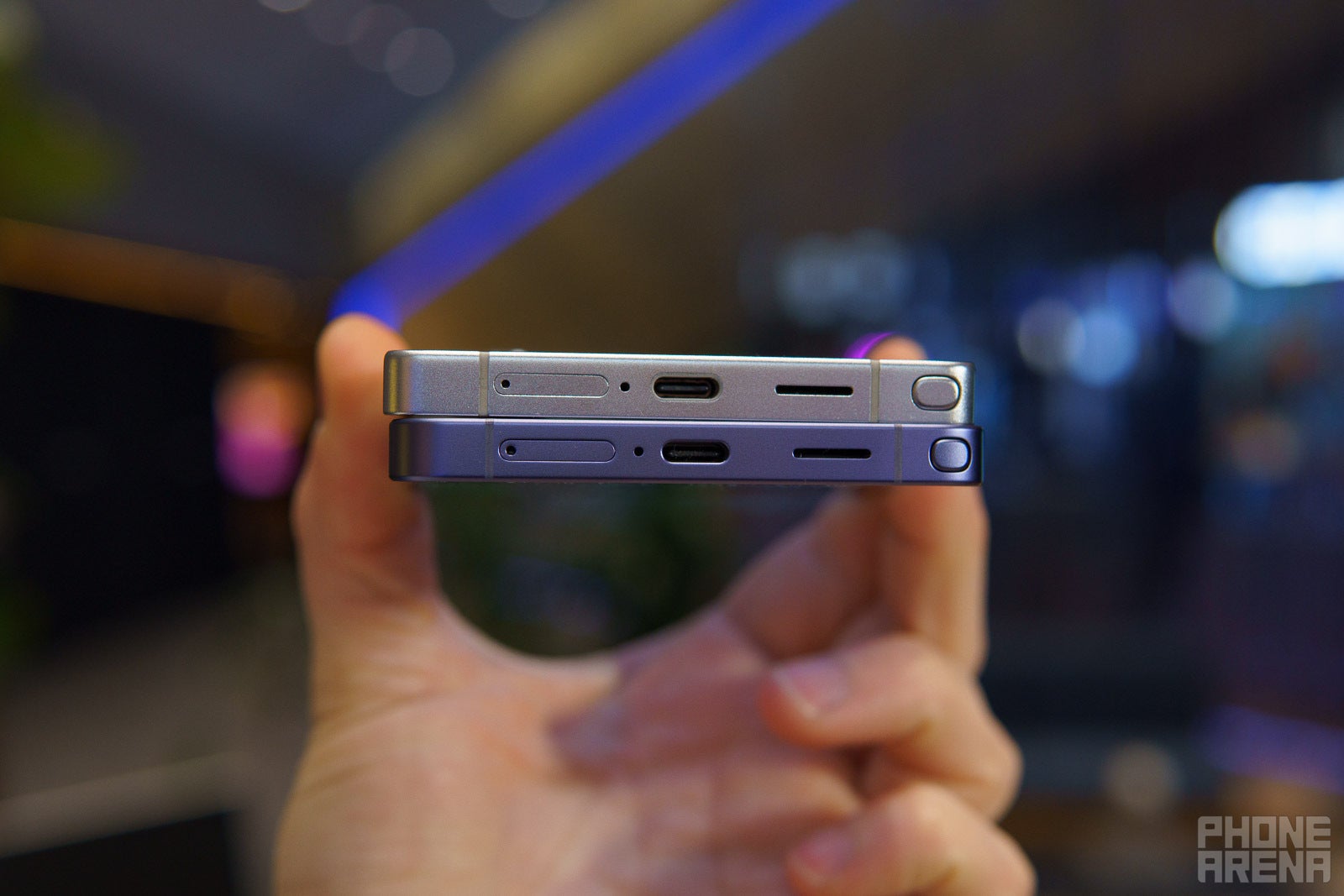
Same 5,000 mAh, but 60W wired and 25W wireless make the S26 Ultra much quicker to top up. | Image by PhoneArena
For yet another year, Samsung has decided to keep the same 5,000 mAh battery inside the Ultra, so if we see any improvements, they will most likely come from the new chipset.
However, the difference between the S26 Ultra and the S25 Ultra is that the new model comes with Samsung’s Super Fast Charging 3.0, which basically means you get 60W wired charging. Samsung claims this is enough to charge the S26 Ultra to 75% in roughly 30 minutes under “optimal conditions.”
PhoneArena Battery and Charging Test Results:
Wireless charging also takes a major step forward to up to 25W vs 15W on the predecessor, alongside Wireless PowerShare for reverse wireless charging (no changes there).
| Galaxy S26 Ultra | Galaxy S25 Ultra |
|---|---|
| Battery size 5,000 mAh | Battery size 5,000 mAh |
Charging speeds 60W wired 25W wireless charging USB-C 3.2 | Charging speeds 45W wired 15W wireless charging USB-C 3.2 |
There is still no built-in magnetic alignment system. If you want that on an Android, you are still limited to case-based solutions or a Google Pixel 10.
Specs Comparison
|
|
| Samsung Galaxy S26 Ultra | Samsung Galaxy S25 Ultra |
| Dimensions | |
|---|---|
| 163.6 x 78.1 x 7.9 mm (~12.33 mm with camera bump) | 162.8 x 77.6 x 8.2 mm (~9.1 mm with camera bump) |
| Weight | |
| 214.0 g | 218.0 g |
| Size | |
|---|---|
| 6.9-inch | 6.9-inch |
| Type | |
| Dynamic AMOLED, 120Hz | Dynamic AMOLED, 120Hz |
| System chip | |
|---|---|
| Snapdragon 8 Elite Gen 5 for Galaxy SM8850-1-AD (3 nm) | Snapdragon 8 Elite for Galaxy SM8750-AB (3 nm) |
| Memory | |
| 12GB (LPDDR5X)/256GB (UFS 4.0) 12GB/512GB 16GB/1024GB |
12GB (LPDDR5X)/256GB (UFS 4.0) 12GB/512GB 12GB/1024GB |
| Type | |
|---|---|
| 5000 mAh | 5000 mAh |
| Charge speed | |
| Wired: 60.0W Wireless: 25.0W |
Wired: 45.0W Wireless: 15.0W |
| Main camera | |
|---|---|
| 200 MP (OIS, PDAF) Sensor name: Samsung ISOCELL HP2 Aperture size: F1.4 Focal length: 23 mm Sensor size: 1/1.3" Pixel size: 0.6 μm | 200 MP (OIS, Laser and PDAF) Sensor name: Samsung ISOCELL HP2 Aperture size: F1.7 Focal length: 24 mm Sensor size: 1/1.3" Pixel size: 0.6 μm |
| Second camera | |
| 50 MP (Ultra-wide, PDAF) Sensor name: Samsung ISOCELL JN3 Aperture size: F1.9 Sensor size: 1/2.5" Pixel size: 0.7 μm | 50 MP (Ultra-wide, PDAF) Sensor name: Samsung ISOCELL JN3 Aperture size: F1.9 Pixel size: 0.7 μm |
| Third camera | |
| 10 MP (Telephoto, OIS, PDAF) Sensor name: Sony IMX754 Optical zoom: 3.0x Aperture size: F2.4 Sensor size: 1/3.94" Pixel size: 1.12 μm | 10 MP (Telephoto, OIS, PDAF) Sensor name: Sony IMX754 Optical zoom: 3.0x Aperture size: F2.4 Focal Length: 67 mm Sensor size: 1/3.52" Pixel size: 1.12 μm |
| Fourth camera | |
| 50 MP (Telephoto, Periscope, OIS, PDAF) Sensor name: Sony IMX854 Optical zoom: 5.0x Aperture size: F2.9 Focal Length: 115 mm Sensor size: 1/2.52" Pixel size: 0.7 μm | 50 MP (Telephoto, Periscope, OIS, PDAF) Sensor name: Sony IMX854 Optical zoom: 5.0x Aperture size: F3.4 Focal Length: 111 mm Sensor size: 1/2.52" Pixel size: 0.7 μm |
| Front | |
| 12 MP (PDAF, HDR) | 12 MP (PDAF, HDR) |
See the full
Samsung Galaxy S26 Ultra vs Samsung Galaxy S25 Ultra specs comparison
or compare them to other phones using our
Phone Comparison tool
Summary
Great upgrades, but not FOMO worthy. The S26 Ultra is a strong successor, not a must. | Image by PhoneArena
The Galaxy S26 Ultra brings a few notable upgrades like faster charging, a faster processor that’s much better at AI, and a new and unique privacy feature. We also have improved optics for the main and 5x telephoto cameras. All great stuff!
Now, whether the new model is worth upgrading to if you own the S25 Ultra—I don’t think so. We no longer live in an age where each new generation can justify such an early upgrade. It doesn’t look like there is any danger of FOMO with the S26 Ultra.
Still, I deem the Galaxy S26 Ultra a worthy successor to the S25 Ultra, and for anyone entering the Ultra lineup now, it is undoubtedly worth the purchase. You will get the cleanest, most complete version of Samsung’s 2026 flagship vision, and it arrives at the same $1,299 starting price, which is arguably the best part about this release.


Related Content



Popular stories
Latest News
Things that are NOT allowed:
To help keep our community safe and free from spam, we apply temporary limits to newly created accounts: