Galaxy S26 Ultra could offer four and a half reasons to upgrade and one reason to steer clear
Leaker posts a detailed comparison of the Galaxy S25 Ultra and Galaxy S26 Ultra.
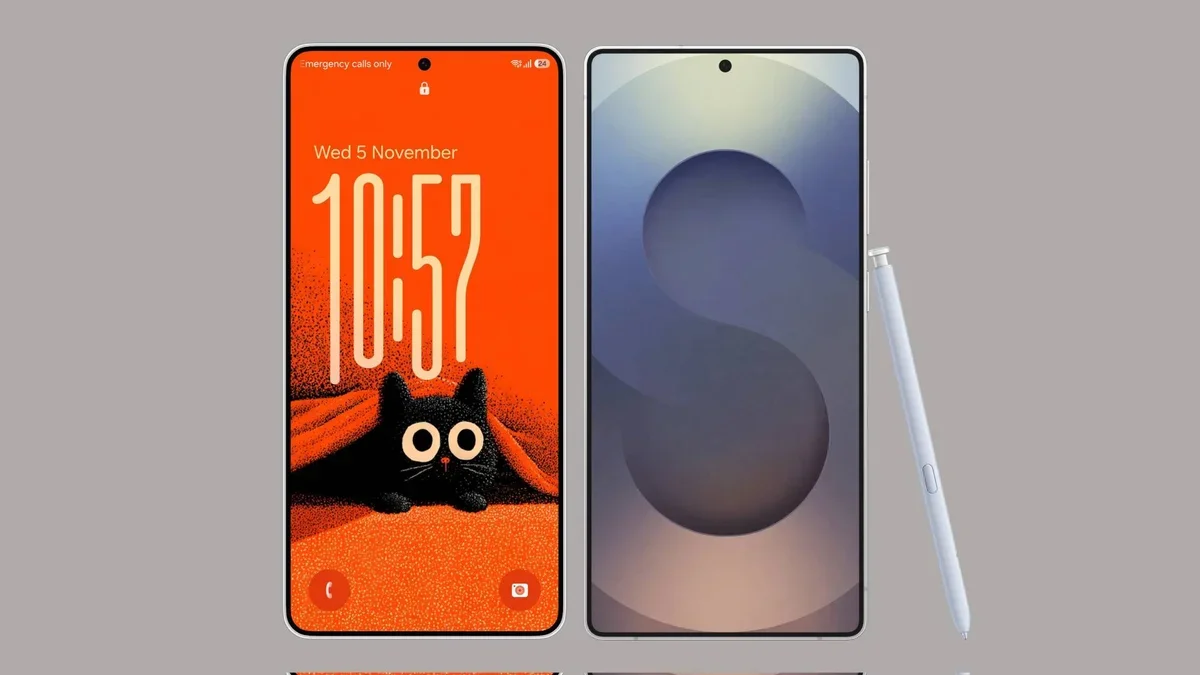
A render showing how the Samsung Galaxy S26 Ultra compares to the S25 Ultra | Image Credit - Ice Universe
Hardly any reason to upgrade from the Galaxy S25 Ultra
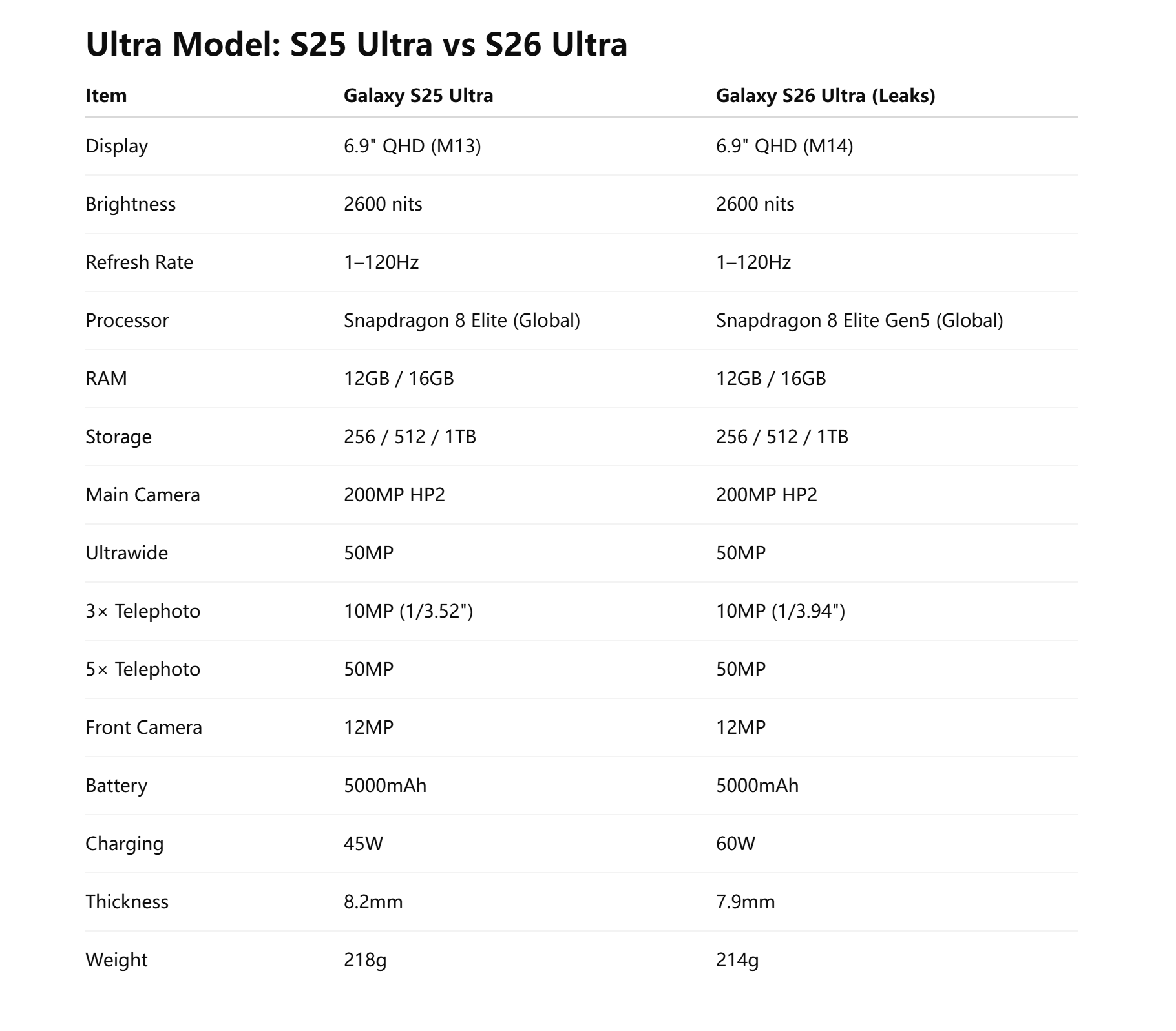
Galaxy S25 Ultra vs Galaxy S26 Ultra specs. | Image Credit - Ice Universe
The Galaxy S26 Ultra will reportedly have a 6.9-inch Quad High Definition (QHD) display just like the Galaxy S25 Ultra, but the screen will be made of the newer M14 material.
Like other next-gen Android flagships, the Galaxy S26 Ultra will be fueled by the Snapdragon 8 Elite Gen 5, but RAM and storage options will stay the same at 12GB and 16GB, and 256GB, 512GB, and 1TB, respectively.
Battery capacity remains 5,000mAh, though charging speed could increase from 45W to 65W.
The thickness is expected to be trimmed from 8.2mm to 7.9mm, and the weight will also go down from 218 grams to 214 grams.
Obvious specs aren't everything?
While the leaked spec sheet suggests the Galaxy S26 Ultra will be much like the Galaxy S25 Ultra, the full picture is in the hidden, seemingly unimportant details.
According to previous leaks, the device will likely feature the Color Filter on Encapsulation (CoE) technology to make the screen thinner and perceptibly brighter.
Similarly, while the RAM count will remain unchanged, Samsung is rumored to use low-power double data rate 5X (LPDDR5X) memory with a speed of up to 10.7 gigabits per second (Gbps). This will not just make the device feel speedy but also improve camera performance.
The device's slender profile will make it feel lighter in your hands, and the leaner dimensions might be why Samsung couldn't fit a bigger battery or better sensors.
If you owned the Galaxy S25 Ultra, would you upgrade to the S26 Ultra?
1689 Votes
Looks like Samsung won't give me any reason to do that.
75.78%
Only if the price remains the same.
13.38%
Yes.
10.83%
The incremental upgrade may come at a higher cost
Despite not being a dramatic upgrade, the Galaxy S26 Ultra may cost more than the Galaxy S25 Ultra, which is already outrageously expensive at a starting price of $1,299.99. With component prices rising, Samsung won't be the only smartphone company raising the price of its flagship phone, though. While this may make consumers more receptive, the increase could still hamper the phone's success, given the largely incremental nature of the upgrades.


Popular stories
Latest News

Things that are NOT allowed:
To help keep our community safe and free from spam, we apply temporary limits to newly created accounts: