Every product we review or recommend is thoroughly tested by our in-house experts in real-world conditions, following our
review methodology
and
ethics statement
to ensure honest, independent, and data-driven results.
The RedMagic 11 Pro still sits on top of our review ratings sheet. That's a feat in and of itself, especially for a gaming phone. That's the reason I was so excited when RedMagic came up with a new addition to the lineup—the RedMagic 11 Air.
I know what you're all thinking. The "Air" moniker is an attempt to jump on the thin-phone bandwagon and get some hype out of the name itself. But the RedMagic 11 Air is more than that—it's a sleek and attractive gaming device that offers an amazing bang for your buck starting at just $499.
At this price point, the RedMagic 11 Air is cheaper even than Samsung A-series devices and the same price as a Pixel A-series phone. The difference is that this one comes with a huge 7,000 mAh battery, a cool design, and a fast, albeit year-old, chipset. Let's dig in and see what $499 can buy you if you decide to head to the RedMagic online store and get a RedMagic 11 Air.
RedMagic 11 Air
What we like
Sleek and attractive design
Affordable
Snappy performance
What we don't like
No wireless charging
Ultrawide camera not great
7.2
PhoneArena Rating
6.5
Price Class Average
Battery Life
8.1
7.7
Photo Quality
6.3
6.2
Video Quality
5.2
4.9
Charging
6.9
7.1
Performance Heavy
8
5.6
Performance Light
8.7
6.7
Display Quality
8
7.5
Design
8
6.8
Wireless Charging
0
5.2
Biometrics
7
6.9
Audio
7
6.4
Software
8
6.5
Why the score?
This device scores 9.7% better than the average for this price class, which includes devices like the Motorola Moto G Stylus 5G (2026), Xiaomi Poco X8 Pro Max and Nothing Phone (4a) Pro
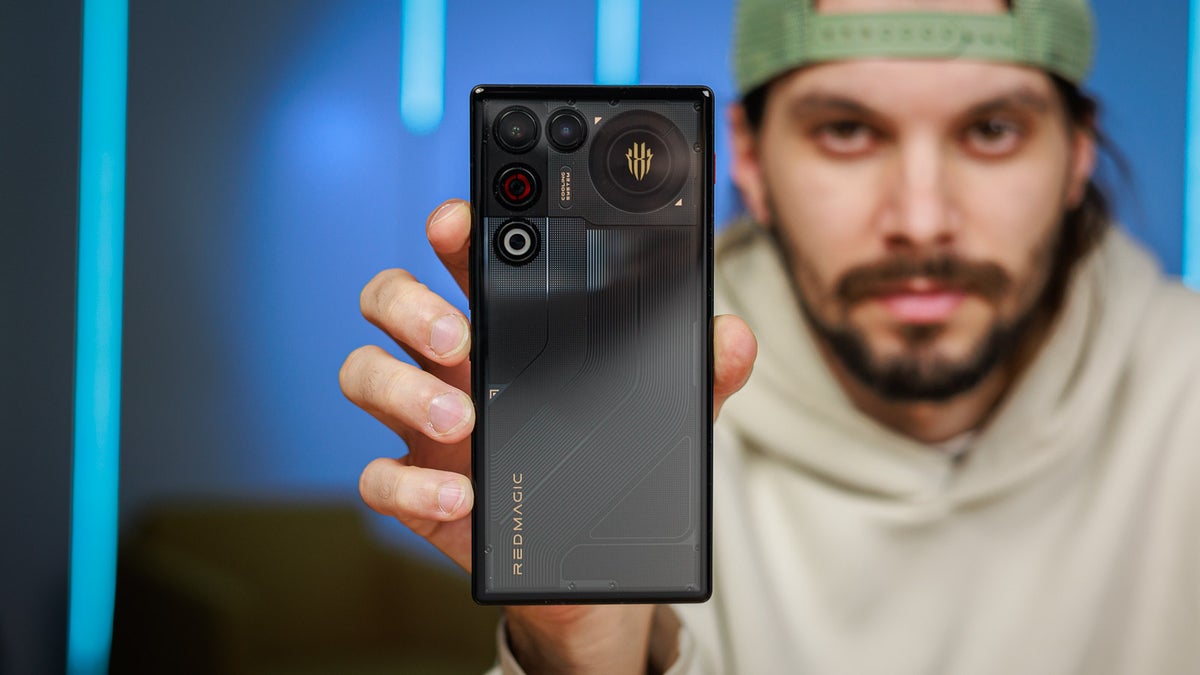
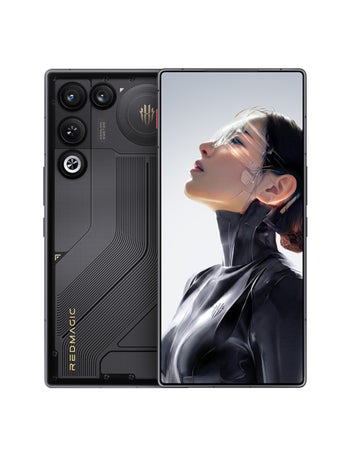
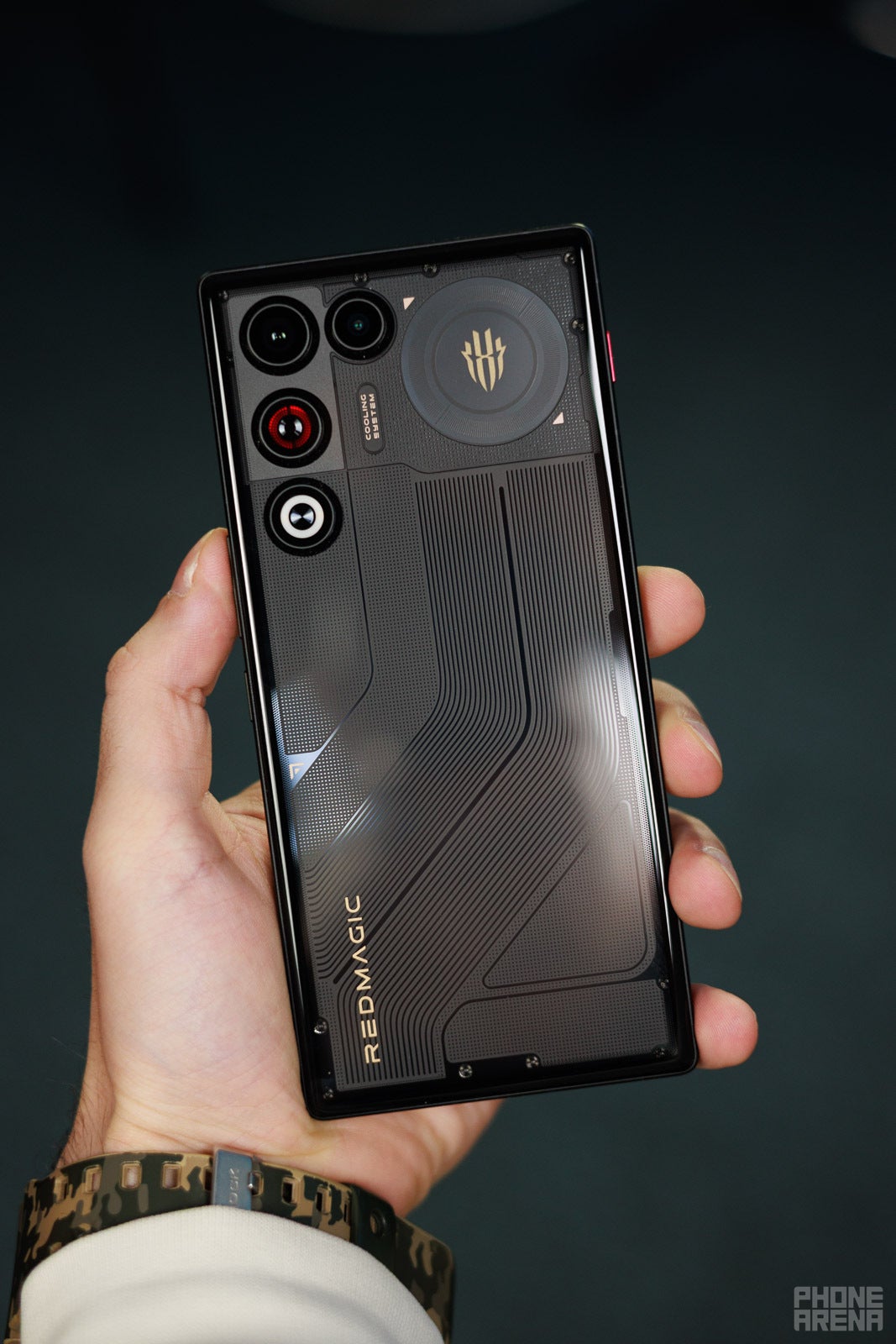
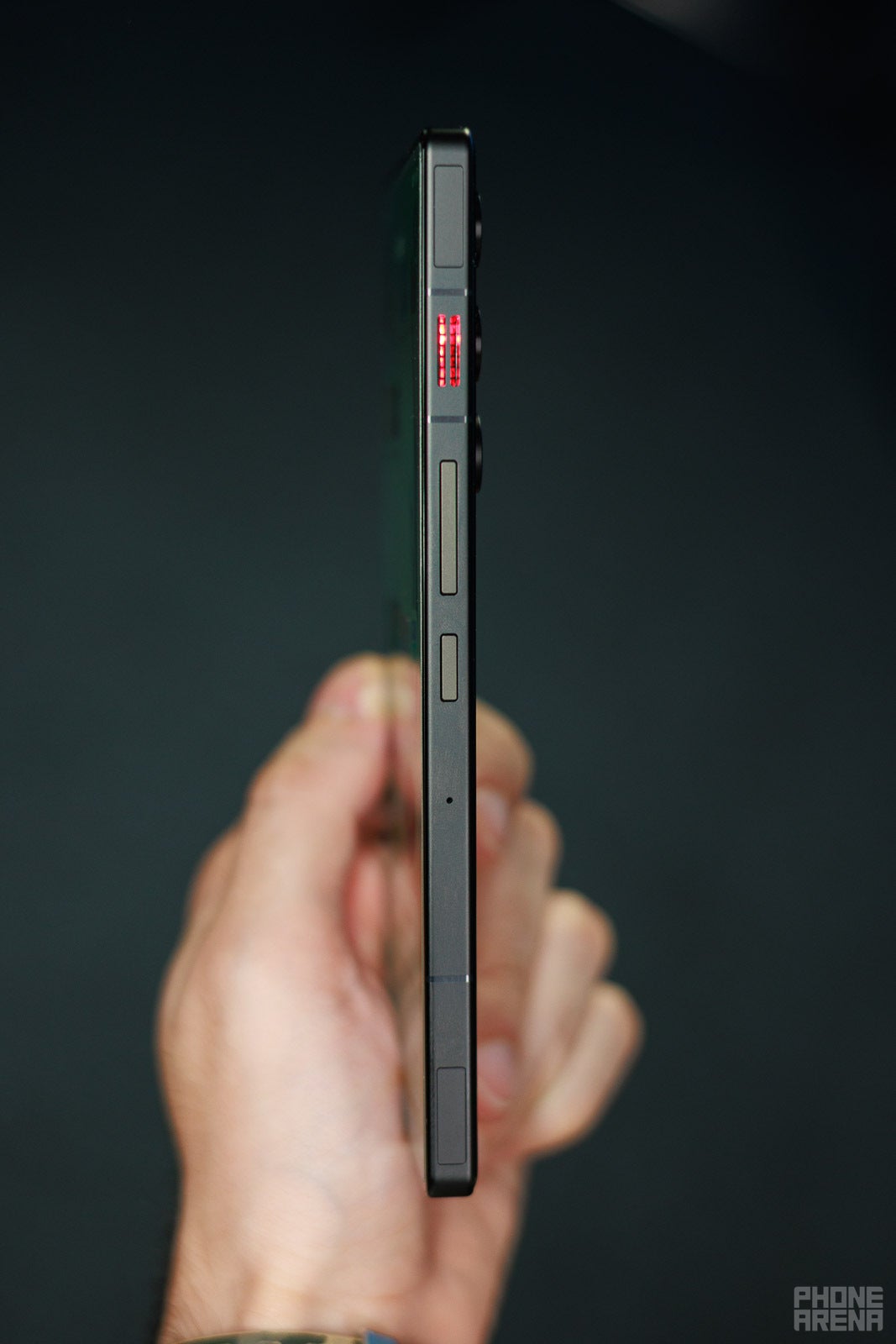
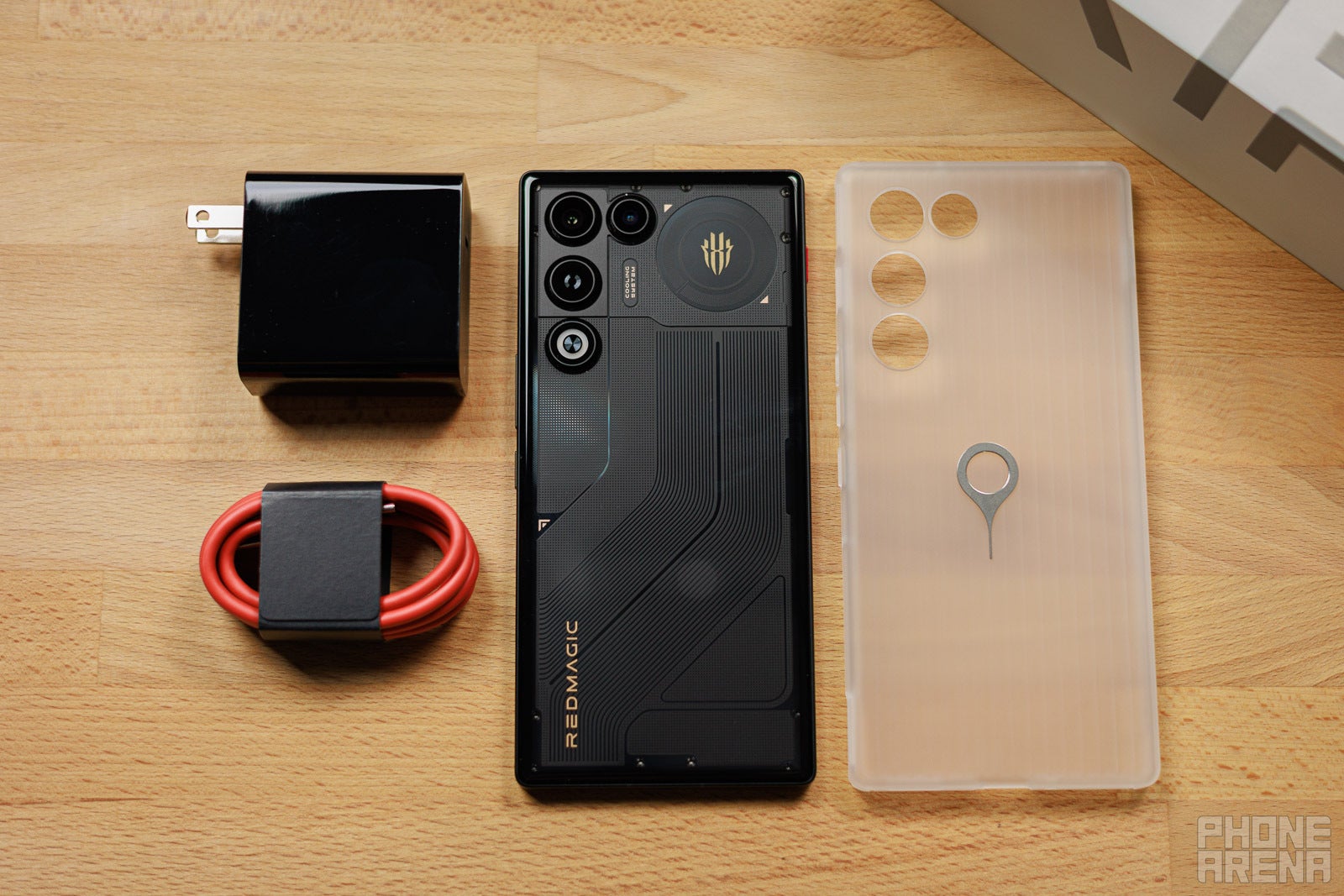
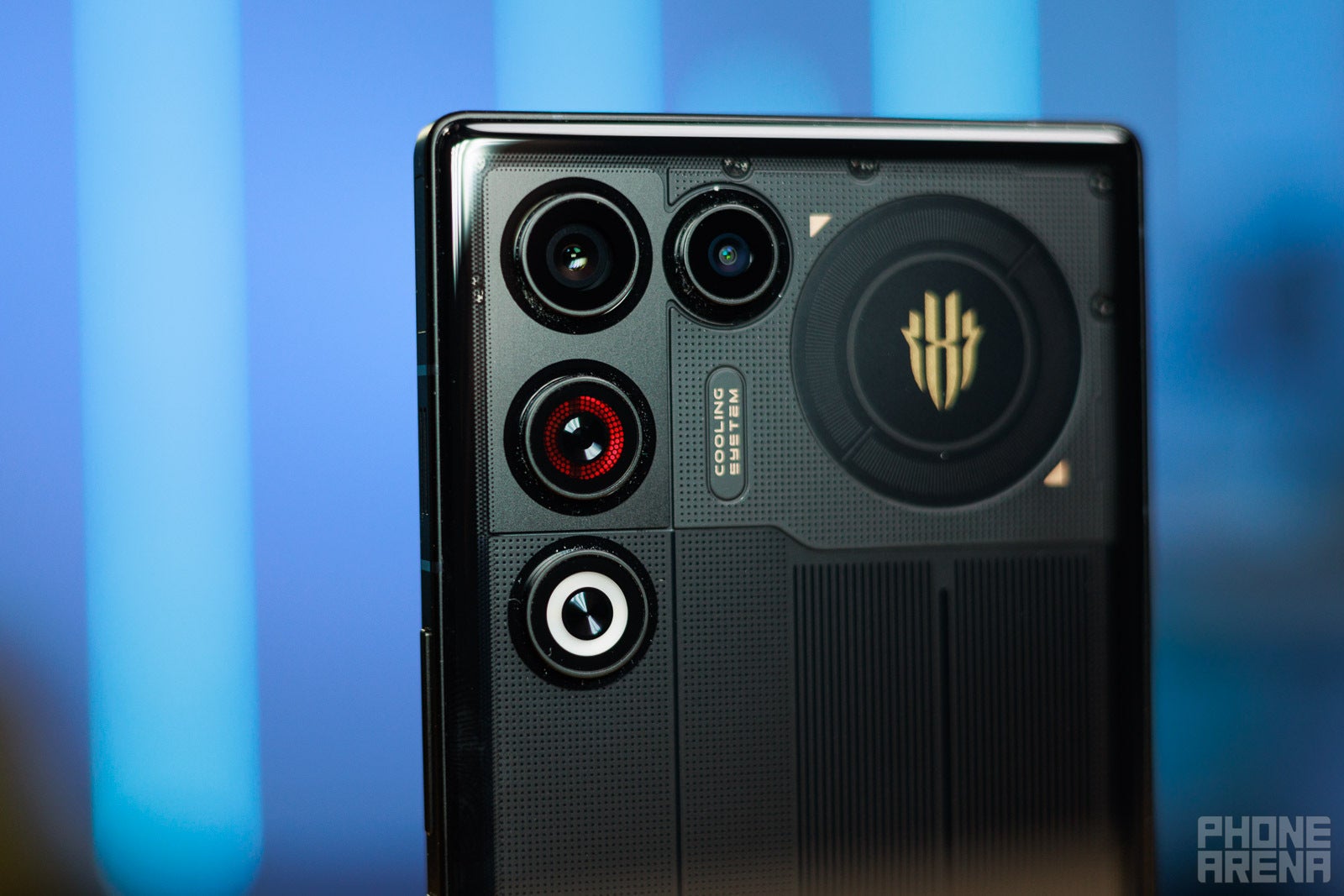
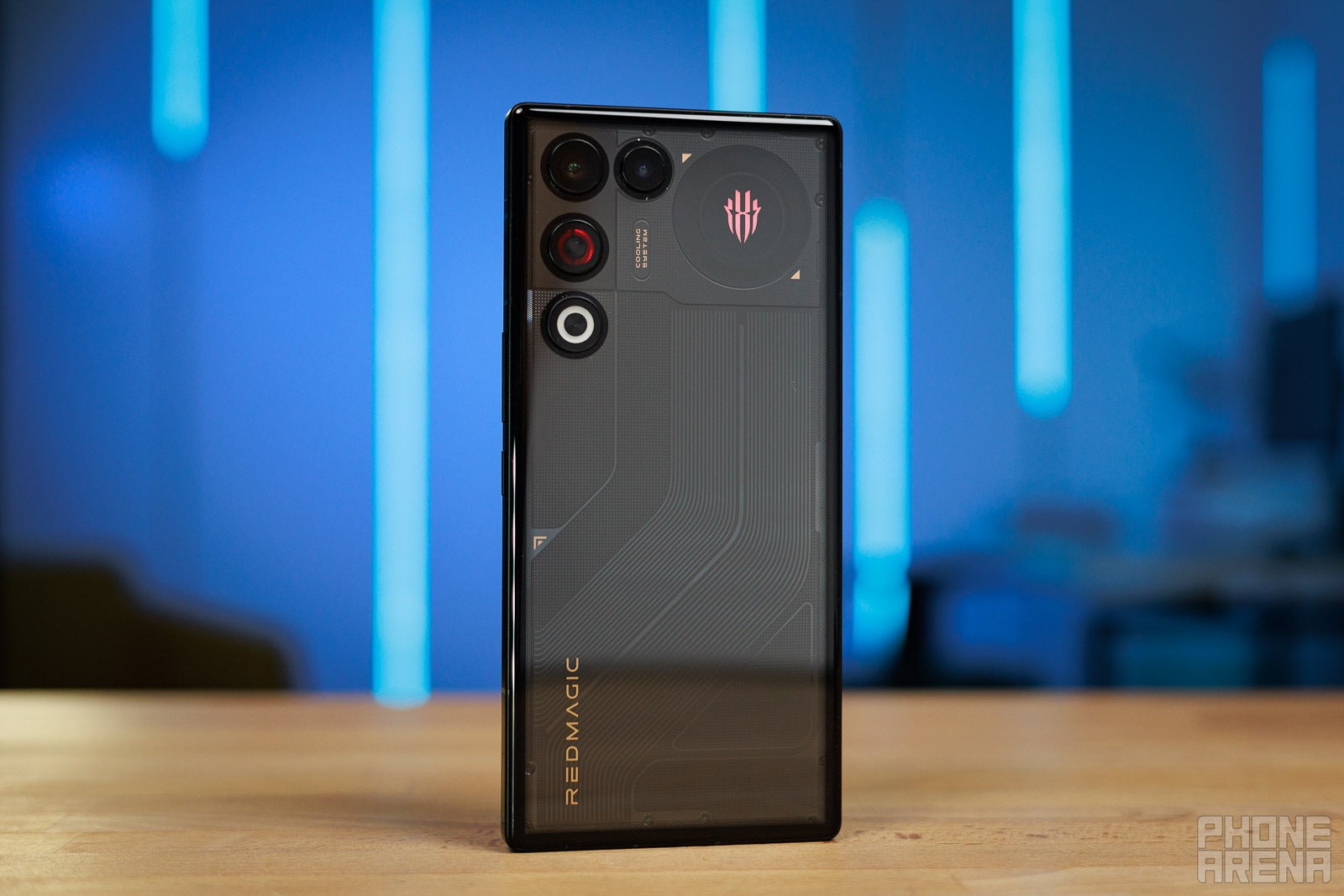
The RedMagic 11 Air follows the same design language as its bigger and more expensive sibling—the RedMagic 11 Pro. The phone has lost one millimeter in thickness, but now the cameras protrude through the transparent back glass, and they're not flush with the back of the phone.
We have the same industrial look but a tad more subtle. The back is transparent, but the raw internals sit under a decorative cover. There's no alien-looking liquid-cooling system, and the RGB lights are limited to the RedMagic logo and the active fan.
The phone looks classy, and the ever-so-slightly curved 2.5D back glass makes it comfortable in the hand. Even though the difference in thickness is just a millimeter, the Air feels much more sleek and compact.
The dedicated Magic slider from the Pro model is now a button, keeping the same red color and textured appearance. The two capacitive shoulder triggers are still there, although not RGB illuminated.
Recommended For You
The active fan is also different from the one used on the Pro model. This time the fan sucks air from the circular back opening (mimicking a camera cutout) rather than using a channel going across the phone.
The retail box is a generous one by modern smartphone standards—we've got an 80W charging brick, a USB-C cable, and a back cover to protect the sticking-out cameras. Although, I personally wouldn't cover the back with a misty plastic case and rob the phone of one of its strongest sides—the design.
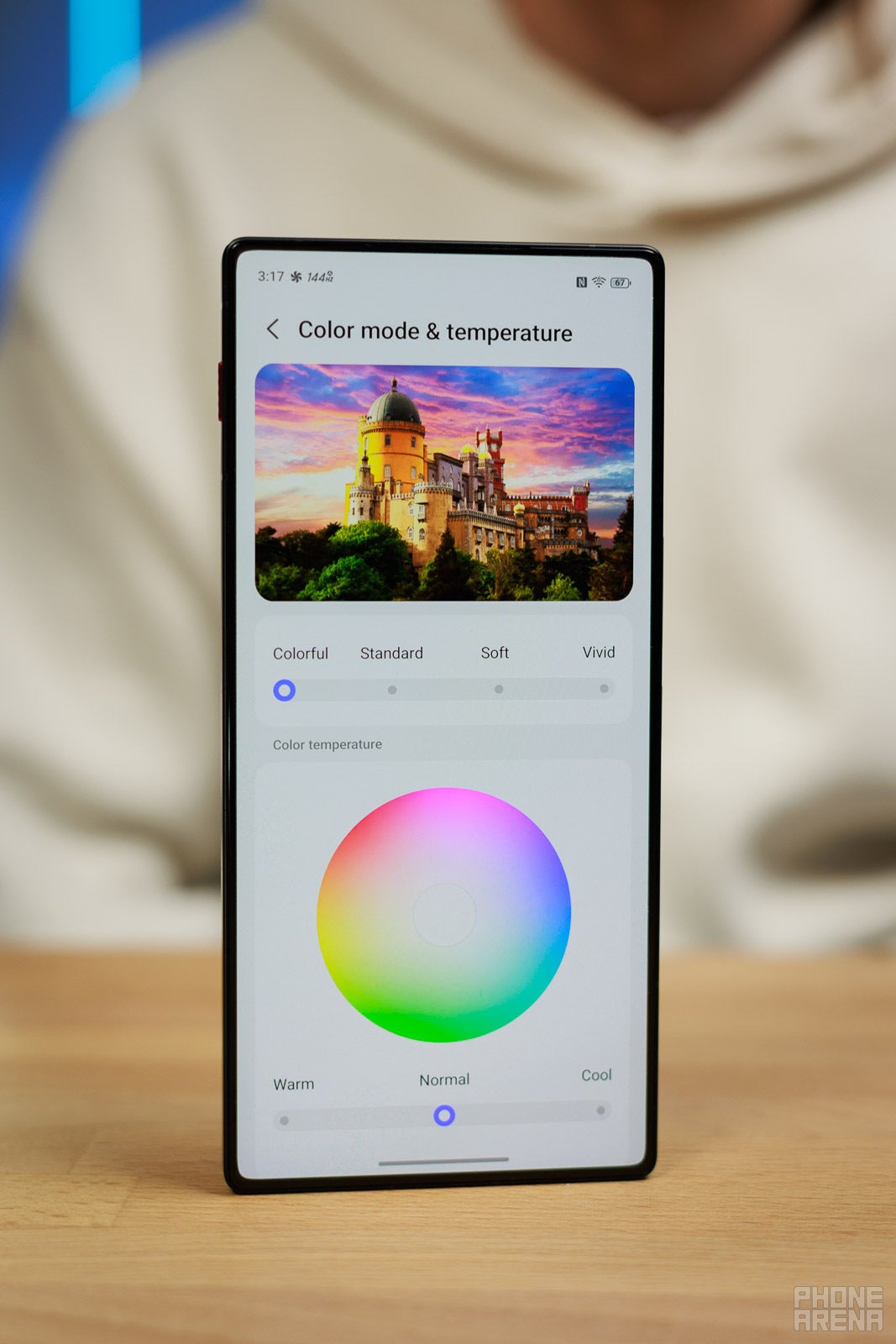
Moving to the display of the RedMagic 11 Air, we find the exact same 6.85-inch, 144 Hz panel used on the Pro. It has a resolution of 1216 x 2688 pixels and a cited peak brightness of 1,800 nits.
The under-display 16MP selfie camera is still there, and coupled with the thin uniform bezel, it makes the phone look futuristic and gives off that sought-after all-display look. Time to check the display measurements and those brightness claims.
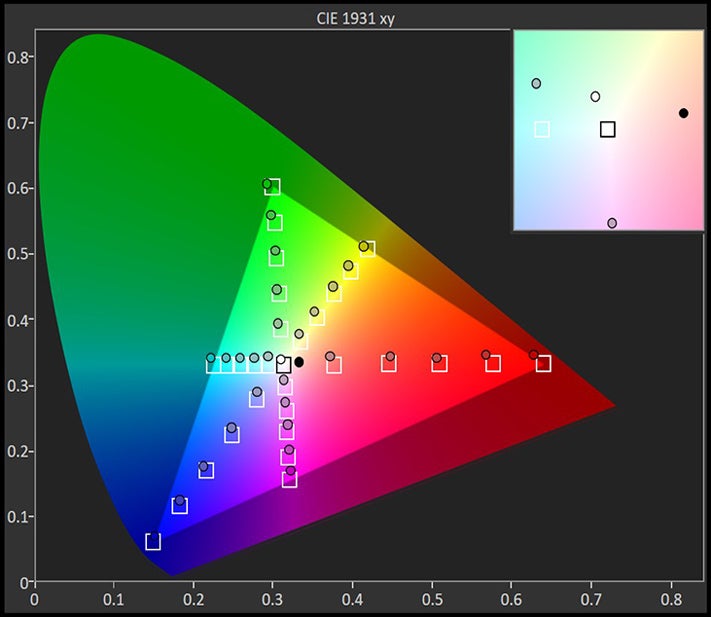
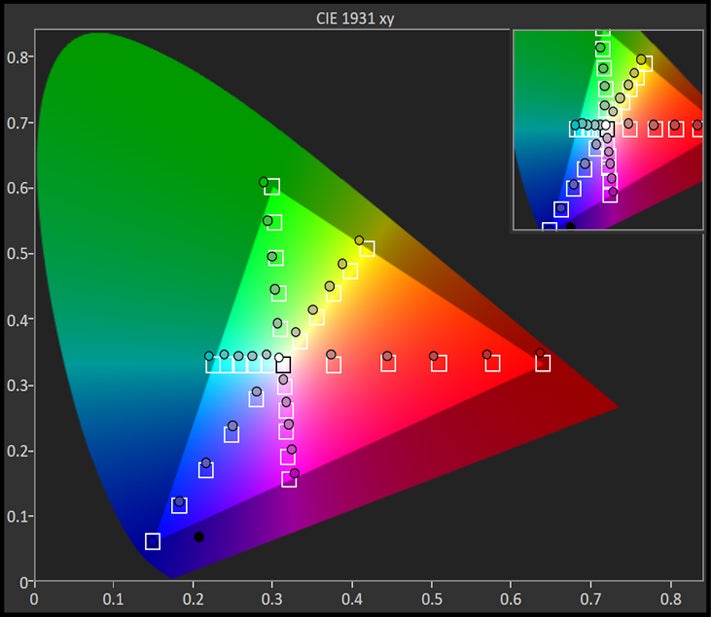
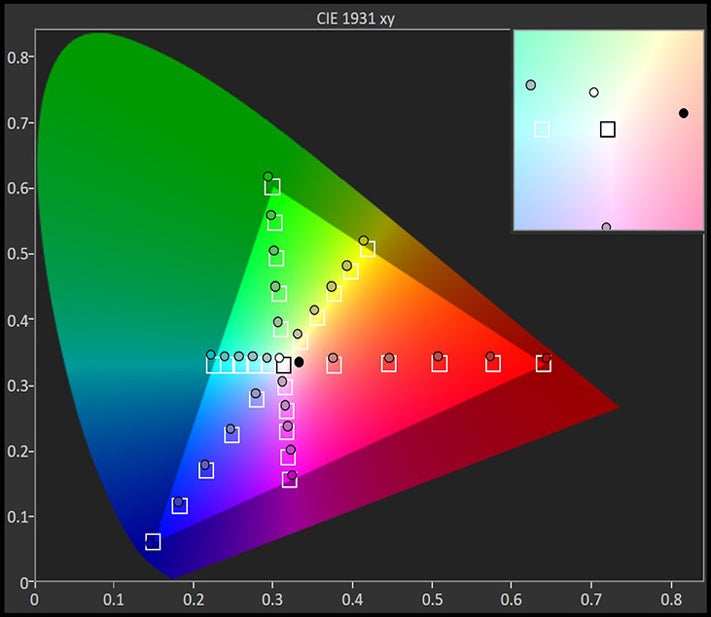
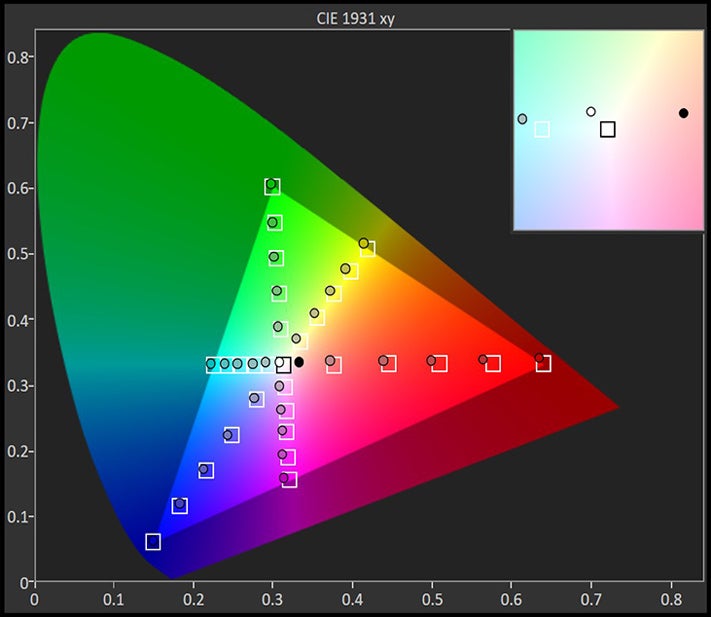
The CIE 1931 xy color gamut chart represents the set(area)of colors that a display can reproduce,with the sRGB colorspace(the highlighted triangle)serving as reference.The chart also provides a visual representation of a display's color accuracy. The small squares across the boundaries of the triangle are the reference points for the various colors, while the small dots are the actual measurements. Ideally, each dot should be positioned on top of its respective square. The 'x:CIE31' and 'y:CIE31' values in the table below the chart indicate the position of each measurement on the chart. 'Y' shows the luminance (in nits) of each measured color, while 'Target Y' is the desired luminance level for that color. Finally, 'ΔE 2000' is the Delta E value of the measured color. Delta E values of below 2 are ideal.
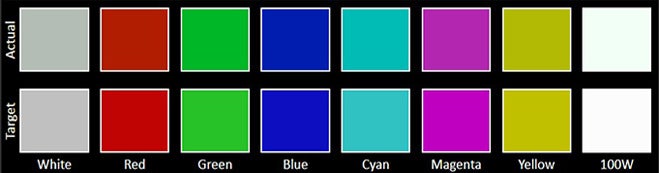
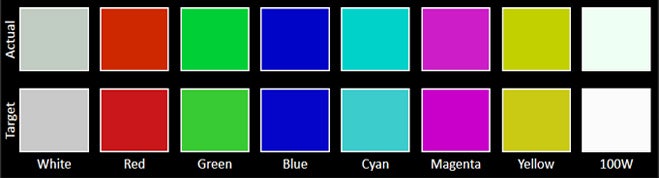
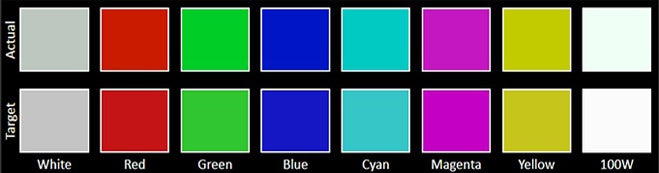
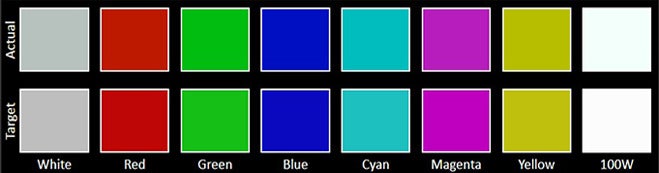
The Color accuracy chart gives an idea of how close a display's measured colors are to their referential values. The first line holds the measured (actual) colors, while the second line holds the reference (target) colors. The closer the actual colors are to the target ones, the better.
The Grayscale accuracy chart shows whether a display has a correct white balance(balance between red,green and blue)across different levels of grey(from dark to bright).The closer the Actual colors are to the Target ones,the better.
The brightness figures match perfectly with what RedMagic wrote in the specs sheet. The phone managed 1,819 nits at 20% APL and around 1,400 nits shining with all available white pixels, which is a pretty good result, albeit a bit lower than what the RedMagic 11 Pro was able to achieve in the same test.
When it comes to minimum brightness and color reproduction, the RedMagic 11 Air is still not on par with popular flagships such as the Samsung Galaxy S25 Ultra or the Apple iPhone 17 Pro Max, both of which offer under 1 nit minimum brightness for your night scrolling.
In terms of biometrics, another small sacrifice has been made—the RedMagic 11 Air features an optical under-display fingerprint scanner, which works just fine, but it's not as fast as the ultrasonic reader on the Pro model.
RedMagic 11 Air Camera
Good main camera, disappointing ultrawide
RedMagic 11 Air
PhoneArena Camera Score
BEST 158
130
PhoneArena Photo Score
BEST 165
138
Main (wide)
BEST 87
78
Zoom
BEST 30
20
Ultra-wide
BEST 26
18
Selfie
BEST 30
22
PhoneArena Video Score
BEST 155
123
Main (wide)
BEST 83
67
Zoom
BEST 27
17
Ultra-wide
BEST 24
19
Selfie
BEST 28
21
The RedMagic 11 Air comes with a rather modest dual camera system on its back, consisting of wide and ultrawide cameras. The main camera uses a 50MP, 1/1.55" OmniVision OV50E40 sensor under a lens with an aperture of f/1.89 and an equivalent focal length of 23 mm.
The ultrawide camera is a small 8MP, 1/4.0" sensor with an f/2.2 aperture. There's no dedicated telephoto or even a depth sensor; we only have an LED ring to complement the two cameras.
Unsurprisingly, the RedMagic 11 Air scores similarly to the Pro model in our camera benchmark, with a decent main camera score and disappointing ultrawide and telephoto results. Time for some real-life samples.
Images taken with the main wide camera look rather good; there's enough detail resolved, the exposure is decent, and the color reproduction is also true to life. There's a certain softness to the samples, and the dynamic range is not the widest out there, but in good lighting conditions, you can snap some pretty decent photos with the main camera.
Things deteriorate quickly when we switch to the ultrawide. This 8MP quarter-inch sensor just can't capture enough detail, and the samples look blurry at times and also a tad overexposed. These problems are exaggerated in low-light conditions, where the small sensor can't capture enough light to produce a good image.
There's no dedicated telephoto camera on the RedMagic 11 Air, so all zoom samples use digital zoom and/or crops from the main sensor. The lack of detail is obvious, and most of the 3X zoom samples are highly processed mess.
The selfie shots are soft and blurry as well, but that's an artifact from the under-display camera—the light has to pass around the pixels to get to the camera, and the results are obvious. Having an edge-to-edge display comes at a cost.
Video recording caps at 8K and 30 frames per second, but we advise you to stick to 4K at either 30 or 60 frames per second. The image stabilization is much better, and there's less choppiness and tearing in the frames.
Night recording suffers from the same issues as night still shots—the smallish sensors can't capture enough light, and the algorithms can't compensate.
RedMagic 11 Air Performance & Benchmarks
Previous generation elite
RedMagic opted to use the previous generation Qualcomm chip—the Snapdragon 8 Elite. It's a powerful platform, the first to really challenge Apple's silicon in years, but it's not the latest and greatest.
There's no lag, stutter, or any issues in day-to-day tasks; everything runs smoothly, and coupled with the high refresh rate, using the RedMagic 11 Air feels extremely nice. The base configuration starts at 12GB of RAM and 256GB of storage, which is adequate.
You can get the phone with up to 512GB of memory and 16GB of RAM, and the jump up in price is not that big either—the top model costs $599 globally ($629 in the US). Let's see how the Snapdragon 8 Elite performs in the slim body of the RedMagic 11 Air.
CPU Performance Benchmarks:
Geekbench 6 Single Higher is better
RedMagic 11 Air2996
RedMagic 11 Pro3674
Samsung Galaxy S25 FE2170
Google Pixel 10 Pro2314
Geekbench 6 MultiHigher is better
RedMagic 11 Air9659
RedMagic 11 Pro11638
Samsung Galaxy S25 FE7110
Google Pixel 10 Pro6274
Geekbench 6: A high single-core score is what makes your phone feel snappy during everyday tasks like opening apps, typing and browsing. The multi-core score matters most when doing heavier work like video editing or gaming.
The synthetic benchmark scores of the Snapdragon 8 Elite are in line with what we've seen from other phones equipped with the same silicon. There's a gap to the latest Gen 5 iteration of the chip, but it's not that big, and the multi-core score is already pushing 10K, which is pretty impressive.
The RedMagic 11 Air also manages to beat more expensive phones such as the Galaxy S25 FE and the Pixel 10 Pro.
GPU Performance
3DMark Extreme(High)Higher is better
RedMagic 11 Air6869
RedMagic 11 Pro7874
Samsung Galaxy S25 FE3623
Google Pixel 10 Pro3426
3DMark Extreme(Low)Higher is better
RedMagic 11 Air2456
RedMagic 11 Pro6709
Samsung Galaxy S25 FE2253
Google Pixel 10 Pro2118
Wild Life Extreme is a heavy graphics workload used to measure a device's sustained GPU performance and thermal throttling. It uses older mobile rendering techniques and is friendly to older or lower-end mobile devices.
The GPU scores paint a similar picture; there's an expected gap between the first Snapdragon Elite and the latest Gen 5 version. However, under heavy load, the RedMagic 11 Air throttles quite a lot.
The lowest 3DMark scores are very similar to what the Pixel 10 Pro and the S25 FE were able to achieve with more modest chipsets inside. We think the culprit si the slim body of the RedMagic 11 Air and the lack of a fancy liquid-cooling system.
RedMagic 11 Air Software
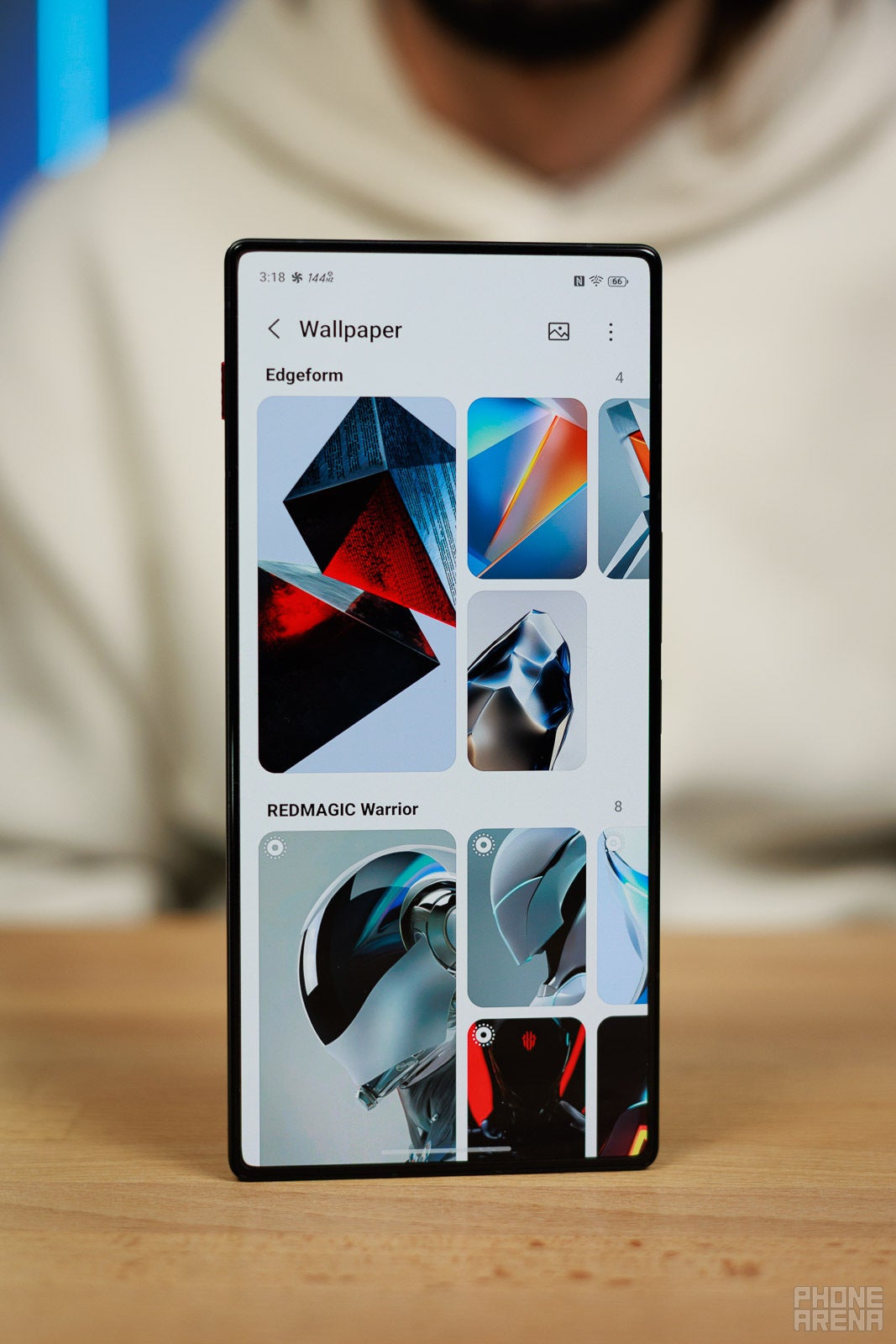
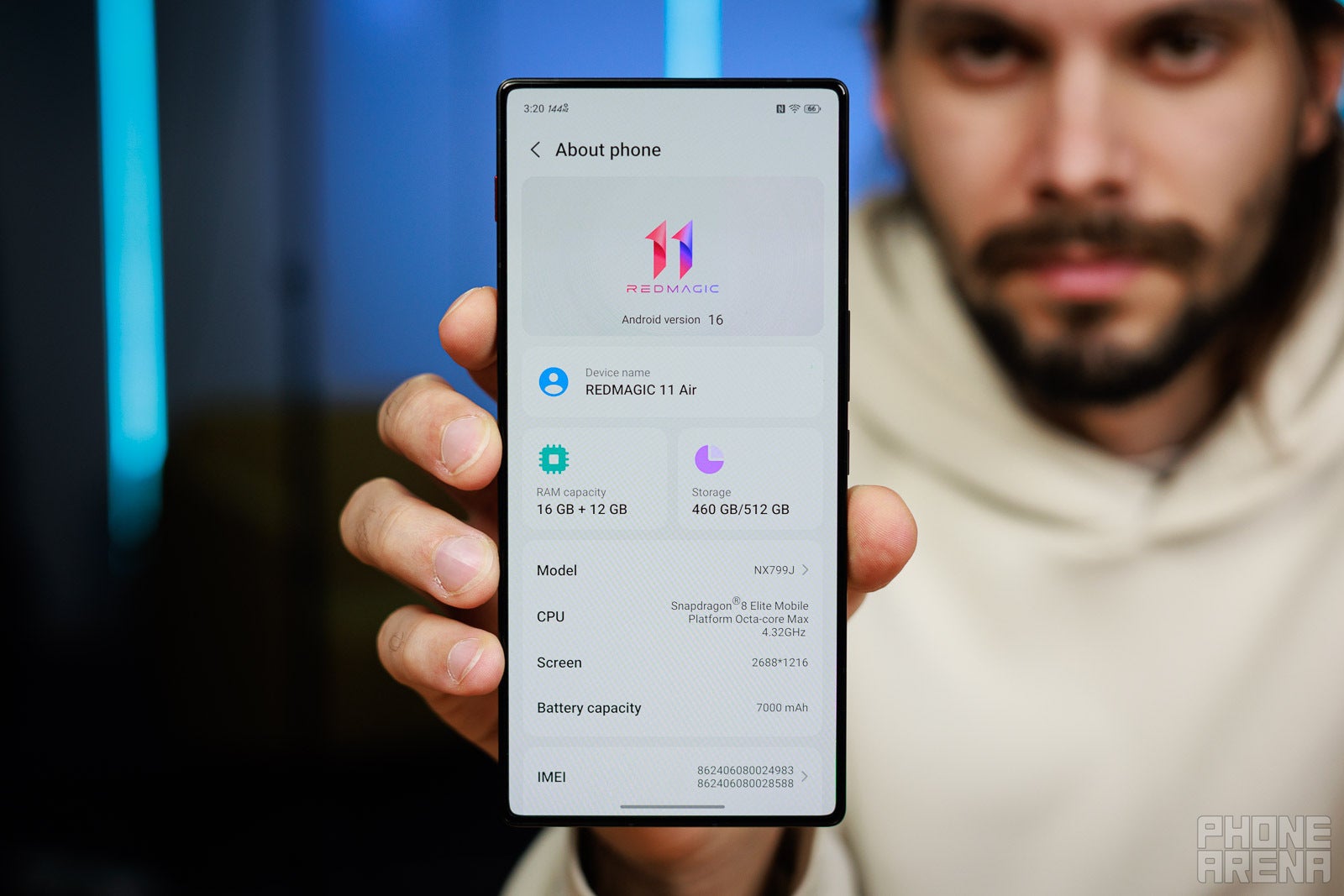
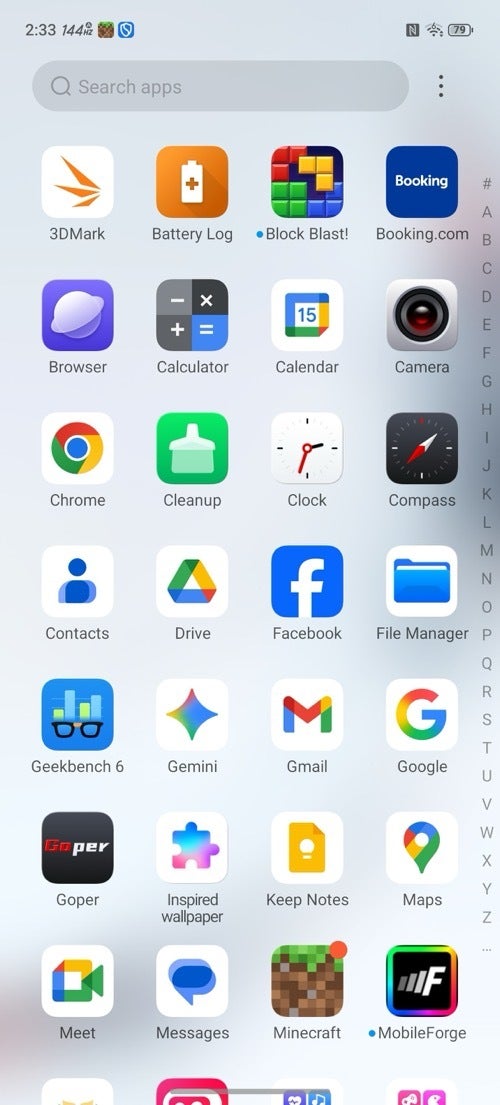
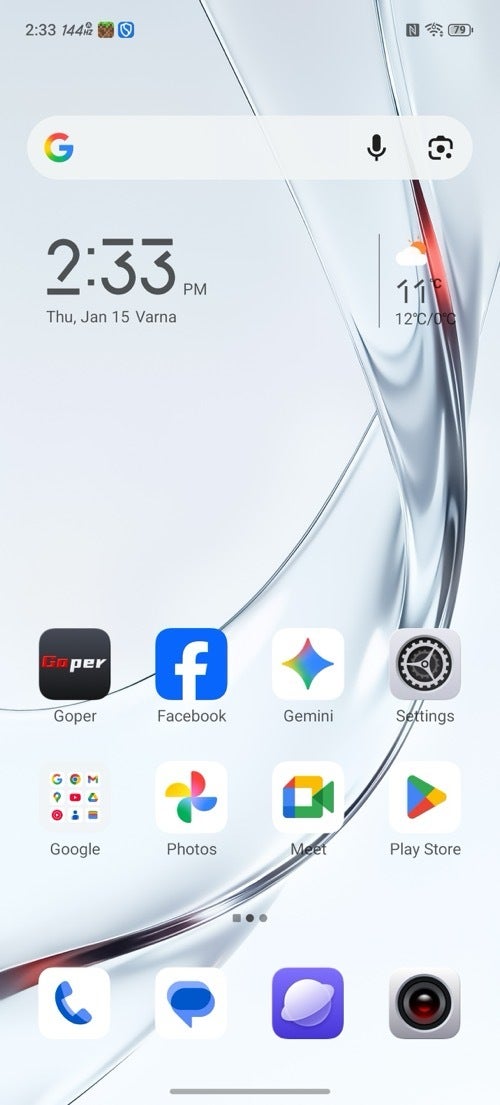
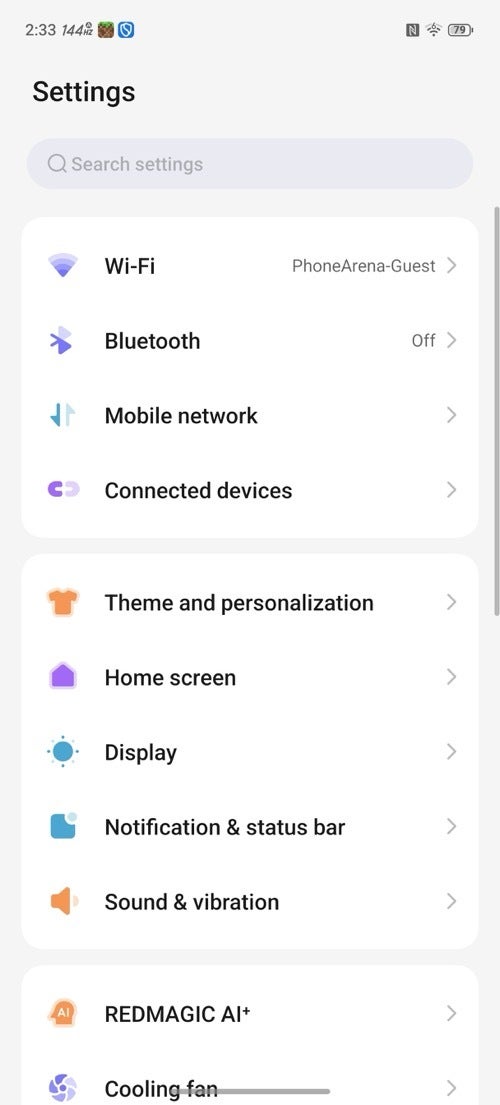
The RedMagic 11 Air comes running RedMagicOS 11 out of the box, which is a UI skin on top of Android 16. There's no bloatware, and apart from the dedicated Game Space mode, things look quite clean.
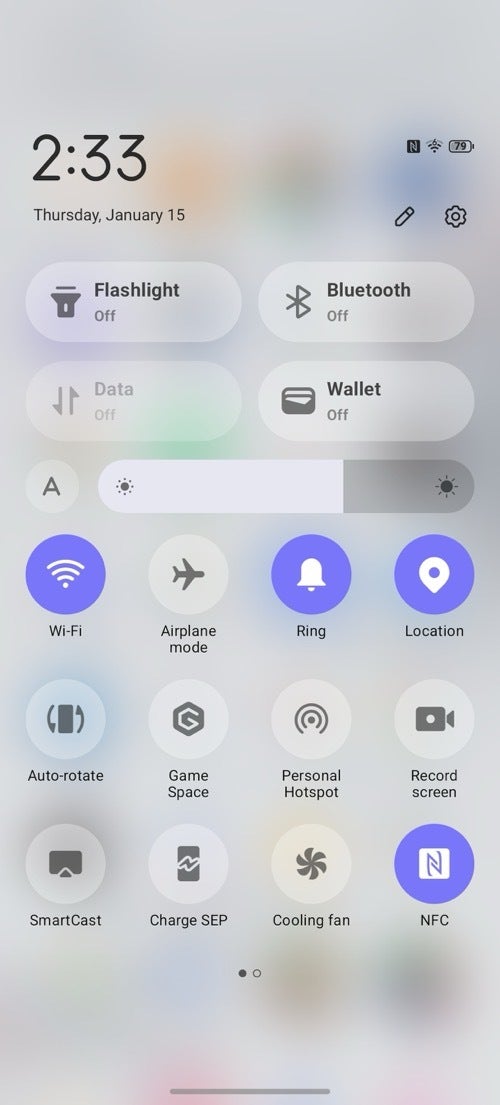
The red slider on the side of the RedMagic 11 Pro is gone, and there's an identical-looking button in its place. By default, it activates the aforementioned Game Space mode, and you have to long-press it (doesn't work with a simple short press).
You can, of course, customize this button to open the camera, summon Gemini, or act as a mute button, but the long press remains the only way to activate those features.
Speaking of Gemini and AI, there's something called RedMagic AI+ on board of the RedMagic 11 Air, offering some basic but useful AI features baked into the system.
You get three major Android updates in most regions of the world and five years of software support in Europe (thanks to EU regulations) on the RedMagic 11 Air. Not as extensive as what you get on your Pixel or Galaxy, but still very good for a Chinese gaming phone.
The 7,500 mAh battery inside the RedMagic 11 Pro skyrocketed it to first place when we tested that model. It's now still inside the top 3, so we expected good performance from the Air. This model shaves 500 mAh in order to keep a slim waist, and the total capacity is 7,000 mAh.
That's still massive by today's standards, even though we're starting to see phones with lithium-silicon batteries pushing 10,000 mAh (the Honor Power is one example).
The composite score of around 8 hours places the RedMagic 11 Air 28th among phones tested in the past two years - a good result but not as impressive as we expected, given the big battery inside.
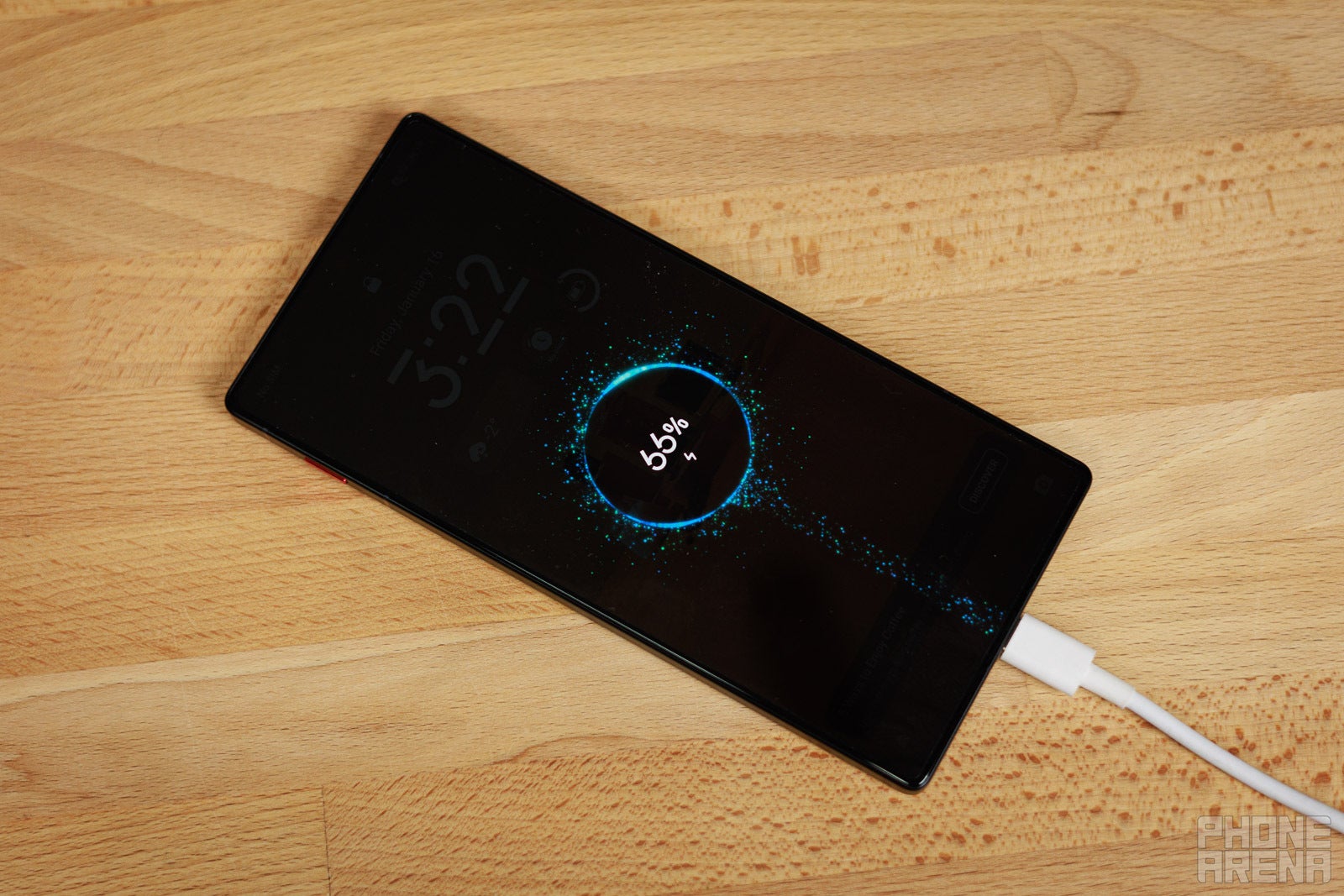
Charging caps at 80W on the global version (the Chinese version supports up to 120W wired fast charging), and it's fast enough to fill the huge battery from zero to full in just over an hour. There's no wireless charging on board—one of the big sacrifices RedMagic had to make to keep the phone that thin and also competitively priced.
RedMagic 11 Air Audio Quality and Haptics
The phone comes equipped with the usual stereo setup, where the earpiece doubles as a second loudspeaker. The thin body contributes to less bassy sound, and even though the phone can get quite loud, the sound is not the richest we've heard on a smartphone.
At max volume there's some harshness in the high-frequency range, but overall, if you keep the volume under 80%, the RedMagic 11 Air can sound quite decent. The haptic feedback is quite good, actually, you can adjust the strength and the vibration is tight and pleasant.
Should you buy it?
The base 12/256GB version of the RedMagic 11 Air costs just $499. That's an important feature of this phone, because even midrange models are more expensive nowadays. The Samsung A56 starts at $549, and the midrange Pixel 9a matches the $499 price tag of the RedMagic 11 Air, but comes with a slower chipset and a plastic build.
The RedMagic 11 Air is a good deal - for just $499 you're getting a cool-looking, sleek device, a powerful chipset, and solid battery life. Even if you're not a gamer, you can enjoy some of the gaming features this device has on board, as well.
There are two major drawbacks—the camera system is not on par with modern flagships, especially the ultrawide camera. And there's no wireless charging, so if you're used to just throwing your phone on a charging mat when you get home, you won't be able to do it with the RedMagic 11 Air.
But if you can live with these, the RedMagic 11 Air will serve you well for at least five long years, and you won't need to break the bank to be able to afford it.
Mariyan, a tech enthusiast with a background in Nuclear Physics and Journalism, brings a unique perspective to PhoneArena. His childhood curiosity for gadgets evolved into a professional passion for technology, leading him to the role of Editor-in-Chief at PCWorld Bulgaria before joining PhoneArena. Mariyan's interests range from mainstream Android and iPhone debates to fringe technologies like graphene batteries and nanotechnology. Off-duty, he enjoys playing his electric guitar, practicing Japanese, and revisiting his love for video games and Haruki Murakami's works.
A discussion is a place, where people can voice their opinion, no matter if it
is positive, neutral or negative. However, when posting, one must stay true to the topic, and not just share some
random thoughts, which are not directly related to the matter.
Things that are NOT allowed:
Off-topic talk - you must stick to the subject of discussion
Offensive, hate speech - if you want to say something, say it politely
Spam/Advertisements - these posts are deleted
Multiple accounts - one person can have only one account
Impersonations and offensive nicknames - these accounts get banned
To help keep our community safe and free from spam, we apply temporary limits to newly created accounts:
New accounts created within the last 24 hours may experience restrictions on how frequently they can
post or comment.
These limits are in place as a precaution and will automatically lift.
Moderation is done by humans. We try to be as objective as possible and moderate with zero bias. If you think a
post should be moderated - please, report it.
Have a question about the rules or why you have been moderated/limited/banned? Please,
contact us.




















Things that are NOT allowed:
To help keep our community safe and free from spam, we apply temporary limits to newly created accounts: