Sony Xperia Z1 Compact vs Samsung Galaxy S4
Introduction
Android has improved hugely, but as it evolved every year, the screen size of the top Android devices also increased. We grew from having 4-inch phones to 4.7-inch devices, then 5-inch ones, only to arrive at a landscape of humongous gadgets dominating the mobile landscape. The blessing had become a curse to some who still wanted a compact smartphone, one that you can easily use single handedly, and one that easily fits all pockets. Those exist today, but feature less capable hardware than the big guys. That’s where the Sony Xperia Z1 Compact comes in with the simple promise to be not just compact, but also running on no-compromise top-notch hardware.
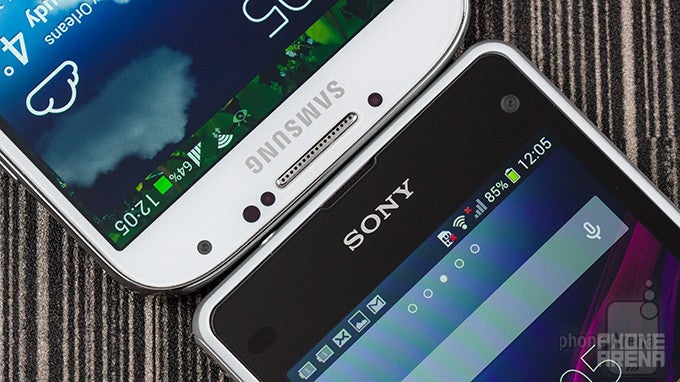
The Xperia Z1 Compact features a 4.3-inch display and compact overall sizes, while the Galaxy S4 is larger, with a 5-inch display; the Z1 Compact runs on the newer and more powerful Snapdragon 800 system chip, while the Galaxy S4 features the older Snapdragon 600; the Sony phone has a large-sensor 20-megapixel camera, while Samsung’s has a regular smartphone camera sensor and a more modest, 13-megapixel resolution.
It is a battle of small versus big, new against old, where the smaller new phone can for the first time in recent history turn out to be better than the big one. Is that so? It’s time to find out.
Design
Size is the most glaring distinction between the Sony Xperia Z1 Compact and the Samsung Galaxy S4 - single-handed use is a joy on the Xperia Z1 Compact as your thumb can easily reach every corner of it, while the same cannot be said about the Galaxy S4. At the same time, the Z1 Compact is slightly chubbier, but not hugely. You can see the exact difference in our size visualization tool below.
The two also feature radically different design. The signature glossy plastic used by Samsung does not have that premium feel we expect from a top-shelf device, but that has not stopped the Galaxy S4 from selling in the millions. Still, we appreciate the slightly more expensive materials used in the Xperia Z1 Compact - its front is made of glass, the back is made of plastic, and it's all held together by a sturdy metallic frame, a construction that Sony refers to as ‘Omnibalance’ design language. It is not just about the looks, though - the Z1 Compact is also water and dust resistant. It features the IP58 protection rating, which means that it can survive in water under 3 feet deep for continuous periods of time (more than half an hour). As for the Galaxy S4, you’d better not drop it in water at all - it has none of those advanced protection features.
The Z1 Compact has all sorts of slots and buttons on its sides, and you get an easily accessible micro SIM card slot, a microSD card slot, a volume rocker, lock key and dedicated camera shutter key. All are within easy reach and have reasonable amount of travel making them comfortable to press. The Galaxy S4 does not expose all its ports and slots - the micro SIM and microSD card slots are under the back cover, only the volume rocker and lock keys are on its sides, and are even clickier and easier to press than the ones on the Z1 Compact.

5 x 2.56 x 0.37 inches
127 x 64.9 x 9.5 mm
4.83 oz (137 g)

5.38 x 2.75 x 0.31 inches
136.6 x 69.8 x 7.9 mm
4.59 oz (130 g)

5 x 2.56 x 0.37 inches
127 x 64.9 x 9.5 mm
4.83 oz (137 g)

5.38 x 2.75 x 0.31 inches
136.6 x 69.8 x 7.9 mm
4.59 oz (130 g)
See the full Sony Xperia Z1 Compact vs Samsung Galaxy S4 size comparison or compare them to other phones using our Size Comparison tool.
Display
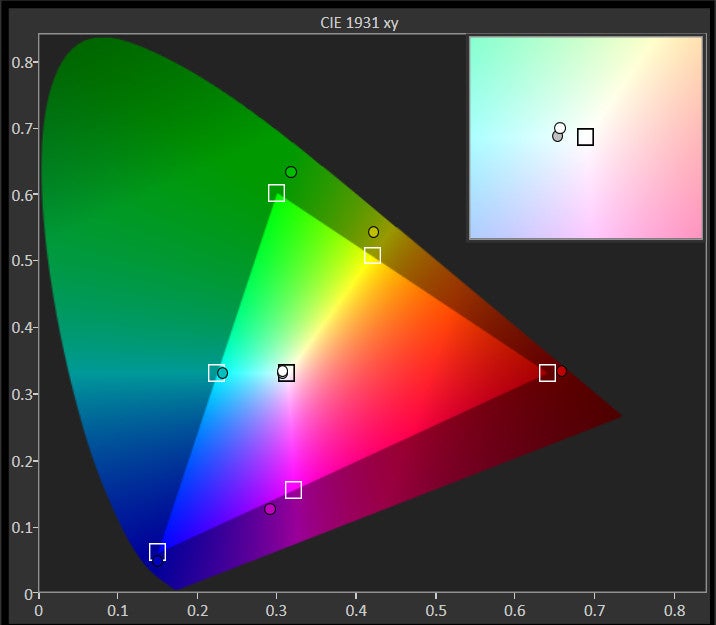
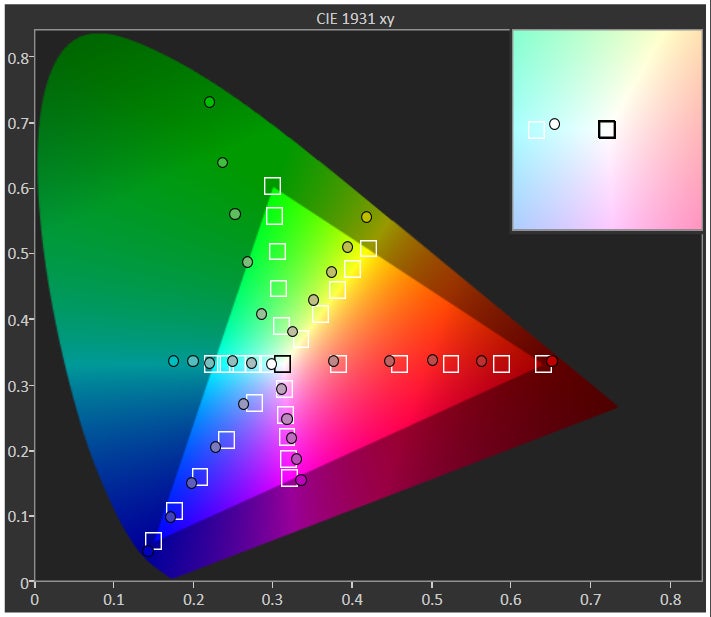
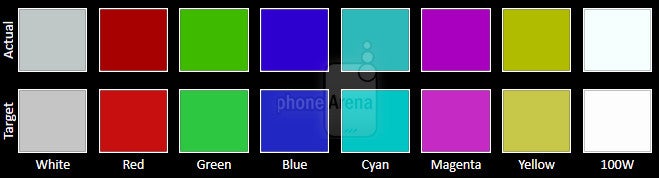
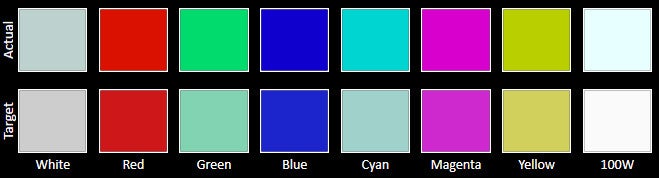
Sony is known for including not-so-stellar displays with sub-par viewing angles in its latest top smartphones, but luckily the Xperia Z1 Compact bucks the trend and actually uses a very nice IPS LCD screen with good viewing angles. Most importantly, the screen has got lively, nicely saturated colors, and just looks good. It’s a 4.3-inch display (on-screen buttons take up some of that space) with a resolution of 720 x 1280 pixels. This translates into pixel density of 342 ppi, which is enough to produce pretty sharp visuals.
The Galaxy S4 on its part uses Samsung’s AMOLED display technology, and has a larger 5-inch diagonal size. The screen uses a wider color gamut, with more saturated (but less realistic) colors. Its resolution is also higher at 1080 x 1920 pixels, which makes it even sharper than the Sony display, and as a result, it’s easier to read tiny fonts on the Galaxy S4. Samsung’s flagship also has superior viewing angles, as - even when you tilt it to extreme angles - it retains colors and brightness very close to those you see when you look straight at the display,.
Outdoors, the Sony Xperia Z1 Compact has the advantage of being able to get much brighter, and it’s easier to read. Peak brightness reaches a respectable 515 nits, while the Galaxy S4 can only go to as much as 289 nits. Interestingly, though, in night time, when you want your screen to go as dim as possible, the Galaxy S4 has a big advantage as its display can be toned down to 9 nits (measured with the screen set to show white color), while the Z1 Compact would annoy your eyes as it’s only capable of lowering brightness down to 39 nits.
Overall, it’s hard to say which of the two phones has the better screen. Both are good, but not perfect. Having a larger screen like the one on the Galaxy S4 could be an advantage, but also results in a larger device. For all else, they are just different.


Interface and functionality
Both the Sony Xperia Z1 Compact and the Samsung Galaxy S4 run on the same Android platform (4.3 Jelly Bean, to be exact), but it’s hard to say so by just looking at them. Sony’s Timescape user interface is elegant, filled with animations, and it features clean, realistic-looking icons, while Samsung’s TouchWiz is wildly cartoonish, with extremely colorful, rounded icons and funny sounds. The difference is obvious. TouchWiz is definitely more feature-packed - you just don’t get the fancy air gestures and smart stay/scroll/pause on Sony devices, but then again, it’s true that not everyone needs those features and not everyone uses them.
UI of the Sony Xperia Z1 Compact
Interface of the Samsung Galaxy S4
Handling notifications is almost identical on both - it all happens in the dedicated notification dropdown that you can access any time (within an app also, of course) by just swiping down from the top of the screen.
Phone and messaging, the two core apps, are similar in functionality, and the phonebook easily syncs with the cloud on both. You’d expect typing to be easier on the larger, 5-inch Galaxy S4, and it indeed is when you can use both of your hands, but for single-handed typing the smaller screen actually works out to be a big advantage for the Xperia Z1 Compact.
Processor and Memory
The Sony Xperia Z1 Compact has just launched, and it’s got time on its side - it features the latest and most powerful Snapdragon 800 system chip, whereas the Galaxy S4, a handset released nearly a year ago, is still sold with the now dated Snapdragon 600 chip. Both are quad-core and very powerful, but the Snapdragon 800 is just faster, capable of reaching higher peak clock speeds of 2.2GHz.
In real world use, you won’t notice any slowdown or lag when doing your daily business and scrolling around the interface and menus. What’s more, both are perfectly capable to run the latest and most demanding games like Modern Combat 4 and Asphalt 8. With higher loads, the advantage of the Z1 Compact, however, grows, and becomes more noticeable.
Good news is that both the Z1 Compact and the S4 support expandable storage via microSD cards. On the Sony phone, you can even hot swap microSD cards as the slot is conveniently located on the side, while the S4 requires you to take out the battery to change the microSD card. Internal storage is set at 16GB on both.
Internet and Connectivity
The default browser on the Xperia Z1 Compact is Google's Chrome, while the Galaxy S4 offers you the choice between its own custom Android browser and Chrome. Google has decided to make Chrome the browser of 4.4 KitKat and future Android versions, and for a good reason - it has the better optimized for touch interface and great cross-platform syncing capabilities. Most importantly, loading pages is quick and navigation - smooth on both phones.
Surfing the web
The Z1 Compact, however, also has the tangible advantage of supporting more 4G LTE bands. Most notably, it supports band 4 (used by most US carriers), as well as bands 1, 2, 3, 4, 7, 8, and 20, and this allows it to basically roam the world on many FDD-LTE networks. The international Galaxy S4, in contrast, has more limited LTE support (bands 1, 3, 5, 7, 8 and 18). For all other users that don’t live in an LTE-covered area, both handsets support HSPA+ at speeds of up to 42Mbps.
The two also come with dual-channel Wi-Fi connectivity, GPS, Glonass, Bluetooth 4 and NFC support.
Camera
The Xperia Z1 Compact features an impressively large image sensor for its size, and for a smartphone in general. It’s got the same 20.7-megapixel 1/2.3" camera as the Xperia Z1, while the Samsung Galaxy S4 sports a 13-megapixel camera with a smaller 1/3.06" sensor. That's a huge difference – Sony's sensor is 72% larger, and a larger sensor is capable of better capturing light and is key in enabling better shots, especially when light gets scarce. The Z1 Compact’s camera also comes with a wide f/2.0 aperture, letting more light in than the f/2.2 lens of the Galaxy S4. In addition, the Xperia Z1 Compact has a larger, 27mm focal length (compared to 31mm on the S4), so that you can get more of a scene to fit in a shot.
Camera UI of the Sony Xperia Z1 Compact
Both cameras are quick to start, but the Galaxy S4 captures images faster. With all its carefully explained shooting modes and large buttons, the Samsung user interface offers many more options like well-explained shooting modes that you can use. In contrast, the Z1 Compact's “Superiour auto” mode automatically picks what it thinks is the right shooting mode for a scene, but does not allow you to manually pick one. Nonetheless, both cover the essentials with HDR shooting and burst mode shots. Access to manual settings like ISO and white balance are also readily available on both camera apps, great for more advanced photographers.
Camera interface of the Samsung Galaxy S4
Images captured on the two handsets are some of the best you can get out of a smartphone - detailed, sharp and rich in color. Nonetheless, the Xperia Z1 has a slight edge as it captures sharper and more realistic looking photographs than the Galaxy S4. This is not to discount the excellent images that the S4 shoots, but it’s a nuance that’s noticeable as the S4 images tend to be a bit too contrasty. It's worth mentioning that when you shoot in auto mode, the Xperia Z1 Compact actually captures 8-megapixel images by combining multiple pixels from the original 20-megapixel shot into 'super' pixels with better clarity and color.
Indoors, where light gets scarce, the Xperia Z1 still retains its lead. It captures images with a slightly better color balance than the Galaxy S4. Sony’s phone also has the slightly more powerful LED flash.
Sample images
For video recording, both handsets capture footage of up to 1920 x 1080-pixel resolution with a frame rate of around 30 fps. Both recordings are very smooth, without any skipped frames, and provide plentiful detail. However, the Z1 Compact does provide more detail, and the slightly sharper and more realistic image. Sony’s phone also records slightly cleaner audio, picking up less wind noise.
Sample Videos
Multimedia
A large screen plays a huge part of the media experience on a smartphone where every fraction of an inch makes a difference. That is why, the Galaxy S4 with its much larger 5-inch display, has the upper hand when it comes to watching videos or looking through images. The Xperia Z1 Compact’s 4.3-inch screen is still usable for your media needs, and with its improved viewing angles the experience is better than on previous Sony phones.
For video, both phones chew through common file formats with ease and, of course, have no trouble decoding 1080p video. For music, the Z1 Compact features the Sony Walkman app with its modern looks, and plenty of features like lyrics and artist information that it pulls from the web. Samsung’s app lacks the visual flare of its Sony counterpart (and these fancy functions), but for all else, it works just as fine, and both have equalizers that you can use to control the sound experience.
Music player of the Sony Xperia Z1 Compact
Music player of the Samsung Galaxy S4
Sound from the loudspeakers is nothing to write home about on both phones, and it falls short of the best ones out there. Sound volume is fine on the Galaxy S4, but it is actually a bit too quiet on the Xperia Z1 Compact, probably because of its water-proof construction, but we still wish it was louder.
Call quality
Both smartphones feature good call quality. In the earpiece, voices sound almost equally loud (a bit quieter on the Z1 Compact) and clear on both devices. Our callers were also able to easily recognize our voice with its natural tones on both phones.
The speakerphone on the Galaxy S4 is just a bit louder, though, and that’s an advantage for say, conference calls.
Battery
The smaller Xperia Z1 Compact packs a surprisingly large battery for its size. It’s got a 2300mAh battery that is not user removable, while the Galaxy S4 - despite the big difference in size - has only a slightly larger, 2600mAh juicer. Not surprisingly, the Z1 Compact is quoted to last longer with 18 hours of 3G talk time (versus 17 hours on the S4), and standby time is much longer on the Sony phone.
In reality, both phones are able to easily last a full workday in most cases, but under heavier use you’d probably have to charge both of them every night.
Conclusion
With all this said, it’s time to answer the big question - which one should you buy, the Z1 Compact or the Galaxy S4? It’s clear that we’re talking about two great devices all around, but - if you are not scared of the smaller screen - the Z1 Compact seems to have the upper hand. After all, it’s not only newer, but it is built with premium materials, features better protection from the elements, a beefier processor, and a better camera - all of that makes it the logical choice.
The Galaxy S4 is a nearly one-year old device, and its age starts to show, as it has older and less capable internals. At the same time, it's also true that it has dropped down in price, so that it's not a bad value for its money. If you're looking for the very best out there, though, it's hard to give the S4 a heart-felt recommendation right now. For that, between the two, the Xperia Z1 Compact wins our heart.


Popular stories


Related Content
Latest News


Things that are NOT allowed:
To help keep our community safe and free from spam, we apply temporary limits to newly created accounts: