What can dual-core do for you: a course refresher what the A5 chip will bring to the Apple iPhone 4S

UPDATE: Apple just announced the iPad 2's dual-core A5 chip going into the newest iPhone 4S as well. If you are a current iPhone 4 owner, that would be the sole main reason to get the latest edition. Thus, we are reposting our article on the advantages of multicore platforms below, in order to gauge the possibilities this SoC brings to the fifth generation of the acclaimed handset from Cupertino. Besides the obvious 1080p Full HD video recording advantage, Apple also announced Infinity Blade 2, which will be optimized for the iPhone 4S, and also a beta of Siri, the voice command assistant, whose integration wouldn't be possible without the A5. And that's just a start...
We won't bother you with the technical details behind dual-core chipsets, we've written a separate article on that, if you want to know more. We'd rather point out that in this very moment you can get as much slick user interface and apps, high-definition video recording, and fast browsing from a WP7 handset, for example, with its two-year old single core 65nm processor, as from the first dual-core phones, whose chipsets are produced with the 45nm ARM Cortex-A9 design.
The typical user wouldn’t even notice that their brand new WP7 phone is sporting 2009 tech, since the platform is optimized for this exact CPU, and because of that, it runs faster and smoother than even some Android overlays powered by two Cortex-A9 cores. Not to mention how oily iOS and adjacent apps move on the iPhone 4, for instance, whose silicon is circa 2010.
To quote James Bruce, the lead mobile strategist of ARM: "Badly designed software will overcome quality hardware", and we couldn’t agree more. Only when the mobile operating systems and their applications are designed for multiple cores are we to see tangible benefits in the UI and app performance. So why are these guys waving their chipsets at us?
For now, the two visible advantages of having a dual-core CPU in your phone or tablet – Full HD 1080p video recording, and faster webpage rendering - are not on the top of everyone's list when choosing a phone, but they do hint at the possibilities that multicore chipsets are enabling.
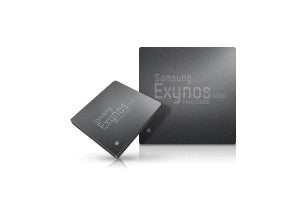
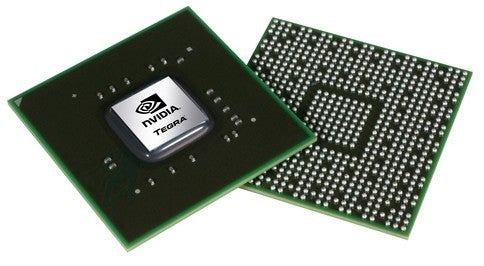

Moreover, we can rest the case with Adobe Flash and performance with the dual-core chipsets – if decently coded, one can browse most heavily Flash-ed pages without a hiccup, making Apple all the more stubborn not to include support for it in its mobile browser. We can turn it off in Android, but with any dual-core phone you never need to. All in all, the browsing experience itself is worth getting a dual-core phone.
And now we come to the Achilles heel of dual-core phones and tablets – software support. The multicore optimization of Android Honeycomb will come to phones with Android Ice Cream Sandwich later this year, and Apple will have measures for taking true advantage of the A5 chipset in iOS. Apps, however, that are written from the ground-up for dual-core mobile chipsets, are few and far between - you probably have enough fingers on you to count them all both for Android, and iOS. As you can guess, they are mostly games, where CPU/GPU power matters most.

Great Battles Medieval is dual-core optimized
Apple’s iPad 2 has more apps optimized for the A5 chip to show for it. The iPad 2-optimized versions of Dead Space HD and Infinity Blade, as well as racers like Asphalt 6: Adrenaline HD, are boasting visual and gameplay enhancements that are only working with the new chip in the iPad 2. We also have A5-requiring versions of apps like iMovie, for example, which have been optimized to distribute the load between the cores, allowing for faster multitrack audio editing, and stitching videos without a hiccup. The deep voice-recognition integration called Siri in the new iPhone 4S also wouldn't be possible without the computational prowess of the dual-core A5:

Apple dedicated a special attention at its iPhone 4S presentation to Infinity Blade's sequel, Infinity Blade 2, which is about to hit the App Store December 1, and said it has "visuals you've never seen on a mobile device". Hopefully it is a harbinger of things to come for the iPhone 4S and future multicore iPhones.
As for battery life, contrary to urban myths, we aren’t observing degraded metrics. Android phones with suboptimal power management barely make the workday even with single-core chipsets. Phones with well thought-out power management perform better than average, dual-core might and all. The Samsung Galaxy S II allowed us 62 hours between recharges with normal usage, running the often chastised in that respect Android, and that’s without the recent firmware update. Apple also cites battery life on the iPhone 4S that is the same as on the iPhone 4, despite the A5 monster inside, so the juicing shouldn't be a cause for concern.
Coming back to our imaginary friend waving their dual-core gadget in our face – do they have bragging rights? Yes, be it only for the gain in browser performance and the Full HD video capture. Is dual-core a staple necessity? Not until more quality software gets developed with multicore in mind from the onset.
What do you think, will Apple manage to squeeze the maximum out of its dual-core A5 on the iPhone 4S better than Android in terms of software to take advantage of it?
Better game visuals on the iPad 2 (right) compared to the the iPad show that dual-core does matter. Images courtesy of touchArcade
As for battery life, contrary to urban myths, we aren’t observing degraded metrics. Android phones with suboptimal power management barely make the workday even with single-core chipsets. Phones with well thought-out power management perform better than average, dual-core might and all. The Samsung Galaxy S II allowed us 62 hours between recharges with normal usage, running the often chastised in that respect Android, and that’s without the recent firmware update. Apple also cites battery life on the iPhone 4S that is the same as on the iPhone 4, despite the A5 monster inside, so the juicing shouldn't be a cause for concern.
Coming back to our imaginary friend waving their dual-core gadget in our face – do they have bragging rights? Yes, be it only for the gain in browser performance and the Full HD video capture. Is dual-core a staple necessity? Not until more quality software gets developed with multicore in mind from the onset.
What do you think, will Apple manage to squeeze the maximum out of its dual-core A5 on the iPhone 4S better than Android in terms of software to take advantage of it?


Popular stories





Latest News




Things that are NOT allowed:
To help keep our community safe and free from spam, we apply temporary limits to newly created accounts: