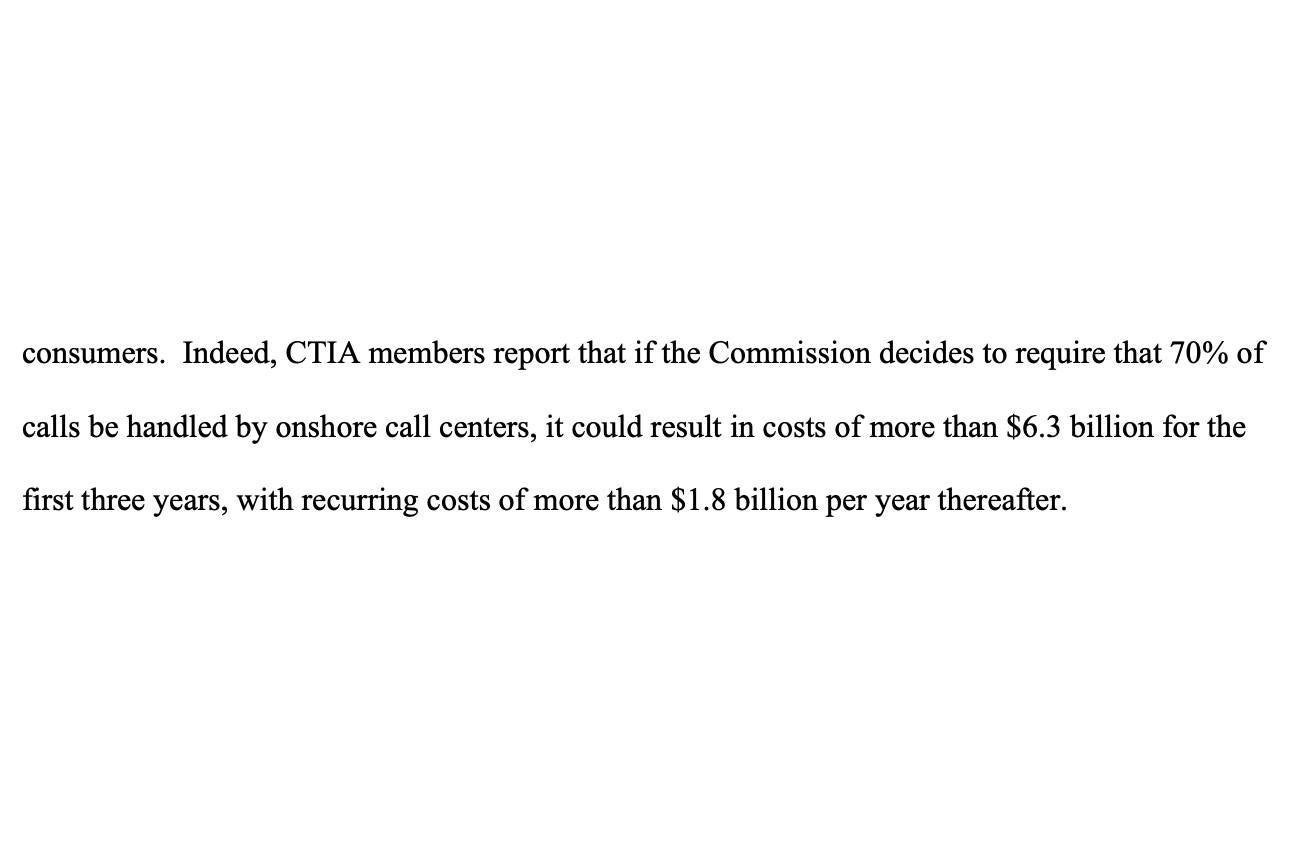
CTIA claims that US-based call centers would drive up costs. | Image by CTIA
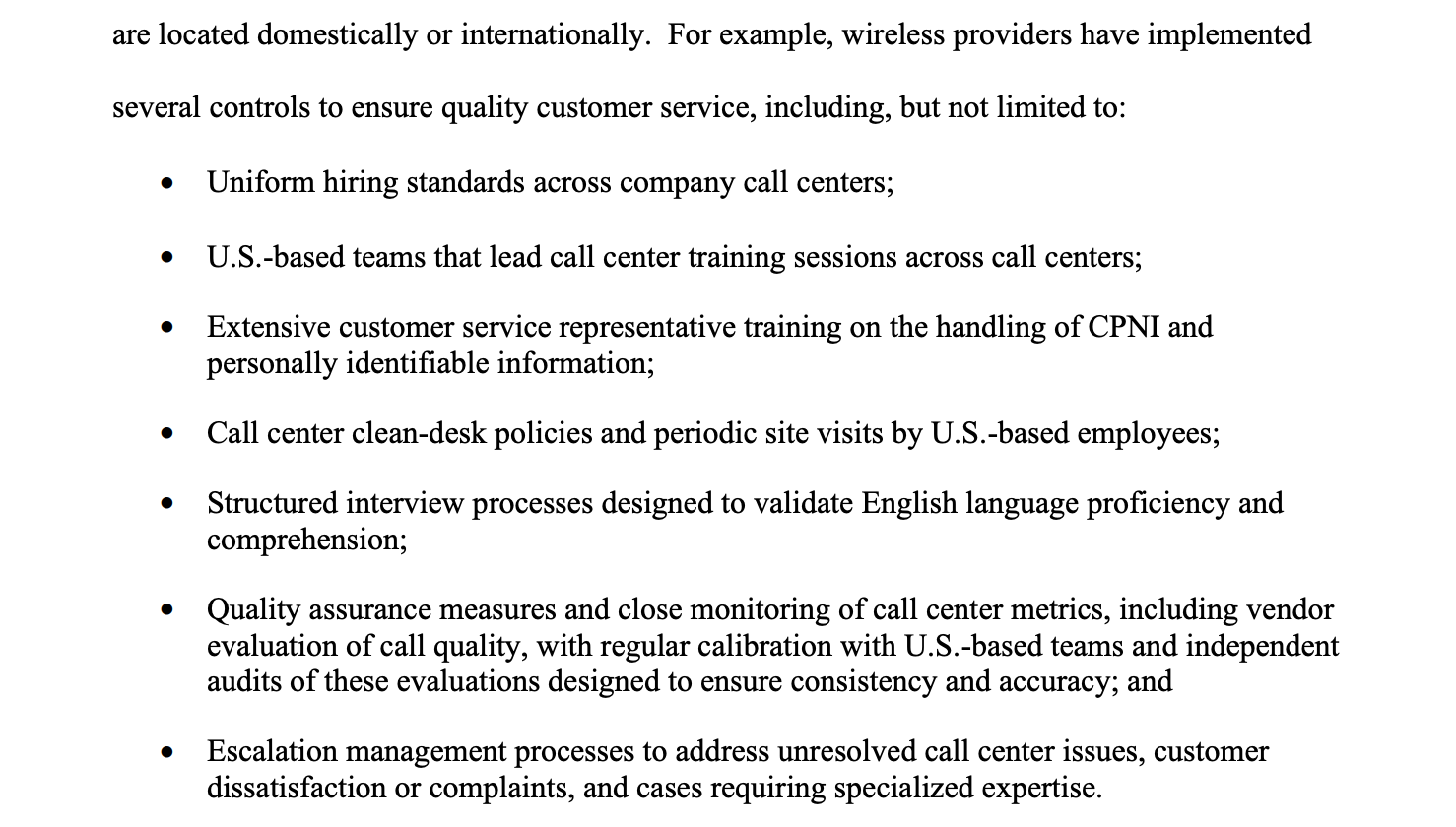
CTIA has taken issue with every single one of the FCC's assertions. The association notes that providing quality customer service is essential for carriers to retain customers in the hyper-competitive wireless market, and as such, they are already motivated to provide high-quality support.
The group fears that the FCC's unnecessary intervention, which it claims falls outside its legal purview, would disrupt a customer care model that currently prioritizes immediate resolution. CTIA argued that no actual evidence supports the need for these new rules.
According to the coalition, the proposed steps would undermine service quality, spike wait times, and drive up operational costs that would eventually trickle down to customers' bills.
The mandates would also divert resources away from network improvements and technological innovation just to ensure compliance.
Customer data and language proficiency
Wireless carriers are motivated to provide quality service. | Image by CTIA
CTIA also countered allegations that international call centers pose a threat to data security. It assured the FCC that carriers invest heavily to protect customers through various measures such as masking sensitive data, conducting staff background checks, and prohibiting representatives from copying customer information.
While the FCC suggested that carriers should at least inform customers when a call is handled outside the US, CTIA argued that this would only fuel customer frustration and prolong wait times. Similarly, letting customers choose to transfer to a US-based agent could backfire on service quality.
Recommended For You
CTIA members already enforce English proficiency standards, and they have asked the FCC to back off from a vague new mandate.
Interestingly, the filing even claims that some CTIA members report higher customer resolution rates at their offshore hubs.
While CTIA hypes up the use of AI to streamline the process, subscribers regularly report how utterly inept these bots are.
Getting a human agent on the line feels like a stroke of luck as it is, but customers often find themselves back at square one when routed offshore, where a language barrier prevents the two sides from understanding each other.
The price tactic
Whether it's shorter phone unlocking windows or US-based call centers, carriers love using the threats of price hikes to get regulators off their backs. While some of CTIA's points have merit, broadly rejecting every single one of the FCC's proposals suggests an unwillingness to acknowledge and resolve problems that customers are facing.
CTIA loves to talk about competition, but with the Big Three being the only facilities-based providers, all MVNOs and cable companies depend on them for wireless service.
Free Galaxy A17 5G with Straight Talk
Get a free Galaxy A17 with Straight Talk. To claim this deal, you need to pair the phone with activation on a Silver Unlimited Plan or higher. This tier costs $45 per month. Offer valid through 01/10/27 while supplies last online.
Anam Hamid is a computer scientist turned tech journalist who has a keen interest in the tech world, with a particular focus on smartphones and tablets. She has previously written for Android Headlines and has also been a ghostwriter for several tech and car publications. Anam is not a tech hoarder and believes in using her gadgets for as long as possible. She is concerned about smartphone addiction and its impact on future generations, but she also appreciates the convenience that phones have brought into our lives. Anam is excited about technological advancements like folding screens and under-display sensors, and she often wonders about the future of technology. She values the overall experience of a device more than its individual specs and admires companies that deliver durable, high-quality products. In her free time, Anam enjoys reading, scrolling through Reddit and Instagram, and occasionally refreshing her programming skills through tutorials.
A discussion is a place, where people can voice their opinion, no matter if it
is positive, neutral or negative. However, when posting, one must stay true to the topic, and not just share some
random thoughts, which are not directly related to the matter.
Things that are NOT allowed:
Off-topic talk - you must stick to the subject of discussion
Offensive, hate speech - if you want to say something, say it politely
Spam/Advertisements - these posts are deleted
Multiple accounts - one person can have only one account
Impersonations and offensive nicknames - these accounts get banned
To help keep our community safe and free from spam, we apply temporary limits to newly created accounts:
New accounts created within the last 24 hours may experience restrictions on how frequently they can
post or comment.
These limits are in place as a precaution and will automatically lift.
Moderation is done by humans. We try to be as objective as possible and moderate with zero bias. If you think a
post should be moderated - please, report it.
Have a question about the rules or why you have been moderated/limited/banned? Please,
contact us.












Things that are NOT allowed:
To help keep our community safe and free from spam, we apply temporary limits to newly created accounts: