T-Mobile can't stop dissing its own heavily-marketed feature
T-Mobile is de-emphasizing T-Satellite.
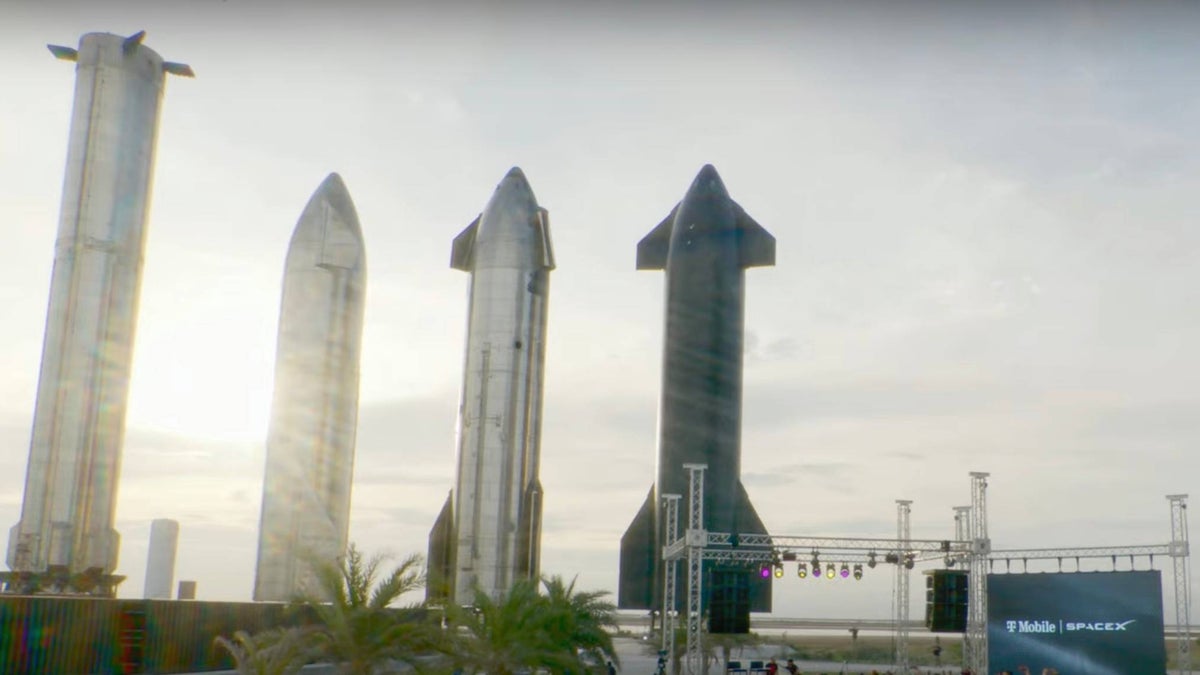
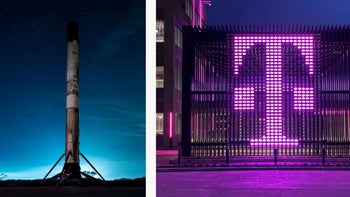
T-Mobile and Verizon continue to insist that satellite can't compete with terrestrial networks. | Image by Teslarati
T-Mobile and SpaceX struck up a high-profile partnership in 2022, culminating in the rollout of T-Satellite in July. Fast forward almost a year, and T-Mobile seemingly can't downplay the service enough.
The adoption of the SpaceX-powered T-Satellite feature may not have been enthusiastic, but does T-Mobile really need to remind us every single day? T-Mobile and the broader telecom industry seem intent on shaping a narrative that relegates satellite connectivity to niche use cases. Interestingly, that goes against the very fabric of the company, which considers an emergency call "the most important connection that T-Mobile carries."
T-Mobile's CEO, Srini Gopalan, regurgitated the low T-Satellite usage stats during a J.P. Morgan investor conference on Monday.
According to May data, T-Satellite accounts for only 0.0002% of the total network usage, making it a complementary service to land-based services.
Since each carrier controls different spectrum in different regions, sharing resources can help ensure a seamless experience for customers.
The carriers would still be able to innovate in how they package the service to customers, but the partnership would reduce costs and improve efficiency.
Industry watchers initially viewed this sudden camaraderie among the Big Three as a defensive huddle against SpaceX, which now owns spectrum and could bypass carriers altogether.
Verizon CEO Dan Schulman threw cold water on that theory, noting that only about 5 million homes in the US will be better off with a satellite connection. For more than 95% of its customers, satellite can't hold a candle to terrestrial networks.
The Federal Communications Commission (FCC) is pushing for at least three providers in the direct-to-device (D2D) space, looking fondly toward lagging rivals such as Amazon and AST SpaceMobile.
But while those companies are making moves, SpaceX is already miles ahead. A helping hand from the Big Three to reduce market fragmentation might be exactly what the underdogs need to close the gap, paving the way for more competition.
We heard it the first time
The adoption of the SpaceX-powered T-Satellite feature may not have been enthusiastic, but does T-Mobile really need to remind us every single day? T-Mobile and the broader telecom industry seem intent on shaping a narrative that relegates satellite connectivity to niche use cases. Interestingly, that goes against the very fabric of the company, which considers an emergency call "the most important connection that T-Mobile carries."
According to May data, T-Satellite accounts for only 0.0002% of the total network usage, making it a complementary service to land-based services.
Why the JV then?
If the numbers are so underwhelming, why are AT&T, T-Mobile, and Verizon planning to combine spectrum resources and partner with satellite operators to eliminate dead zones?
The carriers would still be able to innovate in how they package the service to customers, but the partnership would reduce costs and improve efficiency.
Because of the distribution of spectrum, I might own the right spectrum outside Zion National [Park] and Verizon might have it over Yellowstone, which doesn’t help the customer. Bringing it together creates a uniform spectrum world.
Srini Gopalan, T-Mobile CEO, May 2026
Why are carriers downplaying satellite connectivity?
38 Votes
Just telling us the truth about low usage.
23.68%
To downplay the importance of SpaceX.
39.47%
To control how this area is shaped.
36.84%
Starlink is no threat
Industry watchers initially viewed this sudden camaraderie among the Big Three as a defensive huddle against SpaceX, which now owns spectrum and could bypass carriers altogether.
Verizon CEO Dan Schulman threw cold water on that theory, noting that only about 5 million homes in the US will be better off with a satellite connection. For more than 95% of its customers, satellite can't hold a candle to terrestrial networks.
For us, the physics of satellite versus terrestrial are really kind of night and day. For 95% plus of our customers, we see satellite as a complementary service and very, very hard to compete with terrestrial networks.
Dan Schulman, Verizon CEO, May 2026
More players is a good idea
The Federal Communications Commission (FCC) is pushing for at least three providers in the direct-to-device (D2D) space, looking fondly toward lagging rivals such as Amazon and AST SpaceMobile.


Popular stories
Latest News
Things that are NOT allowed:
To help keep our community safe and free from spam, we apply temporary limits to newly created accounts: