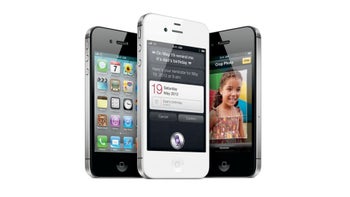
Apple iPhone 4s
Featured in Best Music
640 x 960 pixels
0.3 MP VGA front
Dual-core, 800 MHz
MEMORY: 64 GB
US carrier availability
Available: AT&T, U.S. CellularDiscontinued: Verizon, Sprint, T-Mobile, Cricket, Virgin Mobile, Boost Mobile, Alltel
Pros
- Large pixel size (1.4 μm)
- Small dimensions (4.54 x 2.31 x 0.37 inches)
Cons
- Lacks microSD slot for storage expansion
- Proprietary USB connector - have to use its cable instead of a standard microUSB
Description
Design
- Device type:
- Smart phone
- OS:
- iOS (9.x, 8.x, 7.x, 6.1, 6, 5.1, 5)
- Dimensions:
- 4.54 x 2.31 x 0.37 inches (115.2 x 58.6 x 9.3 mm)
- Weight:
- 4.94 oz (140 g)
the average is 5.2 oz (150 g)
- 4.94 oz (140 g)
- Materials:
- Main body: glass; Accents: aluminum
- Colors:
- Black, White
Display
- Physical size:
- 3.5 inches
- Resolution:
- 640 x 960 pixels
- Pixel density:
Pixel density - The pixel density of a display represents the number of pixels over an area of one inch. It’s measured in “pixels per inch”, or ppi. The higher the number, the more detailed and good-looking the display is.
- 326 ppi
- Technology:
Technology - There are two main screen technologies currently used in phones and tablets: LCD and AMOLED. The former usually features a light source and liquid crystals, while the latter is based on organic light-emitting diodes. Newer LCD variations like IPS-LCD and Super-LCD allow for very accurate color reproduction and very wide viewing angles, where no significant image quality loss is observed. Current AMOLED screens differ in such a way that they can exhibit much more saturated colors (sometimes too much) and incredibly high contrast levels, which is due to black color being completely black in AMOLED displays.
- IPS LCD
- Screen-to-body ratio:
- 55.27 %
- Peak brightness:
- 500 cd/m2 (nit)
- Features:
- Light sensor, Proximity sensor, Oleophobic coating
Camera
- Camera:
- 8 megapixels
- Flash:
- LED
- Aperture size:
Aperture size - The aperture of a camera is the opening through which light travels before it reaches the camera sensor. The smaller the number is, the bigger this opening is, allowing for more light to pass.
- F2.4
- Focal length (35mm equivalent):
- 35.00 mm
- Camera sensor size:
- 1/3.2"
- Pixel size:
- 1.4 μm
- Hardware Features:
- Autofocus, Back-illuminated sensor (BSI)
- Software Features:
- Face detection, Digital image stabilization, Touch to focus, Geo tagging
- Camcorder:
- 1920x1080 (1080p HD) (30 fps)
- Features:
- Digital image stabilization
- Front-facing camera:
- 0.3 megapixels VGA
Hardware
- System chip:
System chip - Most modern handsets use an advanced chip that includes many of the device’s hardware modules like the processor, Wi-Fi, Bluetooth and sometimes even the wireless radio. This field shows what particular system chip (or System-on-a-Chip) is used in the phone.
- Apple A5
- Processor:
Processor - The processor is the main computing component of a phone and is a major factor when it comes to the overall speed of the device. Some more powerful smartphones use dual-core and quad-core processors designed to deliver greater performance.
- Dual-core, 800 MHz, ARM Cortex-A9
- Graphics processor:
- PowerVR SGX 543MP2
- System memory:
System memory - System memory, or RAM memory is the type of memory that the device uses to temporarily store data from the OS or currently-running apps. The more RAM available to the device, the better the performance will be when multiple or heavier programs are running.
- 0.5 GB RAM
- Built-in storage:
- 64 GB
Battery
- Type:
- Not user replaceable, Li - Ion
- Talk time:
- 14.00 hours
the average is 15 h (880 min)
- 14.00 hours
- Stand-by time:
- 8.3 days (200 hours)
the average is 16 days (375 h)
- 8.3 days (200 hours)
- Talk time (3G):
- 8.00 hours
the average is 17 h (1014 min)
- 8.00 hours
- Music playback:
- 40.00 hours
- Video playback:
- 10.00 hours
Multimedia
- Mirroring:
- TV-out
- Music player:
- Filter by:
- Album, Artist, Genre, Playlists
- Features:
- Album art cover, Background playback
- Filter by:
- Speakers:
- Earpiece, Loudspeaker
- Additional microphone(s):
- for Noise cancellation
Cellular
- CDMA:
CDMA - Code Division Multiple Access. A technique of multiplexing, also called spread spectrum, in which analog signals are converted into digital form for transmission. For each communication channel, the signals are encoded in a sequence known to the transmitter and the receiver for that channel. The foremost application is digital cellular phone technology from QUALCOMM that operates in the 800MHz band and 1.9GHz PCS band. CDMA phones are noted for their excellent call quality and long battery life.
- 800, 1900 MHz
- GSM:
- 850, 900, 1800, 1900 MHz
- UMTS:
- 850, 900, 1900, 2100 MHz
- Data:
- HSDPA 14.4 Mbit/s, HSUPA 5.76 Mbit/s, UMTS
- Micro SIM:
- Yes
Phone features
- Sensors:
- Accelerometer, Gyroscope, Compass
- Notifications:
- Music ringtones (MP3), Polyphonic ringtones, Vibration, Flight mode, Silent mode, Speakerphone
- Other features:
- Voice dialing, Voice commands, Voice recording
Connectivity
- Bluetooth:
- 4.0
- Wi-Fi:
- 802.11 b, g, n
- Mobile hotspot:
- Yes
- USB:
- USB 2.0
- Connector:
- Proprietary
- Features:
- USB charging
- Positioning:
Positioning - This field shows the positioning systems supported by the device. There are three main types: GPS, A-GPS and GLONASS. GPS - This is one of the most widespread global positioning technologies, developed and maintained by the U.S. government. It uses satellites in order to detect your location. Works best in clear weather. A-GPS - A-GPS stands for Assisted GPS and is the industry standard for positioning and navigation. “Assisted” means that it can use local wireless networks, in addition to satellites, for quicker and more precise localization. GLONASS - GLONASS is a global positioning system, developed by the Russian Federation. It’s very similar to GPS, but isn’t so popular in cell phones.
- A-GPS, Glonass
- Navigation:
- Turn-by-turn navigation, Voice navigation
- Other:
- Computer sync, OTA sync
Availability
- Officially announced:
- 04 Oct 2011
Shopping information
- Accessories:
- Apple Earphones with Remote and Mic, Dock Connector to USB Cable, USB Power Adapter, Documentation
Regulatory Approval
- FCC approval:
FCC approval - The Federal Communications Commission (FCC) is an independent United States government agency, directly responsible to Congress. The FCC was established by the Communications Act of 1934 and is charged with regulating interstate and international communications by radio, television, wire, satellite and cable. The FCC's jurisdiction covers the 50 states, the District of Columbia, and U.S. possessions. Every wireless phone device that is sold in the U.S. has to be tested and approved for sale by the FCC.
- Date approved:
Date approved - Shows the date when the particular phone is approved by the Federal Communications Commission
- 04 Oct 2011
- FCC ID value:
FCC ID value - Shows the FCC Identifying value of the particular phone
BCG-E2430A link
- FCC ID value:
- Date approved:
- FCC measured SAR:
FCC measured SAR - Working closely with federal health and safety agencies, such as the Food and Drug Administration (FDA), the FCC has adopted limits for safe exposure to radiofrequency (RF) energy. These limits are given in terms of a unit referred to as the Specific Absorption Rate (SAR), which is a measure of the amount of radio frequency energy absorbed by the body when using a mobile phone. The FCC requires cell phone manufacturers to ensure that their phones comply with these objective limits for safe exposure. Any cell phone at or below these SAR levels (that is, any phone legally sold in the U.S.) is a "safe" phone, as measured by these standards. The FCC limit for public exposure from cellular telephones is an SAR level of 1.6 watts per kilogram (1.6 W/kg).
- Head:
- 1.18 W/kg
- Measured in:
- 1900 MHz
- Body:
- 1.15 W/kg
- Measured in:
- 850 MHz
- Head:
To see the full specifications with in-depth details click here.
Alternative variants
We list only the specs that are different than the main variant
Apple iPhone 4s 16GB
differences:
- Built-in storage:
- 16 GB
Apple iPhone 4s 32GB
differences:
- Built-in storage:
- 32 GB
Despite our efforts to provide full and correct Apple iPhone 4s specifications, there is always a possibility of making a mistake. If you see any wrong or incomplete data, please LET US KNOW.
If you are interested in using our specs commercially, check out our Phone specs database licensing page.