FCC vote next month could affect the 5G service of T-Mobile, Verizon, and AT&T
The FCC is expected to hold a vote on July 22 that could lead to improvements in 5G coverage for the "Big 3."
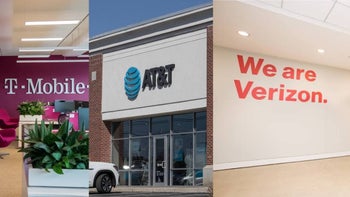
The US "Big 3" get an opportunity to improve 5G coverage | Image by PhoneArena
The Federal Communications Commission (FCC) plans to vote on an order that would result in an auction of mid-band spectrum next year. Mid-band spectrum is very important when it comes to 5G connectivity, and it's a story that we have written about from the start.
How T-Mobile made the right 5G decision while Verizon and AT&T did not
Back when Verizon, AT&T, and T-Mobile were planning their 5G build outs, Verizon and AT&T opted to use millimeter wave (mmWave) airwaves. It made sense to those carriers to go with the spectrum that would support the fastest data speeds. But those two wireless providers didn't think about one of the physical characteristics of mmWave spectrum. These signals travel very short distances and are easily blocked by buildings and trees.
T-Mobile Chief Technical Officer Neville Ray had a better idea. While not as fast as mmWave, mid-band spectrum travels faster than low-band airwaves. And while it might not travel as far as low-band, mid-band does travel farther than mmWave. This is why mid-band has been nicknamed the "Goldilocks of 5G."
Verizon and AT&T spent billions to obtain mid-band spectrum
Ray decided to buck the trend and build-out T-Mobile's 5G service using mid-band airwaves. The problem was that mid-band spectrum was hard to find. But T-Mobile knew where it could get some. For years, Sprint had been holding a hoard of 2.5GHz mid-band spectrum and for $26 billion in T-Mobile stock, Sprint was acquired by T-Mobile. You didn't think that T-Mobile acquired Sprint for its operational skill and abilities, did you?
My opinion of current 5G service
320 Votes
Not as fast as I thought it would be
41.25%
I don't notice any changes
16.25%
I can't wait for 6G
18.13%
Not as many new uses for 5G as I thought
24.38%
Verizon and AT&T soon realized the blunder they had made, knowing that it would cost too much and take forever to cover the US with mmWave spectrum. So both decided to pivot and spent more than $68 billion combined at an FCC auction for C-Band licenses. T-Mobile became the early 5G leader in the US, a position that it arguably still holds today.
Next month, the FCC will vote on whether it will hold an auction of mid-band spectrum
On July 22, the FCC will vote to hold an auction of 160 MHz of spectrum in the Upper C-Band during 2027. A law passed last year required an auction of at least 100 MHz of spectrum. However, an FCC statement said that the regulatory agency wanted to let go of "significantly more spectrum than the minimum required under law."
Such an FCC auction would be expected to bring in billions of dollars in winning bids. The FCC has felt the pressure to auction off the mid-band spectrum due to current and future heavy demand for wireless connectivity for smartphones, other connected devices, and even self-driving vehicles. For 5G connectivity, the C-Band offers the perfect mix of performance and coverage.
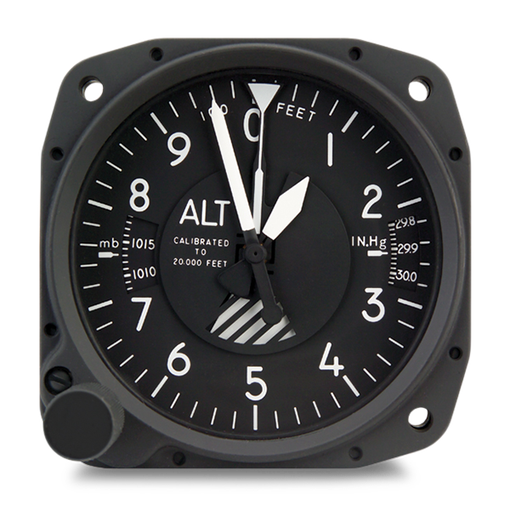
Some C-Band spectrum interferes with airplane altimeters. | Image by MidContinent Instruments
The Upper C-Band is currently used for satellite transmissions and airline altimeters. You might recall that when AT&T and Verizon first wanted to employ the C-Band spectrum they acquired, they were forced by airlines and airports to wait to use some frequencies because of interference with the altimeters on aircraft.
Because of the potential for interference with the spectrum being made available in the proposed auction, new users will have to make sure that there is no issue caused by their use of the spectrum won during the auction. Some current users might have to move to a different part of the spectrum.
We expect the "Big 3" to make bids if the auction is held
Altimeters are used by pilots, when landing in inclement weather, to measure how many feet off the ground they are flying. This makes the altimeter an important tool. The FCC says that it envisions the use of "retrofit rebates" to help airlines insulate altimeters so they are unaffected by 5G interference.
We would expect the "Big 3" US carriers (Verizon, T-Mobile, and AT&T) to be involved if the auction does get the green light to proceed. You might think that all three carriers have enough mid-band spectrum, but that is not the case and may never be the case.


Popular stories
Latest News


![Another batch of Galaxy S26 series users in the US are getting a nice surprise today [UPDATED]](https://m-cdn.phonearena.com/images/article/183643-wide-two_350/Another-batch-of-Galaxy-S26-series-users-in-the-US-are-getting-a-nice-surprise-today-UPDATED.webp)
Things that are NOT allowed:
To help keep our community safe and free from spam, we apply temporary limits to newly created accounts: