When can we expect a Samsung Galaxy phone with a solid-state battery?
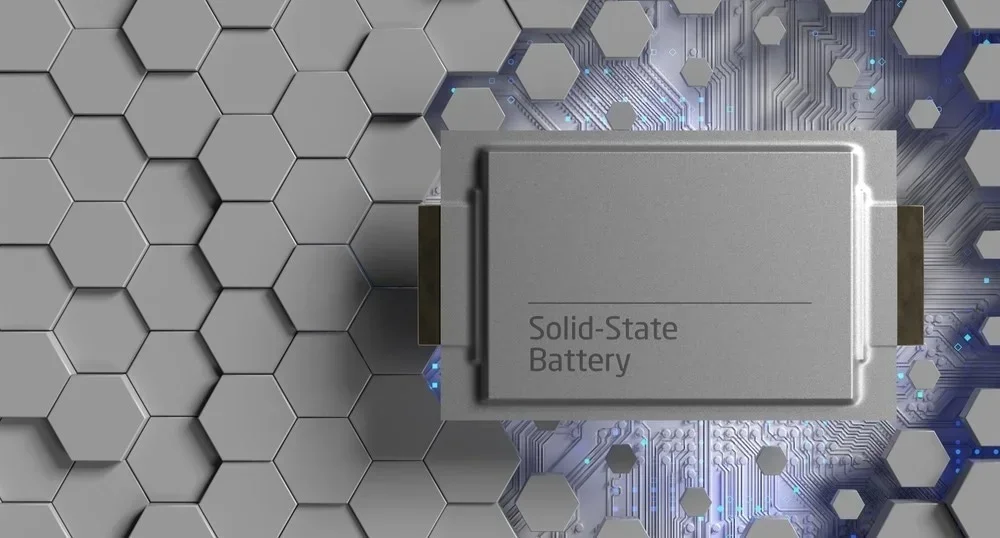
Will we ever see a Samsung phone with a solid-state battery? This thought occurred to me while researching my sources for the Donut solid-state battery article. Let's investigate!
But 2019 came and went into the annals of history, and no solid-state Galaxy emerged. What's the current state of Samsung's solid-state battery push, and when, if ever, will we get a solid-state battery phone?
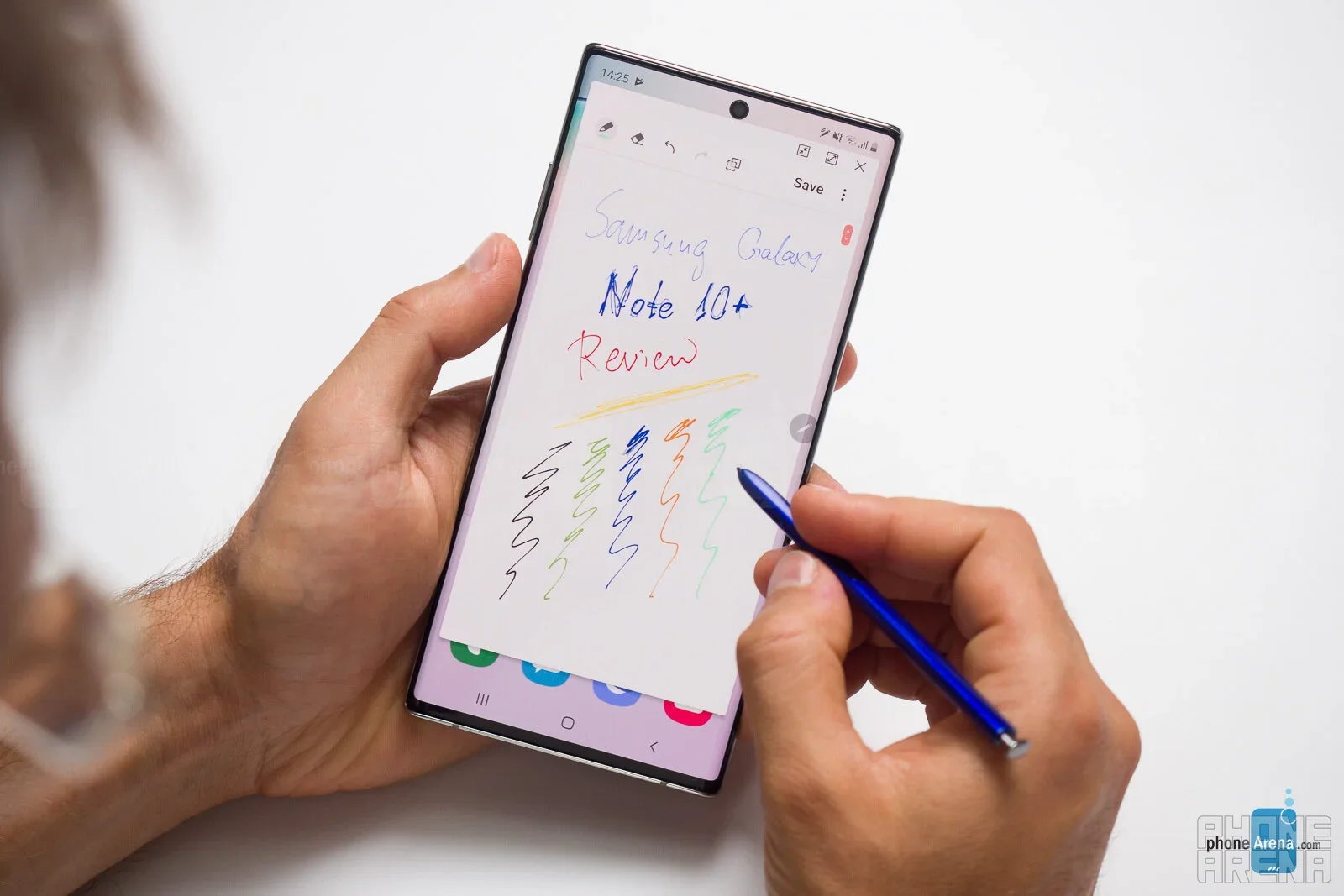
Samsung Galaxy Note 10 was supposed to use a solid-state battery
The Galaxy Note 10 was supposed to be the first phone with a solid-state battery | Image by PhoneArena
The first real hint that Samsung is planning to use a solid-state battery in one of its smartphones came in 2017. An article published in The Korean Herald cited an anonymous Samsung SDI executive, saying:
Our technological level to produce a solid-state battery for smartphones will be mature enough in one to two years. However, it depends on Samsung Electronics whether it will be used for phones.
Samsung SDI is the department responsible for renewable energy and energy storage systems development. This department has been working on a solid-state battery solution for more than a decade.
Recommended For You
Many news outlets picked up that story back in 2017, but nothing happened on that front in the next couple of years.
Samsung wearables will most likely get solid-state batteries first
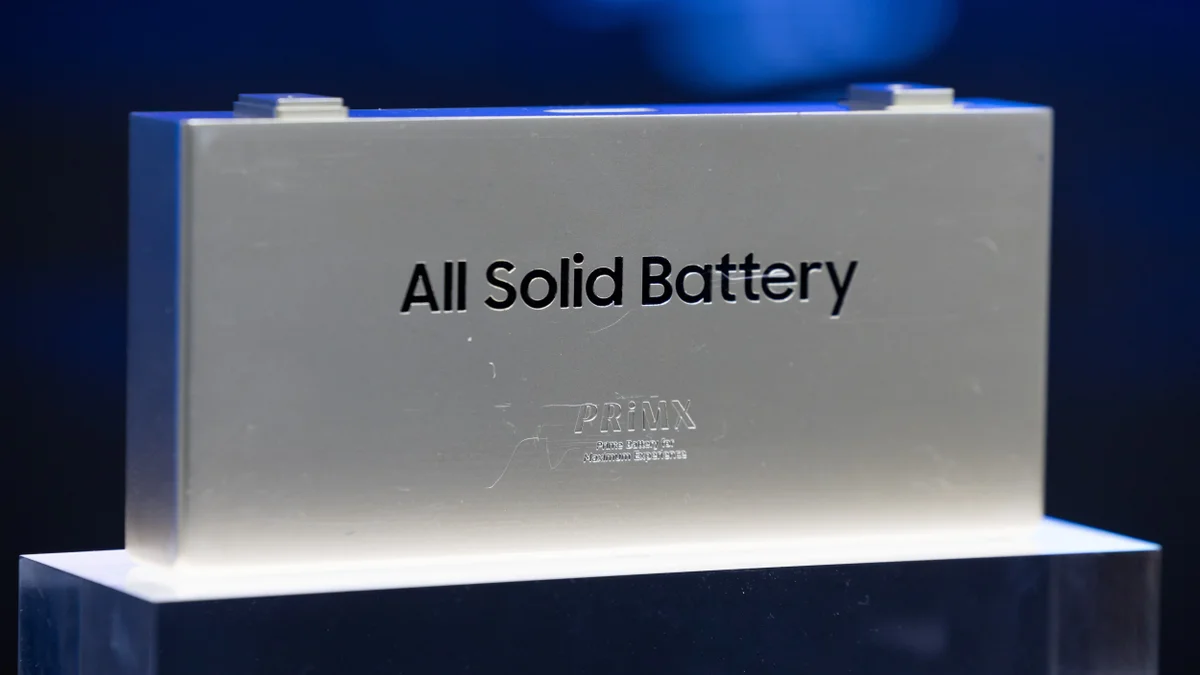
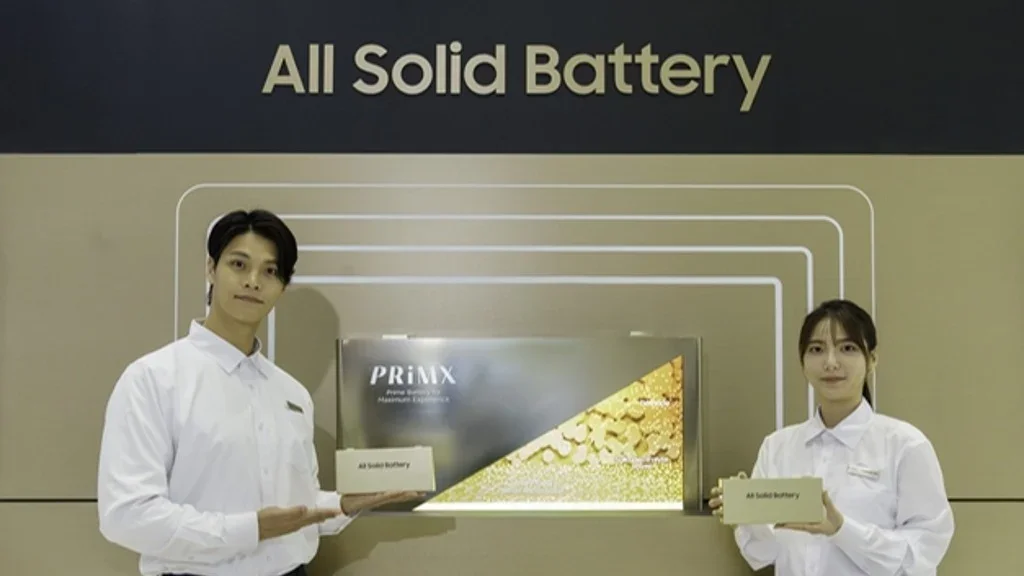
Samsung's all-solid battery | Image by Samsung Electro-Mechanics
The next piece of the puzzle came on September 22, 2024, in the form of a quiet press release from Samsung Electro-Mechanics, another branch of the Korean chaebol, dealing with electronic components and materials.
Here's an excerpt from the press release (translated from Korean):
Samsung Electro-Mechanics announced on the 22nd that it has successfully developed the world's first compact all-solid-state battery for use in wearable devices.
There are no details regarding the tech involved, but the article mentions that the new batteries can be molded in any shape and have an energy density of around 200 Wh/kg, considered to be the highest in the industry at the time.
In comparison, the Donut solid-state battery has an energy density of 400 Wh/kg, exactly twice the density Samsung was able to achieve, and, according to Donut Labs executives, their battery is far from the theoretical energy density ceiling.
Samsung Electro-Mechanics is developing prototypes and conducting tests with customers to apply compact all-solid-state batteries to wearable devices. The company aims to enter the wearables market by the end of 2026 with mass production.
This sounds quite promising, especially given the fact that Donut Labs haven't mentioned anything about making their solid-state battery available for smaller gadgets such as laptops, smartphones, and wearables.
Are we finally going to get Galaxy Watch models with days of battery life? Why not a week? Sadly, no. At least not right away.
Silicon-carbon batteries are still better
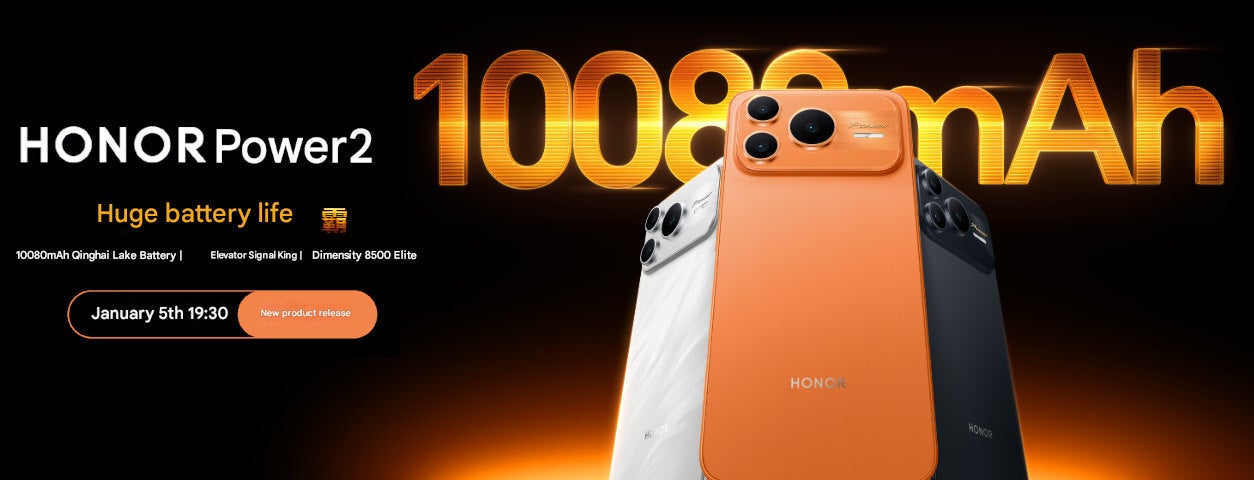
The Honor Power 2 was unveiled in China with a massive 10080mAh silicon-carbon battery | Image by Honor
We covered the silicon-carbon tech with a separate article, but in a nutshell, this tech imbues silicon in the graphene anode, boosting the capacity of the battery. Silicon can hold more charge (theoretically up to 1,300 Wh/kg), but it's extremely brittle and unstable.
Honor was the pioneer in getting the tech to the mainstream market with the Honor Magic 5 Pro (in China) and subsequently the Magic 6 Pro globally.
The latest model, the Honor Power 2, features a fourth-generation silicon-carbon battery with a 10,080 mAh capacity and an energy density of 821 Wh/kg.
This is four times better than what Samsung promises for their first-generation solid-state battery and two times higher energy density than the Donut solid-state battery.
But solid-state batteries have greater potential overall. While silicon-carbon batteries still use liquid electrolyte and geopolitically significant metal ores, solid-state batteries use primarily carbon and silicon, which are abundant, cheap and readily available.
When will we get a Galaxy phone with a solid-state battery?
The future of battery tech is indeed solid-state | Image by PixaBay
If everything goes according to plan, Samsung might show early prototypes of wearables equipped with solid-state batteries as early as this year's MWC in Barcelona. First-generation models will most likely offer similar battery life to their conventional lithium-ion counterparts but charge much faster – in a matter of minutes, even seconds.
I don't think the Galaxy S26 will feature a solid-state battery; the models are already in the warehouses, waiting for the big reveal a month from now. However, Samsung has the opportunity to get the tech inside the Galaxy S27 series if everything goes smoothly with the wearable's debut. And that's a big "if."
I'll keep on monitoring the solid-state battery field for new developments, but I'm pretty excited about the future of energy storage. We might've solved the battery equation, or at least found a much better solution!
Six-month unlimited plan is now 57% off
$90
$210
$120 off (57%)
Mint Mobile is now allowing you to get whichever plan you like for either three, six, or 12 months for just $15/mo. If you go for the six-month unlimited service, for instance, you'll now have to pay just $90 upfront instead of $210.
Mariyan, a tech enthusiast with a background in Nuclear Physics and Journalism, brings a unique perspective to PhoneArena. His childhood curiosity for gadgets evolved into a professional passion for technology, leading him to the role of Editor-in-Chief at PCWorld Bulgaria before joining PhoneArena. Mariyan's interests range from mainstream Android and iPhone debates to fringe technologies like graphene batteries and nanotechnology. Off-duty, he enjoys playing his electric guitar, practicing Japanese, and revisiting his love for video games and Haruki Murakami's works.
A discussion is a place, where people can voice their opinion, no matter if it
is positive, neutral or negative. However, when posting, one must stay true to the topic, and not just share some
random thoughts, which are not directly related to the matter.
Things that are NOT allowed:
Off-topic talk - you must stick to the subject of discussion
Offensive, hate speech - if you want to say something, say it politely
Spam/Advertisements - these posts are deleted
Multiple accounts - one person can have only one account
Impersonations and offensive nicknames - these accounts get banned
To help keep our community safe and free from spam, we apply temporary limits to newly created accounts:
New accounts created within the last 24 hours may experience restrictions on how frequently they can
post or comment.
These limits are in place as a precaution and will automatically lift.
Moderation is done by humans. We try to be as objective as possible and moderate with zero bias. If you think a
post should be moderated - please, report it.
Have a question about the rules or why you have been moderated/limited/banned? Please,
contact us.




Things that are NOT allowed:
To help keep our community safe and free from spam, we apply temporary limits to newly created accounts: