Camera comparison: iPhone 6 and iPhone 6 Plus vs iPhone 5s, Galaxy S5, LG G3, Lumia 1520, Xperia Z2, HTC One (M8)
You can now read:
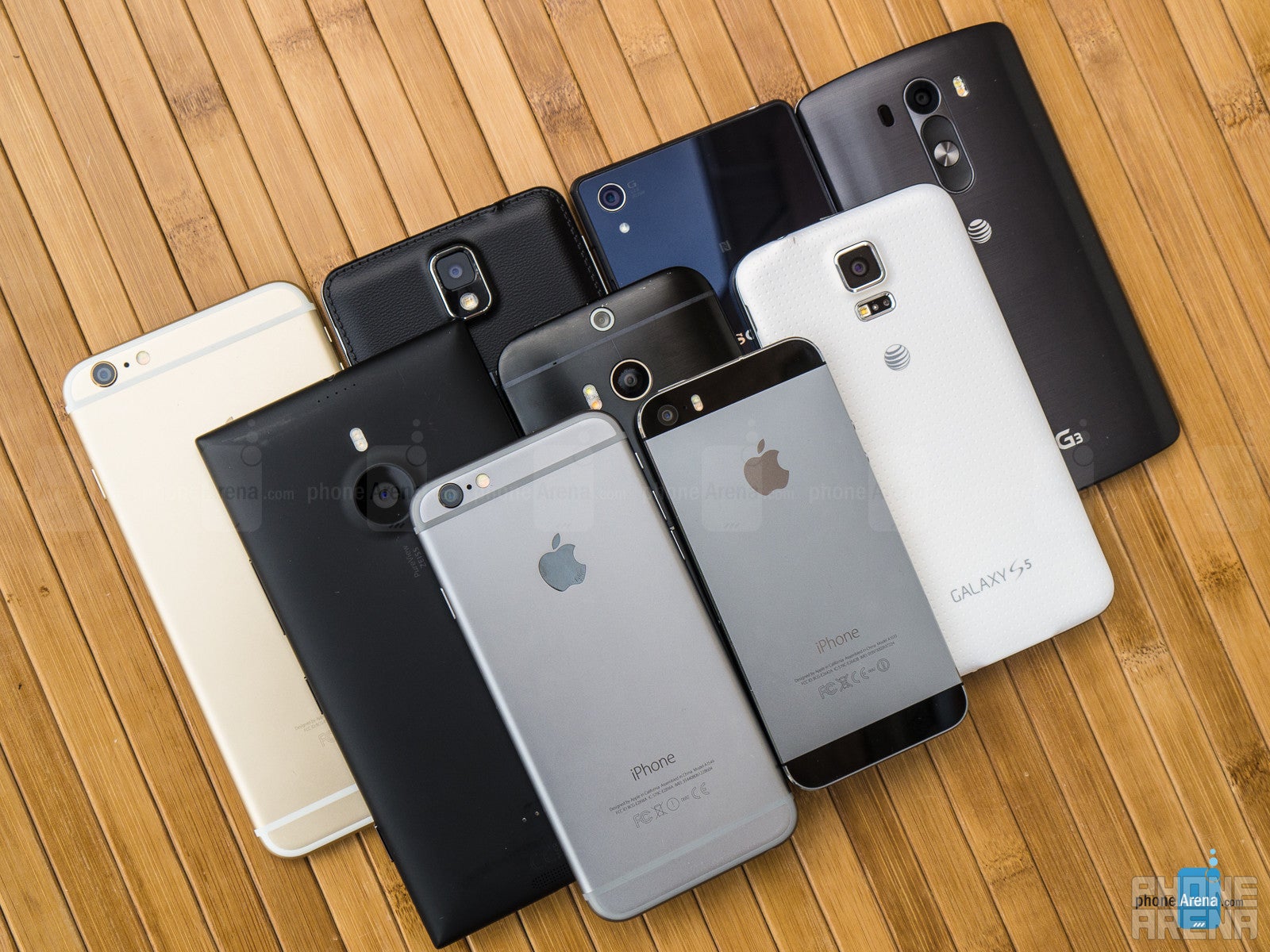
- iPhone 6 vs iPhone 6 Plus vs iPhone 5s vs Galaxy S5 vs LG G3 vs Lumia 1520 vs Xperia Z2 vs HTC One (M8) Camera comparison
- Samsung Galaxy Note 4 vs iPhone 6 vs iPhone 6 Plus vs Sony Xperia Z3 vs LG G3 vs Galaxy S5 vs Galaxy Note 3 Camera comparison
Introduction
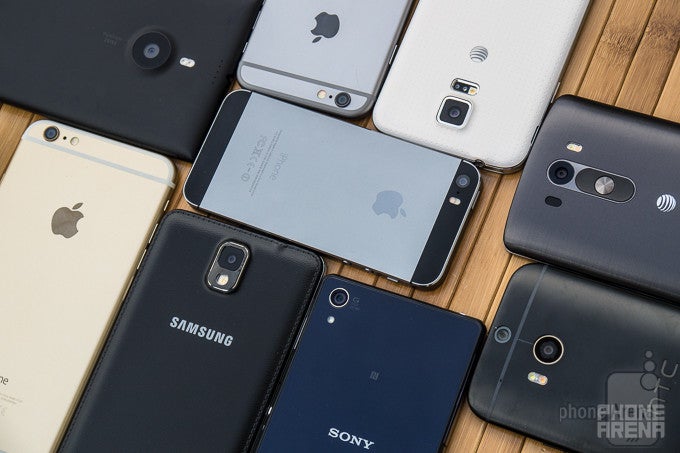
Technology has reached a state where making phone calls is far from a phone's most frequently used feature. Instead, people use their phones to look up stuff on the web, to access social networks, and, of course, to take photos and videos. That's why manufacturers invest a lot of time and effort in equipping their phones with quality cameras.
Colors
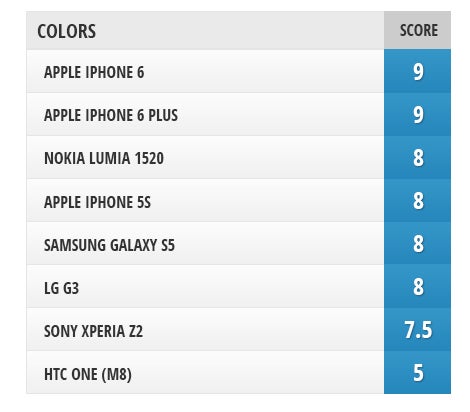
We bet you're expecting to see identical performance from the cameras on the iPhone 6 and iPhone 6 Plus. And you're absolutely correct if you do – their daytime samples have turned out splendid, and we don't see any difference in quality between the two phones' photos. On top of that, color reproduction in the iPhones' images is excellent. Colors are vivid and eye-pleasing, without being blown out of proportion, as other cameras have a tendency of doing. Take a look at the samples below and see what we mean. Notice how in the iPhone 6 and 6 Plus photos flower petals look vibrant and natural with their colors? Most other phones have increased the saturation and contrast in their photos to a point where the same color hues appear overly bright.
The Nokia Lumia 1520 has a lot of potential and is one of the better performers in this race, but its results are rather inconsistent. Some of its photos have excellent color balance and accuracy, while others turn out overly warm or cold. Colors are neutral to vivid, but shades that are bright in real life could end up oversaturated in the produced image.
Sony's Xperia Z2 has its own opinion about things. With colors, in particular, its camera keeps their saturation at a neutral, almost washed-out level, with a slight cold-ish tone in several scenes. This might appeal to some people, yet those who'd rather have a bit more vibrancy in their images might be left underwhelmed.
The Samsung Galaxy S5's camera has a tendency to lean towards the colder side, as is typical for most of Samsung's cameras, actually. That's especially noticeable in shades of red, which appear slightly pink-ish. Color saturation is slightly boosted, and we're okay with that.
Shooting with the LG G3 produces vivid, colorful images. Perhaps their color saturation could have been not as intense, but we'd take them as they are. Some scenes appear colder or warmer than they should, but the deviation is slight and doesn't bother us.
The HTC One (M8) could have done better. Some scenes have their colors reproduced neutrally, but in others, there's some serious skewing going on. In our samples below, shades of orange appear yellow, shades of yellow appear white, and the sky's blue hue is very unnatural. Also, we noticed that its camera increases color saturation way too much in cloudy scenes.
Details
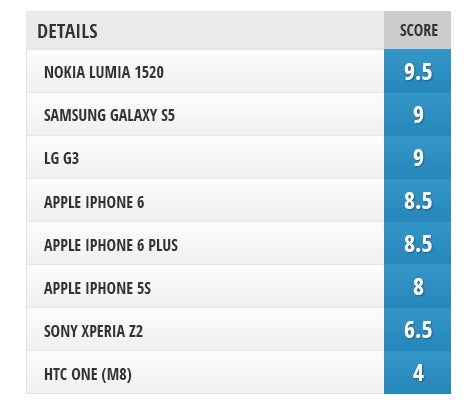
Once again, the iPhone 6 and iPhone 6 Plus produce photos containing an identical amount of detail. And given the 8-megapixel resolution of their sensor, we're delighted to see how much detail their photos pack. Leaves of trees and blades of grass are clearly visible without being overly soft or sharp. At the same time, there's barely any noise visible in their daytime photos. But the best cameras they are not, at least not in this category.
The Nokia Lumia 1520 captures even better details in its photos. It has a high-res, 20MP sensor, after all, so we weren't expecting any lesser results. Even the downsampled, 5MP samples below rival the iPhone's images in terms of details, and once you compare full-res images side by side, it becomes clear that the Lumia has the upper hand. Noise is low to non-visible.
Unsurprisingly, the LG G3 excels in detail reproduction. When you look at images from up close, however, it is clear to see that details are slightly softened, presumably by the camera's noise suppression algorithms. Nevertheless, we're satisfied with what we see.
The camera on the iPhone 5s was, and still is, a formidable contender. Its photos are low on noise and high on details, especially given the lesser resolution of its sensor. It can't quite beat the iPhone 6, but it is good enough to satisfy even the more demanding photographers out there.
Lastly, the HTC One (M8) can't keep up with its mere 4 megapixels of resolution. Sure, the photos are usable, but forget about zooming in and seeing anything pretty as fine details are non-existent.
Indoor
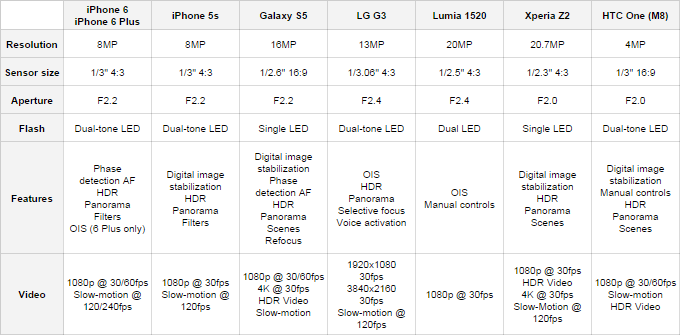
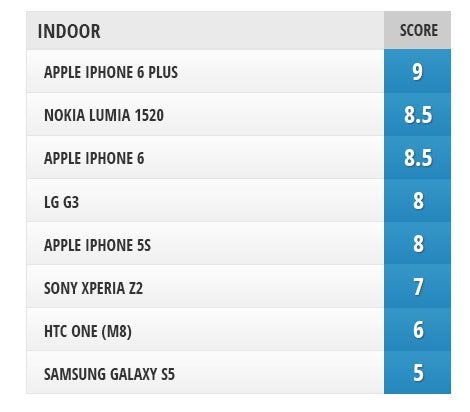
As for the iPhone 6, it is one of the better performers in the bunch. Digital noise is present, however, and in darker photos it is very easy to spot. On the upside, details are plentiful considering the light conditions. The LED flash light on the iPhone 6 and iPhone 6 plus fill the frame with plenty of light, even from a distance.
The LG G3's camera features optical image stabilization as well, and to no surprise, its low-light images are very steady. Noise is pretty much absent, but that's because the camera's software is reducing it quite aggressively. That explains why fine details are smeared, but that's not too bothering unless you zoom in. The LED light is strong and fills the frame well when fired.
The Sony Xperia Z2 can't keep up with the competition. Blur is easy to spot in its low-light images, and noise spoils the fine details. Its photos are pretty good overall, but not as good as we wish they were. On the upside, its flash performs really well and color accuracy is retained even when it fires.
The Samsung Galaxy S5 produced mostly mediocre low-light photos, which was something we did not expect. Some were decent, some were at the verge of being discarded as unusable due overwhelming amounts of noise or blur. The LED light is strong, but it usually renders the image colder than it actually is.
Night
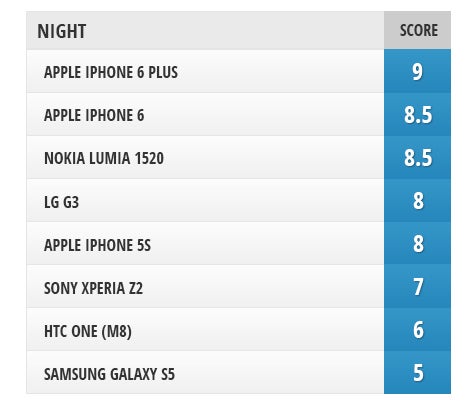
As we usually do in our in-depth camera comparisons, we took a bunch of night photos to see how the phones handled extreme low-light scenarios. Unsurprisingly, the iPhone 6 Plus once again took better photos than the iPhone 6, with less noise and no motion blur, due to the reasons we described on the previous page. Moreover, it is surprising to see how much detail the 6 Plus has managed to capture with so little light. As for the iPhone 6, its night photos contain a generous amount of details, but there's quite a lot of visible noise. Nevertheless, we're more than satisfied with its perofmance at night.
The LG G3 takes great night photos, but not every single time. While the noise is low and exposure is adequate, we see way too much detail softening in most photos, and that just isn't pretty. Still, if you don't zoom too much, you'll be amazed by the G3's night photos.
Our night photos from the Sony Xperia Z2 turned out decent, but still, we were expecting to see better results. Details are soft and grainy compared to what we saw from the aforementioned phones. Also, color accuracy is a bit shaky.
The night-time photos produced by the Samsung Galaxy S5 could not impress us at all. Most of them were underexposed, blurry, or noisy, which made them unusable. That's why having a good light source nearby is advised when taking photos in very low light.
Video
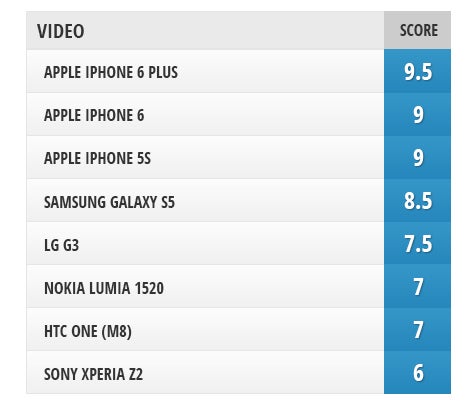
Last year's iPhone 5s was one of the best phones for taking videos, and the new models are even better performers in this category. Videos from both the iPhone 6 and iPhone 6 Plus are smooth, with lots of details and minimal amounts of digital noise. Furthermore, the two show how steady the frame stays when properly-executed image stabilization is applied. The iPhone 6 Plus uses optical image stabilization, which is why its videos are even steadier than the iPhone 6's. Also, we're happy to report that the newly-added continuous auto-focus is one of the fastest we've seen on a phone. The only thing lacking is sound. On both phones, it is of good quality, but its volume is rather low.
By default, the Samsung Galaxy S5 does not apply any kind of image stabilization, and it shows looking at its videos. But that aside, its videos are actually pretty good, with lots of details and accurate colors. The sound in them is loud and clear.
Videos shot with the LG G3 turn out good, with lots of details and little noise, but could have been better. Dark areas, such as shadows under the trees, are too dark, while light areas, like the sky and the clouds, are too light. The optical image stabilization keeps the frame really steady, and that's a plus. On the downside, the recorded audio sounds digitized and artificial.
The Nokia Lumia 1520 takes detailed videos, but it seems like its optical image stabilization causes the frame to “wobble” a bit. We wouldn't call this imperfection annoying, but it is noticeable. And the sound is quieter than it should be. In fact we can barely hear our own voice in the video.
The relatively low resolution of the One (M8)'s sensor is not holding its camera back this time. Videos are smooth, sufficiently detailed and with accurate colors, although the camera definitely doesn't like it when you're shooting against the sun. We must point out that the sound in the M8's videos is excellent.
As for the Sony Xperia Z2, its videos are stable thanks to the software-based SteadyShot stabilization, but details are lacking compared to what all other phones can produce. At least the sound in the videos is loud and of high quality.
Conclusion
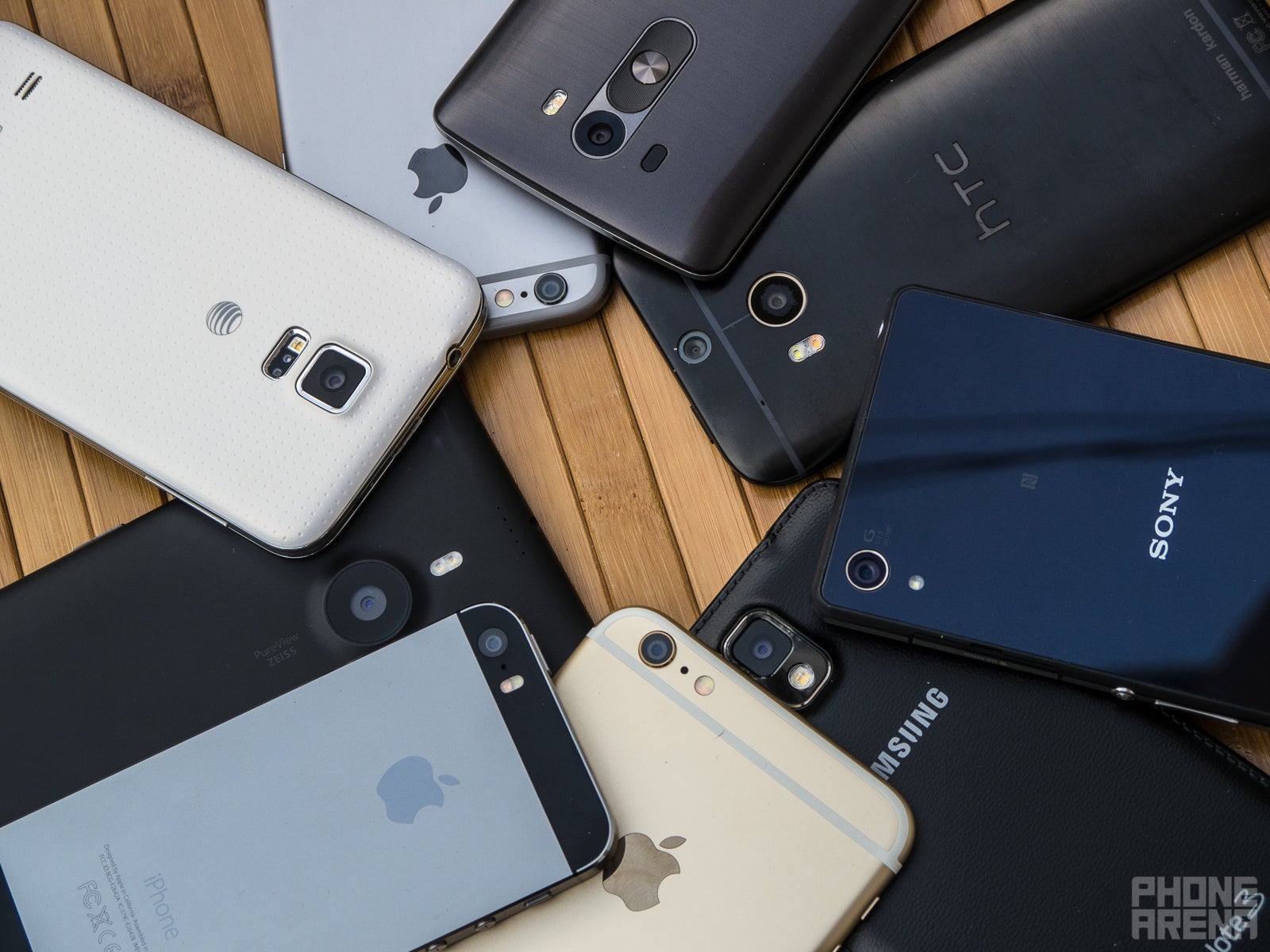
Now would be a good time to reiterate that the iPhone 6 Plus has a slightly better camera. This became obvious when we compared its night-time photos against those from the iPhone 6. But the difference is rather minor, and unless you're very serious about the quality of your photos, the iPhone 6 should do just fine for your needs.
Grabbing the bronze prize in our comparison, the Nokia Lumia 1520 reminded us that the potential in its 20MP camera should not be underestimated. Nokia's phablet stood out with its extremely detailed images, and had it done better in our indoor test, it would have won the metaphorical silver medal.
As for the LG G3, its 13MP camera couldn't manage to top any of our test categories. Still, it stood its ground with its all-around great performance. The snapper produces very eye-pleasing details in daytime, and given the right conditions, its night photos can leave you impressed.
Then there's the iPhone 5s – a phone that can give the big boys some serious competition even though its 8MP camera has been around since last year. That is especially true when taking videos. In fact, the 5s is, more or less, as good as the iPhone 6 in that respect.
Somewhat surprisingly, the Samsung Galaxy S5 couldn't rank among the top three phones in our comparison. Its daytime photos are detailed and with decent color reproduction, but its low-light performance leaves lots of room for improvement. Its videos are great, but not excellent.
The Sony Xperia Z2 also performed rather disappointingly. Despite having a whopping 20 megapixels to work with, its camera can't match the clear, detailed images produced by its competitors.
Lastly, the HTC One (M8) grabs the attention with its intricate camera setup, but the actual results are often underwhelming. The photos produced lack the details its competitors can produce, and the color accuracy leaves room for improvement.
The final score for each phone represents its average rating, but note that we're only taking into account the Details, Color representation and Indoor categories in the final score. We're factoring all the others (such as Night and Panorama) out, since those represent situations where users are less likely to take images in. Video recording isn't included either, since we consider it a separate thing from photo-taking. We've done this in order to end up with a final rating that is representative of a camera's performance in those areas, which we think are most important to users.
You can now read:

Follow us on Google News





 FCC OKs Cingular\'s purchase of AT&T Wireless
Things that are NOT allowed:
To help keep our community safe and free from spam, we apply temporary limits to newly created accounts: