Samsung Galaxy Z Fold 8 Ultra vs Fold 8: Which one should you pick?

We may earn a commission if you make a purchase from the links on this page.
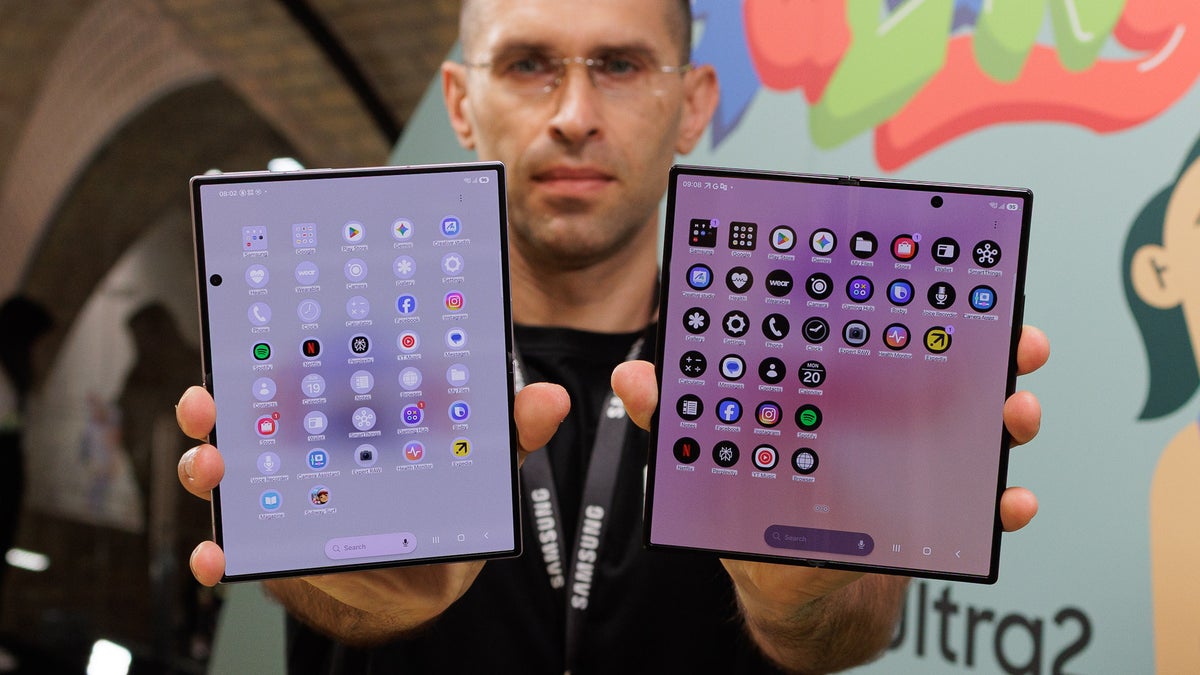
The Galaxy Z Fold 8 Ultra is direct successor to the Galaxy Z Fold 7. | Image by PhoneArena
Samsung just kicked off the 2026 foldable season with a rather exciting launch of not two but three exciting foldable phones, one of which is a new form factor for the company and has all the makings of a potential hit with consumers.
The new Galaxy Z Fold 8 is wider than usual, opening to a squarish 4:3 inner display and featuring a wide 16:10 external screen. It's a very lightweight and easy-to-handle device that's surprisingly functional and approachable.
It isn't the best-spec'd new foldable though, the honors go to the Galaxy Z Fold 8 Ultra, which is the real successor to the Galaxy Z Fold 7. It has a larger inner screen, a bigger battery, and a dedicated telephoto camera, whereas the Galaxy Z Fold 8 only has a dual camera.
But which one of these two is the better fit for you?
To find an answer to this question, I've put both phones through the paces of PhoneArena's extensive display, performance, camera, and battery tests. More importantly, I've used each device for a few days already and have established strong impressions about either device. Both the Galaxy Z Fold 8 Ultra and the Galaxy Z Fold 8 were provided by Samsung as review samples, but the manufacturer had no involvement in the testing results, editorial decisions, and the final verdict.
Most images in this review are original photography captured by the PhoneArena team. Aside from real-life usage, each of these phones has gone through the full scope of our dedicated testing process, including our camera and battery tests.
Galaxy Z Fold 8 Ultra vs Galaxy Z Fold 8 differences:
| Galaxy Z Fold 8 Ultra | Galaxy Z Fold 8 |
|---|---|
| Narrower book-style foldable, similar to Samsung's previous models | A wide-style foldable with a 4:3 inner screen |
| An 8-inch inner screen | Slightly smaller 7.6-inch inner screen |
| A 6.5-inch outer screen | A smaller 5.4-inch cover screen |
| Triple camera with proper telephoto | Dual camera (wide + ultrawide) |
| New 50 MP ultrawide camera | The same 50 MP ultrawide |
| A larger 5,000 mAh battery | A 4,800 mAh battery |
Table of Contents:
Design and Size
A different yet familiar design language
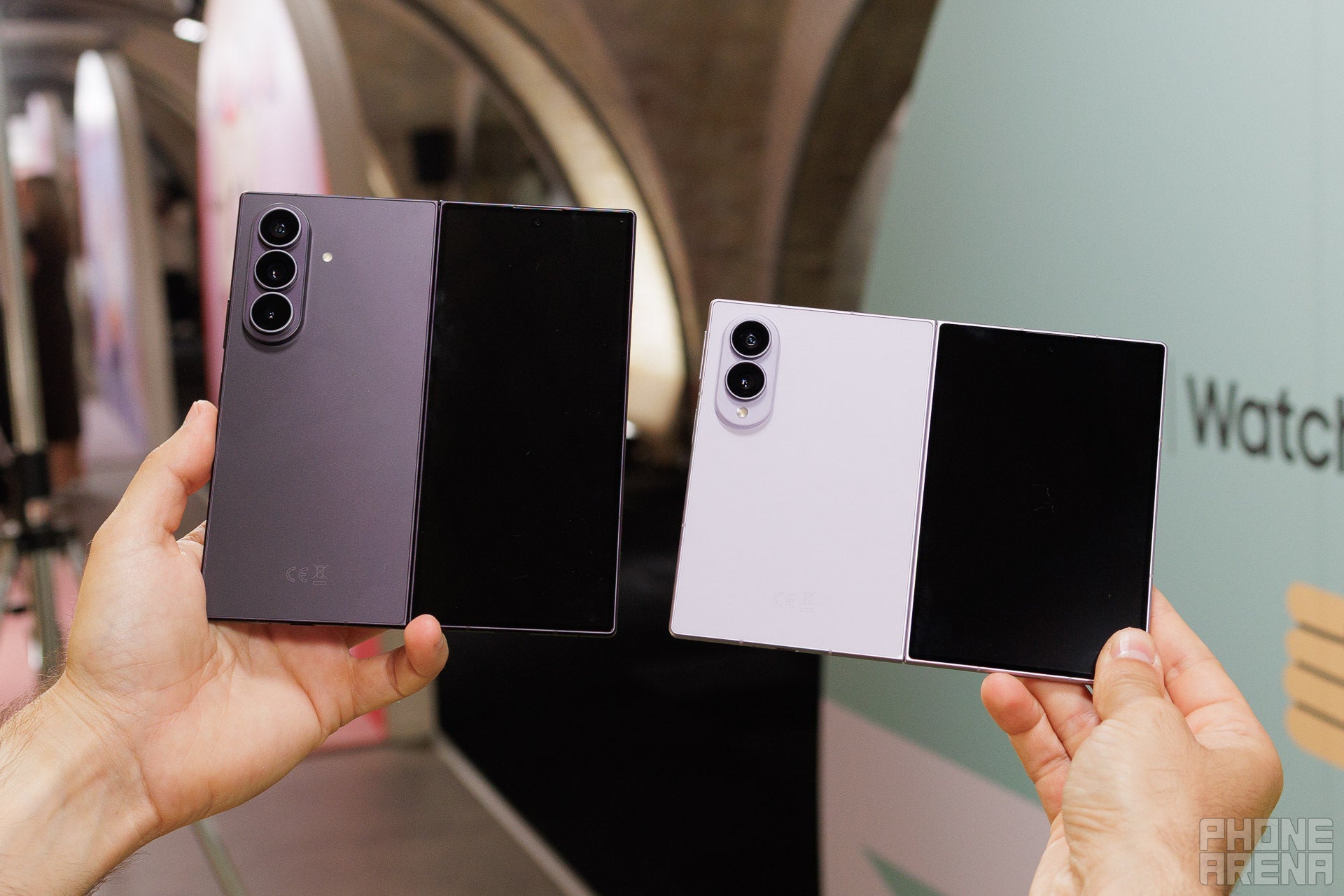
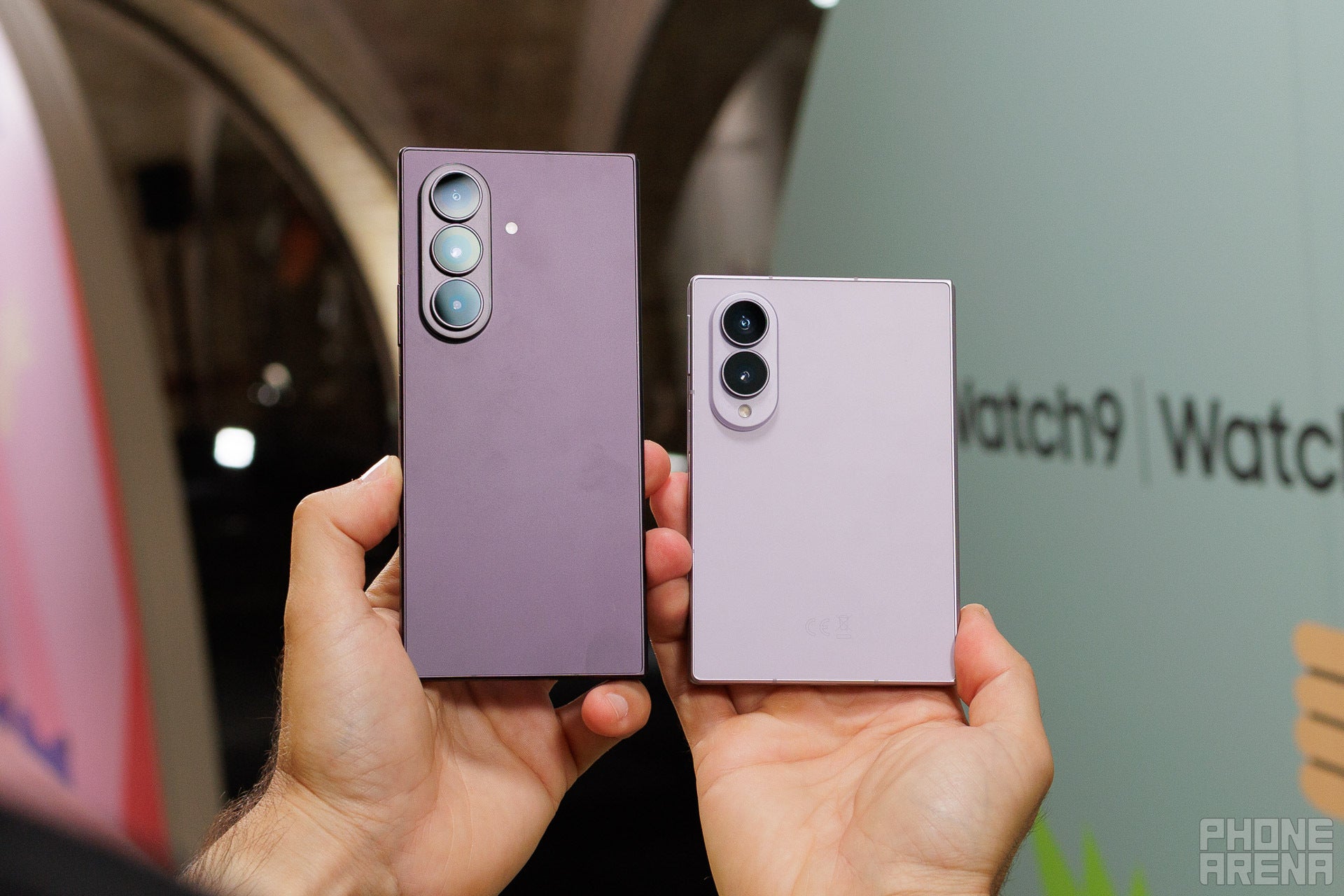
The Galaxy Z Fold 8 Ultra is a thin and tall device, pretty much similar to what the Galaxy Z Fold 7 looked. With a thin no-wedge design, it reiterates the same Gorilla Glass and Armor Aluminum sandwich that opens to reveal a creaseless 8.0-inch screen. I love the form factor as it combines the large squarish inner screen with a functional cover screen that lets you complete most tasks without having to unfold the device.
The Galaxy Z Fold 8 Ultra scores an improved, TriFold-inspired hinge that now features magnets that aid the closing and opening of the inner screen. Additionally, Samsung has put an ultra-thin titanium alloy inside the display that's more than 30% thinner than the width of a human hair. The reason for that is further making the crease even shallower and less pronounced.
The Galaxy Z Fold 8 Ultra is extremely thin at just 4.1 mm when unfolded and also quite light at just 215 grams. Yet, the Galaxy Z Fold 8 is much lighter at just 201 grams, a staggering difference that makes the wide Fold a bit too
|
|
| Samsung Galaxy Z Fold 8 Ultra | Samsung Galaxy Z Fold 8 |
| Dimensions | |
|---|---|
| 158.4 x 143.2 x 4.1 mm (~9.19 mm with camera bump) | 123.9 x 161.4 x 4.5 mm (~8.75 mm with camera bump) |
| Weight | |
| 215.0 g | 201.0 g |
See the full
Samsung Galaxy Z Fold 8 Ultra vs Samsung Galaxy Z Fold 8 specs comparison
or compare them to other phones using our
Phone Comparison tool
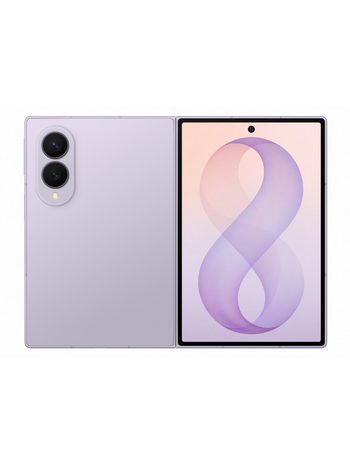
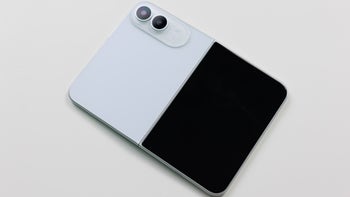
Meanwhile, the Galaxy Z Fold 8 ushers in a new era for Samsung foldables by introducing us to a wide-style device for the first time. Well, technically we got a taste of that with the Galaxy Z TriFold, but that one was more of a one-off stunt that didn't prove too successful. The Galaxy Z Fold 8 will be anything but, with a design set to rival the iPhone Ultra and all the makings of a hit on the foldable scene.
The Z Fold 8 is wider but shorter than the Galaxy Z Fold 8 Ultra or any other of Samsung's previous foldables, making it more wallet-shaped. This means its inner screen is much more rectangular and suitable for multimedia as opposed to the more squarish Galaxy Z Fold 8 Ultra.
And you know what? I absolutely adore that! The rectangular inner screen instantly clicked with me, combining the functionality of a tablet with the pocketability of a foldable phone.
Both devices feature slightly curved top and bottom panels that definitely make it much easier to unfold either one of these two. That's a welcome change that makes it way easier to unfold the new devices without having to claw your way in with your finger nails.
Both of these foldables are IP48-rated for water and dust protection. Water wouldn't easily get inside, but be wary around dust, as smaller particles can still enter the hinge mechanism.
The Galaxy Z Fold 8 Ultra launches in Violet Shadow, Cream, Graphite, and Violet Green exclusively available online. The Galaxy Z Fold 8 will be yours in Lavender, Cream, Graphite, and Pistachio available online only. I like the Violet Shadow and Pistachio variants the most.
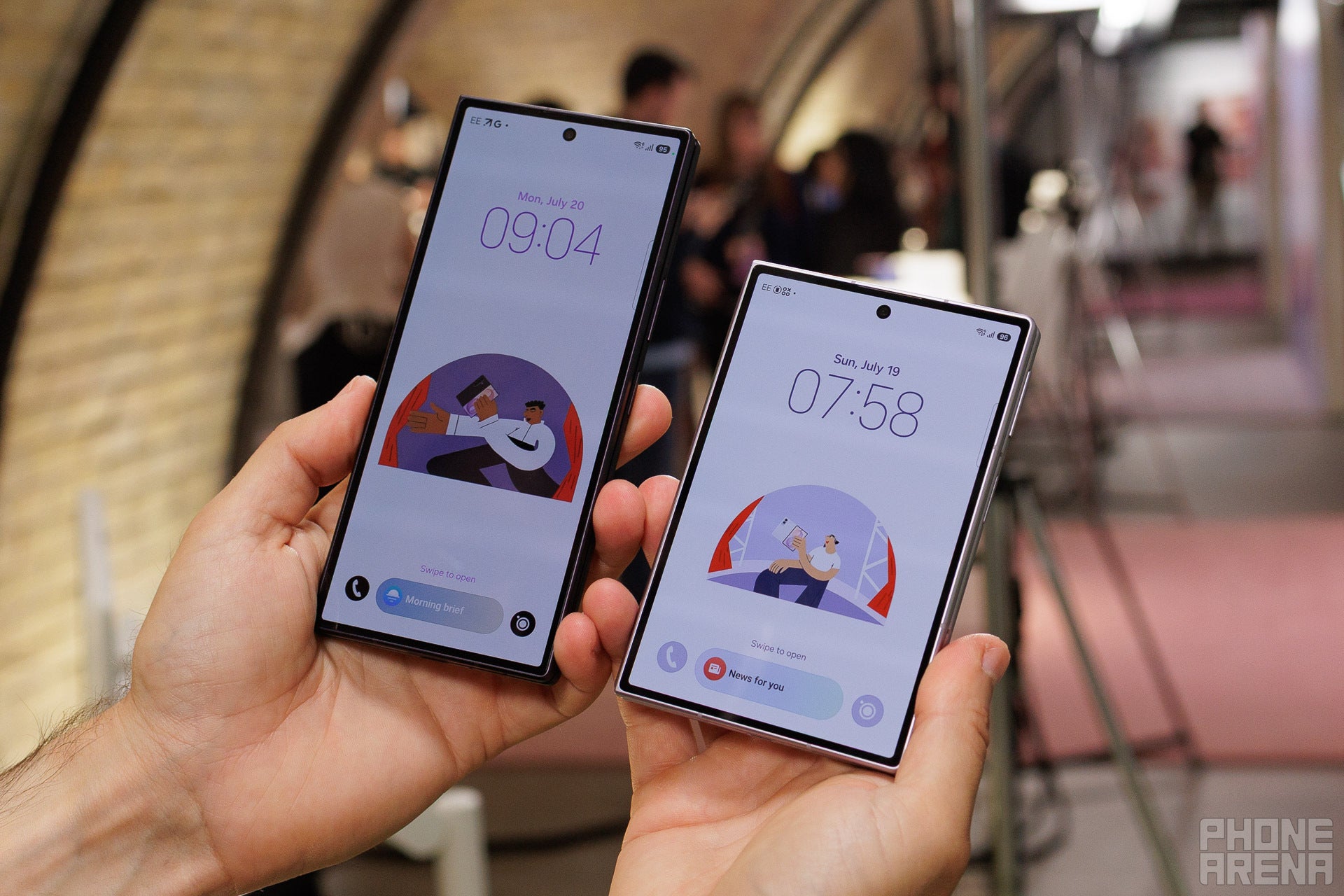
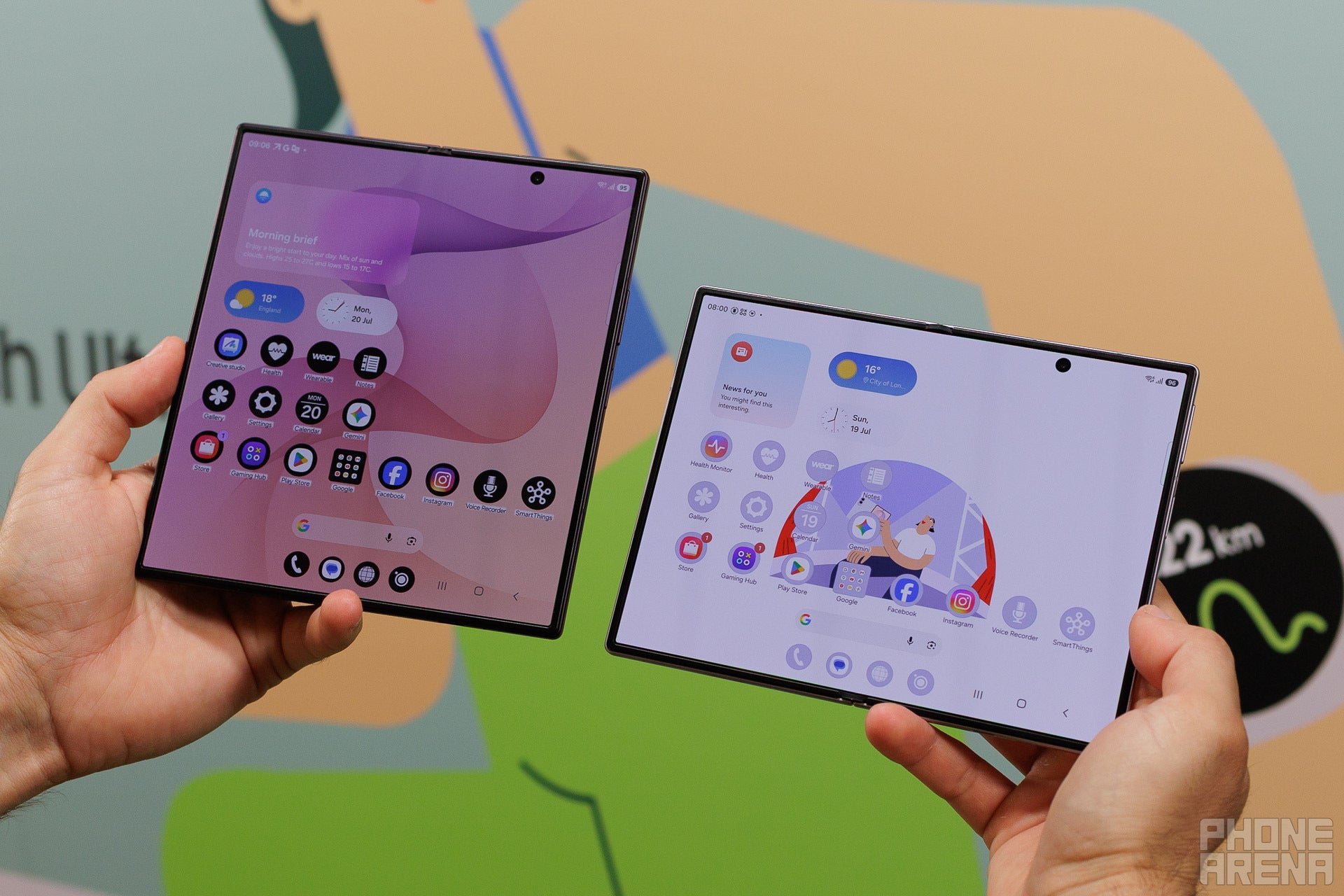
The Galaxy Z Fold 8 Ultra is the device with the larger screens in terms of diagonal size thanks to an 8.0-inch internal screen and a 6.5-inch cover display, closely following through with the Galaxy Z Fold 7's dimensions. It amps up the peak brightness to 3,000 nits and now features a lot of titanium inside the screen in order to achieve a zero display crease.
|
|
|
| Samsung Galaxy Z Fold 8 Ultra | Samsung Galaxy Z Fold 8 |
| Size | |
|---|---|
| 8.0-inch | 7.6-inch |
| Type | |
| Dynamic AMOLED, 120Hz | Dynamic AMOLED, 120Hz |
See the full
Samsung Galaxy Z Fold 8 Ultra vs Samsung Galaxy Z Fold 8 specs comparison
or compare them to other phones using our
Phone Comparison tool
The wide Fold 8 will be getting a slightly smaller 7.6-inch inner screen and a 5.4-inch cover display, but these will have dramatically different aspect ratios that will make a very different device. The inner screen, for example, is a 4:3 one, making it even more suitable for consuming media than the squarish one on the Fold 8 Ultra.
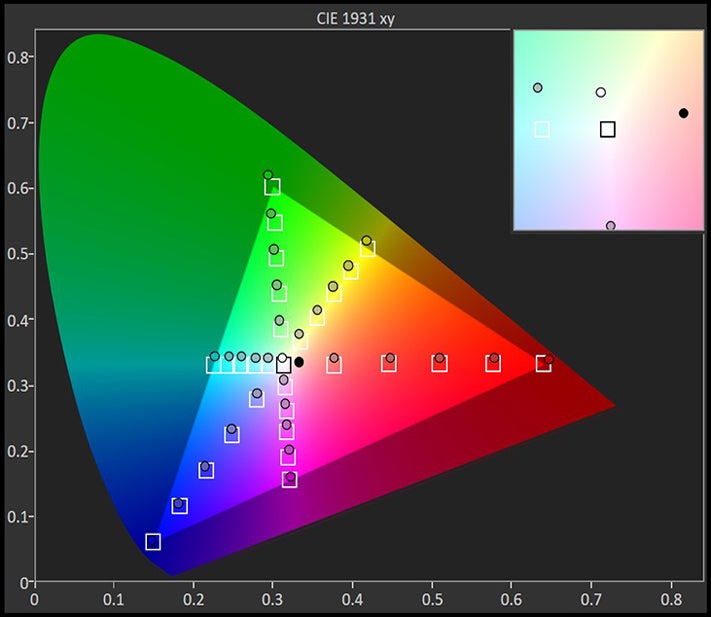
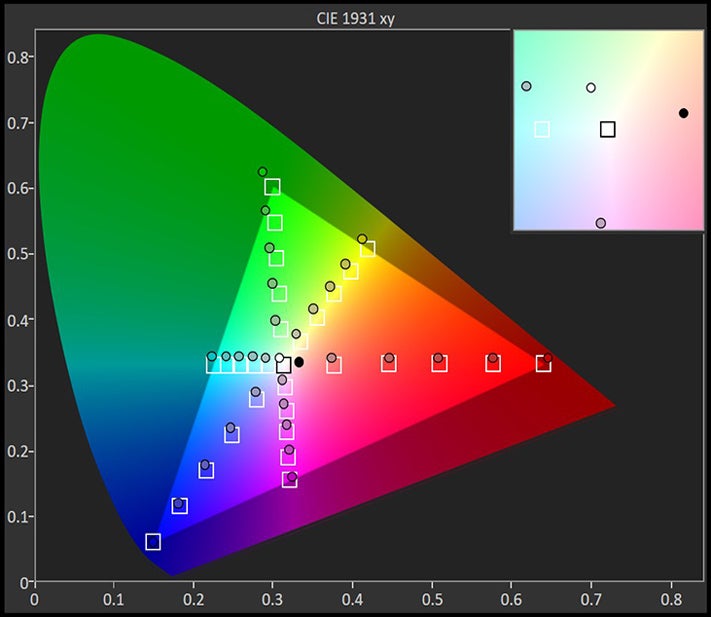
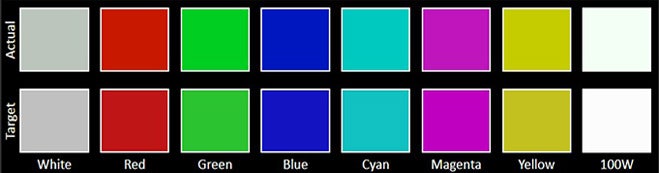
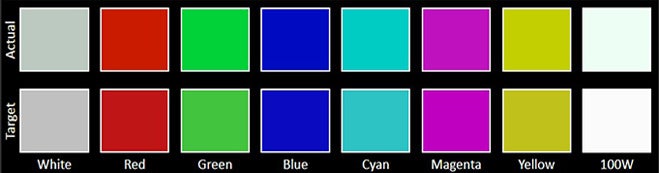


In the display tests I ran, both phones boast similar qualities, including nearly identical peak brightness, excellent color temperature, and display gamma. You can rely on either one to display a lovely image, with great viewing angles and colors that pop.
And let me address the elephant in the room––you can still see the concept of a display crease from an angle, but you will hardly notice it when you run your fingers over it. That's definitely an improvement over older Galaxy Z Fold devices.
Both phones come with the same capacitive fingerprint scanner in the power button on the side. No reason to change that, it's a fast and reliable solution. However, it should be noted that some more exotic foldable phones coming from China have employed optical or even ultrasonic fingerprint sensors in either their inner and outer displays, so Samsung is certainly not dwelling on the verge of a technological breakthrough here.
Performance and Software
Snapdragon power
I am happy to find the flagship Snapdragon 8 Elite Gen 5 for Galaxy inside either the Galaxy Z Fold 8 Ultra and the Z Fold 8. That one is the fastest variety of the chip that has a slightly higher clock than the regular Elite Gen 5 chip most other Android flagships use. The same chip was also featured on the Galaxy S26 Ultra globally and on S26/S26 Plus units in the US.
A proper powerhouse, especially in gaming, that one is!
It's among the fastest chipsets around right now and particularly impresses in terms of graphics performance. It also excels in everyday multitasking and should provide more than enough hardware leeway for Galaxy AI tasks to be executed quickly and efficiently.
|
|
|
| Samsung Galaxy Z Fold 8 Ultra | Samsung Galaxy Z Fold 8 |
| System chip | |
|---|---|
| Snapdragon 8 Elite Gen 5 for Galaxy SM8850-1-AD (3 nm) | Snapdragon 8 Elite Gen 5 for Galaxy SM8850-1-AD (3 nm) |
| Memory | |
| 12GB (LPDDR5X)/256GB (UFS 4.0) 12GB/512GB 16GB/1TB | 12GB (LPDDR5X)/256GB (UFS 4.0) 12GB/512GB 16GB/1TB |
| OS | |
| Android (17), up to 7 OS updates | Android (17), up to 7 OS updates |
See the full
Samsung Galaxy Z Fold 8 Ultra vs Samsung Galaxy Z Fold 8 specs comparison
or compare them to other phones using our
Phone Comparison tool
In the CPU-centric Geekbench 6 test, I find it not surprising at all that both devices deliver the same performance and achieve similar scores. Everyday tasks and CPU-heavy workflows will run exceptionally well on either one of these for many years to come. That's to be expected of two devices powered by the same chip.
GPU Performance
Now, when it comes to graphics performance, it's the Galaxy Z Fold 8 Ultra that has the upper hand. The main reason for that could be its vastly better thermal management, which allows heat to dissipate faster and not impede the GPU from achieving its maximum potential. In the 3DMark Wild Life Extreme stress test, the Ultra fares better than the regular Fold 8, which could throttles out faster.
In the more advanced Steel Nomad test, the Galaxy Z Fold 8 is once again lagging behind the Ultra in terms of both peak and sustained performance. However, the Ultra isn't exemplary in this more advanced test, so the overall difference between the two phones isn't that wide.
In the final and most extreme graphics test, Solar Bay Extreme, the Galaxy Z Fold 8 Ultra commands a domineering lead over the Galaxy Z Fold 8. If you're into the latest and most advanced ray-traced games, then the Galaxy Z Fold 8 Ultra is the device to go for. The Galaxy Z Fold 8 will run the same games slightly worse, giving you a not-so-good overall experience.
Storage speed
The base versions of these two phones boast 12 GB of RAM in both the 256 GB and 512 GB versions. Owners of the 1 TB model will get 16 GB of RAM for even better on-device Galaxy AI processing.
In terms of storage speeds, the Galaxy Z Fold 8 Ultra demonstrates slightly higher random read speeds, which means that it could appear to be faster in some scenarios
Software-wise, both phones will launch with One UI 9.0, which is based on the recently released Android 17. One of the very useful new features of Android 17 is app bubbles, which will surely improve the multitasking capabilities of the foldable phone.
Among the new Galaxy AI software features that Samsung will bring to the Galaxy Z Fold 8 are a more proactive Now Nudge feature, which will now intelligently suggest maps, calendar invites, and auto-split your current apps when relevant.
Camera
A matter of zoom
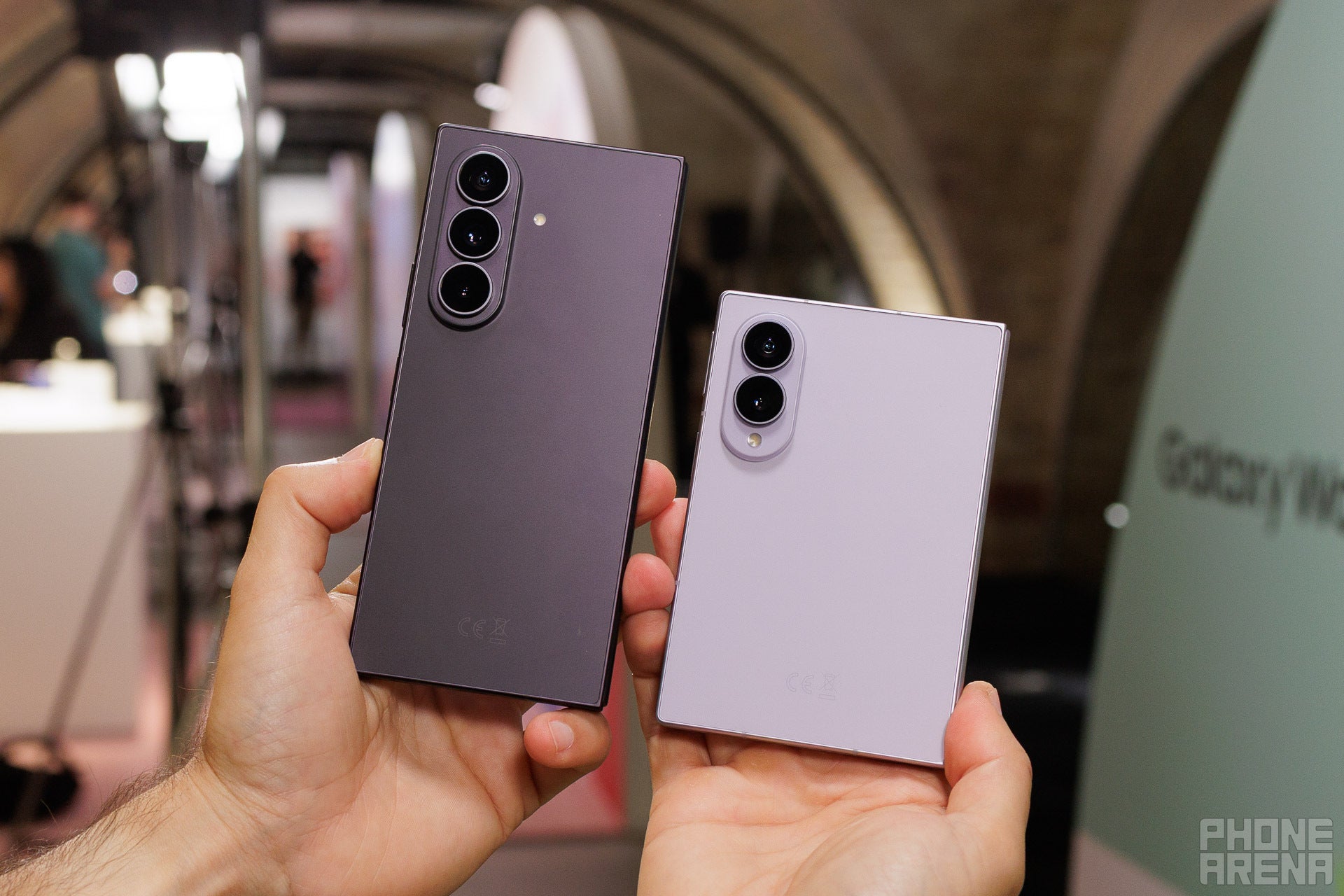
Image by PhoneArena
I was somewhat excited to see that the Galaxy Z Fold 8 Ultra has scored an upgrade to the camera system, one that gives us a 50 MP ultrawide camera instead of the 12 MP one used previously. The rest of the cameras are the same, a 200 MP main camera and a 10 MP telephoto.
This is definitely a welcome upgrade, one that is certainly beneficial, especially for video recording, where the ultrawide might come in very, very handy.
|
|
|
| Samsung Galaxy Z Fold 8 Ultra | Samsung Galaxy Z Fold 8 |
| Main camera | |
|---|---|
| 200 MP (OIS, PDAF) Sensor name: Samsung ISOCELL HP2 Aperture size: F1.7 Focal length: 24 mm Sensor size: 1/1.3" Pixel size: 0.6 μm |
50 MP (OIS, PDAF) Sensor name: Samsung ISOCELL GN3 Aperture size: F1.8 Focal length: 24 mm Sensor size: 1/1.56" Pixel size: 1.0 μm |
| Second camera | |
| 50 MP (Ultra-wide) Sensor name: Samsung ISOCELL JN3 Aperture size: F1.9 Focal Length: 13 mm Sensor size: 1/2.5" Pixel size: 0.7 μm | 50 MP (Ultra-wide) Sensor name: Samsung ISOCELL JN3 Aperture size: F1.9 Focal Length: 13 mm Sensor size: 1/2.5" Pixel size: 0.7 μm |
| Third camera | |
| 10 MP (Telephoto, OIS, PDAF) Sensor name: Samsung S5K3K1 Optical zoom: 3.0x Aperture size: F2.4 Focal Length: 67 mm Sensor size: 1/3.94" Pixel size: 1.0 μm |
|
| Front | |
| 10 MP (HDR) | 10 MP (HDR) |
See the full
Samsung Galaxy Z Fold 8 Ultra vs Samsung Galaxy Z Fold 8 specs comparison
or compare them to other phones using our
Phone Comparison tool
At the same time, the functional Galaxy Z Fold 8 relies solely on a dual-camera system, comprising a 200 MP wide and 12 MP ultrawide cameras. Not a particularly impressive setup, but Samsung is certainly betting on the novel form factor and not the cameras themselves to make the Z Fold 8 an intriguing device.
And for the most part, I have to agree that this rings true: you shouldn't consider this phone for the cameras. That's not to say it doesn't take great photos, it does, but its versatility and overall quality are slightly lacking in comparison.
In the camera test I ran, the Galaxy Z Fold 8 Ultra scores a slightly higher total score than the wide Fold 8, which is mostly due to the lack of a dedicated telephoto camera.
PhoneArena Camera Score:
Samsung is bringing a host of mostly software improvements to the Galaxy Z Fold 8 Ultra, like an enhanced ProVisual engine that delivers a more advanced low-light video processing. There's also more flexible 8K video recording and editing, support for Samsung's efficient APV codec, as well as four new cinematic LUTs for on-device color grading of any log videos you capture.
Battery Life and Charging
Upgrades, finally
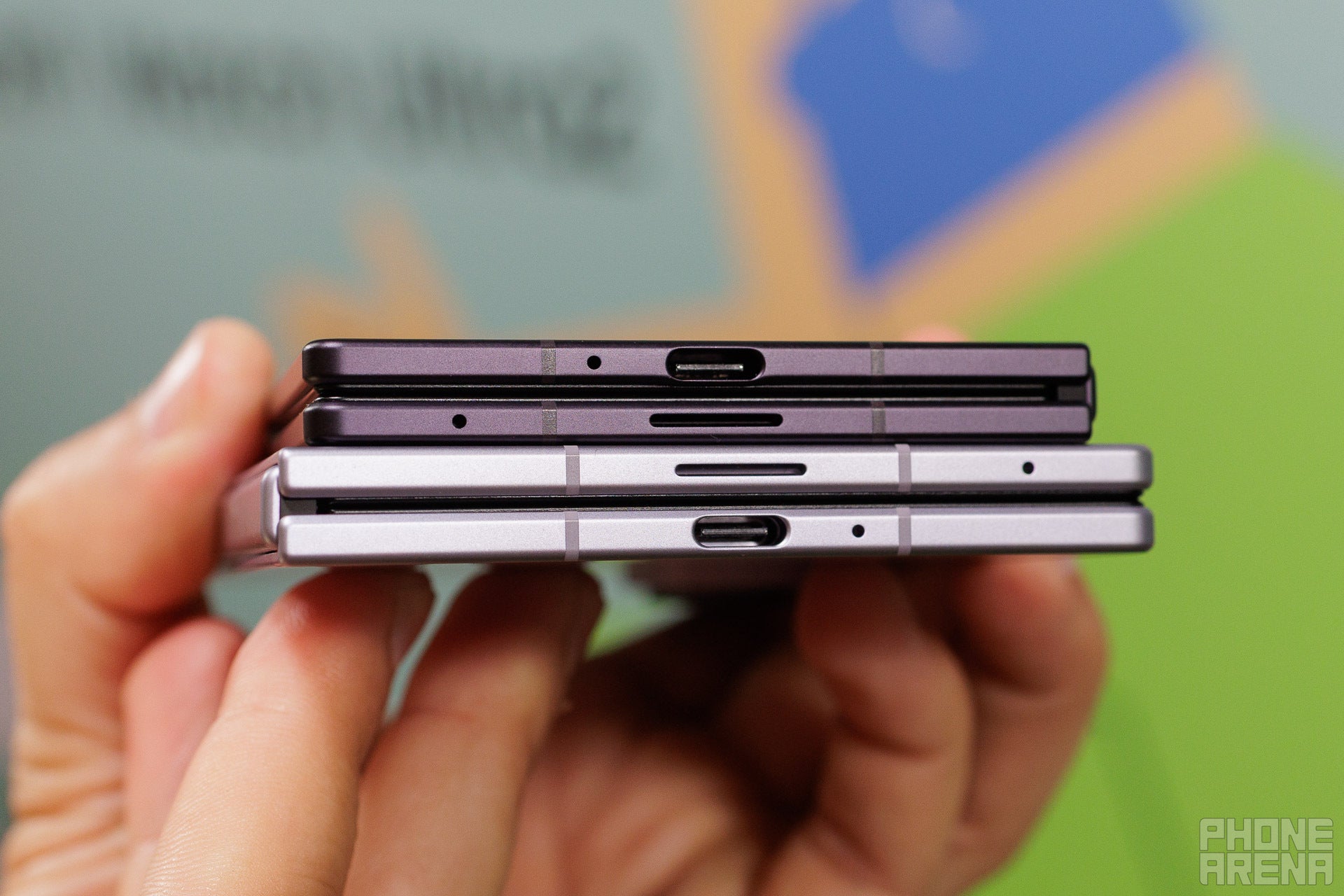
Image by PhoneArena
The Galaxy Z Fold 8 Ultra comes with a 5,000 mAh battery, a massive upgrade in comparison with the 4,400 mAh that was available on the Galaxy Z Fold 7. The bigger headline here is that the newer silicon-carbon technology tech has been used in some capacity here, a monumental shift of tone for Samsung which has been notoriously conservative about its batteries ever since the Galaxy Note 7 disaster.
The Galaxy Z Fold 8 relies on a slightly smaller 4,800 mAh battery, which still provides a very similar battery life.
In the tests I ran, the Galaxy Z Fold 8 lasted longer in our tests than the Galaxy Z Fold 8 Ultra. That's odd, and I'd expect a software update before the official market release will address that irregularity.
PhoneArena Battery and Charging Test Results:
But it's not only the batteries that have scored an upgrade, the charging is also improved. Both devices support 45 W wired and 20 W wireless charging, a very decent improvement over the 25 W wired and 15 W wireless charging of any previous models. You can get the Galaxy Z Fold 8 Ultra fully topped up in 72 minutes.
Specs Comparison
Here's a quick overview of the Galaxy Z Fold 8 Ultra versus the Galaxy Z Fold 8 specs.
|
|
|
| Samsung Galaxy Z Fold 8 Ultra | Samsung Galaxy Z Fold 8 |
| Dimensions | |
|---|---|
| 158.4 x 143.2 x 4.1 mm (~9.19 mm with camera bump) | 123.9 x 161.4 x 4.5 mm (~8.75 mm with camera bump) |
| Weight | |
| 215.0 g | 201.0 g |
| Size | |
|---|---|
| 8.0-inch | 7.6-inch |
| Type | |
| Dynamic AMOLED, 120Hz | Dynamic AMOLED, 120Hz |
| System chip | |
|---|---|
| Snapdragon 8 Elite Gen 5 for Galaxy SM8850-1-AD (3 nm) | Snapdragon 8 Elite Gen 5 for Galaxy SM8850-1-AD (3 nm) |
| Memory | |
| 12GB (LPDDR5X)/256GB (UFS 4.0) 12GB/512GB 16GB/1TB | 12GB (LPDDR5X)/256GB (UFS 4.0) 12GB/512GB 16GB/1TB |
| OS | |
| Android (17), up to 7 OS updates | Android (17), up to 7 OS updates |
| Type | |
|---|---|
| 5000 mAh | 4800 mAh |
| Charge speed | |
| Wired: 45.0W Wireless: 20.0W | Wired: 45.0W Wireless: 20.0W |
| Main camera | |
|---|---|
| 200 MP (OIS, PDAF) Sensor name: Samsung ISOCELL HP2 Aperture size: F1.7 Focal length: 24 mm Sensor size: 1/1.3" Pixel size: 0.6 μm |
50 MP (OIS, PDAF) Sensor name: Samsung ISOCELL GN3 Aperture size: F1.8 Focal length: 24 mm Sensor size: 1/1.56" Pixel size: 1.0 μm |
| Second camera | |
| 50 MP (Ultra-wide) Sensor name: Samsung ISOCELL JN3 Aperture size: F1.9 Focal Length: 13 mm Sensor size: 1/2.5" Pixel size: 0.7 μm | 50 MP (Ultra-wide) Sensor name: Samsung ISOCELL JN3 Aperture size: F1.9 Focal Length: 13 mm Sensor size: 1/2.5" Pixel size: 0.7 μm |
| Third camera | |
| 10 MP (Telephoto, OIS, PDAF) Sensor name: Samsung S5K3K1 Optical zoom: 3.0x Aperture size: F2.4 Focal Length: 67 mm Sensor size: 1/3.94" Pixel size: 1.0 μm |
|
| Front | |
| 10 MP (HDR) | 10 MP (HDR) |
See the full
Samsung Galaxy Z Fold 8 Ultra vs Samsung Galaxy Z Fold 8 specs comparison
or compare them to other phones using our
Phone Comparison tool
Summary
Samsung is changing its foldables in a big way. Aside from a name upgrade, the new flagship Galaxy Z Fold 8 Ultra has also scored a new ultrawide camera, a faster chipset, and potentially better battery life. It's a continuation of the same success formula that Samsung has been reiterating for the past couple of years, and if you can stomach the steep price tag, it's among the finest foldables right now.
Meanwhile, the new kid on the block will aim to take right to the iPhone Ultra and function as its most direct Android rival. It's breaking new ground for all manufacturers here, as the wallet-style foldable form factor has remained largely untested and unproven.
After trying the Galaxy Z Fold 8, I'm a convert. It really feels like something different that just makes so much sense I wonder why nobody thought of giving us a proper rectangular foldable before. Aside from the functional form factor, the Galaxy Z Fold 8 is also much more compact, making it a very appealing offering.


Related Content


Popular stories



Latest News


Things that are NOT allowed:
To help keep our community safe and free from spam, we apply temporary limits to newly created accounts: