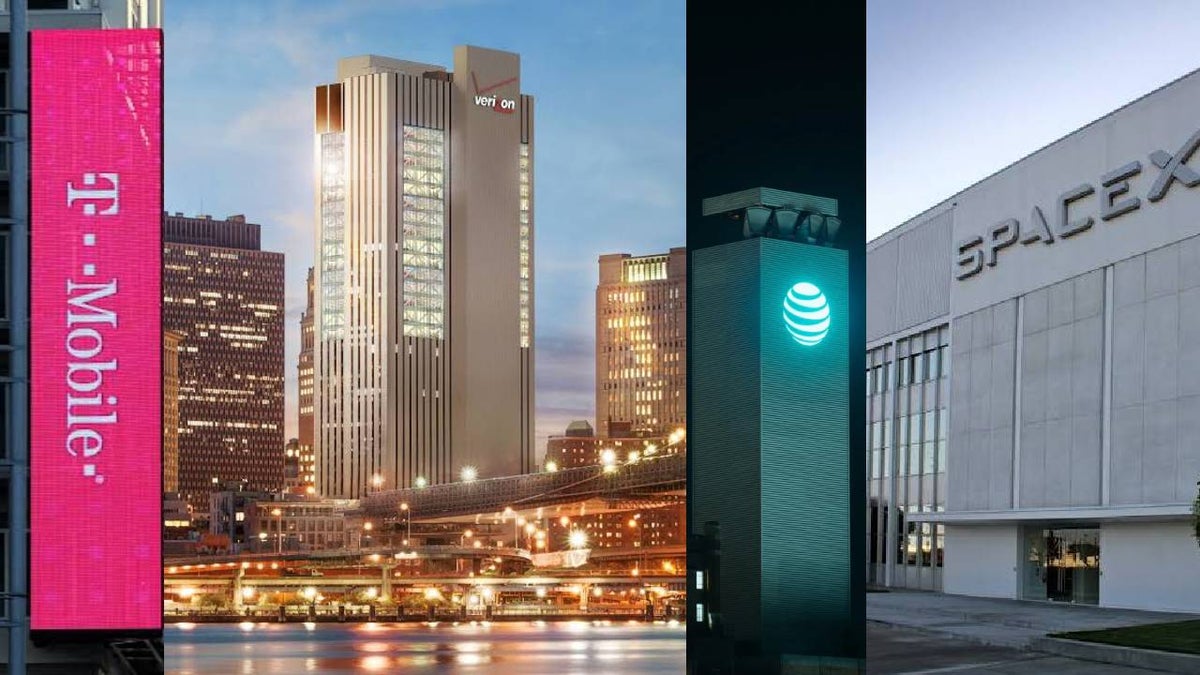
SpaceX has made one thing abundantly clear: it's coming for AT&T, T-Mobile, and Verizon with a land-based cellular network of its own. Shares of the incumbents stumbled after the announcement, as an innovative rival threatens their long-held oligopoly. SpaceX is quietly sharpening its tech to give legacy carriers a tough time.
Leveling up the tech
SpaceX wants to reach consumers directly. | Image by SpaceX
In a recent filing with Innovation, Science and Economic Development (ISED) Canada, SpaceX outlined its second-generation direct-to-device system, which will leverage the 2 GHz spectrum and V2 satellites.
The upgraded constellation promises speeds twenty times faster and lower latency than the current system.
The spectrum licenses purchased from EchoStar span multiple international markets, paving the way for a global satellite network in the 2 GHz band. While SpaceX must wait until November 2027 to activate these licenses for Starlink, it isn't waiting around. The company is designing and deploying its second-generation satellite system and working with smartphone manufacturers to ensure native band support out of the box.
A full network from orbit
The current Starlink system uses a narrow 5 MHz bandwidth suitable for messaging and light data.
The second-gen system, built on 5G New Radio Non-Terrestrial Networks (NR-NTN) standards, will be able to handle 100 times more traffic. It's expected to deliver full 5G cellular connectivity with an experience comparable to 4G networks, supporting texting, calling, data, and broadband services.
Thanks to advanced beamforming and improved link budgets, V2 satellites will offer improved compatibility with smartphones. SpaceX expects Apple, Samsung, and Google devices to support full voice, text, and data functionality by 2027.
Recommended For You
By 2028, with thousands more satellites in orbit, SpaceX aims to be the only direct-to-device provider offering continuous coverage worldwide, even in hard-to-reach high-latitude polar regions.
What would be the best part of a SpaceX cellular network?
304 Votes
Innovation
11.51%
More competition
43.09%
Universal coverage
45.39%
What does this mean for the US?
While the Canadian filing notes SpaceX won't offer a standalone service there, it drops hints about the US strategy.
In the US, it intends to launch its own network. The more powerful satellites, paired with its spectrum holdings, give SpaceX the foundation for a hybrid network.
SpaceX explicitly argues in its filing that satellite providers should be permitted to use a combination of terrestrial and orbital tech to launch a satellite-first service.
Handset support
SpaceX notes that major manufacturers such as Samsung are already testing n252 NTN support. This will allow smartphones to recognize satellite connections natively, sidestepping the limitations of the current Direct-to-Cell tech.
SpaceX's efforts to acquire more spectrum and get device manufacturers on board are yet another sign that the undisputed rule of AT&T, T-Mobile, and Verizon is about to come to an end.
Read more about how SpaceX silently became a threat to the Big Three:
Mint Mobile is now allowing you to get whichever plan you like for either three, six, or 12 months for just $15/mo. If you go for the six-month unlimited service, for instance, you'll now have to pay just $90 upfront instead of $210.
Anam Hamid is a computer scientist turned tech journalist who has a keen interest in the tech world, with a particular focus on smartphones and tablets. She has previously written for Android Headlines and has also been a ghostwriter for several tech and car publications. Anam is not a tech hoarder and believes in using her gadgets for as long as possible. She is concerned about smartphone addiction and its impact on future generations, but she also appreciates the convenience that phones have brought into our lives. Anam is excited about technological advancements like folding screens and under-display sensors, and she often wonders about the future of technology. She values the overall experience of a device more than its individual specs and admires companies that deliver durable, high-quality products. In her free time, Anam enjoys reading, scrolling through Reddit and Instagram, and occasionally refreshing her programming skills through tutorials.
A discussion is a place, where people can voice their opinion, no matter if it
is positive, neutral or negative. However, when posting, one must stay true to the topic, and not just share some
random thoughts, which are not directly related to the matter.
Things that are NOT allowed:
Off-topic talk - you must stick to the subject of discussion
Offensive, hate speech - if you want to say something, say it politely
Spam/Advertisements - these posts are deleted
Multiple accounts - one person can have only one account
Impersonations and offensive nicknames - these accounts get banned
To help keep our community safe and free from spam, we apply temporary limits to newly created accounts:
New accounts created within the last 24 hours may experience restrictions on how frequently they can
post or comment.
These limits are in place as a precaution and will automatically lift.
Moderation is done by humans. We try to be as objective as possible and moderate with zero bias. If you think a
post should be moderated - please, report it.
Have a question about the rules or why you have been moderated/limited/banned? Please,
contact us.







Things that are NOT allowed:
To help keep our community safe and free from spam, we apply temporary limits to newly created accounts: