Every product we review or recommend is thoroughly tested by our in-house experts in real-world conditions, following our
review methodology
and
ethics statement
to ensure honest, independent, and data-driven results.
We may earn a commission if you make a purchase from the links on this page.
Exactly one week ago, I picked up the new Galaxy Fold 8 and put my SIM card in it with a lot of excitement and a bunch of questions. Is the new passport form factor too wide and weird? Will it replace the boxier foldables we had until now? Do I really need this over a regular phone?
One week later, I think I have figured out the answers.
The Fold 8 appears in stores on August 7th, with a starting price of $1,900 for the base 12/256GB model. It will be available on all major US carriers, but probably the best way to buy it is with a trade-in that can save you a lot of that steep initial cost.
This review is based on seven days of daily use and lab testing of the Galaxy Z Fold 8. The device was provided by Samsung as a review sample, but the company had no involvement in our testing process, editorial decisions or final review.
Most images in this review are original photography captured by the PhoneArena team in our studio. Beyond real-world use, every phone also goes through our dedicated testing process, including our proprietary camera test that alone takes nearly a full day of use and battery life measurements across three scenarios using our prorietary method. The Fold 8 was tested under the same method.
Grab the Galaxy Z Fold 8 Ultra for $300 off
$1799
99
$2099
99
$300 off (14%)
For a limited time, Samsung's Galaxy Z Fold 8 Ultra can be yours with a generous $300 price cut, no trade-in required. If those savings don't sound compelling enough, trade in an eligible phone to save up to $800.
The Galaxy Z Fold 8 is Samsung's first foldable phone with a passport design. Right now, you can grab it with an $800 discount when you trade in an eligible device in good condition. Alternatively, you can grab $200 in Samsung Credit, redeemable toward accessories or other Galaxy devices.
This device scores 4.1% better than the average for this price class, which includes devices like the Samsung Galaxy Z Fold 8 Ultra, Google Pixel 10 Pro Fold and Samsung Galaxy Z Fold 7
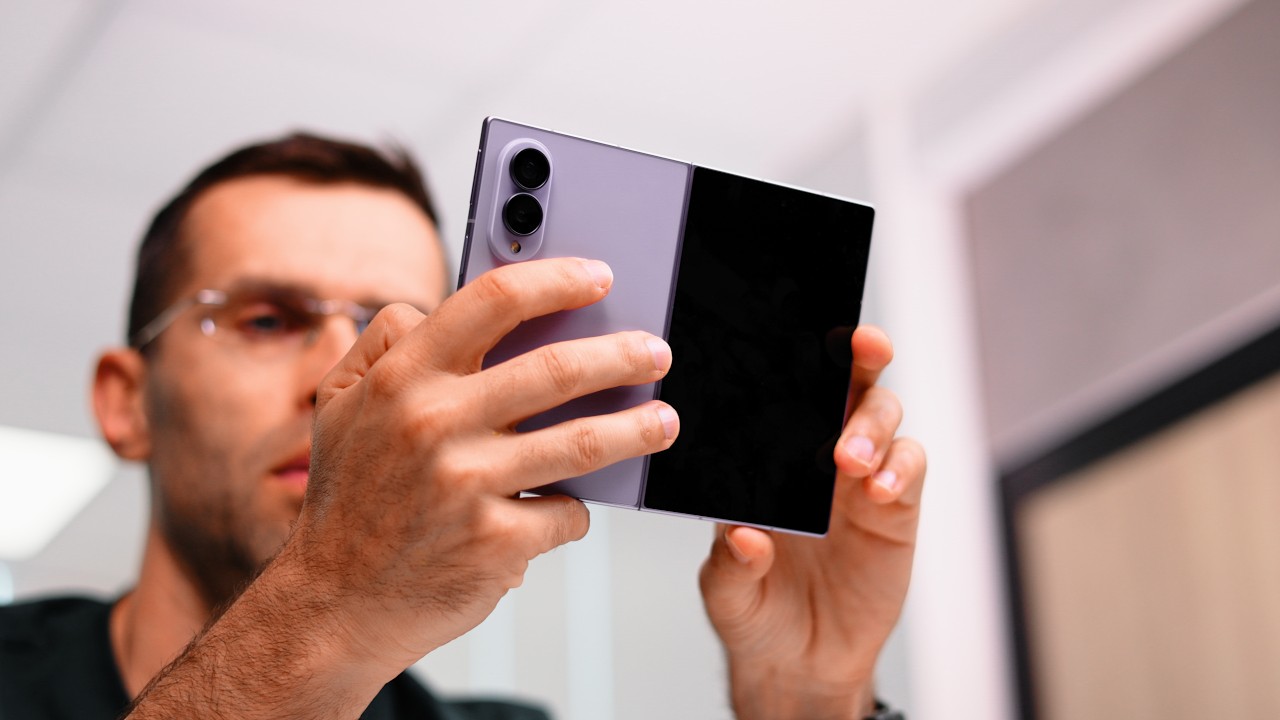
I've been carrying the Fold 8 in my jeans front pocket all this time, and because it is so short and light, I actually feel it less than the iPhone 17 Pro that I carried before it. The Fold 8 weighs just 200 grams, lighter than many regular phones. Compare it to a Galaxy S26 Ultra (214 grams) and it's lighter. Heck, it weighs less than even the compacy iPhone 17 Pro (204 grams).
Image by PhoneArena
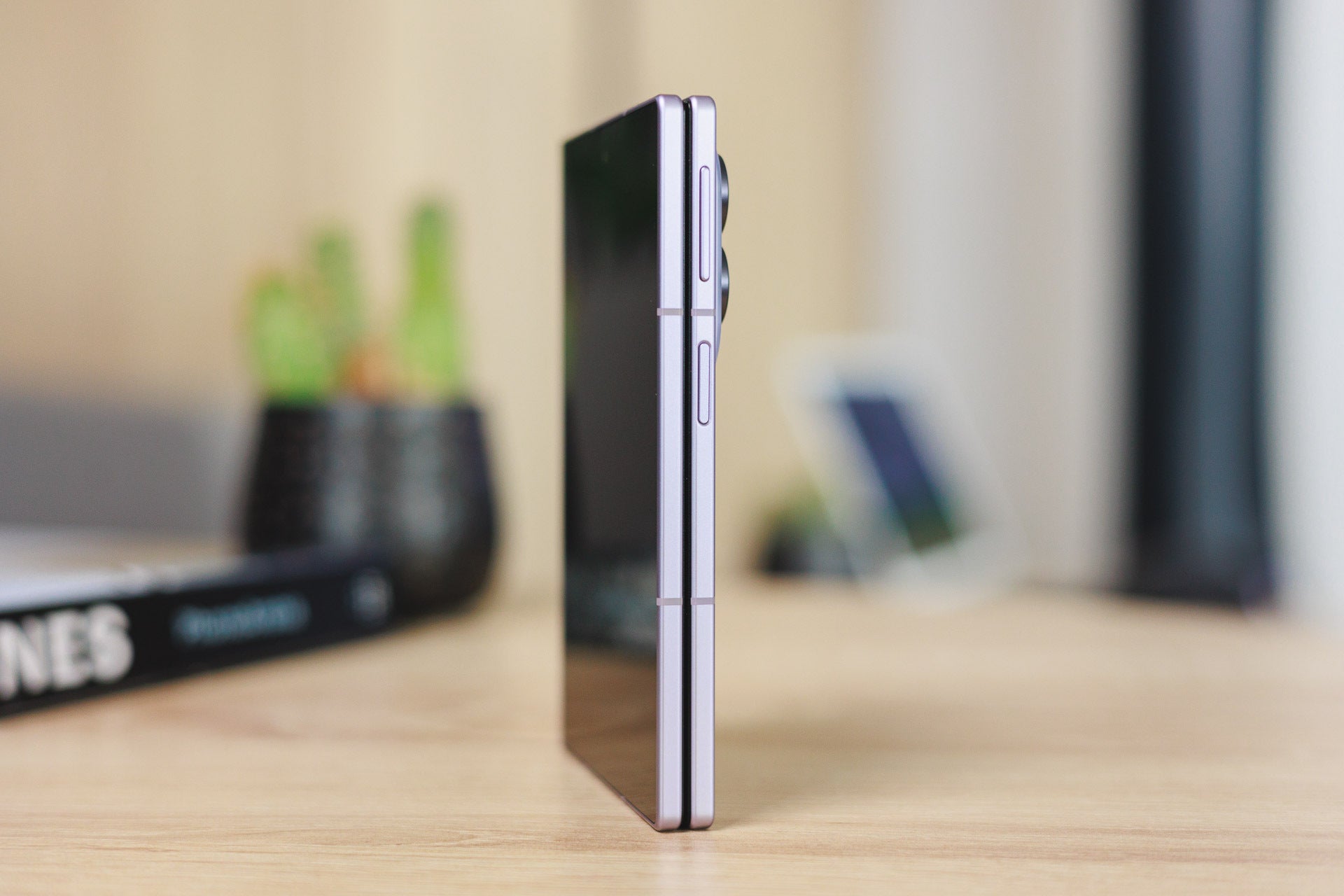
When closed, the wider cover screen does feel like a bit of a stretch to hold. You get used to that with time, but it’s an adjustment. The one downside of the shorter form factor is that the keyboard now takes up more space, leaving a bit less screen for the content, but at least you can reach the top of the screen much easier.
Recommended For You
Overall, I have always found bigger traditional phones like the iPhone Pro Max or the Galaxy Ultra cumbersome to hold and carry in a pocket, and this Fold 8 is a lot more manageable.
Image by PhoneArena
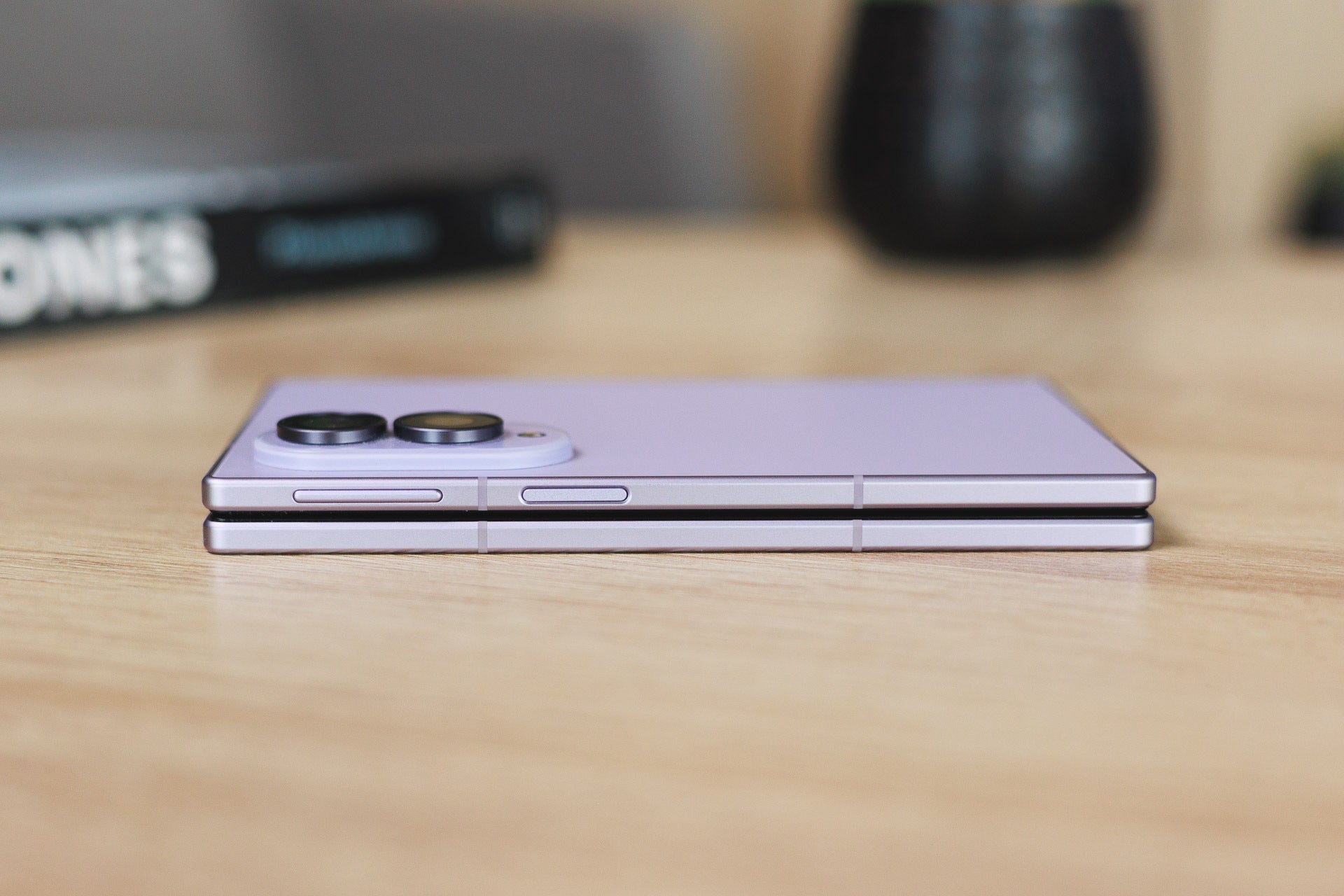
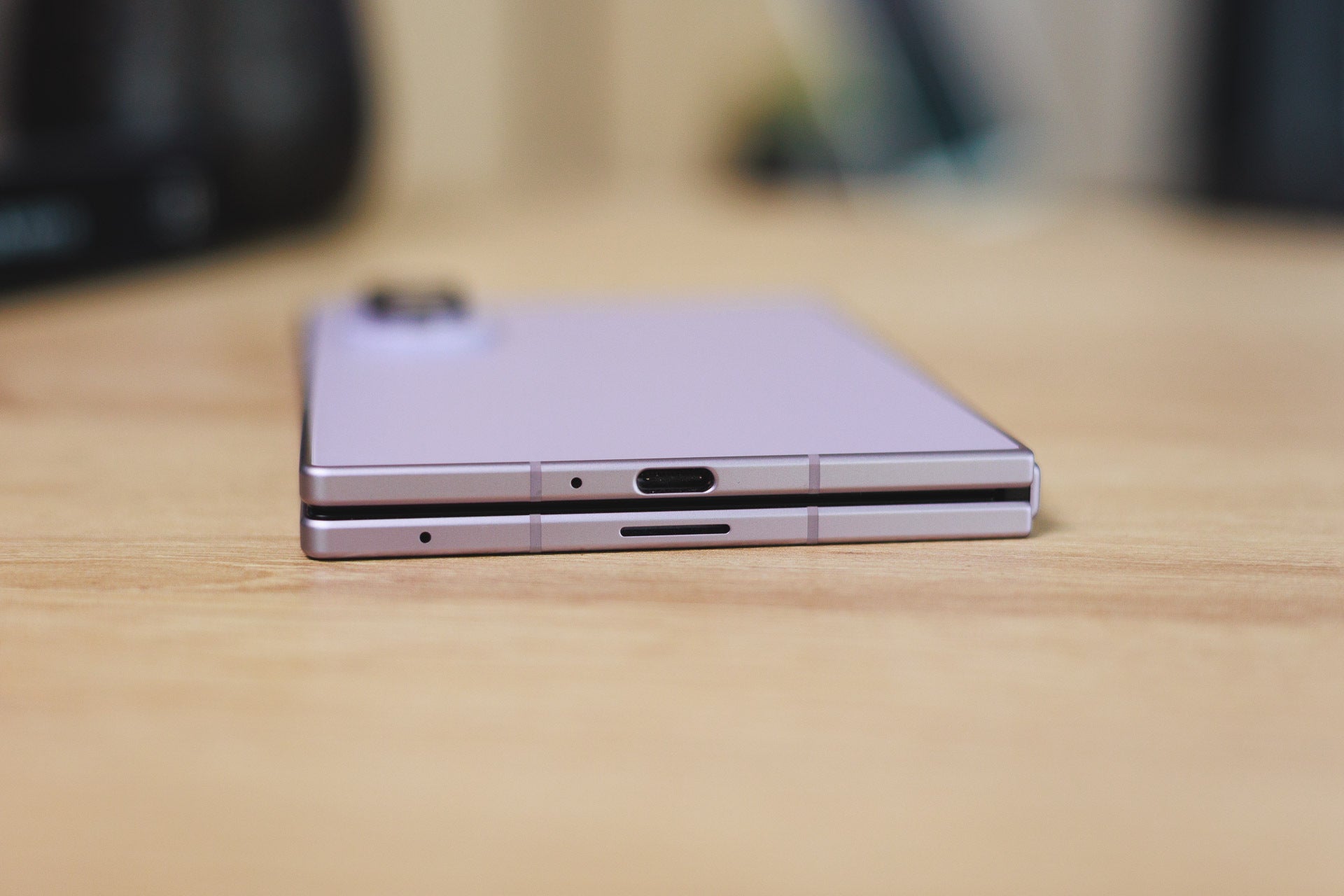
The Fold 8 now also has slightly tapered sides. It is much easier to place your finger between the two halves, while opening the Fold 7 felt like the phone was fighting you. Small details like that matter a lot in daily use.
Image by PhoneArena
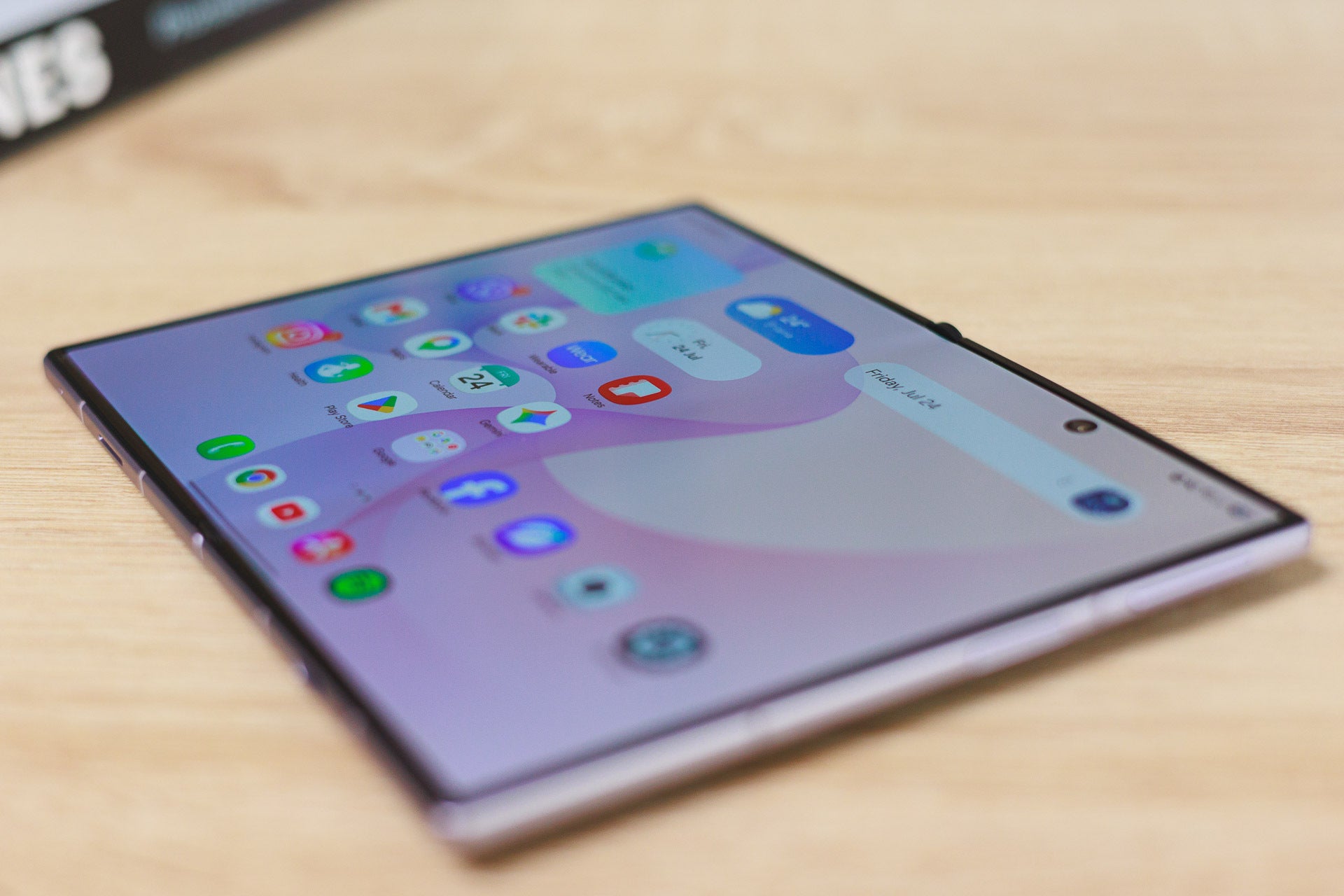
The crease in the middle has also practically disappeared on the Fold 8. You can see it if you really look for it, but I never actually felt it as a distraction.
Samsung is also the first phone maker to use titanium to support this screen, so it has less give and feels way sturdier, just like a real phone. The downside? Well, because titanium is a metal and metals are incompatible with a stylus, there is no S Pen support. It’s ironic that just as foldables feel strong enough to support an S Pen, Samsung drops it.
I, personally, haven’t found a good use for the S Pen in my life, but I know some people who will miss it a lot.
The Fold 8 also has a new hinge. The phone opens very confidently and snaps fully open with a confident click. I prefer this over previous folds that opened with a feel that I can best describe as soft and a bit mushy.
Image by PhoneArena
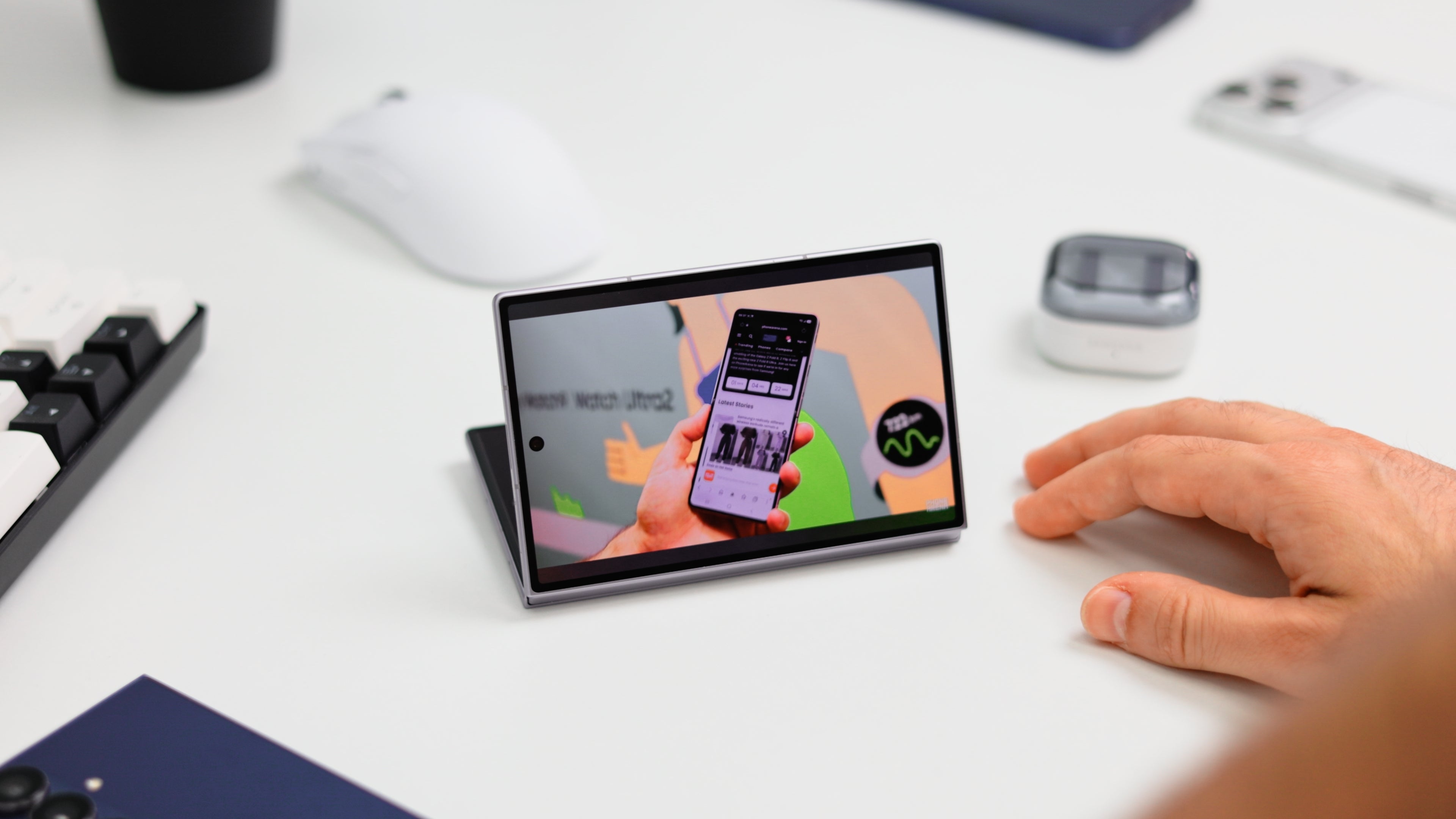
You do lose Flex Mode this year, the feature that splits the screen in half when you watch content, and ironically this would have made more sense with this wider screen. But I, personally, never used it much, so I don't find this to be a big loss. What you can do is just prop open the cover screen, and it will stay on its own, facing you, great for watching videos while you are eating.
One notice about durability: the phone is still not fully dust-proof. You have an IP48 rating, so you are only protected from larger particles, but not against fine dust.
Image by PhoneArena
Last year, a screen replacement on the Fold 7 cost $450, so it makes sense to protect the phone. By the way, you still have the option for Samsung Care+ at $13 a month in the US (or $260 over two years), and that gives you a free screen replacement.
Image by PhoneArena
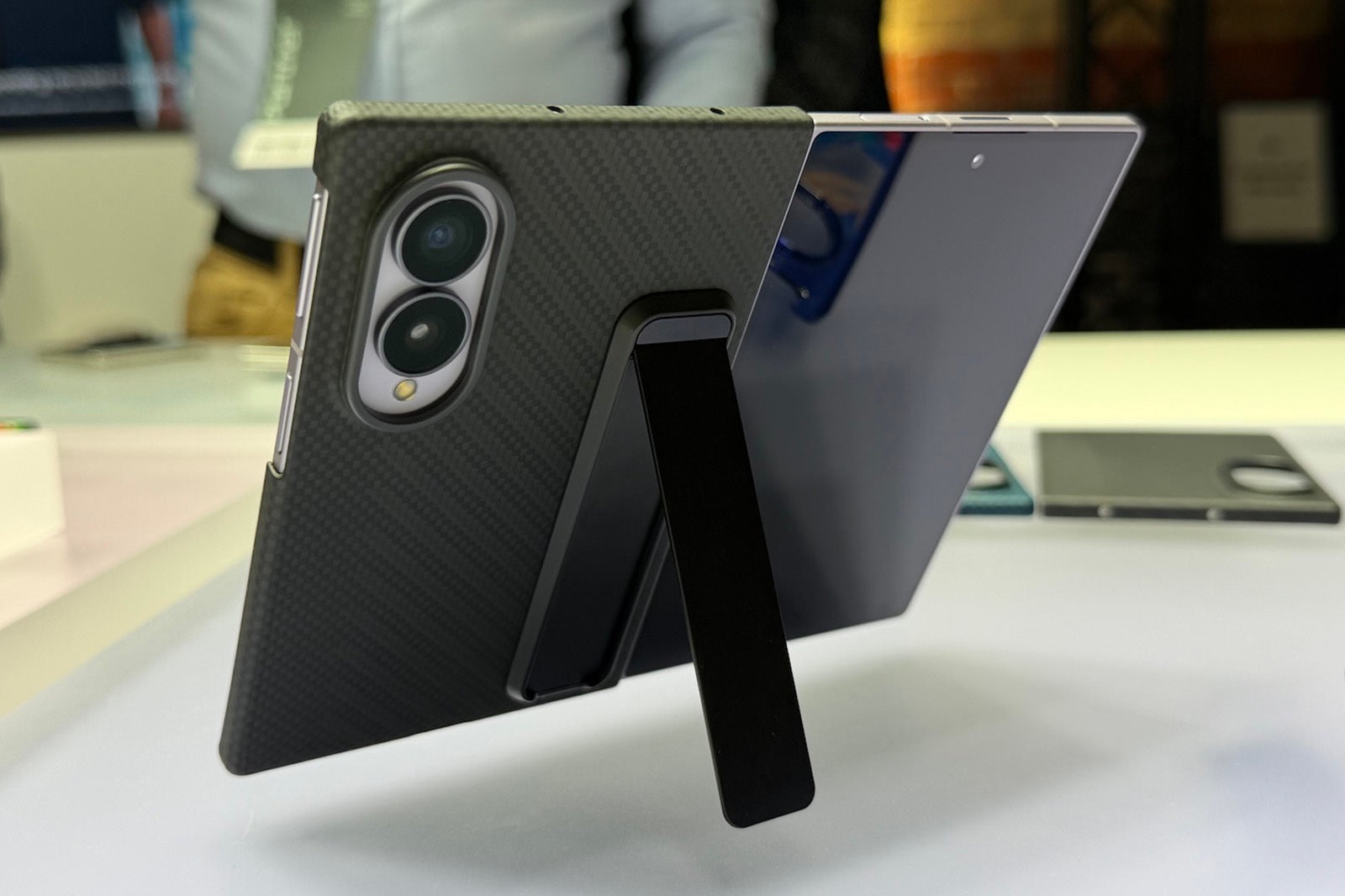
Speaking of protection, modern cases for the Fold 8 just cover the back part, but I really like this official carbon fiber case with a kickstand that feels really sturdy. A kickstand is so nice to have on a folding phone, you basically get a mini TV for your flights, and if you pair the phone with a small keyboard, you can even do some light work with it.
Image by PhoneArena
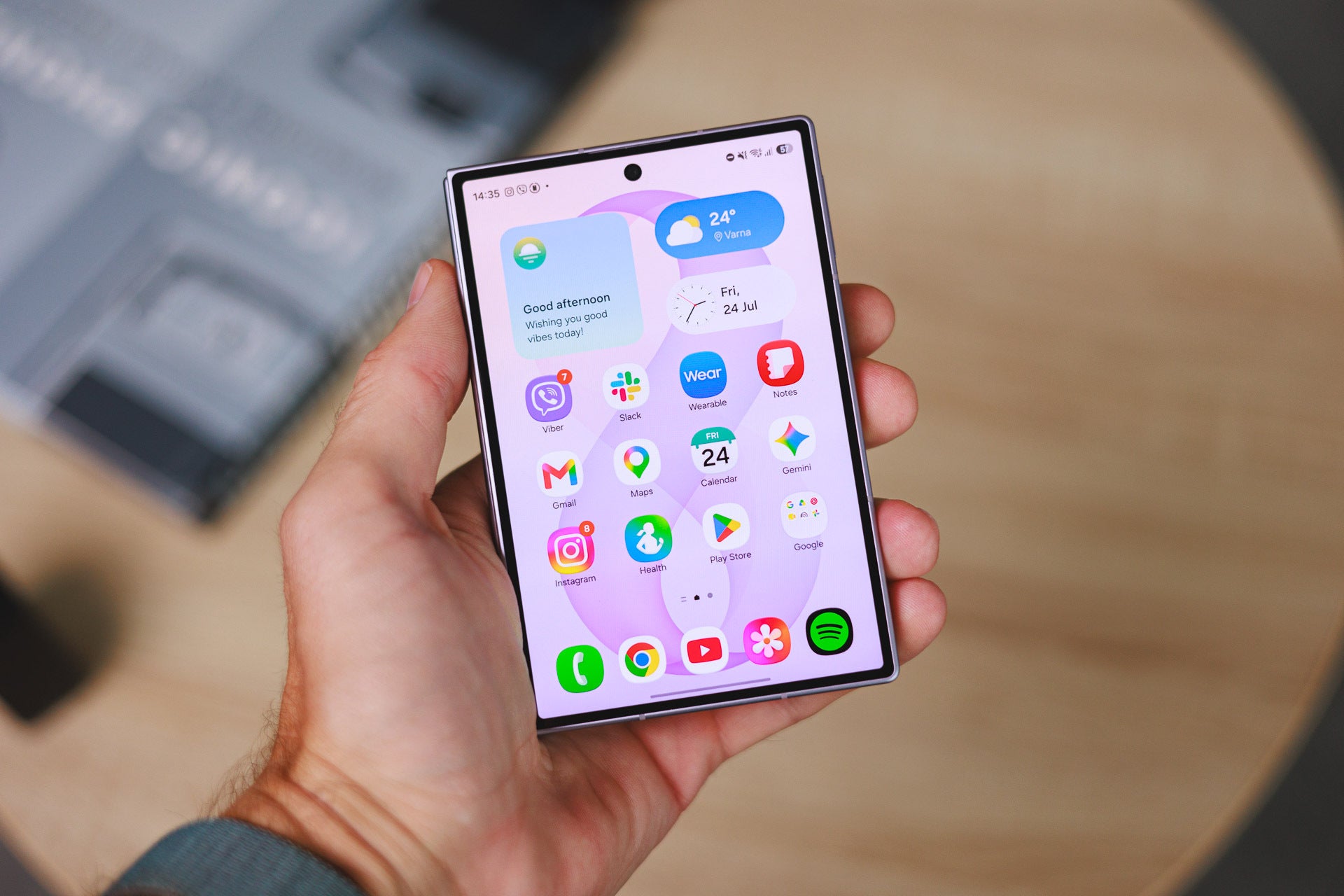
With a 5.5-inch cover screen, you might think this is some kind of an iPhone mini in its closed state (it had a 5.4-inch display). But once you actually get to use the Fold 8, you quickly realize that the wider 16:10 aspect ratio makes this screen feel much bigger than the display of the iPhone mini and the actual screen area is far bigger too.
In fact, the 16:10 aspect ratio is almost a perfect match for video, and fun fact — Macbooks also use the same 16:10 aspect ratio.
Image by PhoneArena
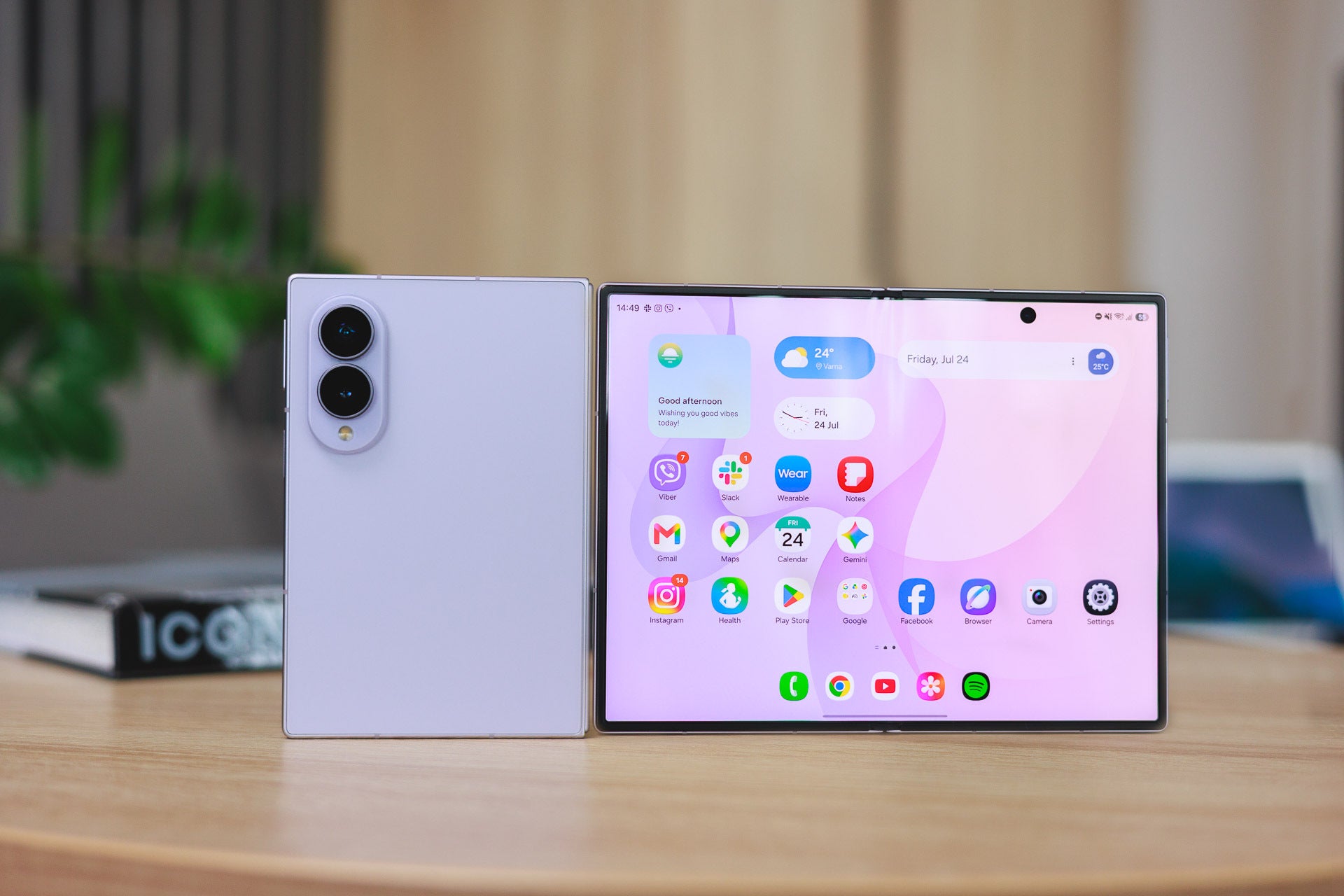
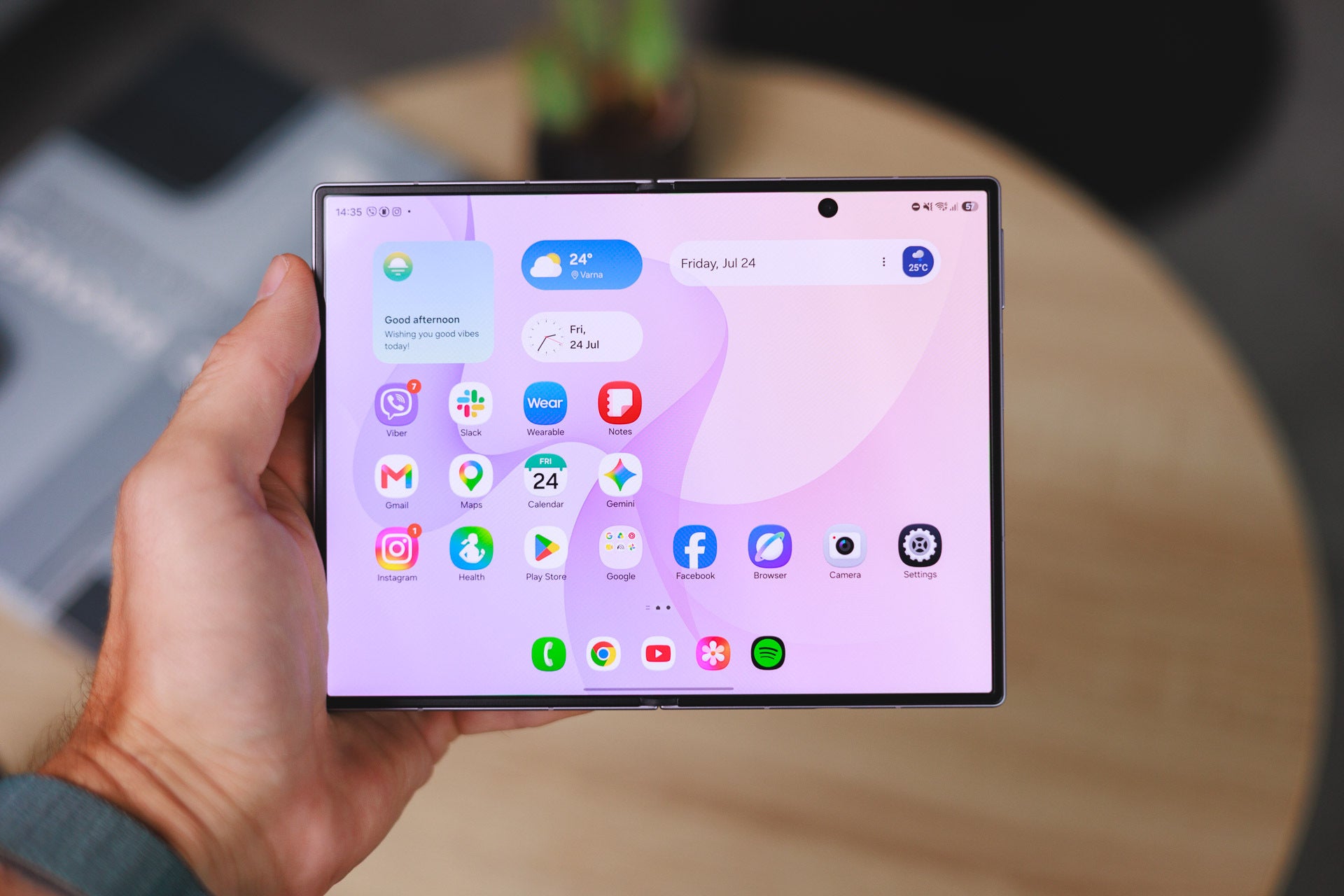
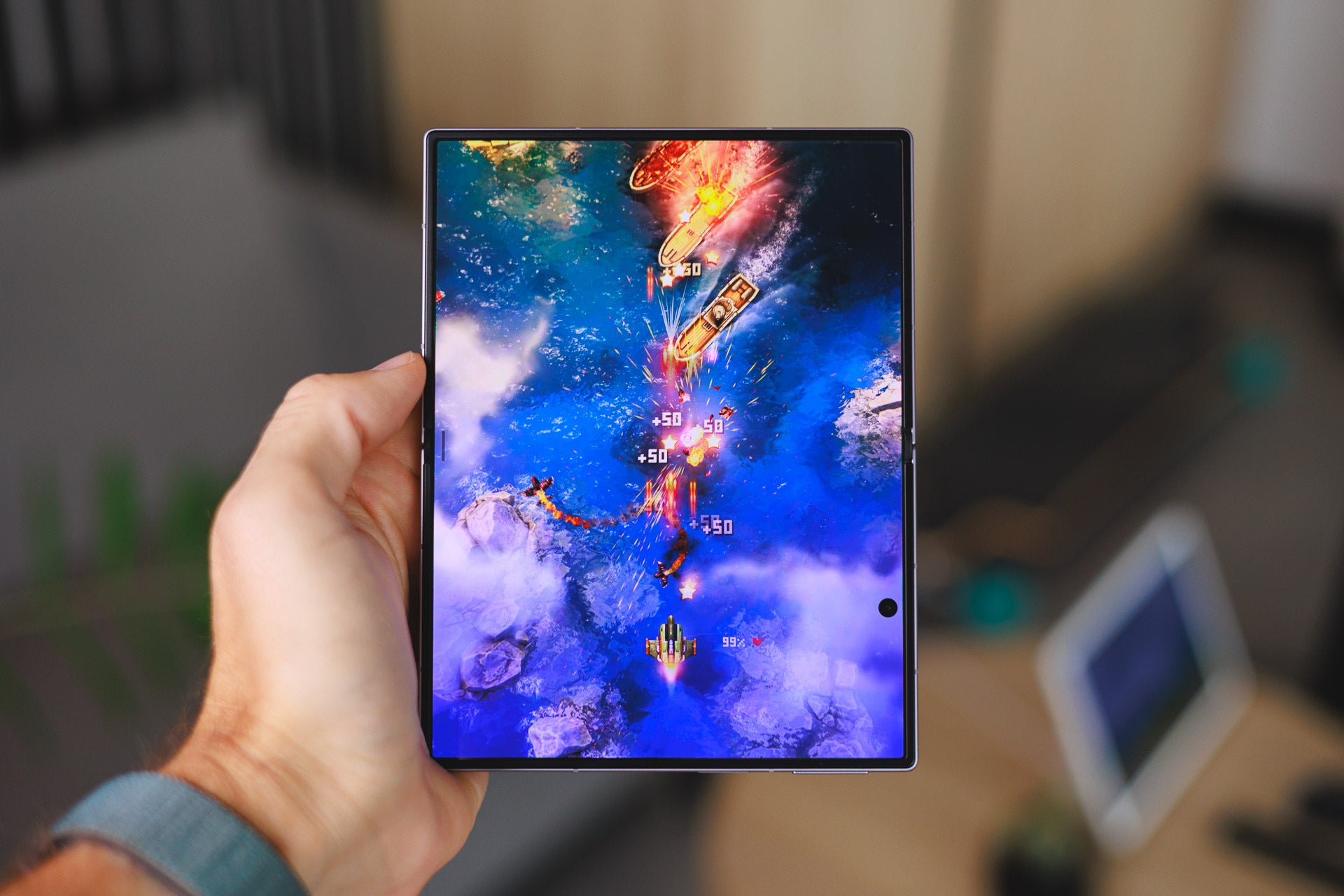
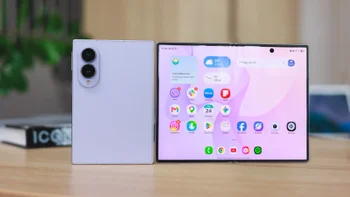
The big highlight of the Fold 8, however, is the main 7.6-inch display. It features a 4:3 aspect ratio, which is exactly the size modern smartphone take photos in. And having a rectangular screen means you can use it in both portrait orientation (when scrolling social media or reading) or landscape orientation (for watching videos).
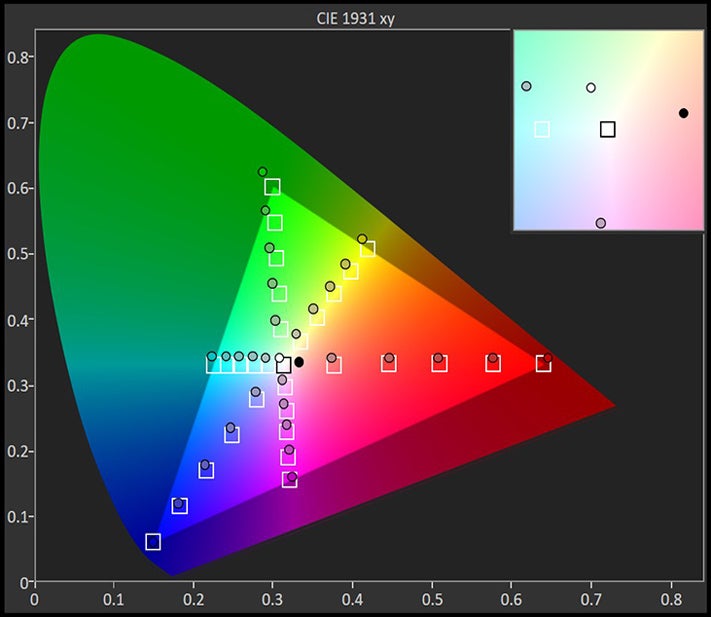
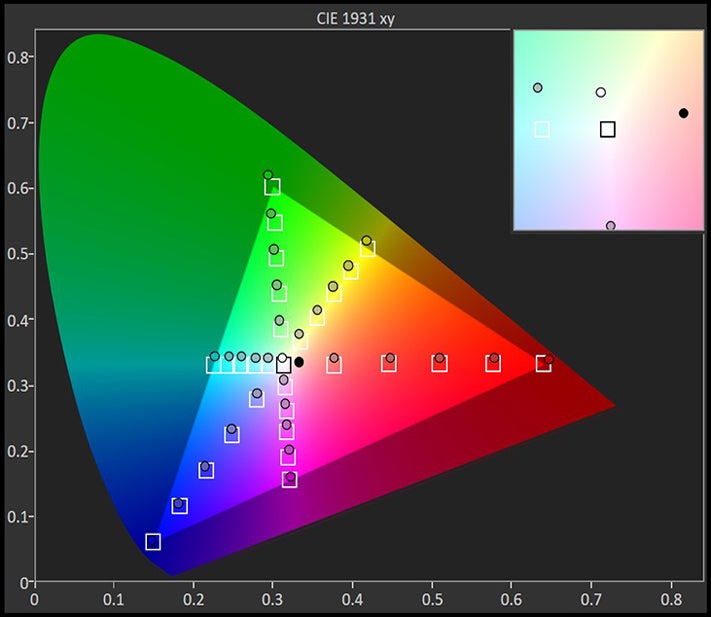
The CIE 1931 xy color gamut chart represents the set(area)of colors that a display can reproduce,with the sRGB colorspace(the highlighted triangle)serving as reference.The chart also provides a visual representation of a display's color accuracy. The small squares across the boundaries of the triangle are the reference points for the various colors, while the small dots are the actual measurements. Ideally, each dot should be positioned on top of its respective square. The 'x:CIE31' and 'y:CIE31' values in the table below the chart indicate the position of each measurement on the chart. 'Y' shows the luminance (in nits) of each measured color, while 'Target Y' is the desired luminance level for that color. Finally, 'ΔE 2000' is the Delta E value of the measured color. Delta E values of below 2 are ideal.
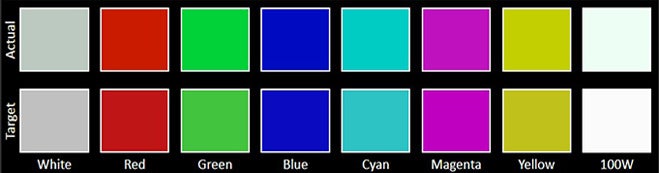
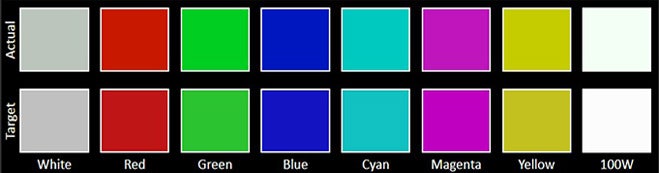
The Color accuracy chart gives an idea of how close a display's measured colors are to their referential values. The first line holds the measured (actual) colors, while the second line holds the reference (target) colors. The closer the actual colors are to the target ones, the better.
The Grayscale accuracy chart shows whether a display has a correct white balance(balance between red,green and blue)across different levels of grey(from dark to bright).The closer the Actual colors are to the Target ones,the better.
Samsung claims this screen is brighter than before, and we measured that's indeed the case. It hits nearly 3,000 nits when tested against a 20% white spot (Samsung claims 3,600 nits, but it's probably using a tiny 1% white spot for that measurement, which is not a very realistic use case).
And let me tell you more about the use case for this screen. First, YouTube videos appear with much less letterboxing than the boxy Folds. I am also often tempted to zoom in to fill the whole screen, as I'm not losing as much information.
Most older TV shows from the 90s were actually shot in 4:3, so TV series like Seinfeld actually look perfect on the Fold 8.
Instagram has been the only app that’s a bit buggy for me. The UI is just not optimized well for the cover screen, and if you watch reels, you see the comment section and it basically squeezes the reel into this tiny window. It’s much better when you open the Fold 8 of course.
I should also mention the fingerprint on the Fold 8. It's embedded in the power button on the side and it's fast and accurate, no complaints at all.
Galaxy Z Fold 8 Camera
A good Samsung camera, nothing more
Image by PhoneArena
Samsung Galaxy Z Fold 8
PhoneArena Camera Score
BEST 158
141
PhoneArena Photo Score
BEST 165
150
Main (wide)
BEST 87
81
Zoom
BEST 30
21
Ultra-wide
BEST 26
22
Selfie
BEST 30
26
PhoneArena Video Score
BEST 155
132
Main (wide)
BEST 83
70
Zoom
BEST 27
17
Ultra-wide
BEST 24
20
Selfie
BEST 28
25
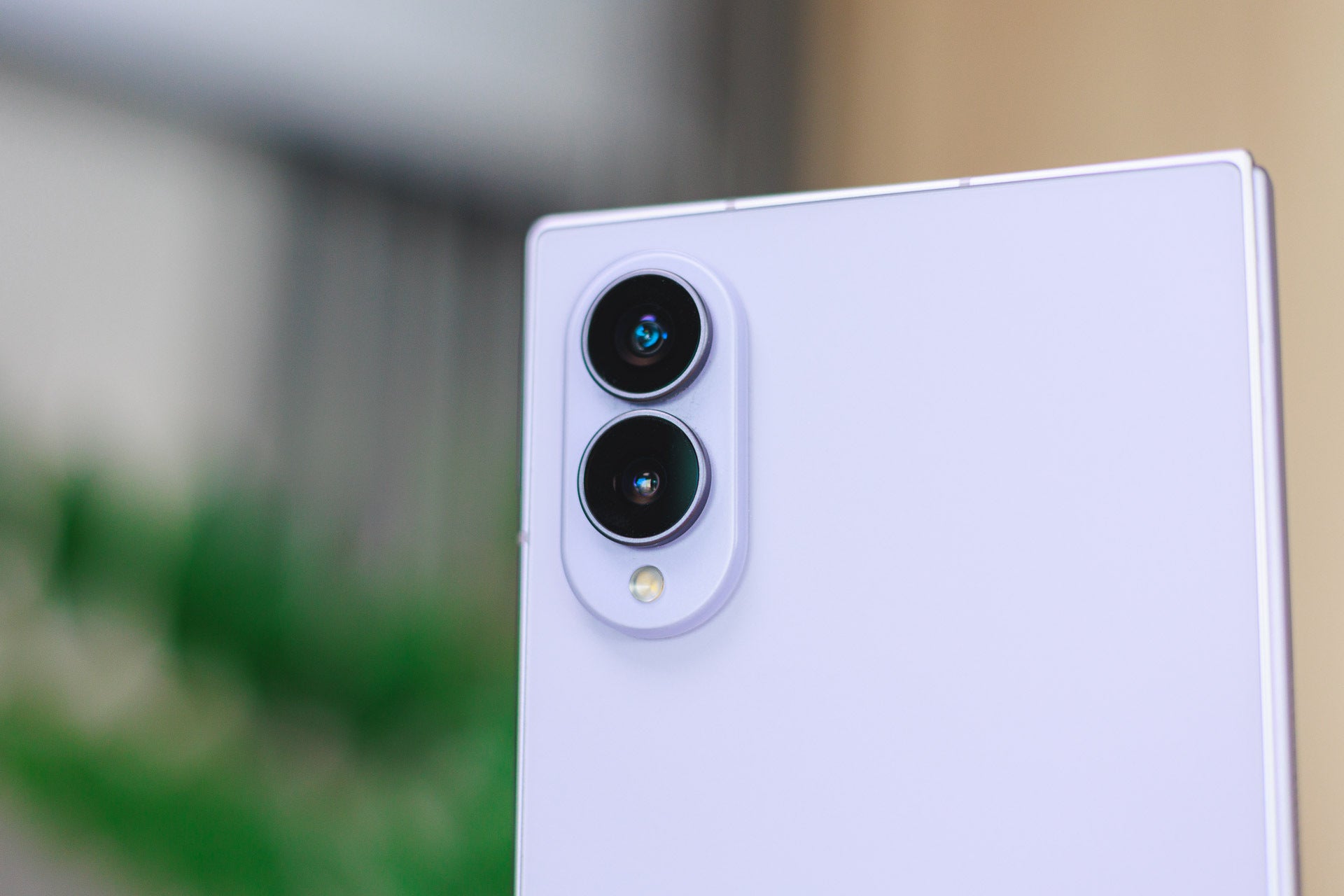
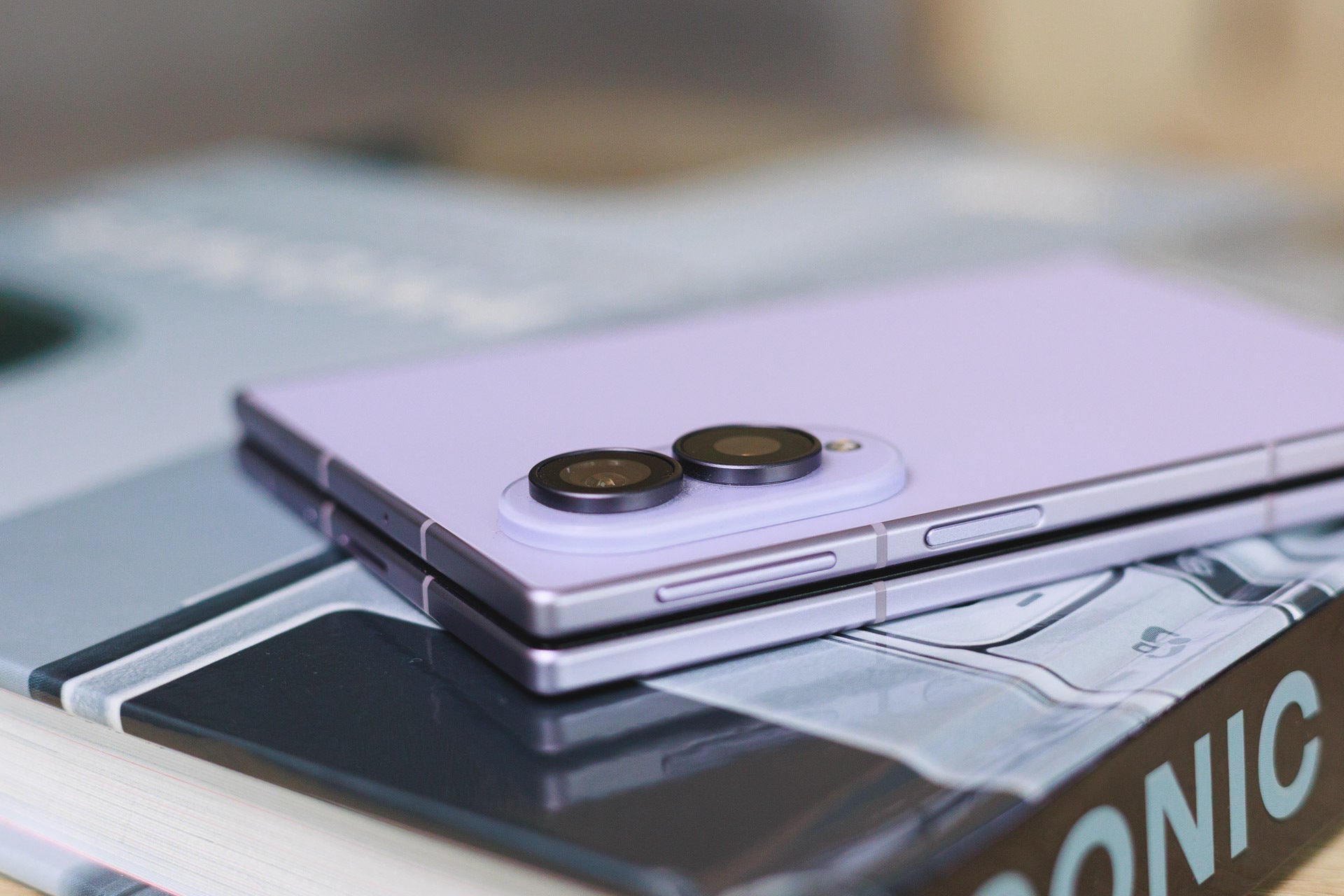
You have two 50MP cameras on the back of the Fold 8, the main one and an ultra-wide one.
Samsung uses a smaller main sensor here compared to the Fold 8 Ultra and S26 Ultra, so that means that the 2X sensor cropping is also not quite as good.
I also understand why Samsung went with an ultrawide camera, but if you are like me and reach out more often for a zoom camera for portraits or to get some cool details, you might be disappointed.
Daytime photos
Low-light photos
Overall, photos from the Fold 8 definitely have that typical Samsung look with saturated colors that I think most people find quite appealing, but they are not as good as what you'd get on a dedicated camera phone.
Galaxy Z Fold 8 Performance & Benchmarks
Plenty of power
Image by PhoneArena
The Fold 8 comes with the Snapdragon 8 Elite Gen 5 with 12GB of RAM for the base configuration.
This is Qualcomm's latest and most powerful mobile chip, so the phone runs very fast.
CPU Performance Benchmarks:
Geekbench 6 Single Higher is better
Samsung Galaxy Z Fold 83512
Samsung Galaxy Z Fold 8 Ultra3588
Geekbench 6 MultiHigher is better
Samsung Galaxy Z Fold 89811
Samsung Galaxy Z Fold 8 Ultra9971
Geekbench 6: A high single-core score is what makes your phone feel snappy during everyday tasks like opening apps, typing and browsing. The multi-core score matters most when doing heavier work like video editing or gaming.
The Fold 8 is on par with the Utlra in CPU performance.
GPU Performance
3DMark Extreme(High)Higher is better
Samsung Galaxy Z Fold 85899
Samsung Galaxy Z Fold 8 Ultra6501
3DMark Extreme(Low)Higher is better
Samsung Galaxy Z Fold 82819
Samsung Galaxy Z Fold 8 Ultra3854
Wild Life Extreme is a heavy graphics workload used to measure a device's sustained GPU performance and thermal throttling. It uses older mobile rendering techniques and is friendly to older or lower-end mobile devices.
Interestingly, when it comes to graphics and gaming, the Fold 8 scored noticeably lower than its Ultra counterpart. This could be due to Samsung having a bit more space and slightly better cooling on the Ultra.
I don't think that's a major problem, as performance is still in the upper echelone of phones we've tested, but heavy gamers should know about this.
3DMark Steel Nomad Light(High)Higher is better
Samsung Galaxy Z Fold 82417
Samsung Galaxy Z Fold 8 Ultra2550
3DMark Steel Nomad Light(Low)Higher is better
Samsung Galaxy Z Fold 81262
Samsung Galaxy Z Fold 8 Ultra1428
Steel Nomad Light Stress Test: Measures your phone's 'gaming stamina' by comparing its peak speed (High) against its throttled speed after it heats up (Low), revealing whether your performance will stay smooth or start lagging during a long session. It loads heavier, more modern effects than Wild Life Extreme and is more in line with current games.
We see a similar drop in performance compared to the Ultra in other gaming benchmarks as well.
3DMark Solar Bay Extreme(High)Higher is better
Samsung Galaxy Z Fold 8789
Samsung Galaxy Z Fold 8 Ultra979
3DMark Solar Bay Extreme(Low)Higher is better
Samsung Galaxy Z Fold 8579
Samsung Galaxy Z Fold 8 Ultra813
Ray Tracing: The test measures Ray Tracing performance because this advanced technology creates the hyper-realistic reflections and shadows found in next-gen titles like Arena Breakout. Even if you don't play games with ray tracing, a high score here means your phone has a 'best-in-class' cooling system.
The Fold 8 is offered in three models: the base 12/256GB one, a 16/512GB version (add $200) and a 16GB+1TB model ($300 on top of the mid-tier model). There is no support for microSD cards here.
Samsung has one of the most refined and feature-rich Android skins, so most people know what they are getting into.
I was, however, disappointed by a few missing features. For example, I really wanted to use the Bubbles feature from Android 17, where you can put every app in a "bubble" with a long press and a tap. Samsung kind of supports this, but it requires quite the gymnastics: you first open the app in pop-up view, and then minimize it. That's just too complicated for most people, myself included.
When it comes to multitasking, you will typically have two apps side by side, but some Android phones also support three apps in vertical cards. Samsung does not support that, it only features a grid-view for three apps, which is quite useless, if you ask me.
But for all else, One UI is really quite good and its implementation of AI photo editing features is also superb.
With a 4,800mAh battery, the Fold 8 is not breaking any records, but remember that it's a thin and light device, so let's not be too critical here.
I was actually happy with real-world battery life, getting just a bit under 6 hours of screen time. In comparison, I usually get around 5 hours and 20 minutes on the compact iPhone 17 Pro, so the Fold 8 beats that number easily.
However, if you compare it with the Galaxy S26 Ultra, I get a bit more than 7 hours on that phone, so the Fold is not quite as good.
We perform three tests in controlled lab conditions on all phones that we test, and the Fold 8 performed decently well on all three.
Image by PhoneArena
Samsung has also upgraded charging speeds this year and the Fold 8 supprots 45W wired charging and 20W wireless charging. It takes a bit more than an hour to charge with a wire, which is decent.
I am a bit disappointed that Samsung skips the magnets on its phones, so you don't have native Qi2/MagSafe support. Typically, you can get those magnets with a case, so not a problem for most people, but if you use your phone without one... well, you're out of luck.
Galaxy Z Fold 8 Audio Quality and Haptics
The Fold 8 has a weird speaker situation compared to a traditional phone.
On a regular phone, when you watch video in landscape mode, the two speakers fire from both sides of the phone creating somewhat of a stereo effect. On the Fold 8, when unfolded and held in landscape orientation, the speakers happen to be on the top and right, but both are on the left side. So this lack of stereo sound is definitely noticeable.
I would also say that speaker quality is decent, but not the best out there. It can get sufficiently loud, but the lower frequencies sound a bit hollow, and overall, the sound is not quite as rich as on some rivals.
There are three things I was wondering with the Fold 8.
Is the new wider form factor actually good in real use? That's a definite yes for me. It feels so right.
Will it replace the boxier foldables we had until now? Again, an easy yes from me. This form factor just feels more natural, be it for videos, photos, gaming or reading.
Do I really need this over a regular phone? Here is where I have some doubts. A regular phone is still a bit more comfortable to hold and for small daily interactions, folding is just not necessary. Let’s be real — a fold will not replace your laptop for productivity. But also let me be honest: unfolding this phone and using it like that is a delightful experience.
After a week of using the Fold 8, it will be really hard going back to a regular phone. So... this might be the form factor of the future after all.
Victor, a seasoned mobile technology expert, has spent over a decade at PhoneArena, exploring the depths of mobile photography and reviewing hundreds of smartphones across Android and iOS ecosystems. His passion for technology, coupled with his extensive knowledge of smartphone cameras and battery life, has positioned him as a leading voice in the mobile tech industry.
A discussion is a place, where people can voice their opinion, no matter if it
is positive, neutral or negative. However, when posting, one must stay true to the topic, and not just share some
random thoughts, which are not directly related to the matter.
Things that are NOT allowed:
Off-topic talk - you must stick to the subject of discussion
Offensive, hate speech - if you want to say something, say it politely
Spam/Advertisements - these posts are deleted
Multiple accounts - one person can have only one account
Impersonations and offensive nicknames - these accounts get banned
To help keep our community safe and free from spam, we apply temporary limits to newly created accounts:
New accounts created within the last 24 hours may experience restrictions on how frequently they can
post or comment.
These limits are in place as a precaution and will automatically lift.
Moderation is done by humans. We try to be as objective as possible and moderate with zero bias. If you think a
post should be moderated - please, report it.
Have a question about the rules or why you have been moderated/limited/banned? Please,
contact us.











Things that are NOT allowed:
To help keep our community safe and free from spam, we apply temporary limits to newly created accounts: