Modern smartphones have great camera systems. Usually, the more cameras, the better. But here's a controversial thought—do we really need an ultrawide camera on a smartphone?
This outrageous idea came to me a couple of days ago while I was browsing through my Google Photos account searching for something. I realized there were almost no ultrawide shots there. Might be just me, but let's try to dive deeper into this.
How wide are smartphone ultrawide cameras?
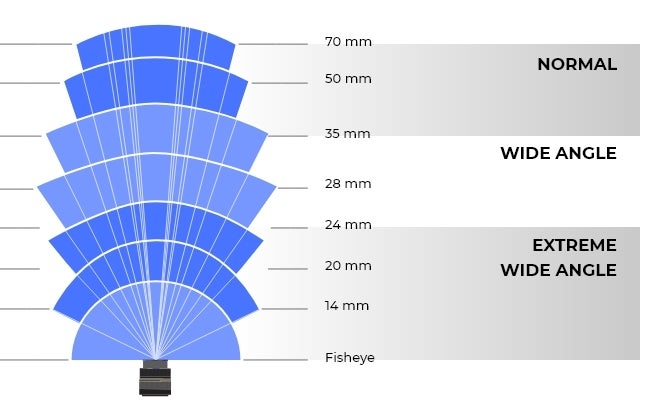
Camera lenses by focal length
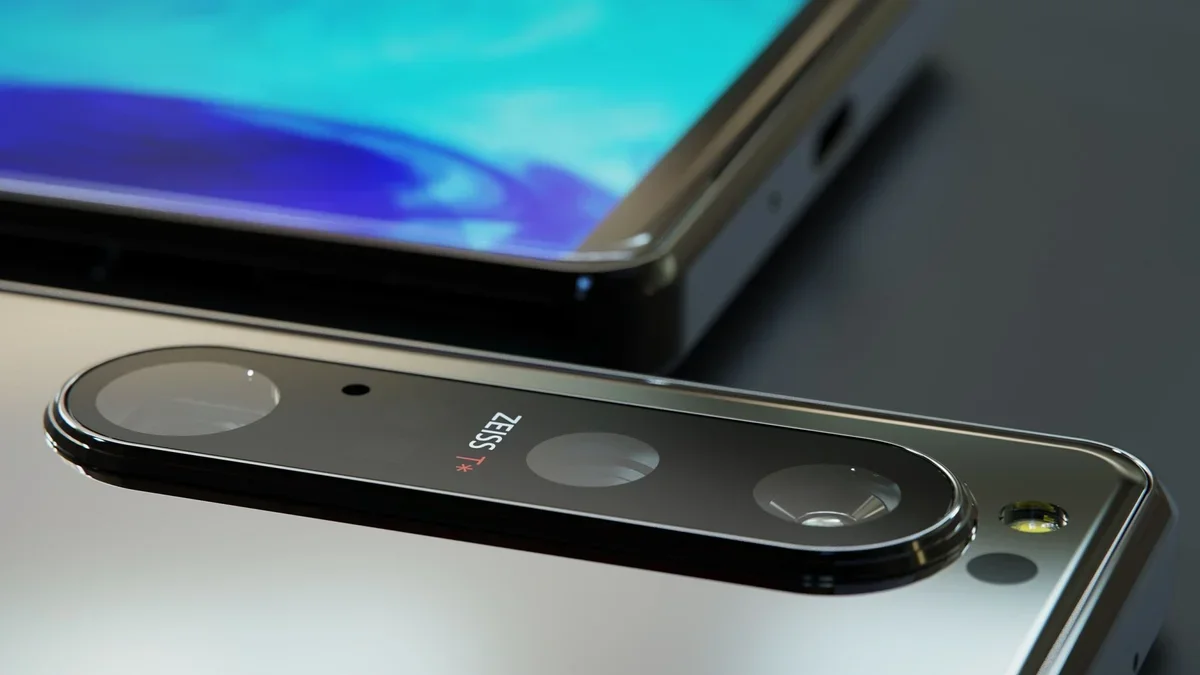
Most modern smartphones use the wide-ultrawide camera duo, and if you're lucky or we're talking about a camera phone or a flagship, there's a telephoto camera added to the party. It's quite interesting that main smartphone cameras are, in fact, quite wide-angle in comparison to regular dedicated digital cameras.
The reason for this is simple: phones used to have just one camera on their backs, and using a wide-angle lens covered more shooting scenarios. The iPhone 4 and the Galaxy S3, for example, both had rear cameras with an equivalent focal length of 29 mm.
For a full-frame 35 mm camera with a 36 mm by 24 mm format, the normal lens adopted by most manufacturers is 50 mm. A lens of focal length 35 mm or less is considered wide-angle.
Then smartphone manufacturers began to slap dual camera systems on the back of smartphones, with the LG G5 one of the first examples sporting such a system with a 26 mm main camera and a 9 mm ultrawide lens.
What's the idea of a smartphone ultrawide camera?
An ultra-wide shot of Grand Canyon | Image by PixaBay
Recommended For You
It's quite simple—the main idea behind an ultrawide camera is to get more "stuff" into the frame. Let's say you're visiting Niagara Falls and want to capture the grandeur of the scene, or the Grand Canyon, or you want to get all of your classmates in the frame from that reunion event.
One of my colleagues also suggested that ultrawide cameras are great for taking photos of your toddler, because they often get too close to the phone. I can't confirm or deny, as I don't have children, but you get the picture.
How come I don't have any ultrawide samples in my Google Photos account then? My first photo dates back to 2007, after all.
What's the problem, then?
< wide angleultra wide angle >
For me, personally, there are a couple of factors contributing to my spare usage of the ultrawide smartphone camera. Some of those might be more universal; some might vary from person to person.
The first one is that I don't like ultrawide shots. For me they don't convey the drama and emotions of a large-scale frame, quite on the contrary. Everything looks small and uninspiring.
Another big factor is that until recently, ultrawide cameras were not on par with main cameras on smartphones when it comes to detail, color reproduction, and overall quality in general.
Then there's the small gap between the main wide camera and the ultrawide cameras on most modern smartphones. Somehow, main camera lenses today became even wider with equivalent focal lengths of 23-26 mm.
The Galaxy S25 features a 24 mm main camera, the iPhone 17—a 26 mm one, and the Pixel 10 is not different at 25 mm. The Honor Magic 6 Pro I've been using for the past couple of years is even wider at 23 mm.
So, in summary, the main wide cameras on modern smartphones are wide enough for me, they offer better quality, and the difference in framing compared to an ultrawide camera isn't that big.
Are there any smartphones without an ultrawide camera?
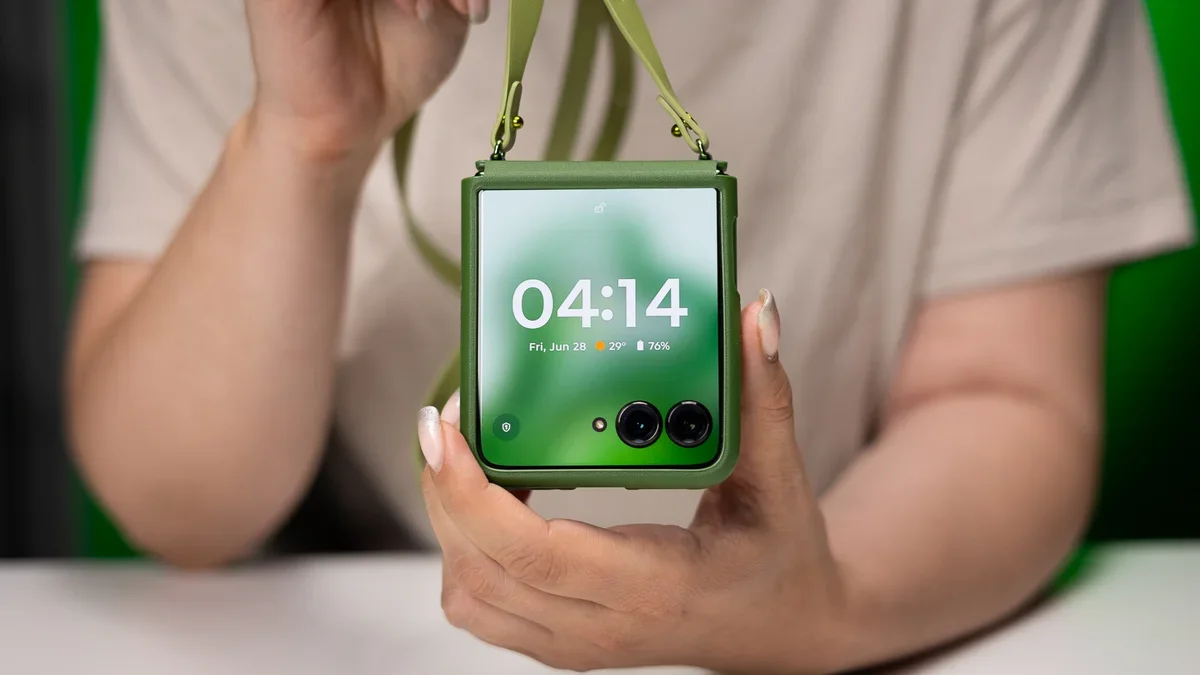
No ultra-wide camera on this one, just a telephoto and a wide-angle lens | Image by PhoneArena
At this point I was pretty sure I could be a minority with this ultrawide conundrum, but I remembered a big phone manufacturer launched a model without an ultrawide camera. And this was fairly recently.
Some of you might remember the Motorola Razr Plus (2024). This powerful flip phone launched with a main 24 mm camera and a telephoto with 2x optical zoom at 47 mm. So, I wasn't crazy. A big smartphone brand decided to mass-produce a smartphone without an ultrawide camera.
I went back and sifted through some of the polls I did on PhoneArena, and I found a few dealing with the smartphone camera issue. Some people voted telephoto instead of ultrawide, and in one discussion some people actually said they only needed one good main camera.
Apple actually has been doing this for quite some time on the iPhone SE back in the day and now on the iPhone "e" series.
What could we use the space for instead?
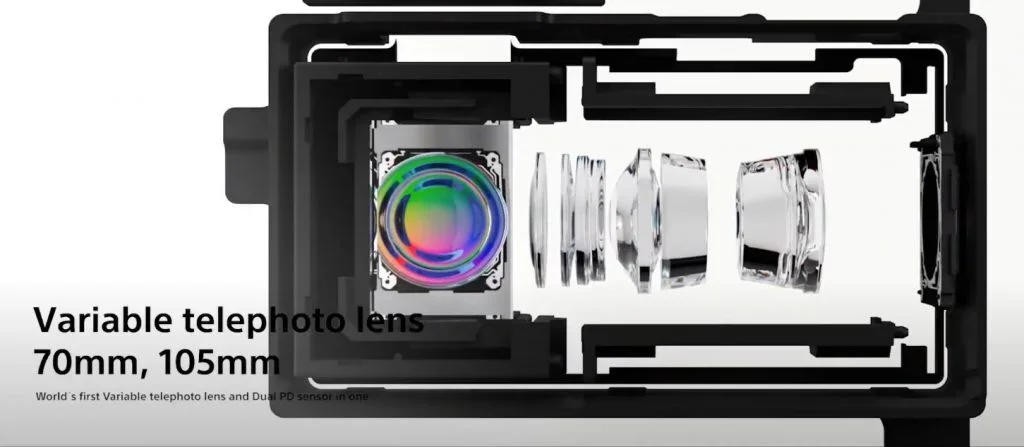
The first iteration of the variable telephoto camera by Sony
I think a modern smartphone can do much better with just two cameras on its back, but not the ones you might be thinking about. Rather than go for the usual wide-ultrawide duo, why not use a good main camera (say 23-26 mm), which is quite wide already, and opt for a periscope telephoto with two fixed focal lengths (50 mm, which is the "normal" framing, and 100 mm—the equivalent of 4.5-5x zoom)? This arrangement makes much more sense to me.
The two focal lengths telephoto system has been done by two separate companies using vastly different approaches. Sony did one with a moving lens inside on the Xperia 1 III, and Huawei used a moving prism to focus light from different lenses on one sensor.
That way we lose the lousy (most of the time) ultrawide, still get a pretty wide-angle main camera with great quality, and on top of that we have a useful 50 mm portrait camera and a telephoto at 100 mm. This system should cover most of the shooting scenarios. Periscope telephoto cameras are now pushing 200MP, they have good sensors and optics and can also do macro shots, whether or not you need those.
What do you think about this? Do you use the ultrawide camera on a regular basis, or are you okay swapping it for something else—a telephoto or a bigger battery? Let me know in the comments below.
Mint Mobile's 6-month plans now cost $10/mo
$10
/mo
$35
$25 off (71%)
Mint Mobile is celebrating its 10-year anniversary with a special offer on its six-month subscription plans. For a limited time, you can get your preferred tier (6GB, 17GB, 23GB or unlimited) for just $10/mo. That saves you between 50% and 71% on the carrier's mobile plans, making it way easier to recommend.
Mariyan, a tech enthusiast with a background in Nuclear Physics and Journalism, brings a unique perspective to PhoneArena. His childhood curiosity for gadgets evolved into a professional passion for technology, leading him to the role of Editor-in-Chief at PCWorld Bulgaria before joining PhoneArena. Mariyan's interests range from mainstream Android and iPhone debates to fringe technologies like graphene batteries and nanotechnology. Off-duty, he enjoys playing his electric guitar, practicing Japanese, and revisiting his love for video games and Haruki Murakami's works.
A discussion is a place, where people can voice their opinion, no matter if it
is positive, neutral or negative. However, when posting, one must stay true to the topic, and not just share some
random thoughts, which are not directly related to the matter.
Things that are NOT allowed:
Off-topic talk - you must stick to the subject of discussion
Offensive, hate speech - if you want to say something, say it politely
Spam/Advertisements - these posts are deleted
Multiple accounts - one person can have only one account
Impersonations and offensive nicknames - these accounts get banned
To help keep our community safe and free from spam, we apply temporary limits to newly created accounts:
New accounts created within the last 24 hours may experience restrictions on how frequently they can
post or comment.
These limits are in place as a precaution and will automatically lift.
Moderation is done by humans. We try to be as objective as possible and moderate with zero bias. If you think a
post should be moderated - please, report it.
Have a question about the rules or why you have been moderated/limited/banned? Please,
contact us.







Things that are NOT allowed:
To help keep our community safe and free from spam, we apply temporary limits to newly created accounts: