Verizon has waved the white flag on price wars, and T-Mobile couldn't be happier
The two carriers want nothing to touch their margins.
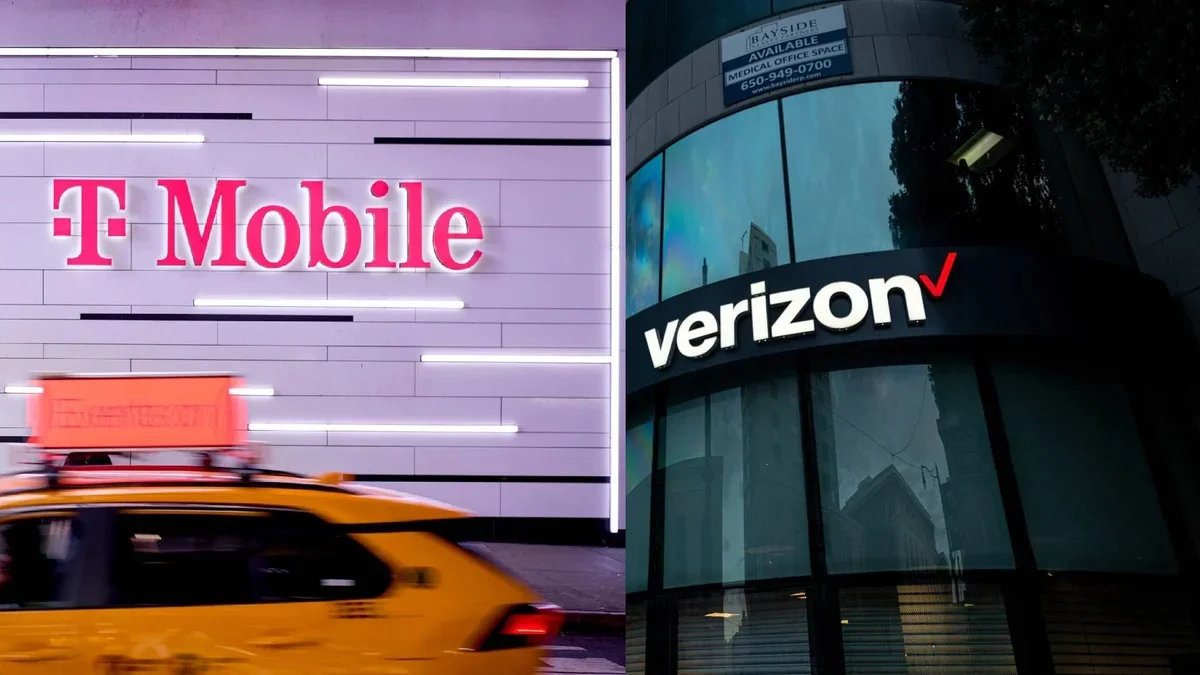
When Verizon abruptly brought in CEO Dan Schulman to stem the exodus of customers, many thought the carrier would spark a price war. These beliefs were reaffirmed when the carrier started offering four lines for $100 with four free iPhone 17 units in December. It looks like that's as generous as Verizon is going to be, with analysts telling Fierce Wireless they don't expect a full-blown price war.
Verizon's iPhone 17 deal hasn't been pulled back yet, and while it's not a price cut per se, customers taking advantage of it will be paying less than the original price. The deal matches T-Mobile's deal and is for the company's low-tier Unlimited Welcome plan. That's a departure from Verizon's typical strategy of reserving its best deals for premium plans.
This led LightShed Partners analysts Walter Piecyk and Joe Galone to perceive it as a sign that Verizon was ready to take a hit on its revenue to grow and warned of a price war.
However, those fears have since subsided, with Verizon not expected to rock the boat any further.
As New Street Research's analyst David Barden points out, Schulman's declaration to increase market share was perceived as a sign that prices would be reduced. This worried investors, and Verizon assuaged those fears by pointing out that Schulman's strategy was to stop resting on its laurels regarding network superiority and shift to a customer-first approach.
Verizon might have had some setbacks, but officially, it's the biggest wireless carrier, it has a strong network, and it boasts a premium brand perception. If the company cuts prices, it won't erode only its Average Revenue Per User (ARPU), but also the ARPU for AT&T and T-Mobile. Ultimately, everyone will be worse off, and Verizon isn't ready to sacrifice its margins.
Instead of aggressively competing on price, Verizon is taking a modest approach with the hopes of luring away enough subscribers from AT&T and T-Mobile to meet its short-term goals.
Jeff Moore, principal of Wave7 Research, which monitors carrier moves and pricing, has also brushed off a price war. He has also dismissed the possibility of T-Mobile's new Better Value plan being a retaliatory move, pointing out that it's a premium plan based on perks.
Roger Entner, analyst and founder of Recon Analytics, echoed that line of thinking.
The picture will become clearer when Verizon announces its fourth-quarter results on Friday.
Verizon lost customers in each of the three quarters of 2025. Under Schulman, Verizon has rolled out deals that create value for customers. For instance, BNP Paribas Equity Research (BNPP) recently spotted a $10 promotional discount for those shopping for a single line.
These steps haven't sufficiently stemmed subscriber churn or attracted enough new sign-ups to offset losses. Verizon isn't willing to spend more to compete more aggressively with rivals at the moment.
The weak impact of Verizon's ongoing promotions is the reason why T-Mobile hasn't responded with bolder promotions of its own. T-Mobile is even ready to cede some market share as long as Verizon continues to be level-headed.
However, considering Verizon's half-hearted attempts don't seem to be working, hostile promotions and intense price cuts shouldn't be ruled out.
If BNPP's prediction pans out, Q4 will cap off a year of customer losses for Verizon. With no visible improvement in metrics, Schulman will likely be forced to take a more ambitious approach, which is just what T-Mobile and even Verizon are hoping to avoid.
For consumers, the us-versus-them dynamic has never been clearer. Apparently, T-Mobile had a less spectacular Q4 than Q3 because it held off on responding to Verizon's promotions. The major carriers want to maintain the current pricing landscape, even if it means implicitly cooperating.
Toeing the status quo
Verizon's iPhone 17 deal hasn't been pulled back yet, and while it's not a price cut per se, customers taking advantage of it will be paying less than the original price. The deal matches T-Mobile's deal and is for the company's low-tier Unlimited Welcome plan. That's a departure from Verizon's typical strategy of reserving its best deals for premium plans.
However, those fears have since subsided, with Verizon not expected to rock the boat any further.
As New Street Research's analyst David Barden points out, Schulman's declaration to increase market share was perceived as a sign that prices would be reduced. This worried investors, and Verizon assuaged those fears by pointing out that Schulman's strategy was to stop resting on its laurels regarding network superiority and shift to a customer-first approach.
As we have said in the past, Verizon has the best house in the neighborhood, and they know that a price war will burn down this neighborhood. If they manage to capture ~200-300k postpaid phone net adds each from AT&T and T-Mobile, it doesn’t hurt those companies meaningfully while also satisfying Verizon’s near-term goal, in our view.
David Barden, New Street Research's analyst, January 2026
Verizon might have had some setbacks, but officially, it's the biggest wireless carrier, it has a strong network, and it boasts a premium brand perception. If the company cuts prices, it won't erode only its Average Revenue Per User (ARPU), but also the ARPU for AT&T and T-Mobile. Ultimately, everyone will be worse off, and Verizon isn't ready to sacrifice its margins.
Jeff Moore, principal of Wave7 Research, which monitors carrier moves and pricing, has also brushed off a price war. He has also dismissed the possibility of T-Mobile's new Better Value plan being a retaliatory move, pointing out that it's a premium plan based on perks.
Roger Entner, analyst and founder of Recon Analytics, echoed that line of thinking.
The picture will become clearer when Verizon announces its fourth-quarter results on Friday.
The fears about the price wars are overblown.
Roger Entner, analyst and founder Recon Analytics, January 2026
A let-down for customers
Verizon lost customers in each of the three quarters of 2025. Under Schulman, Verizon has rolled out deals that create value for customers. For instance, BNP Paribas Equity Research (BNPP) recently spotted a $10 promotional discount for those shopping for a single line.
The weak impact of Verizon's ongoing promotions is the reason why T-Mobile hasn't responded with bolder promotions of its own. T-Mobile is even ready to cede some market share as long as Verizon continues to be level-headed.
However, considering Verizon's half-hearted attempts don't seem to be working, hostile promotions and intense price cuts shouldn't be ruled out.
Were you hoping for a price war?
213 Votes
Yeah, I thought Verizon had learned its lesson.
38.97%
No, the Big 3 only know how to raise prices.
38.5%
I still am!
22.54%
Industry rationality
If BNPP's prediction pans out, Q4 will cap off a year of customer losses for Verizon. With no visible improvement in metrics, Schulman will likely be forced to take a more ambitious approach, which is just what T-Mobile and even Verizon are hoping to avoid.


Popular stories






Latest News




Things that are NOT allowed:
To help keep our community safe and free from spam, we apply temporary limits to newly created accounts: