A Counterpoint report published in February 2026 showed a staggering trend: memory prices have skyrocketed 80%-90% in Q1 2026 alone. According to findings, DRAM, HBM, and NAND have hit record prices.
And yet, smartphones are predicted to have more storage on average in 2026.
Storage capacity in smartphones is expected to increase
TrendForce published a report on March 23, predicting that smartphone storage capacity is expected to grow by 4.8% year-over-year. This seems counterintuitive, especially considering that the rising costs were initially thought to push OEMs toward reducing memory per device and emphasizing higher-tier options with LPDDR5 in order to keep profit margins.
How much storage is enough for you?
29 Votes
128GB is enough for me.
17.24%
To me, 256GB is perfect.
34.48%
Only 512GB works for me.
31.03%
1TB all the way!
17.24%
However, TrendForce suggests brands could adopt a different strategy — discontinue low-capacity models altogether. The year-on-year growth is also triggered by the increased AI-related demand in smartphones.
AI, naturally, among the main factors
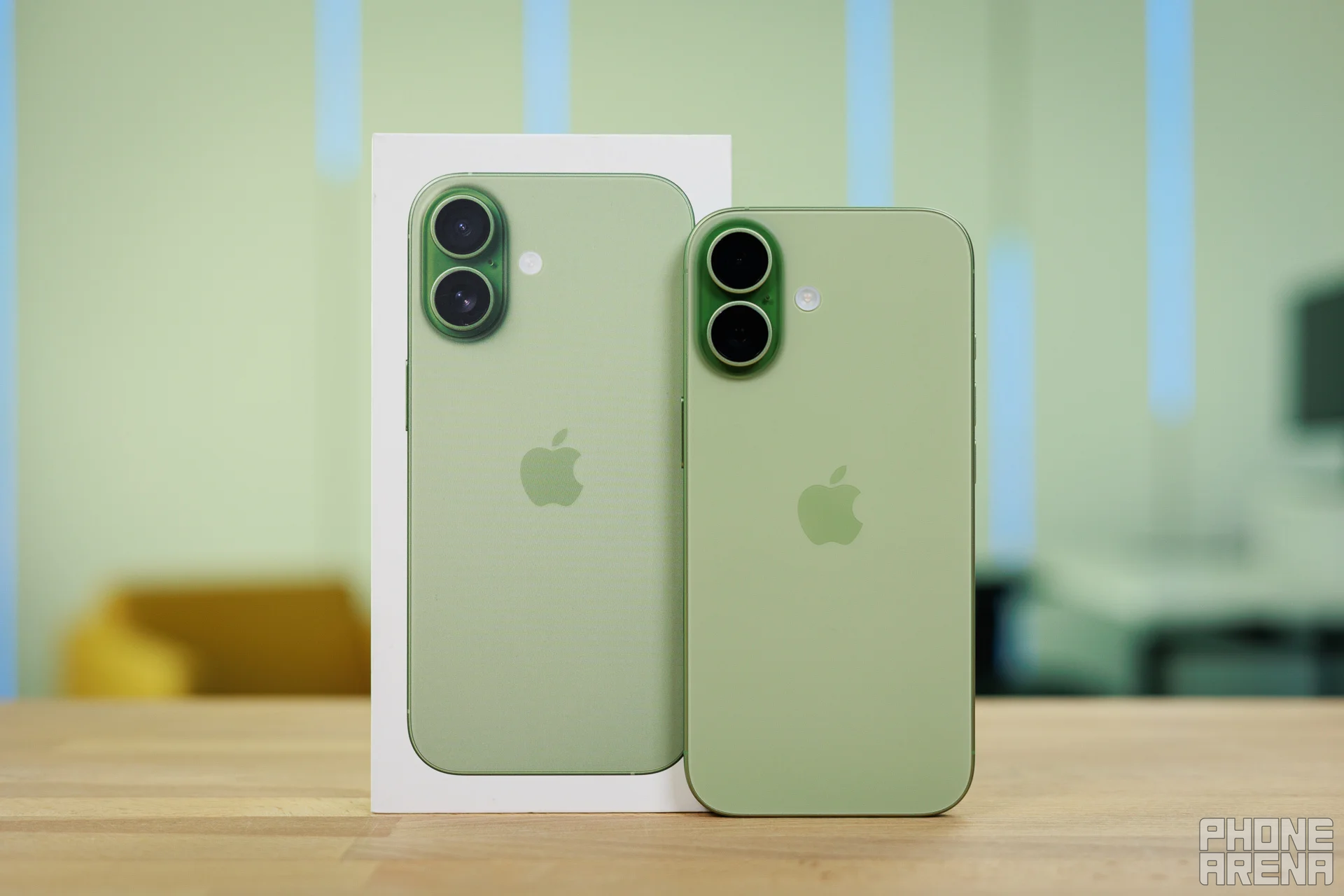
The iPhone 17 comes with 256GB of storage as a baseline. | Image by PhoneArena
Although TrendForce's report indicates AI demand on premium devices plays a key role in the predicted growth of memory on high-tier variants, this is expected to trigger the wide-scale adoption of more memory on affordable models as well.
NAND Flash manufacturers are currently upgrading their processes, which results in a lower production of low-storage chips. This practically makes it harder for OEMs to secure 64GB or 128GB as a baseline for affordable devices. As a result, storage capacities are quietly increasing because OEMs simply can't source the lower-tier NAND Flash options.
Recommended For You
For flagship phones, AI platforms often require 40GB or more of system storage just to process tasks locally without the cloud. To facilitate Apple Intelligence, the iPhone 17 was pushed to 256GB as a baseline, while the Huawei Mate 80 series is supposedly adopting 512GB storage on a wider scale.
The report further emphasizes that in the future, the 128GB base storage configuration could also gradually disappear from the market, as the AI push will require more and more system storage.
The key takeaway
While the TrendForce predictions certainly bring hopes up, we shouldn't forget about the big picture. Notably, with the rising cost of NAND Flash and storage capacities increasing on smartphones, the question becomes: will devices become more expensive as a result?
I think it inevitably will drive prices up. But at the same time, with higher base storage, users could feel like they're getting better value.
Polina Kovalakova, a News and Affiliate Content Writer, has nurtured a passion for mobile technology since the era before smartphones. With a history of exploring a variety of devices, her insights into the mobile world are both broad and nuanced. Polina's non-partisan view extends to appreciating nearly every smartphone brand, a reflection of her open-minded approach to technology. Polina is equally passionate about uncovering the best online deals, tirelessly working to ensure her readers snag top-tier tech at unbeatable prices.
A discussion is a place, where people can voice their opinion, no matter if it
is positive, neutral or negative. However, when posting, one must stay true to the topic, and not just share some
random thoughts, which are not directly related to the matter.
Things that are NOT allowed:
Off-topic talk - you must stick to the subject of discussion
Offensive, hate speech - if you want to say something, say it politely
Spam/Advertisements - these posts are deleted
Multiple accounts - one person can have only one account
Impersonations and offensive nicknames - these accounts get banned
To help keep our community safe and free from spam, we apply temporary limits to newly created accounts:
New accounts created within the last 24 hours may experience restrictions on how frequently they can
post or comment.
These limits are in place as a precaution and will automatically lift.
Moderation is done by humans. We try to be as objective as possible and moderate with zero bias. If you think a
post should be moderated - please, report it.
Have a question about the rules or why you have been moderated/limited/banned? Please,
contact us.







![Another batch of Galaxy S26 series users in the US are getting a nice surprise today [UPDATED]](https://m-cdn.phonearena.com/images/article/183643-wide-two_350/Another-batch-of-Galaxy-S26-series-users-in-the-US-are-getting-a-nice-surprise-today-UPDATED.webp)
Things that are NOT allowed:
To help keep our community safe and free from spam, we apply temporary limits to newly created accounts: