T-Mobile downplays the one area where AT&T and Verizon are winning
T-Mobile isn't buying the convergence hype.
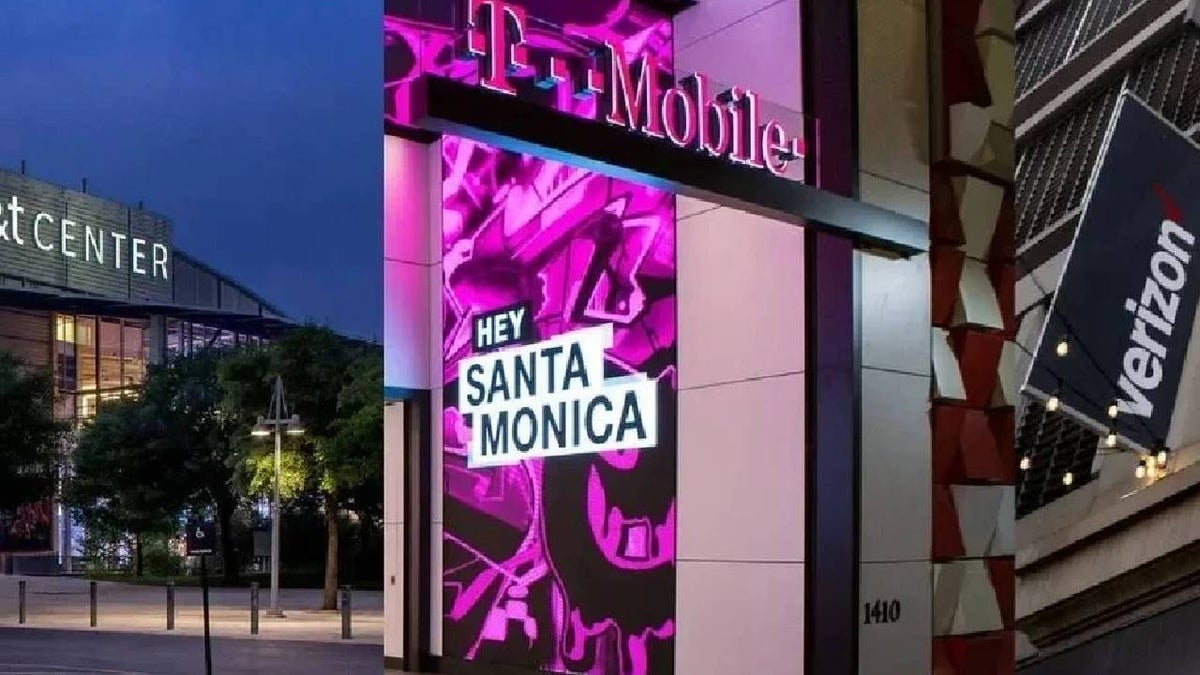
T-Mobile seems to have no plans to offer a voice and internet bundle. | Image by PhoneArena
T-Mobile outpaced industry rivals in both broadband and mobile growth in the first quarter, despite lacking the fiber infrastructure AT&T and Verizon brag about. But how much longer can it keep up that flex?
During the MoffettNathanson Media, Internet and Communications Conference, T-Mobile CFO Peter Osvaldik tried to undermine the kind of wireline and wireless bundles that AT&T and Verizon have rolled out recently.
Osvaldik doesn't believe convergence functionally benefits customers. While converged combos are touted as being easier to manage from a billing point of view, Osvaldik points out that most customers have enabled autopay anyway, so having one bill instead of two isn't as life-changing as rivals make it out to be.
T-Mobile is fine
During the MoffettNathanson Media, Internet and Communications Conference, T-Mobile CFO Peter Osvaldik tried to undermine the kind of wireline and wireless bundles that AT&T and Verizon have rolled out recently.
Osvaldik doesn't believe convergence functionally benefits customers. While converged combos are touted as being easier to manage from a billing point of view, Osvaldik points out that most customers have enabled autopay anyway, so having one bill instead of two isn't as life-changing as rivals make it out to be.
[It] used to be, maybe not long ago, you wouldn’t have to write two checks, but the vast majority of consumers are on autopay. They’re not thinking about writing paper checks.
Peter Osvaldik, T-Mobile CFO, May 2026
Voice and internet bundles do tend to be cheaper, though, and Osvaldik agrees.
While we will probably not see a combo offer from T-Mobile, the company promises competition in product quality and price.
T-Mobile hopes to have 15 million 5G internet subscribers and 3 to 4 million fiber customers by 2030. The broadband base has grown 80% in the last two years. Total network usage has increased by 30% while download speeds have jumped by over 50% over the same period.
The majority of the company's fixed wireless broadband subscribers were previously cable customers.
Throwing subtle shade at AT&T and Verizon, Osvaldik pointed out that T-Mobile doesn't have a legacy fiber network that it needs to put to good use with a convergence narrative.
While we will probably not see a combo offer from T-Mobile, the company promises competition in product quality and price.
T-Mobile hopes to have 15 million 5G internet subscribers and 3 to 4 million fiber customers by 2030. The broadband base has grown 80% in the last two years. Total network usage has increased by 30% while download speeds have jumped by over 50% over the same period.
Throwing subtle shade at AT&T and Verizon, Osvaldik pointed out that T-Mobile doesn't have a legacy fiber network that it needs to put to good use with a convergence narrative.
Remember, we don’t have legacy assets we need to defend or try to overbuild and then sell a story around.
Peter Osvaldik, T-Mobile CFO, May 2026
Verizon begs to differ
Verizon's CEO, Dan Schulman, doesn't see convergence as the only engine of growth, but he still considers it crucial. After all, 55% of Verizon's broadband customers also have a wireless connection, and churn drops by 30% when they are locked into both.
To me, convergence is a really nice cornerstone for growth. We have some really great assets that we can leverage.
Dan Schulman, Verizon's CEO, May 2026
Verizon maintains that fiber is the superior product, though it also credits 5G internet for boosting revenue.
Which strategy makes more sense?
22 Votes
Fiber is king.
54.55%
I'd never purchase two services from the same carrier.
18.18%
5G internet is good enough.
27.27%
T-Mobile's fiber acquisitions tell a different story
According to one report, the real benefit of convergence comes not so much from combining cellular and internet services, but from having fiber in the ground and wireless on top.
Both AT&T and Verizon have more wireless customers in the markets where they also have a fiber footprint.
The game is changing
Notice how carriers have lately been more into promoting the merits of their broadband products than talking about cellular as a standalone service? That's because the network gap has narrowed, and they must find new ways to assert superiority.
That said, T-Mobile conducted some promising trials recently that might widen its 5G lead once again.


Popular stories

Latest News


![Another batch of Galaxy S26 series users in the US are getting a nice surprise today [UPDATED]](https://m-cdn.phonearena.com/images/article/183643-wide-two_350/Another-batch-of-Galaxy-S26-series-users-in-the-US-are-getting-a-nice-surprise-today-UPDATED.webp)
Things that are NOT allowed:
To help keep our community safe and free from spam, we apply temporary limits to newly created accounts: