Do the colors on your smartphone display look different to what your eyes see in reality? Does the red apple on the screen look unnaturally purple? That’s because not all display panels are created equal — some are better than others at reproducing colors accurately. The ability of a smartphone to display colors as faithfully as our eyes perceive them is an important, yet often overlooked, feature of modern phone screens.
When it comes to display technology, Samsung has always been at the forefront — not only in smartphones, but also in TVs, tablets, and OLED panels in general. The Samsung Galaxy S26 Ultra is the company’s latest flagship smartphone, making it interesting to see where it stands in terms of display quality, especially with the new Privacy Display[1] feature on board.
What is smartphone color accuracy and how we measure it
“Color” can be a fairly subjective property, as we humans often disagree on whether something appears orange or red, or whether that beautiful dress is truly blue or purple. However, when it comes to displays, there is a scientific way to measure color accuracy, and it involves a metric called Delta E.
Delta E is an international standard defined by the International Commission on Illumination, and it quantifies the difference between two colors as perceived on a screen. In simple terms, it compares a reference value of the input color signal to what is actually displayed.
Recommended For You
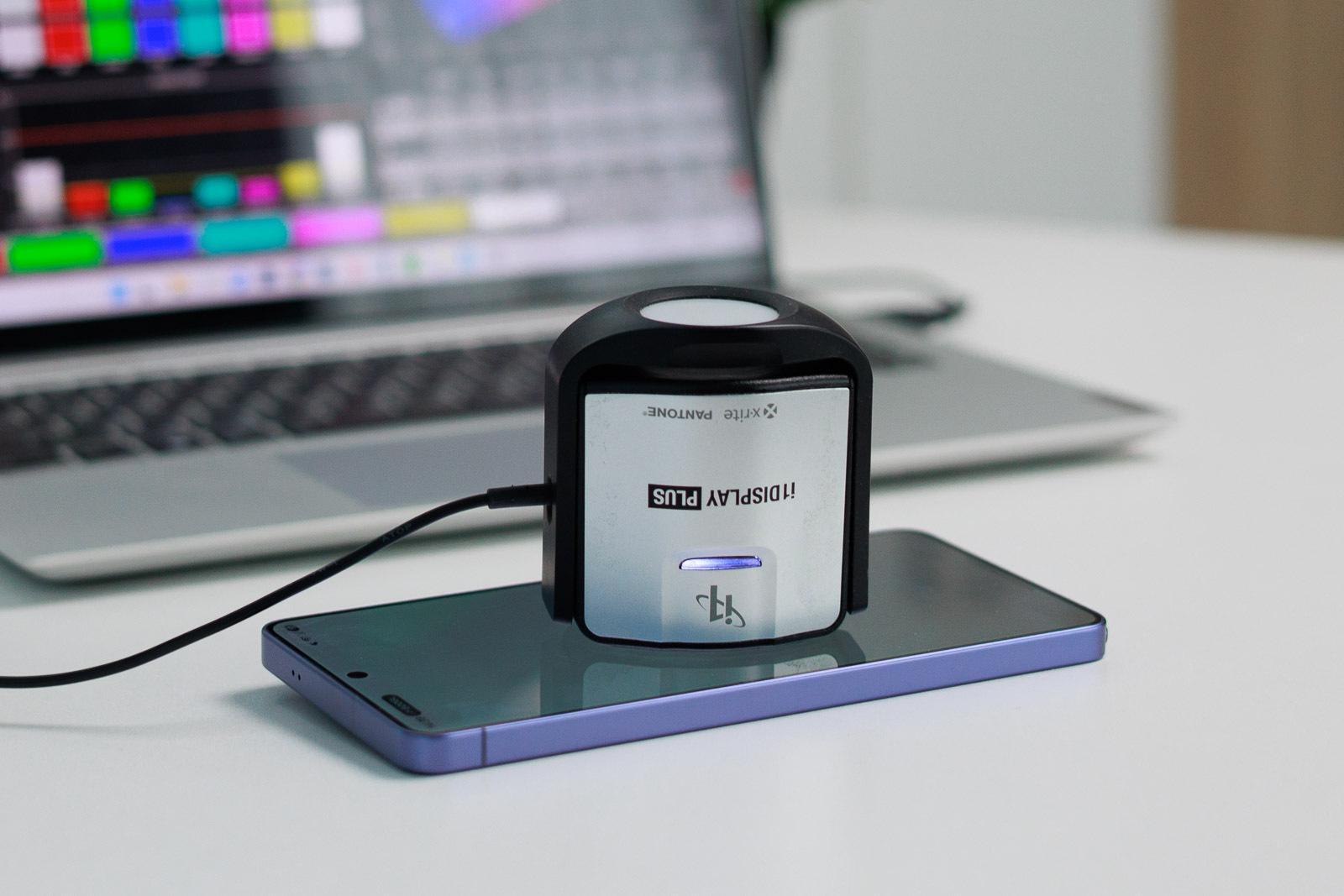
This value is measured using color calibration devices. Here at PhoneArena, we use professional-grade calibration hardware and software to check the color accuracy of smartphones on our test bench. The lower the Delta E value, the more accurate the display’s color reproduction.
DeltaE values and what they mean:
0-1: Reference values
1-2: Not perceptible by the human eye
2.3: The threshold above which the human eye can see the difference
2-5: Qualifies for professional-grade work (designers, artists)
2-10: Perceptible through close observation
11-49: Perceptible at a glance
100: Colors are exactly the opposite
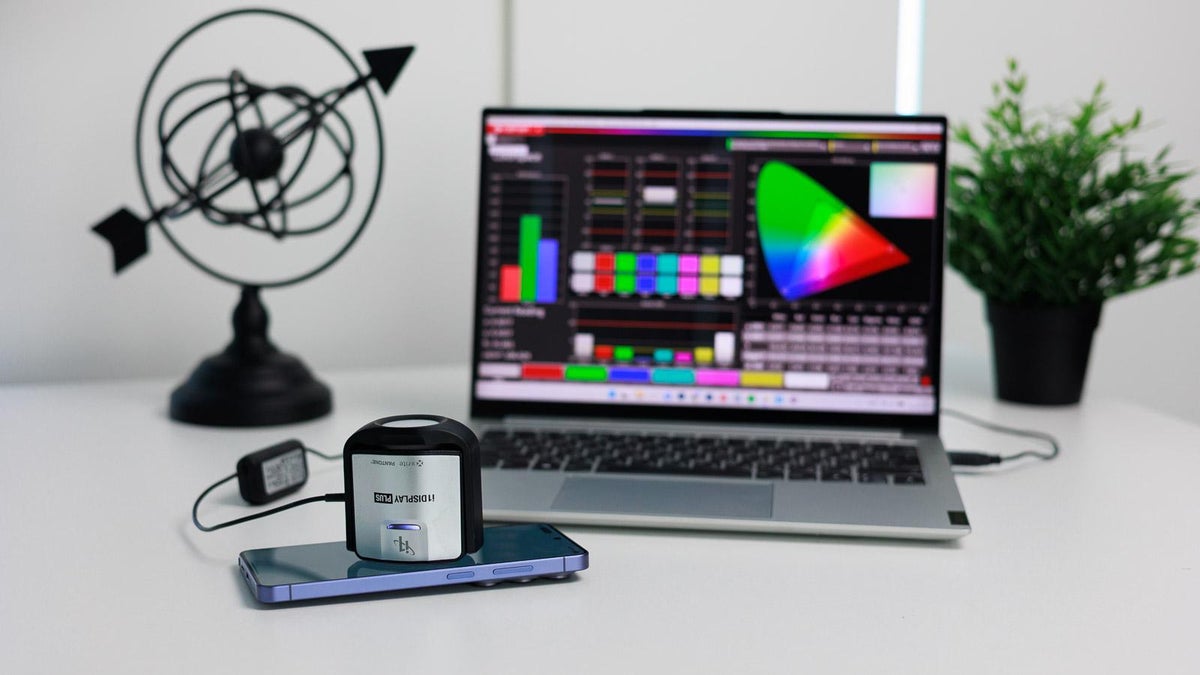
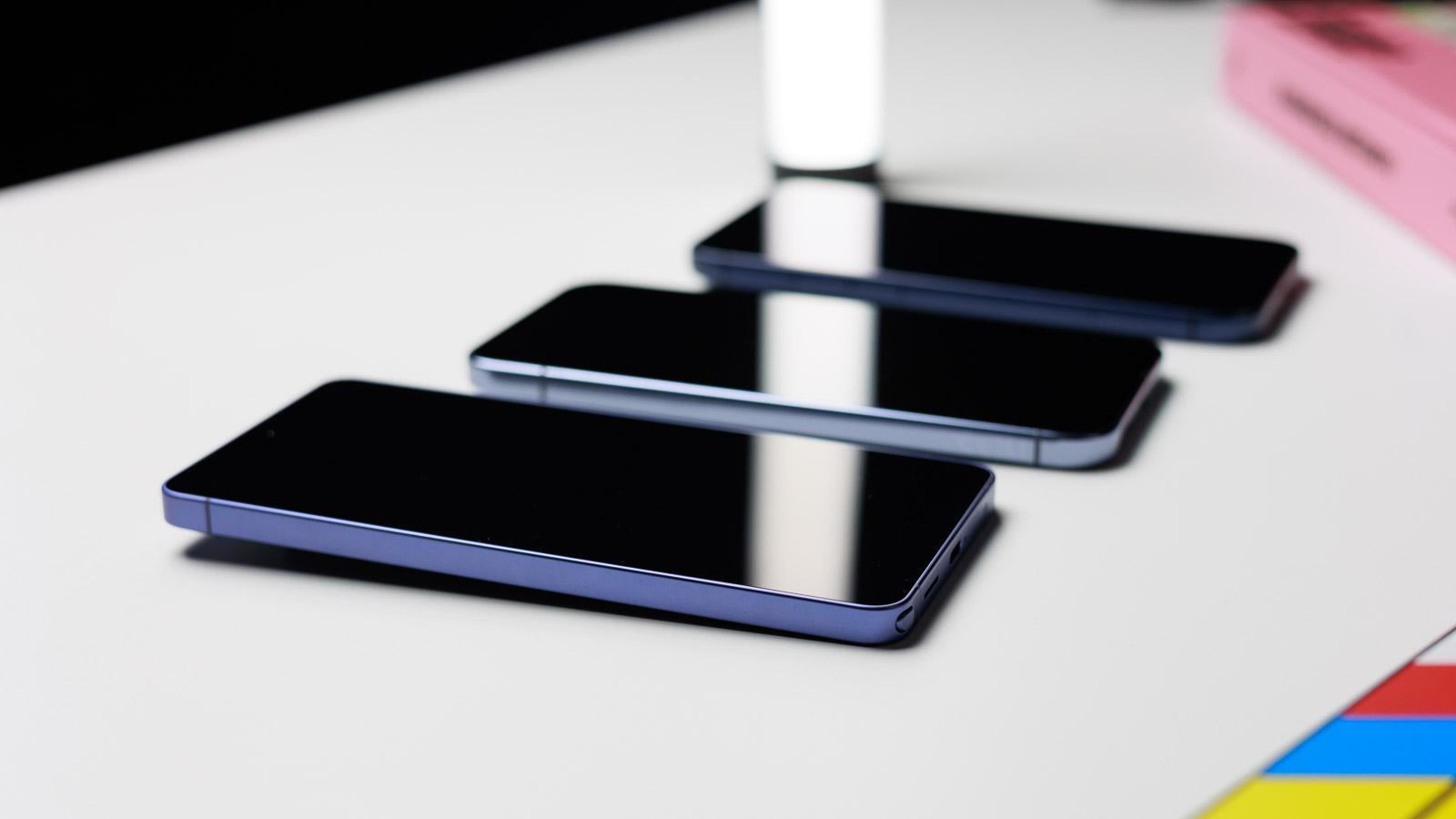
The display of the Galaxy S26 Ultra being tested | Image by PhoneArena
The Galaxy S26 Ultra on the testbench and what the results mean
On average, smartphone users typically keep their screen brightness between 30% and 60% for indoor use. In terms of light intensity, this usually translates to around 200 to 300 nits under typical indoor conditions. We test all phones at 200 nits, which represents the lower end — or a “worst-case scenario” — for color accuracy, as Delta E values tend to improve at higher brightness levels.
For this particular test, we decided to test the performance at both ends of the most commonly used brightness range — 200 and 300 nits. We also averaged the DeltaE score of all the colors to give an overall representation of the display performance across the hue range. Let's see the results!
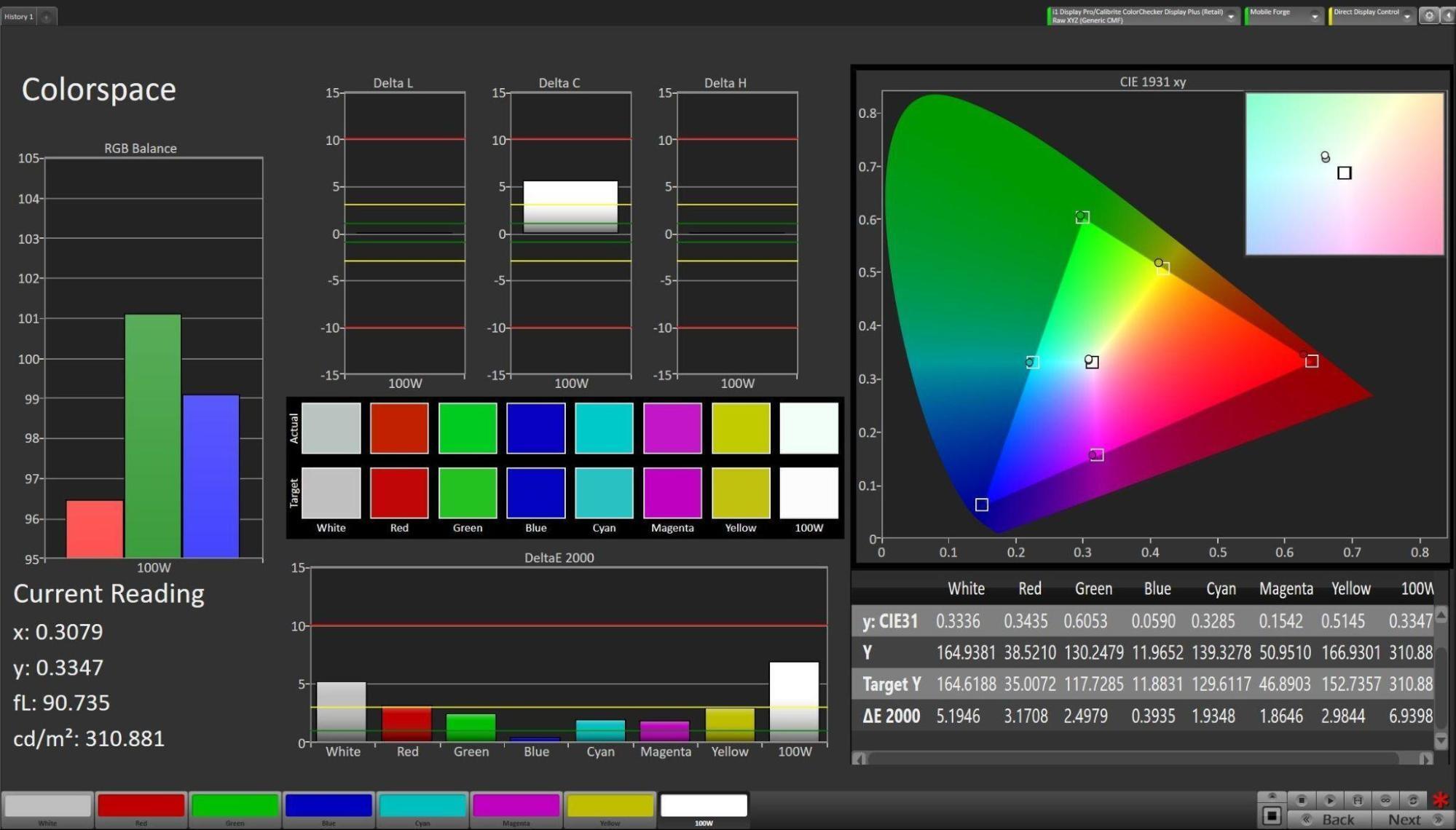
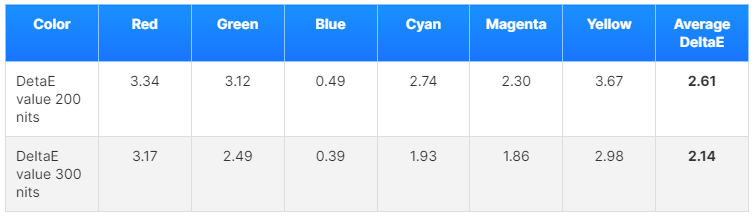
The Galaxy S26 Ultra achieved an average Delta E of 2.14 at 300 nits | Image by PhoneArena
The Samsung Galaxy S26 Ultra achieved an average Delta E of 2.14 at 300 nits and 2.61 at 200 nits. In the Delta E 2000 graph, the yellow line represents the threshold value of 3.0. Most colors remain well below this “golden” line, with red being the only one slightly above it.
What this means is that the display is highly accurate in reproducing input colors — so much so that differences are nearly imperceptible to the human eye. With average Delta E values of 2.14 and 2.61, the S26 Ultra qualifies for professional-grade tasks such as photo and video editing, graphic design, and other color-sensitive work.
Do Galaxy S26 Ultra's Privacy Display and anti-glare coating affect color accuracy?
The new Privacy Display feature is undoubtedly a very cool hardware innovation in display technology. You can read more about it in our dedicated article covering the topic, but many of you might be wondering: does this feature affect the screen accuracy of the Samsung Galaxy S26 Ultra? To answer this question, we redid the measurements with Privacy Display enabled, including a test at its maximum setting.
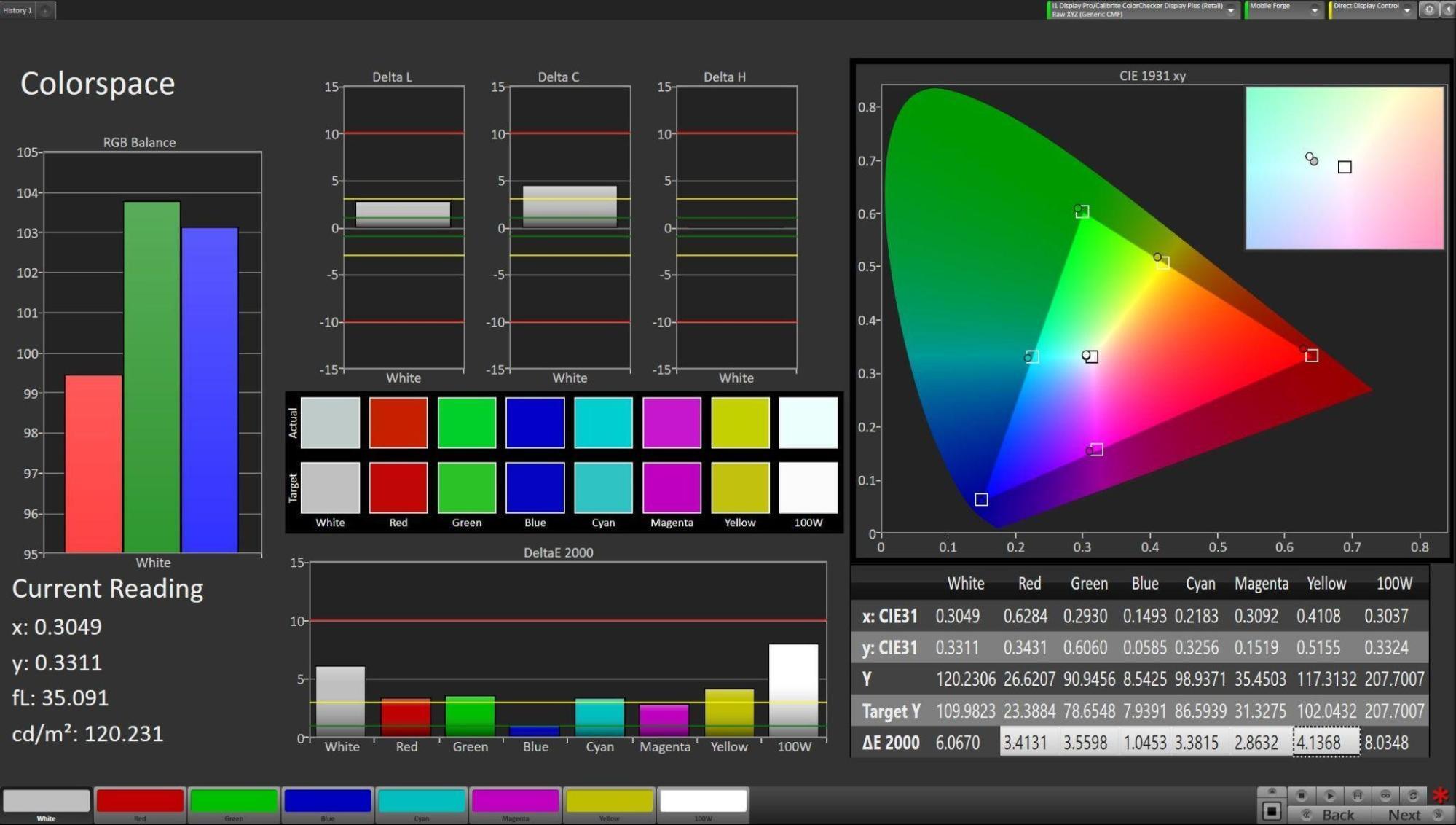
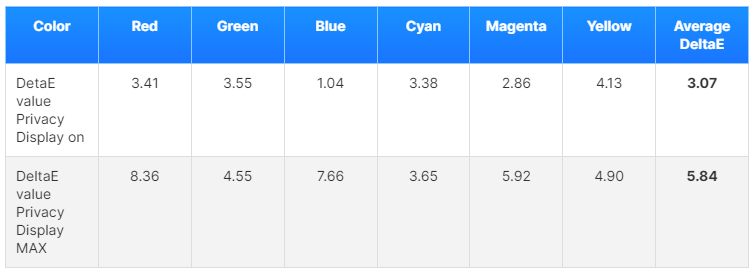
You get decent color accuracy even with Privacy Display enabled | Image by PhoneArena
With Privacy Display on, we measured an average deltaE of 3.07, which is still very good and around the threshold of human color perception. This value went up to 5.84 when the Privacy Display was set to its maximum setting, at which point most people will notice a shift in the displayed colors.
When it comes to the anti-reflective coating of the Samsung Galaxy S26 Ultra, we did a scientific reflectivity test using a complicated setup with mirrors and controlled light sources. You can find the results below – it’s truly something.
The anti-reflective coating is physically on your phone at all times, there’s no way to “turn it off.” All color accuracy tests were done with this coating in place, and the results were great, meaning it doesn’t seem to be affecting the colors of the S26 Ultra in a negative way.
Screen reflectivity rates:
Samsung Galaxy S26 Ultra - 3.9%
iPhone 17 Pro Max - 4.6%
Google Pixel 10 Pro XL - 7.1%
Samsung Galaxy S26 - 7.1%
Тhe anti-glare coating does not negatively impact the color accuracy of the Galaxy S26 Ultra | Image by PhoneArena
Conclusion
The 6.9-inch AMOLED display panel Samsung used on the Galaxy S26 Ultra is not only very bright, as we saw in our outdoor brightness test, but also has excellent color reproduction. For the best results, it’s recommended to keep the color settings on Natural and disable Privacy Display. Even with the latter enabled, the Galaxy S26 Ultra still manages to reproduce colors quite accurately.
[1] Privacy Display - Requires manual activation in settings to function. Privacy Display feature is not AI-powered.
Spend $100 and save $25 on Otterbox cases and screen protectors
Flash sale: Cover your device with brand new styles and reliable safety. Spend $100 on Otterbox cases and screen protectors and save $25 instantly. Exclusions may apply. Valid 10/6-10/11
Mariyan, a tech enthusiast with a background in Nuclear Physics and Journalism, brings a unique perspective to PhoneArena. His childhood curiosity for gadgets evolved into a professional passion for technology, leading him to the role of Editor-in-Chief at PCWorld Bulgaria before joining PhoneArena. Mariyan's interests range from mainstream Android and iPhone debates to fringe technologies like graphene batteries and nanotechnology. Off-duty, he enjoys playing his electric guitar, practicing Japanese, and revisiting his love for video games and Haruki Murakami's works.
A discussion is a place, where people can voice their opinion, no matter if it
is positive, neutral or negative. However, when posting, one must stay true to the topic, and not just share some
random thoughts, which are not directly related to the matter.
Things that are NOT allowed:
Off-topic talk - you must stick to the subject of discussion
Offensive, hate speech - if you want to say something, say it politely
Spam/Advertisements - these posts are deleted
Multiple accounts - one person can have only one account
Impersonations and offensive nicknames - these accounts get banned
To help keep our community safe and free from spam, we apply temporary limits to newly created accounts:
New accounts created within the last 24 hours may experience restrictions on how frequently they can
post or comment.
These limits are in place as a precaution and will automatically lift.
Moderation is done by humans. We try to be as objective as possible and moderate with zero bias. If you think a
post should be moderated - please, report it.
Have a question about the rules or why you have been moderated/limited/banned? Please,
contact us.





Things that are NOT allowed:
To help keep our community safe and free from spam, we apply temporary limits to newly created accounts: