T-Mobile subscribers face future price hikes as rival goes bankrupt (UPDATE)
Without a fourth-facilities based carrier, T-Mobile can more easily hike prices without fear of being aggressively undercut.
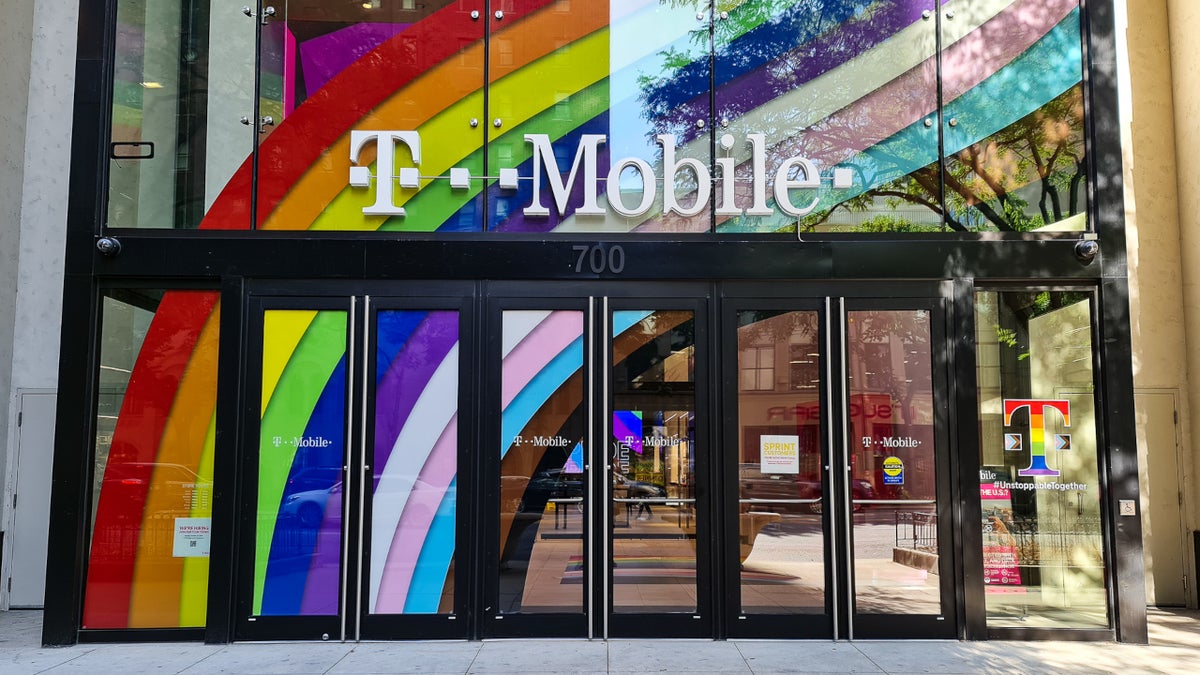
T-Mobile can continue to raise prices thanks to EchoStar's bankruptcy | Image by PhoneArena
UPDATE:Dish has responded to this article by stating that the FCC has already approved the transfer of spectrum to AT&T, but the closing was "pushed out" due to unforeseen delays. As for the escrow fund, Dish says that it will be fully funded when the AT&T transaction closes, along with the debt payment that was due on July 1.
The company continues to provide wireless service to millions of its Boost Mobile subscribers, and the remaining Project Genesis subscribers were given the opportunity to move their plans to Boost Mobile, with plans starting as low as $25/month.
The original story follows:
When the FCC officially gave T-Mobile regulatory approval to buy Sprint in November 2019, it did so with the understanding that Dish Network would replace Sprint to become the country's fourth facilities-based carrier. In other words, the FCC's goal was to maintain a "Big 4" of wireless providers leaving competition at the same level preventing Verizon, T-Mobile, and AT&T from raising prices.
Pressured by the FCC, EchoStar eventually sold its spectrum to AT&T and SpaceX
As part of the plan, Dish bought Boost Mobile, giving it 9 million subscribers right off the bat. This plan did not go smoothly as Dish struggled to attract subscribers.
On the last day of 2023, EchoStar bought Dish Network even though the former was having serious financial issues. Pressured by FCC Chairman Brendan Carr, who wanted the company to sell some of its spectrum to SpaceX, EchoStar did agree to sell most of its airwaves to AT&T and SpaceX.
With these spectrum sales approved, EchoStar, Dish, and Boost were no longer part of a fourth facilities-based carrier, and the construction of the standalone 5G network was halted. Boost is now a hybrid Mobile Virtual Network Operator (MVNO) and turned off its own cell towers. Boost now relies on AT&T to be its primary provider with T-Mobile as its secondary partner. Boost still uses its advanced cloud-native 5G Core network.
EchoStar was forced to declare Chapter 11 bankruptcy
At the end of last month, EchoStar subsidiary Dish DBS was forced to declare bankruptcy. Unable to put together an escrow account of $2.4 billion demanded by the FCC to cover potential claims from EchoStar partners and vendors after shutting its 5G network, the regulatory agency delayed the closing of the spectrum purchases until later this year.
What is the worst part of Echostar's Chapter 11 filing?
177 Votes
Less protection for price hikes: Verizon, T-Mobile and AT&T
68.36%
No "Big 4" in the US like in the old days
26.55%
Dish becomes hybrid MVNO
5.08%
With the closing of AT&T's $23 billion spectrum purchase delayed, EchoStar did not have the cash to make timely payments on its debt. The subsequent bankruptcy filing ended Project Genesis, which Dish had started as a way to compete with T-Mobile, AT&T, and Verizon. Project Genesis offered consumers a $30 per month unlimited plan for smartphone users.
EchoStar's bankruptcy benefits T-Mobile when it comes to pricing. | Image by EchoStar
Project Genesis subscribers' final billing cycle takes place this month, and the service, comprised of its own native 5G network and roaming agreements with AT&T and T-Mobile, will end on August 31, 2026. This leaves the cloud-native 5G core technology that will be used for Boost Mobile's hybrid MVNO service.
Without an aggressive fourth competitor, T-Mobile can raise rates without having to worry about getting undercut by Project Genesis and Boost Mobile. That leaves a three-carrier oligopoly where AT&T, T-Mobile, and Verizon copy each other's moves. If one raises rates, the others follow knowing that there is one less competitor that consumers can turn to.
T-Mobile recently raised prices on long-time subscribers to 3G and 4G legacy plans
As you know, T-Mobile recently removed legacy 2G and 3G plans, forcing these long-time subscribers to migrate to a new 5G plan. This will raise these subscribers' monthly invoices by an average of $6 per month. T-Mobile is now in position, as are Verizon and AT&T, to raise prices without concern.
Since EchoStar went bankrupt on June 30, T-Mobile shares have soared from a 52-week low of $165.66 to today's close of $181.79. The Chapter 11 filing made by EchoStar has T-Mobile analysts licking their lips in anticipation of upcoming price hikes.
The spectrum deal does have some negatives for T-Mobile
As soon as EchoStar's $23 billion spectrum sale to AT&T closes, the latter takes control of 50MHz of mid-band 3.45GHz and low-band 600MHz spectrum. This hurts T-Mobile because the carrier also uses the 600MHz low-band airwaves for its nationwide 5G service.
The spectrum deal also hurts T-Mobile because Boost Mobile now uses AT&T for its primary network, replacing T-Mobile. As a result, T-Mobile's revenues might be a little lower than they would have been without the deal.


Popular stories




Latest News



Things that are NOT allowed:
To help keep our community safe and free from spam, we apply temporary limits to newly created accounts: