Moto Razr Fold release date, price, specs, and must-know features
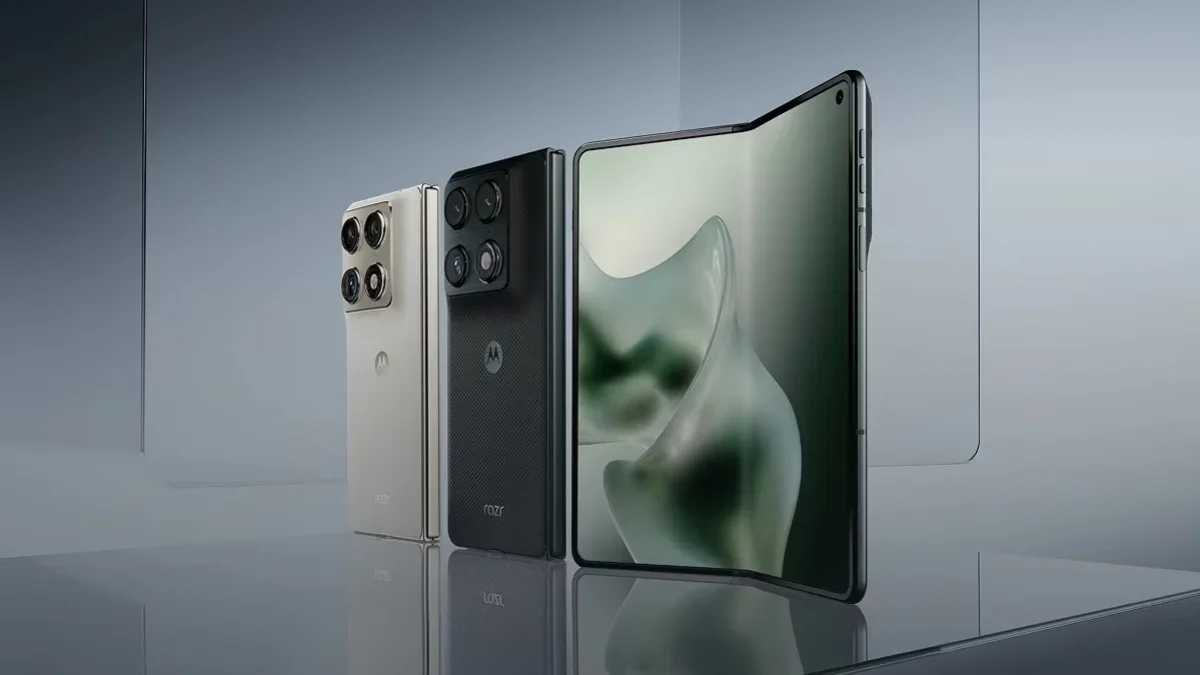
The Razr Fold. | Image by Motorola
Upgrades:
- Motorola's first book-style foldable – a completely different product category for the brand
- 8.1-inch inner display paired with a 6.6-inch cover screen
- Three 50MP cameras covering wide, ultra-wide, and 3x periscope telephoto
- Square camera bump on the back housing the triple-lens system
- Textured back with Motorola's familiar design language
Release timeline:
- Announced at MWC 2026 on March 1, 2026. On sale since May 21, 2026.
Price:
- $1,899 for the only available configuration – 512GB storage.
Jump to:
Moto Razr Fold release date
Motorola teased the Razr Fold on January 9, 2026, made it official at MWC 2026 on March 1, and started selling it on May 21, 2026. It's available through Motorola's website, T-Mobile, and Best Buy.
| Device family | Announcement | Market release |
|---|---|---|
| Moto Razr (2023) | June 2023 | July 2023 |
| Moto Razr+ (2024) | June 2024 | July 2024 |
| Moto Razr Ultra (2025) | April 2025 | May 2025 |
| Moto Razr Fold | March 1, 2026 | May 21, 2026 |
Moto Razr Fold price
The Razr Fold costs $1,899 in the US. There's only one configuration – 512GB – so there's no lower entry point or higher-capacity option to consider.
| Model | 256GB | 512GB | 1TB |
|---|---|---|---|
| Moto Razr Fold | - | $1,899 | - |
| Galaxy Z Fold 7 | $1,999 | $2,119 | $2,419 |
| Pixel 10 Pro Fold | $1,799 | $1,919 | $2,149 |
Moto Razr Fold camera

The Moto Razr Fold features a substantial camera bump to accommodate the three 50MP cameras | Image by Motorola
- 50MP main camera with Sony LYTIA sensor
- 50MP ultra-wide-angle/macro secondary camera, 122-degree FOV
- 50MP 3x periscope telephoto lens
- 32MP external selfie camera
- 20MP internal camera.
Three 50MP sensors is the Razr Fold's biggest hardware differentiator. Most book-style foldables compromise somewhere in the camera system – the Razr Fold doesn't, at least on paper. The main camera uses a Sony LYTIA sensor, the ultra-wide doubles as a macro lens, and the periscope telephoto delivers 3x optical zoom.
Video tops out at 8K at 30fps, or 4K at up to 120fps for smoother footage.
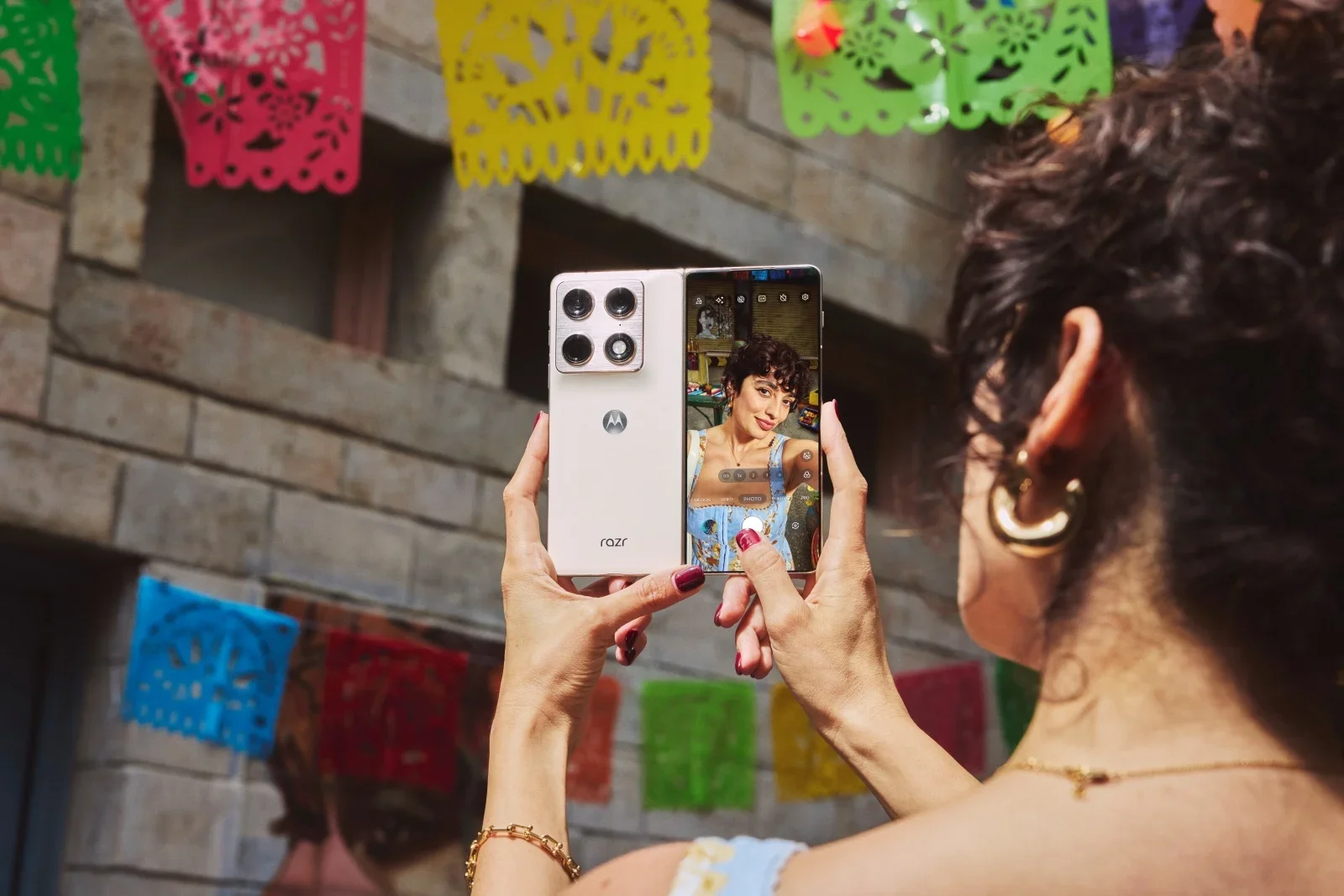
The Razr Fold's cameras. | Image by Motorola
The 20MP inner camera is optimized for video calls rather than general photography, while the 32MP cover screen camera handles quick selfies without needing to unfold the phone. Having two selfie options – one per display – means you can almost always find a usable angle for a call or a snap without awkwardly repositioning the phone.
Moto Razr Fold storage
The Razr Fold comes in a single 512GB configuration. No other storage tiers are offered.
- 512 GB
Moto Razr Fold design
The Motorola Razr Fold. | Images by Motorola
The Razr Fold's exterior pulls heavily from Motorola's Edge lineup – folded up, it reads as a close relative of the Edge 50 Ultra. Two colors are available: Blackened Blue and Lily White. Blackened Blue reads almost black in most lighting but has a diamond-pattern texture that helps with grip.
Lily White goes the opposite direction with a smooth, silk-like finish.
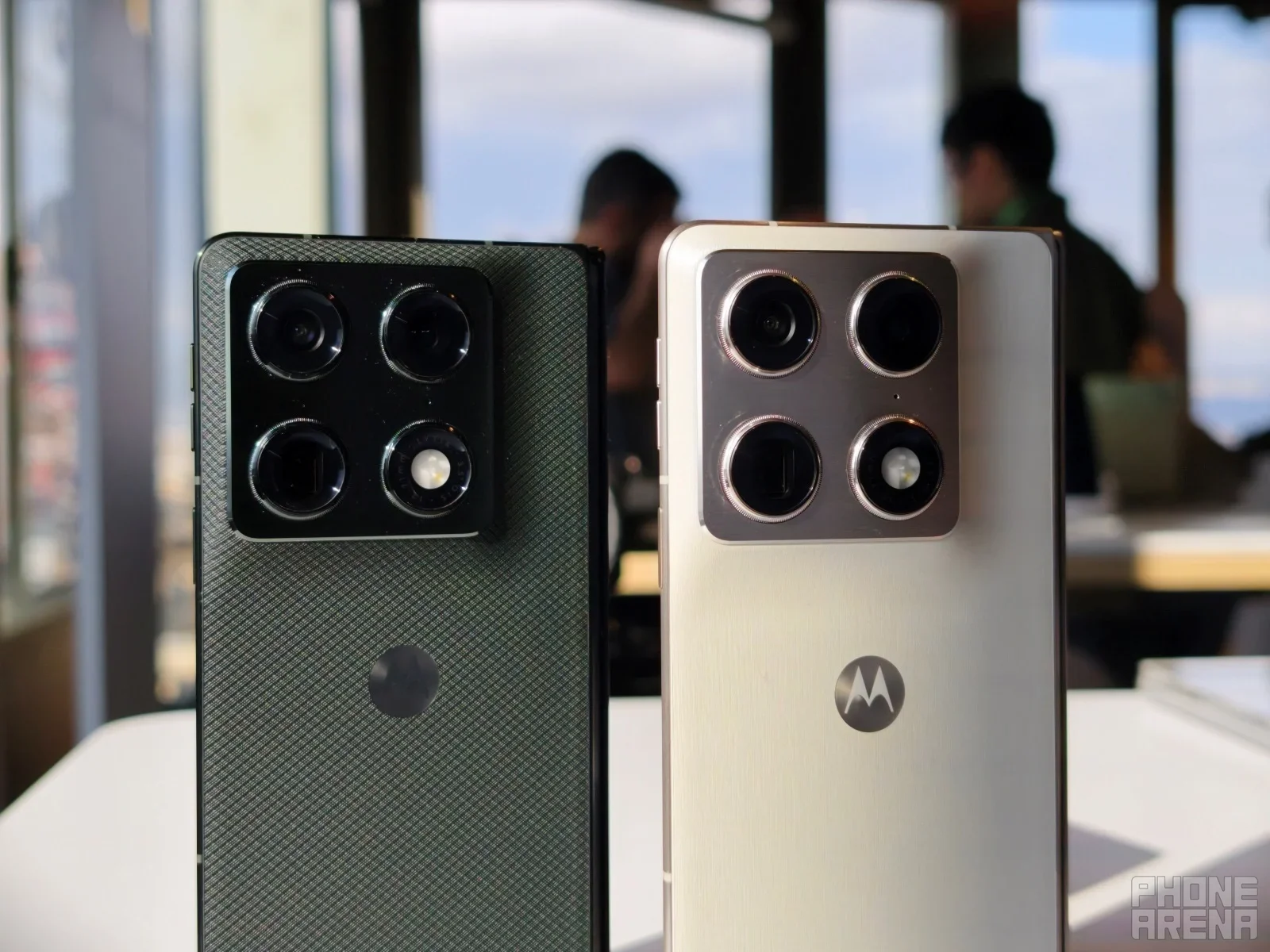
The two color options of the Razr Fold. | Image by PhoneArena
The hinge uses a teardrop design, meaning the inner display curves more gently when folded rather than bending at a sharper angle. The crease is visible under certain lighting but less pronounced than older-generation foldables. That said, a visible crease at this price point is still worth knowing about before you buy.
The camera bump is substantial – fitting three 50MP lenses into a foldable body isn't free, and you can feel it when the phone is sitting on a flat surface.
Unfolded, the Razr Fold is 4.6mm thin. Folded, it measures 9.9mm and weighs 244 grams. The Galaxy Z Fold 7 by comparison is 4.2mm unfolded, 8.9mm folded, and 215 grams – the Razr Fold is meaningfully thicker and noticeably heavier.
Moto Razr Fold display
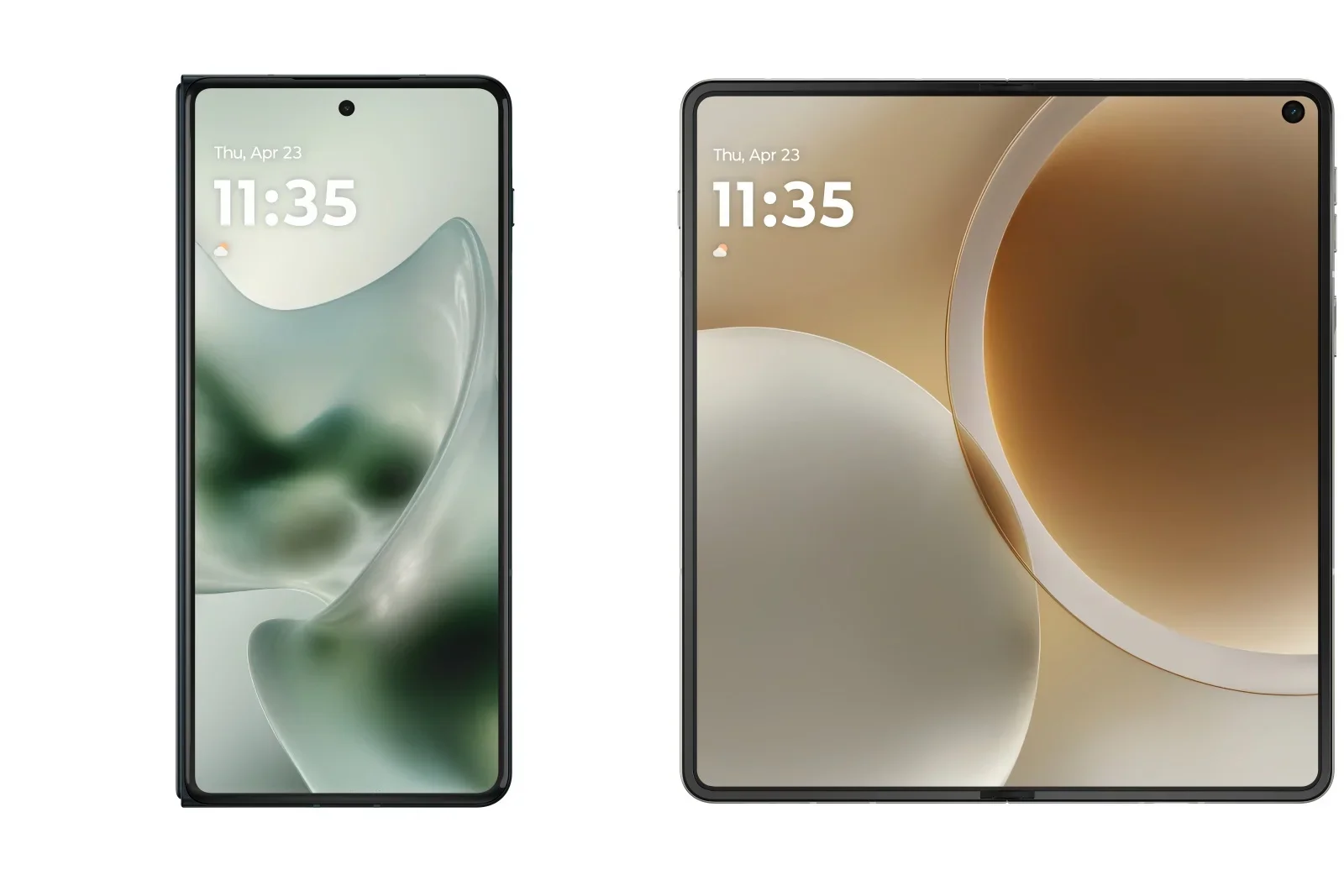
Displays of the Moto Razr Fold. | Image by Motorola
The Razr Fold's 8.1-inch inner screen is slightly larger than the Galaxy Z Fold 7's 8-inch panel, and the 6.6-inch cover display edges out the Fold 7's 6.5-inch outer screen. The inner display runs at 120Hz with a 2200 x 2480 resolution at around 410ppi. The cover screen steps up to 165Hz.
| Device | Screen size | Peak brightness |
|---|---|---|
| Moto Razr Fold main screen Moto Razr Fold cover screen | 8.1" 6.6" | 6,000 nits for cover display, 6,200 nits for folding screen, according to Motorola |
| Galaxy Z Fold 7 main screen Galaxy Z Fold 7 cover screen | 8.0" 6.5" | 2,600 nits |
* - anticipated
The headline numbers are marketing figures, not what you'd see in everyday use.
Both displays are Pantone-validated for color accuracy and support Dolby Vision.
Moto Razr Fold battery
Battery is one of the Razr Fold's genuine strong suits. The 6,000mAh cell is notably large for a book-style foldable – bigger than any current Samsung or Google foldable – and it uses silicon-carbon chemistry rather than the standard lithium-ion in competing devices.
Silicon-carbon stores more energy in the same physical space, which is how Motorola fits this capacity into a chassis that folds down to 9.9mm. The Razr Fold is among the first silicon-carbon book-style foldables available through major US carriers.
Charging speeds are also competitive: 80W TurboPower wired, 50W wireless, and 5W reverse wireless for topping up accessories. For comparison, the Galaxy Z Fold 7 tops out at 25W wired – the Razr Fold is considerably faster.
Moto Razr Fold features and software

Expect split-screen multitasking on the Moto Razr Fold | Image by Motorola
The Razr Fold ships with Android 16 under Motorola's characteristically light custom interface. Motorola-specific features include Shake to Flashlight, Peek Display, and fold-optimized split-screen multitasking. On the AI side, Catch Me Up summarizes missed notifications and Next Move surfaces context-aware action suggestions.
The phone also supports the Moto Pen Ultra stylus for note-taking and annotation on the inner display.
Moto Razr Fold hardware and specs
The Razr Fold runs on the Snapdragon 8 Elite Gen 5 paired with 16GB of RAM – the same flagship chip powering the Galaxy S26 Ultra and Galaxy Z Fold 8 Ultra.
- CPU: Snapdragon 8 Gen Elite Gen 5
- RAM: 16 GB
- Battery: 6,000 mAh
- Charging: 80W wired, 50W wireless
- Storage: 512 GB
Moto Razr Fold review
- Motorola Razr Fold review: our full hands-on evaluation covers real-world performance, camera results across all three lenses, battery endurance, and what it's actually like to use a book-style foldable as a daily driver.
Moto Razr Fold comparisons
- Motorola Razr Fold vs Pixel 11 Pro Fold: how Motorola's book-style debut stacks up against Google's latest foldable flagship.
- Motorola Razr Fold vs Galaxy Z Fold 8 Ultra: Motorola's newcomer goes up against Samsung's current book-style flagship – two very different approaches to the same form factor.
- Motorola Razr Fold vs Galaxy Fold 7: the established benchmark for book-style foldables meets Motorola's first attempt. Here's how they compare on specs, design, and value.
Latest news about Moto Razr Fold:
Latest Moto Razr Fold rumors



Popular stories



Latest News