Apple Vision Pro 2 release date expectations, price estimates and upgrades

What's expected to change vs Apple Vision Pro:
- Current reporting points to the Vision Pro 2 being cancelled or delayed indefinitely
- The overall form factor is expected to carry over from the first-generation model
- Revised head straps are targeting better comfort during extended wear
- An upgraded M6 chip remains the standing assumption if the product moves forward
- VisionOS 27 with Apple Intelligence integration would ship onboard
Expected release timeline:
- Apple refreshed the Vision Pro with an M5 chip in October 2025. A true Vision Pro 2 may or may not arrive – late 2028 or 2029 is the earliest realistic window, according to current reporting.
Expected price:
- If a Vision Pro 2 does materialize, pricing is expected to mirror the current model.
Jump to:
- Release date
- Price
- Head strap and comfort
- Hand tracking, eye tracking, controllers
- Storage
- Design
- Display
- Battery
- Features and software
- Hardware
- Should you wait for the Apple Vision Pro 2?
Release date
According to Bloomberg's Mark Gurman, even if a next-generation Apple headset eventually reaches the market, it won't arrive until late 2028 or 2029 at the earliest.
| Model | Announcement | Market release |
|---|---|---|
| Apple Vision Pro 2 | Unknown, likely late 2028 or 2029 | Unknown, likely late 2028 or 2029 |
| Apple Vision Pro with M5 chip | October 15, 2025 | October 22, 2025 |
| Apple Vision Pro | June 5, 2023 | February 2, 2024 |
Apple's spatial computing team is currently working through four distinct development concepts rather than advancing a single defined product – a sign of how early-stage the effort remains.
Gurman also notes that Apple's internal attention has shifted toward its smart glasses project – a display-free wearable along the lines of the Meta Ray-Ban models. If the glasses perform well commercially, the Vision Pro program could be shut down entirely.
Price
The original Apple Vision Pro launched at $3,499 – well above the broader AR/VR market and far beyond the Meta Quest 3's $500 entry point.
| Model | 256 GB | 512 GB | 1 TB |
|---|---|---|---|
| Apple Vision Pro 2 | $3,499* | $3,699* | $3,899* |
| Apple Vision Pro | $3,499 | $3,699 | $3,899 |
*Anticipated prices
That price point contributed to sales that fell short of Apple's internal targets. Apple has given no indication it plans to bring costs down if a sequel arrives.
The combination of premium pricing, a limited app library, and far more affordable competing options made the original a hard sell for most consumers – and a Vision Pro 2 would occupy the same territory above $3,000 unless Apple fundamentally rethinks its approach.
Head strap and comfort
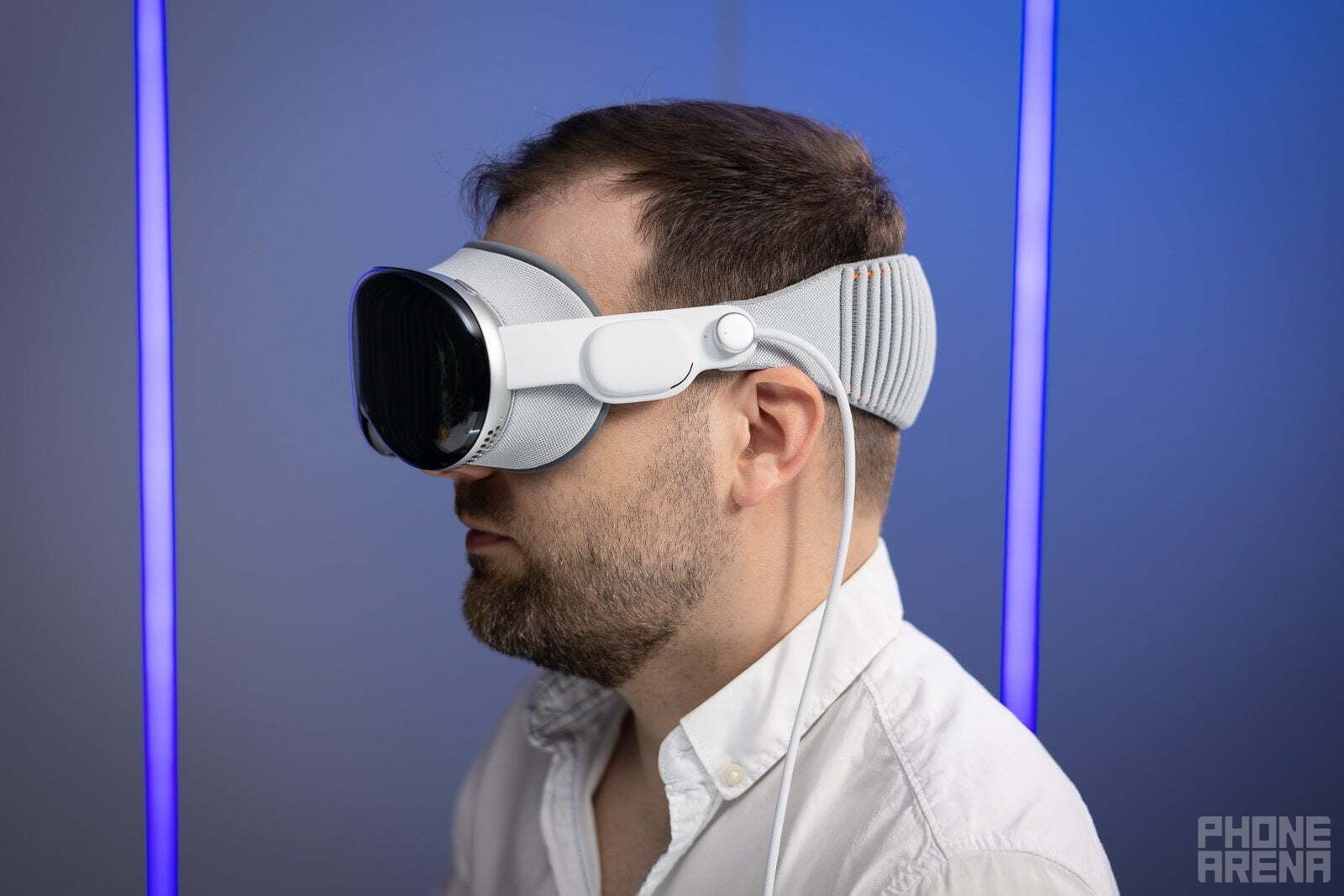
The Apple Vision Pro with its Dual Loop Band head strap | Image by PhoneArena
The consequence was that nearly all of the headset's 650 grams of front-heavy weight pressed directly onto the user's face during extended sessions.
Apple shipped two configurations to work around this: the Solo Knit Band for aesthetics, and the Dual Loop Band – which routes over the top of the head – for anyone prioritizing comfort. The Dual Loop Band is, in effect, the traditional approach Apple had originally tried to design away from.
The Vision Pro 2 is expected to offer comparable strap options. Making a proper overhead band the primary configuration rather than an afterthought would be a genuine improvement for longer sessions, though nothing specific has been confirmed.
Hand tracking, eye tracking, controllers
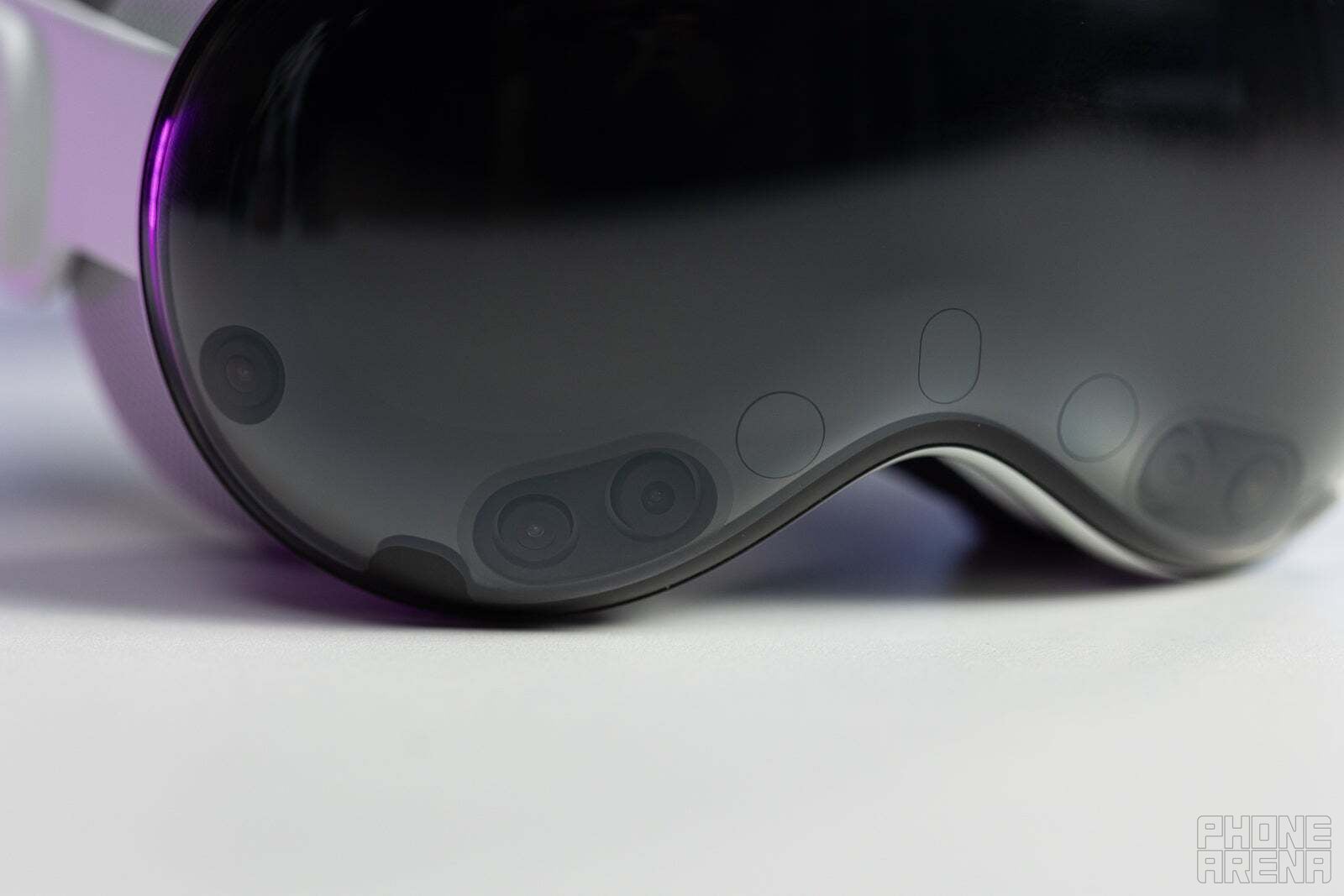
Apple Vision Pro tracking sensors and cameras | Image by PhoneArena
The Vision Pro 2 will almost certainly stay with eye tracking and hand tracking for input – no physical controllers. In our Apple Vision Pro review, the tracking accuracy genuinely stood out, performing noticeably ahead of what competitors were offering at the time.
Third-party controllers compatible with the Vision Pro already exist, and there's a reasonable case for Apple eventually offering its own as an optional gaming accessory – but that stays in the realm of speculation for now. This section will be updated if anything concrete surfaces.
Storage
- 256GB
- 512GB
- 1TB
These tiers match the original Vision Pro, and no leaks point to any change. Apple charges a meaningful premium on storage upgrades, so a 1TB configuration approaching $4,000 would be consistent with its existing pricing structure.
How much storage you need comes down to streaming versus local downloads. For users who want offline access to large AR/VR files – and the Vision Pro is one of the more capable devices for immersive content – buying up at purchase makes practical sense.
As with all Apple devices, storage is fixed at the point of sale and cannot be expanded later.
Design
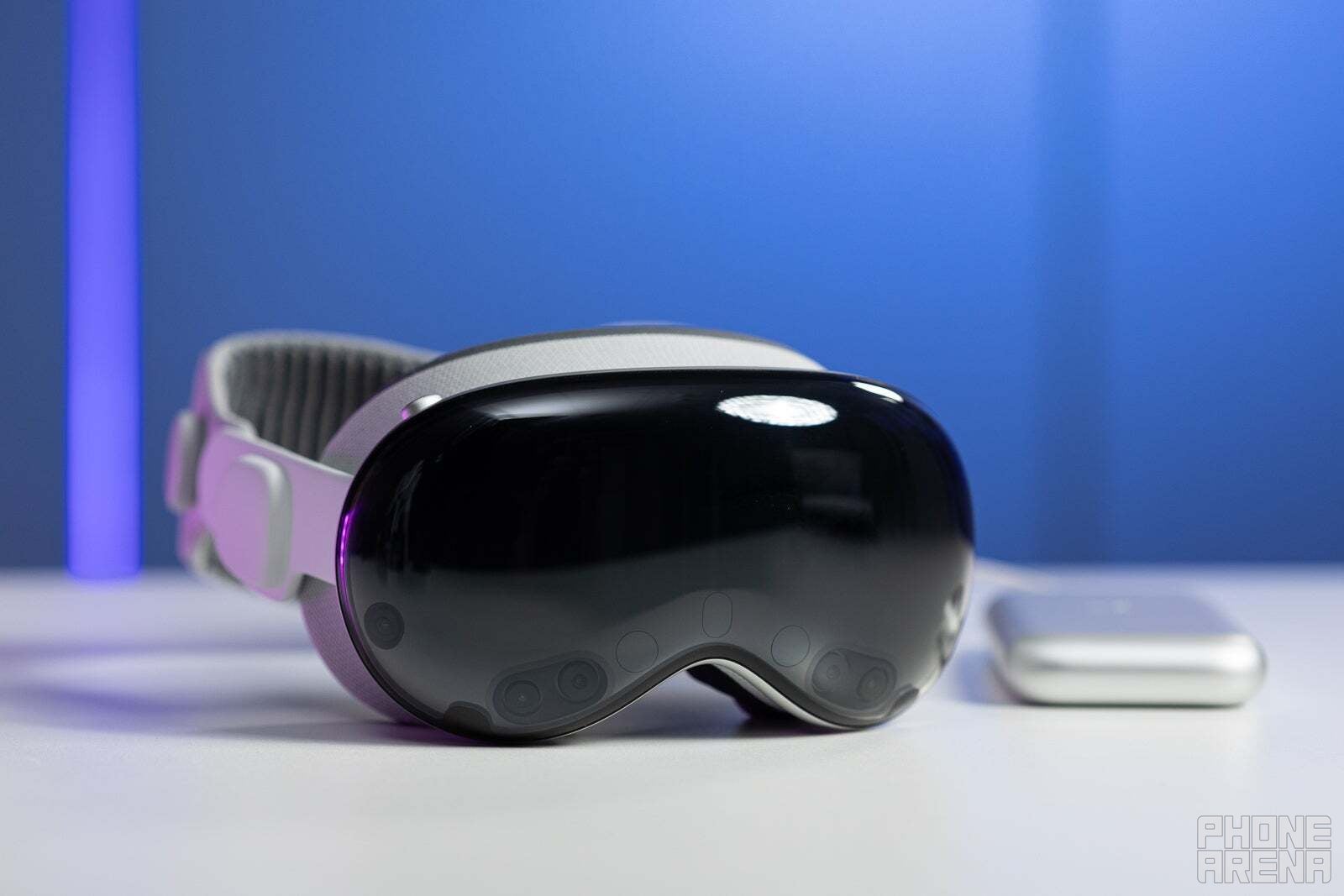
The Apple Vision Pro | Image by PhoneArena
Based on reporting from Gurman and other well-sourced analysts, the Vision Pro 2 is expected to look substantially similar to the original – glass front, aluminum sides, and the same external battery pack connected via a magnetic cable that must remain tethered during use. The same premium materials philosophy carries over, for better or worse.
Gurman reports that the Vision Pro team has been experimenting with plastic, titanium, and various other materials in pursuit of a lighter, more affordable successor.
One concept under consideration follows the approach used by the Meta VR Glasses – offloading the battery, processor, and storage into an external puck rather than integrating everything into the headset. A competing internal argument favors a fully self-contained, all-in-one form factor.
No direction has been settled on, according to rumors.
"Vision Air" branding has been floated internally, consistent with Apple's stated goal of producing something meaningfully lighter than the current 650-gram device. Features that add weight and cost – including EyeSight, the external display that projects a render of the wearer's eyes to people nearby – are reportedly under evaluation for removal.
Display
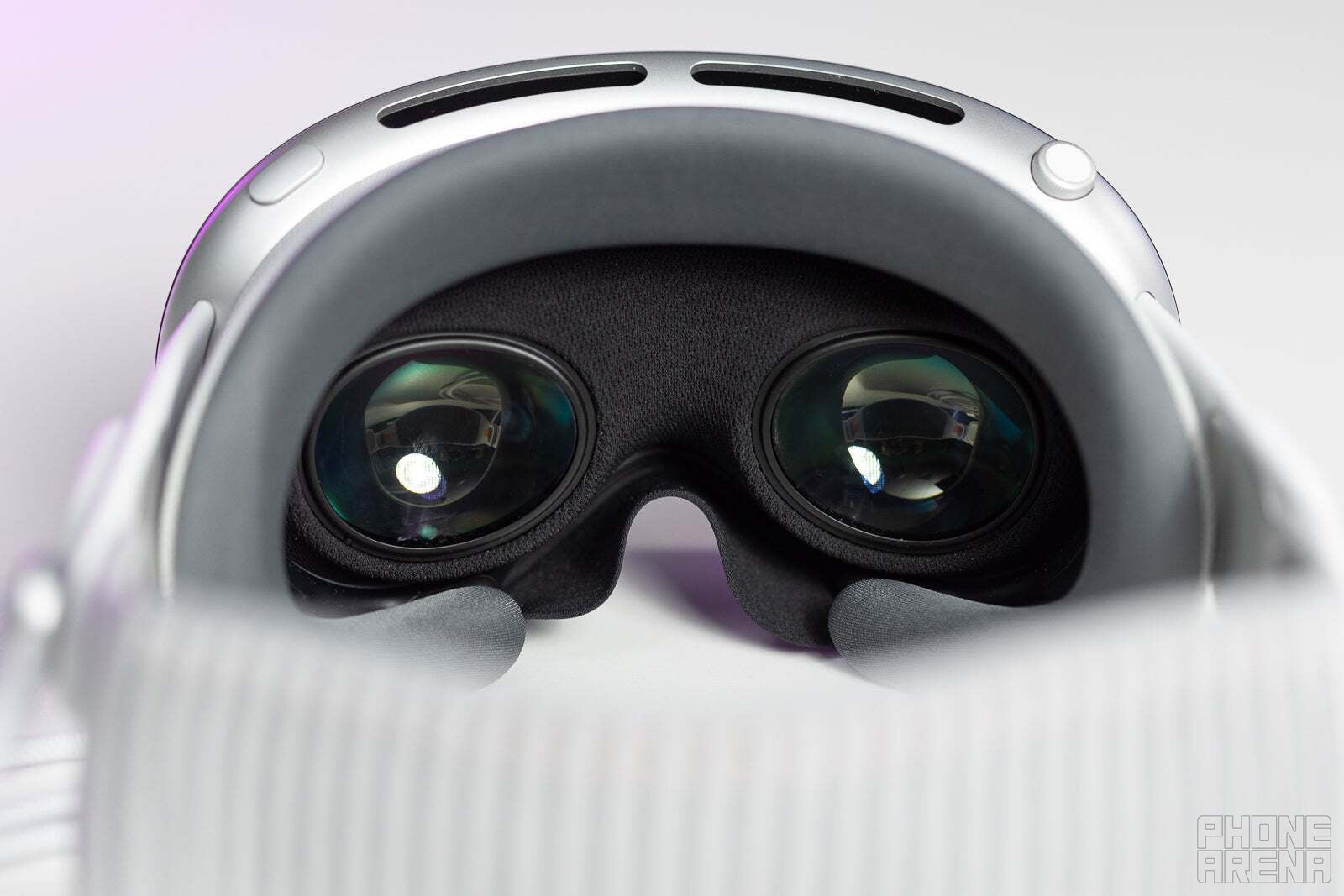
Apple Vision Pro lenses | Image by PhoneArena
Micro-OLED panels – one per eye, running at 3660x3200 resolution and up to 100Hz – are expected to carry over from the original. Those specifications were among the most advanced available when the Vision Pro launched, and with no meaningful competitive pressure forcing Apple's hand, the Vision Pro 2 is expected to remain at the same tier.
Battery
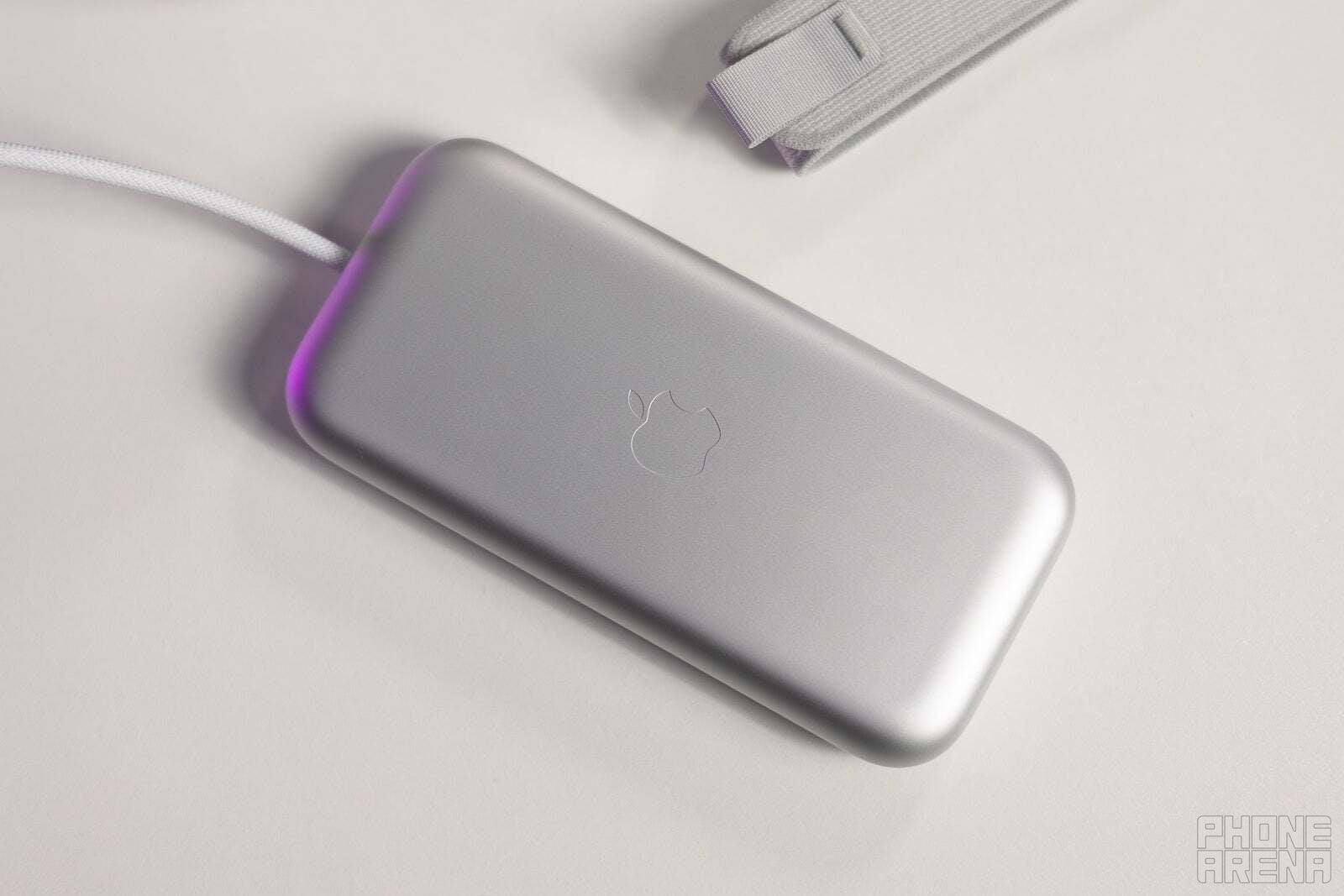
Apple Vision Pro battery | Image by PhoneArena
In our testing, the current headset delivered around two hours of use on a single charge. A more efficient M6 chip would contribute some improvement, though meaningful gains beyond what the M5 already achieved are unlikely.
Any additional endurance from the new chip is welcome, but expectations should stay measured.
Features and software
A Vision Pro 2 would ship running VisionOS 27, assuming it reaches the market within the current release window.
Unveiled at WWDC 2026, VisionOS 27 introduces Visual Intelligence and camera-aware AI capabilities to the platform – giving the headset the ability to interpret what's happening inside active applications as well as what's physically surrounding the wearer in the real world.
VisionOS 27 also brings the rebuilt Siri AI onboard, delivering the same context-sensitive, cross-app task execution arriving on iPhone and iPad with this cycle's updates.
New platform-specific features include the ability to transform personal panoramic photos into fully immersive 3D environments, and the option to preview 3D objects from Mac applications directly inside the headset.
Hardware
The M6 chip has been the standing assumption for a Vision Pro 2 – but that only matters if the product is actually moving forward, which current sourcing increasingly calls into question.
For context: in October 2025, Apple released an internal refresh of the Vision Pro built around the M5 chip, paired with an updated Dual Knit Band.
That updated model pushes 10% more pixels than the M2-based launch version, unlocks refresh rates up to 120Hz, and improves battery endurance over its predecessor. Internally it's a meaningful step – externally it's the same device. It is not a ground-up Vision Pro 2.
Apple's spatial computing priorities have shifted toward smart glasses, and if that product finds an audience the way Meta's Ray-Ban glasses did, internal resources currently allocated to the headset program may not survive the reallocation. A launch before late 2028 or 2029 is not considered realistic even under optimistic assumptions.
Should an M6-equipped Vision Pro 2 eventually reach the market, it would have little trouble running Apple's most demanding on-device AI workloads, and could bring further refinements to the Mac Virtual Display experience for users treating the headset as a portable workspace.
Everything else – the sensor suite, display specs, and storage configurations – is expected to stay where it is.
Should you wait for the Apple Vision Pro 2?
- You should wait for the Apple Vision Pro 2 if an indefinite timeline doesn't concern you and spatial computing isn't something you need right now. Bear in mind that the M5 refresh Apple shipped in late 2025 may turn out to be the ceiling for this product line rather than a bridge to something bigger. If the Vision Pro 2 never materializes as a true second generation, that M5 model becomes the practical endpoint – and the decision to buy shifts accordingly.
- You should not wait for the Apple Vision Pro 2 if the current Vision Pro – especially the M5 variant – covers what you're looking for, or if you're willing to consider other options. Apple's smart glasses project is a distinct product on a more defined trajectory, and the XR market already has competitive alternatives available now, including the Meta Quest 3 and Samsung's Galaxy XR headset.


Popular stories
Latest News