Apple Glasses release date expectations, price estimates, and upgrades
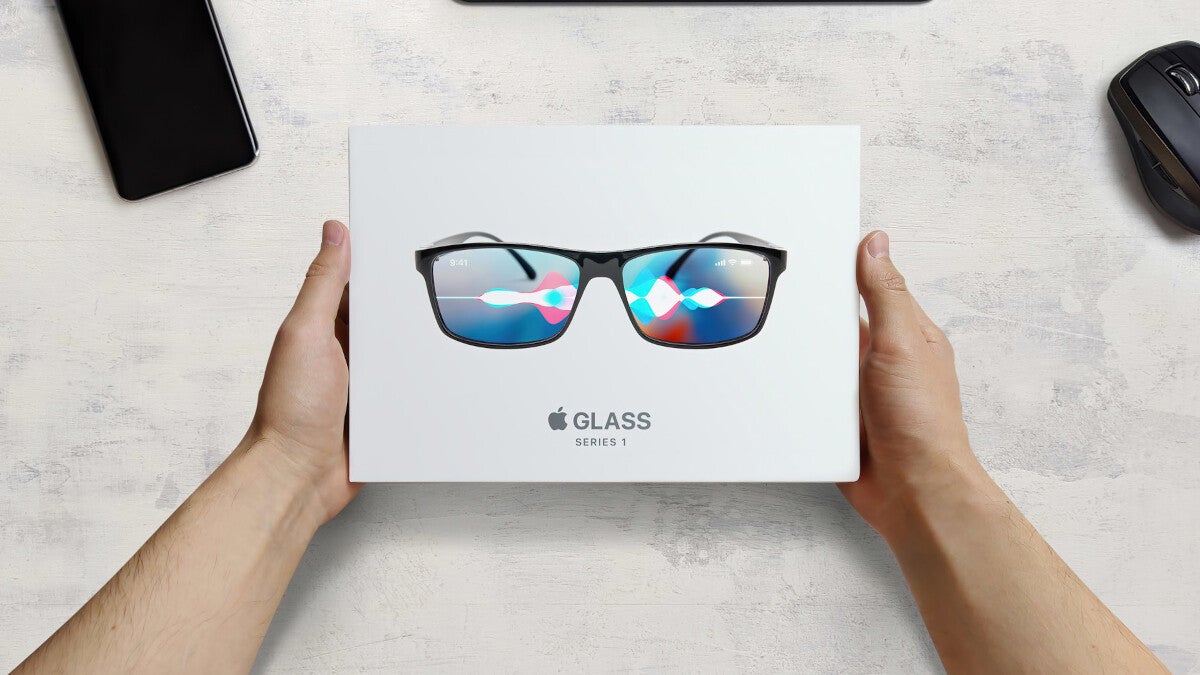
Concept of Apple Glasses box. | Image by Shutterstock and Mr. Mikla
Rumored upgrades:
- Apple Intelligence, Visual Intelligence, and a rebuilt Siri AI expected to sit at the center of the experience
- Hands-free commands in the works, possibly extending to whispered speech or silent lip-reading technology
- At least one high-resolution camera built into the frame, possibly two
- Spatial video capture anticipated alongside regular photos and video
- Four frame designs in testing, available in black, ocean blue, and light brown acetate
- A metal frame tier reportedly under development in parallel with acetate options
- Codenamed N50 internally
- On-device processing handled by a custom chip derived from Apple Watch silicon
- Independent 5G connectivity rumored, cutting the cord from a paired iPhone
- A display-equipped second generation reportedly targeting a 2028–2029 window
- Currently pointing to 2027 – WWDC 2027 is the target for the announcement, with units expected to ship before the end of that year.
Expected price:
- No confirmed figure – general expectations put it somewhere between $300 and $800, overlapping with the Meta smart glasses price range.
Jump to:
Apple Glasses release date
Bloomberg's Mark Gurman reports that Apple plans to unveil the glasses at WWDC 2027 in June, with units expected to reach customers before the end of that year.
| Device family | Announcement | Market release |
|---|---|---|
| Apple Glasses | WWDC 2027 (June)* | Late 2027* |
* - probable dates
Earlier rumors claimed an introduction later in 2026 with an early 2027 release, but the schedule slipped for two reasons: Apple's engineering and marketing teams are still working through details, and the company hasn't figured out its privacy story yet.
That second point is where the real tension sits, according to Gurman. Smart glasses have never fully escaped the shadow of Google Glass – the "Glasshole" backlash, when wearers drew public resentment for filming people without their knowledge, left a mark on the entire category. The fallout went beyond public opinion: courts in New York, Pennsylvania, and Wisconsin have placed restrictions on smart glasses in certain settings, and bans exist across venues from hospitals and schools to cruise ships and theaters.
Apple is reportedly treating all of that history as context it needs to answer before going public with its own version.
Apple Glasses price
No price has been confirmed and nothing specific has leaked. The general expectation puts the glasses in the $300-$800 range – enough to sit in the same conversation as Meta's smart glasses lineup, and well below the Vision Pro's $3,499 entry point.
Meta's Ray-Bans currently start at $380, which gives a useful lower bound for where Apple might target its own pricing.
Apple Glasses camera
The camera picture has shifted considerably as development has moved forward. The original internal position, driven largely by privacy concerns, was apparently to launch with no cameras at all. More recent reporting suggests at least one high-resolution camera capable of shooting photos and video is now expected in the final product.
Spatial video recording is also expected to be supported – a meaningful Apple-specific differentiator that would let wearers capture immersive footage compatible with the Vision Pro and other Apple devices.
A second sensor dedicated entirely to computer vision has also appeared in reports – one that reads the surrounding environment continuously so the onboard AI always has a live understanding of what you're looking at and can respond without any deliberate action from you.
Apple's LiDAR technology could factor in here as well. Rather than photographing people, LiDAR maps spatial depth and geometry – which could let Apple deliver environment-aware features while sidestepping the most obvious privacy objections that come with a camera pointed at the world.
Gurman has indicated the internal debate is still ongoing. One option being weighed is a camera that feeds visual data exclusively to AI tools – object recognition, Visual Intelligence, that kind of thing – with no ability to record photos or video.
Prototypes with no cameras at all have reportedly been built. Going that route would draw a sharp distinction between Apple's glasses and Meta's, though it would also mean cutting the feature Meta users most consistently highlight as a reason they like their glasses.
One privacy-forward design detail that has surfaced: an LED indicator light that activates whenever the camera is recording, so bystanders always know when they're being filmed. That kind of transparency mechanism could be central to Apple's effort to avoid the Google Glass backlash that still haunts the category.
Apple Glasses design
The most credible current reporting, from Bloomberg's Mark Gurman, suggests the Apple Glasses won't have a display at all – designed to be something you'd actually wear all day, rather than a head-mounted screen.
That puts Apple in similar territory to Google's Intelligent Eyewear, which is also leading with audio-first hardware before moving toward display-equipped versions. Where Apple diverges from both Meta and Google is on the hardware itself: the frames are being designed entirely in-house rather than through partnerships with established eyewear brands.
Four frame shapes are reportedly being evaluated internally: a wide Wayfarer-style silhouette, a narrower rectangular design, larger ovals, and smaller ovals. The material is expected to be acetate – more premium and durable than the injection-molded plastic most glasses rely on – in three colors: black, ocean blue, and light brown.
Metal frame options are also reportedly in development alongside acetate, giving the lineup a broader range of price points and aesthetics – similar to how the Apple Watch has always offered aluminum alongside titanium and steel.
Apple is reportedly testing 3D printing technology in the manufacturing process, which could help address the significant challenge of fitting a battery, chip, camera, microphones, speakers, and other components into a frame slim enough for comfortable all-day wear.
Prescription lens support has also come up in reports, with interchangeable lenses that could work along similar lines to the optical inserts Apple already offers for the Vision Pro.
Apple already has an established mechanism for custom Vision Pro lenses through a partnership with Zeiss, and that same infrastructure could extend naturally to cover the smart glasses – potentially making prescription support a smoother process than it is on competing products.
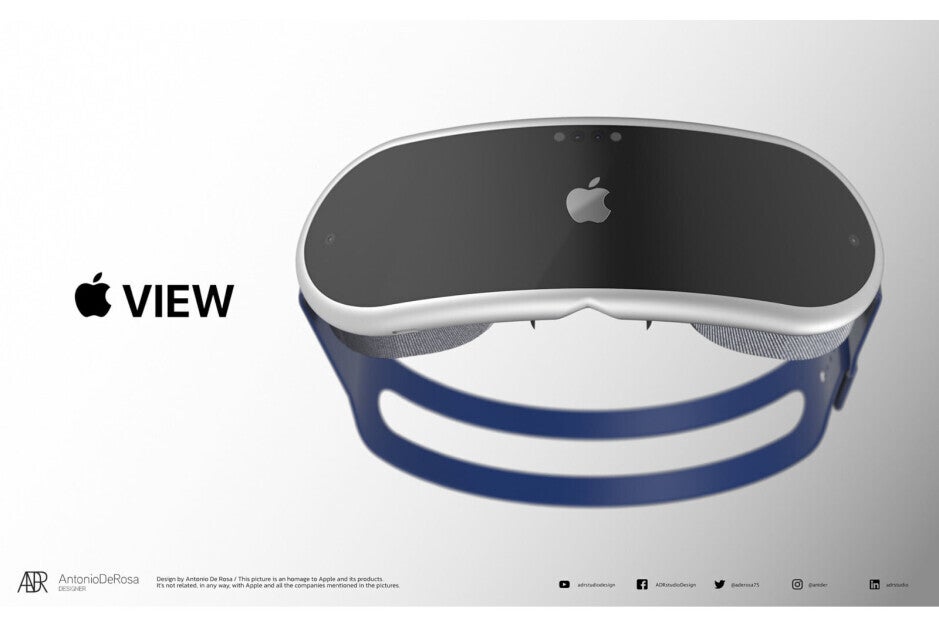
Apple AR headset concept. | Image by AntonioDeRosa
Apple Glasses display
No display at launch – that's the current expected picture.
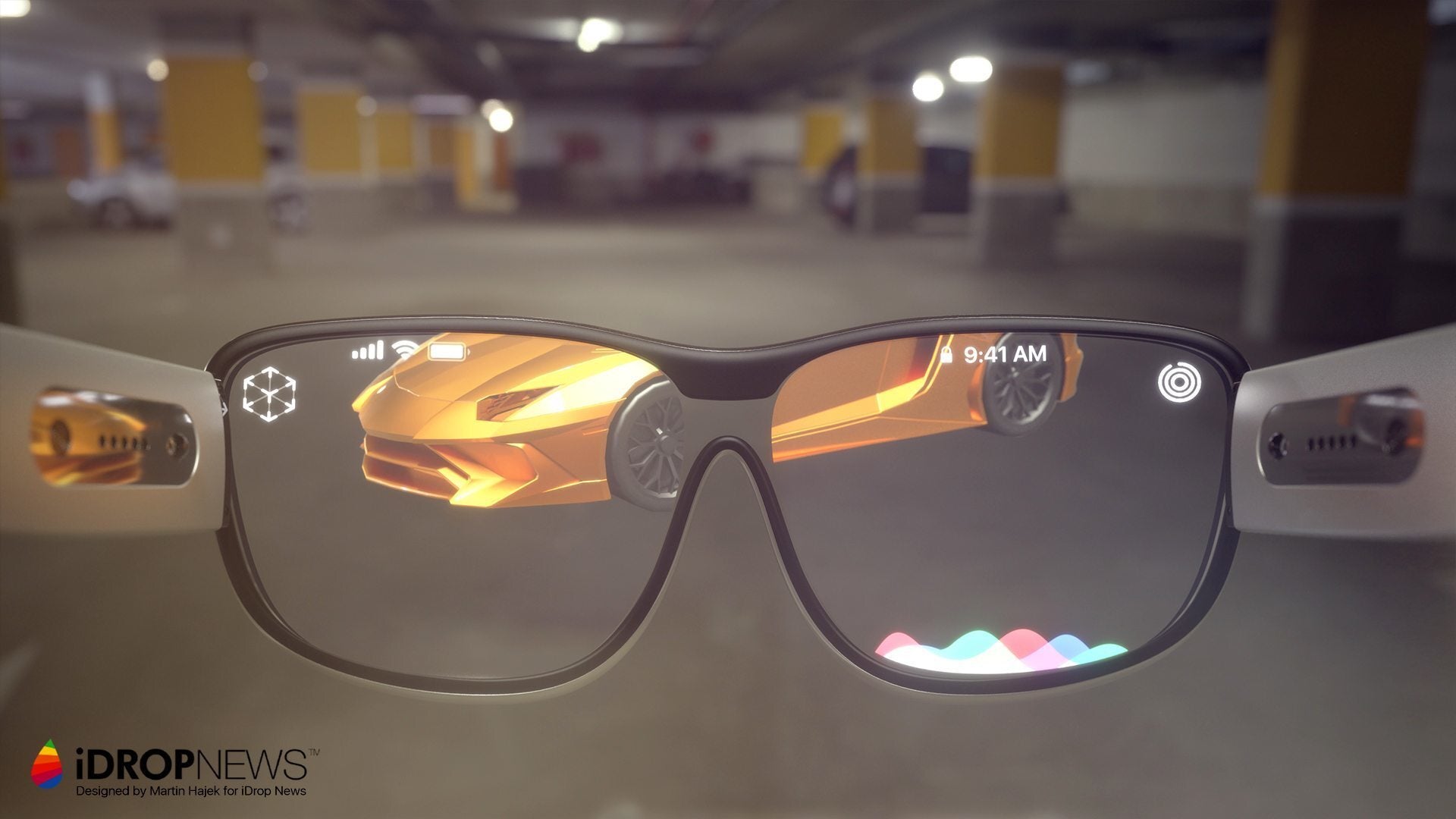
Apple Glasses concept. | Image by Martin Hajek for iDrop News
For historical reference: earlier speculation (dating back to 2019–2020) suggested the glasses might project content onto the lenses at up to 8K resolution, or use Sony Micro-OLED displays for a see-through AR experience. Both of those scenarios now appear to have been describing a different, more ambitious product, or could have been related to the Vision Pro – not the lightweight smart glasses Apple is currently developing.
A second-generation model with an integrated display is reportedly part of Apple's longer-term roadmap, potentially arriving as early as 2028 or 2029.
That version could run visionOS when paired with a Mac, switching to a lighter, more mobile-friendly interface when connected to an iPhone – a flexible dual-mode approach that would let the glasses serve both productivity and everyday use depending on what device they're paired with.
Apple Glasses battery
Nothing specific has surfaced on battery, which isn't surprising given the form factor – a glasses frame offers very little room to work with.
The most realistic approach is a small cell in the arms, charged via a dock. A set of patent applications from 2020 showed Apple exploring wireless charging through a dedicated dock, using magnets and inductive coils built into the frame structure.
Keep in mind that patents document exploration rather than confirmed plans, but a dock-based charging approach is among the more plausible paths given the physical constraints involved.
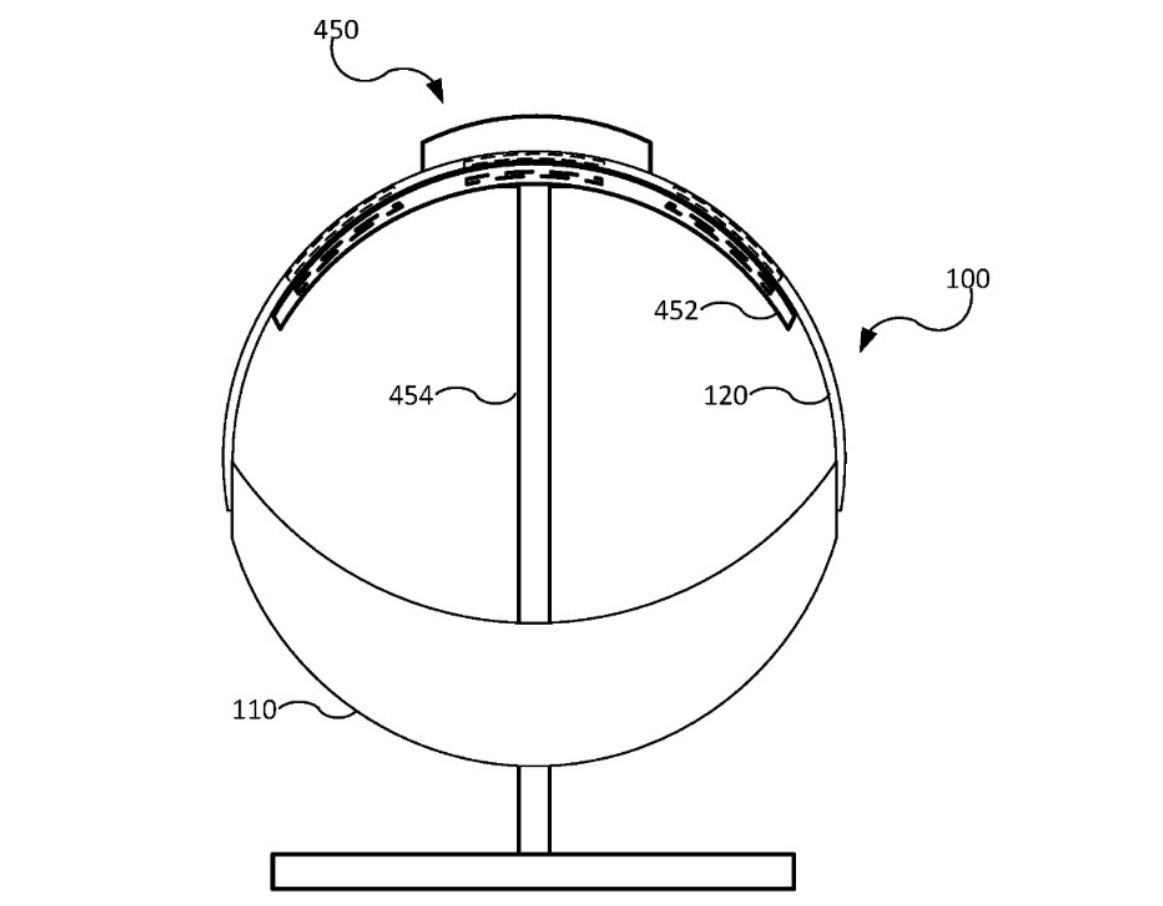
Image from an Apple patent showing an AR headset charging in a docking station. | Image by Apple
Apple Glasses features and software
The Apple Glasses are likely to rely on your iPhone for processing power, per analyst Ming-Chi Kuo – meaning they'd function as a display and sensor extension of your phone rather than a standalone computing device.
That said, Apple is reportedly developing a custom chip based on Apple Watch silicon specifically for the glasses, meaning some processing will happen on the device itself rather than routing everything through a tethered iPhone.
Siri AI will almost certainly be the primary way you interact with the glasses. The version Apple unveiled at WWDC 2026 is a substantial departure from what Siri used to be – it understands natural language, knows your personal context, can read what's in front of you, and takes actions directly inside apps.
Siri AI will almost certainly be the primary way you interact with the glasses. The version Apple unveiled at WWDC 2026 is a substantial departure from what Siri used to be – it understands natural language, knows your personal context, can read what's in front of you, and takes actions directly inside apps.
All of that maps naturally onto a hands-free wearable where touching a screen isn't an option.
Apple Intelligence and Visual Intelligence are both expected to be core to the experience.
Visual Intelligence can identify objects, read and translate text in real time, recognize places, and determine what the camera is looking at to surface relevant next steps. On iPhone you trigger it with the Camera Control button. On the glasses it would simply run continuously in the background without any deliberate action required.
Beyond voice, the glasses are expected to support touch-based controls built into the frame – a tap to snap a photo, for instance – giving wearers a quick physical input method for common actions without having to speak.
The most intriguing hardware rumor involves how you actually give the glasses commands. Apple may be developing technology – built on its acquisition of Q.ai – that reads silent mouth movements or whispered speech by detecting facial muscle activity, so you can interact without speaking aloud in public.
If that capability makes it into the shipping product, it would set the Apple Glasses apart from anything else in the smart glasses space.
Health and fitness features have also been discussed internally, with sensors potentially enabling movement tracking and fitness capabilities. These are not expected to be present at launch – Apple is said to be treating them as additions for future generations rather than day-one features.
A dedicated App Store is also expected at launch, structured similarly to the Apple Watch ecosystem and focused on purpose-built apps and augmented reality experiences.
Apple Glasses hardware and specs
At least two speakers are expected, built into the frame arms close to your ears – the same placement used by every other smart glasses maker currently on the market.
A custom chip based on Apple Watch silicon is reportedly being developed for the glasses, handling on-device AI tasks, connectivity, and sensor management within the tight power and thermal constraints of a wearable frame.
A patent filing also points to an array of built-in microphones capable of capturing audio beyond normal human hearing range, potentially with the ability to direct your attention toward a sound source. As with any patent, this describes something Apple has explored, not necessarily something that will ship.
Built-in 5G connectivity has also appeared in reports, which would give the glasses an independent data connection rather than relying entirely on a tethered iPhone.
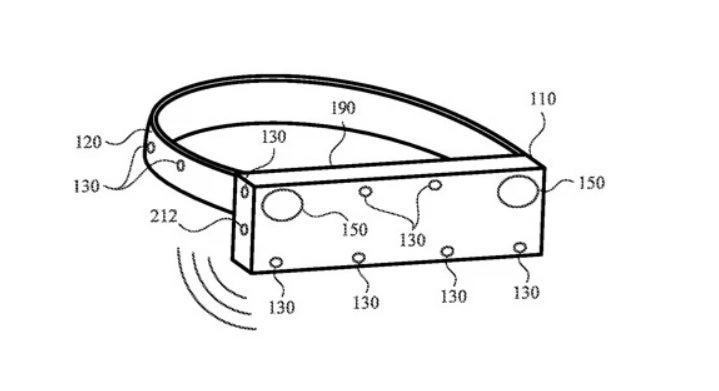
Apple glasses patent image possibly showing the planned arrangement of its microphones. | Image by Apple
Should I wait for the Apple Glasses?
- You should wait for the Apple Glasses if you're invested in the Apple ecosystem and you've been looking for a wearable that actually fits into your day rather than drawing attention to itself. Four frame shapes and three colors in quality acetate suggests Apple is making a genuine effort to build something people want on their face, not just a gadget with a logo. If the iPhone is already central to your life and you want the most natural possible extension of it, these could end up being exactly that – once they're actually in stores.
- You should not wait for the Apple Glasses if you need something now, you were expecting a display, or you have limited patience for first-generation hardware. WWDC 2027 and a late 2027 ship date are the current targets, but that's still well over a year out, and Apple's first entries into new product categories don't always land on schedule. Meta's Ray-Ban smart glasses and Google's Intelligent Eyewear are both real products available today. If the smart glasses concept appeals to you and waiting isn't appealing, either one is a much more immediate option.


Popular stories


Latest News