Google Nexus 6P vs Samsung Galaxy Note 5

Introduction
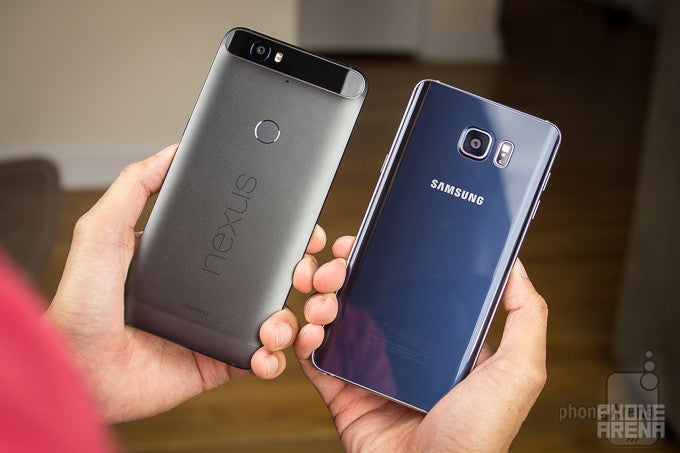
When it comes to the phablet domain, Samsung’s Galaxy Note smartphones have consistently been the frontrunners in its class ever since the segment’s inception. This year’s latest iteration, the Samsung Galaxy Note 5, sees a tremendous shift in its design – while also improving on what it does best. That, of course, consists of being incredibly spec’d to the roof, and accompanied with a diversified portfolio that caters to the everyday professional.
Interestingly enough, it has a strong competitor in a newcomer to the space. The Google Nexus 6P has been one of the biggest surprises this year, showing that Chinese maker Huawei can dish out high-caliber devices on a global scale. With an original looking premium design, combined with the most up-to-date vanilla Android experience, it seemingly might be the new phablet king.
Design
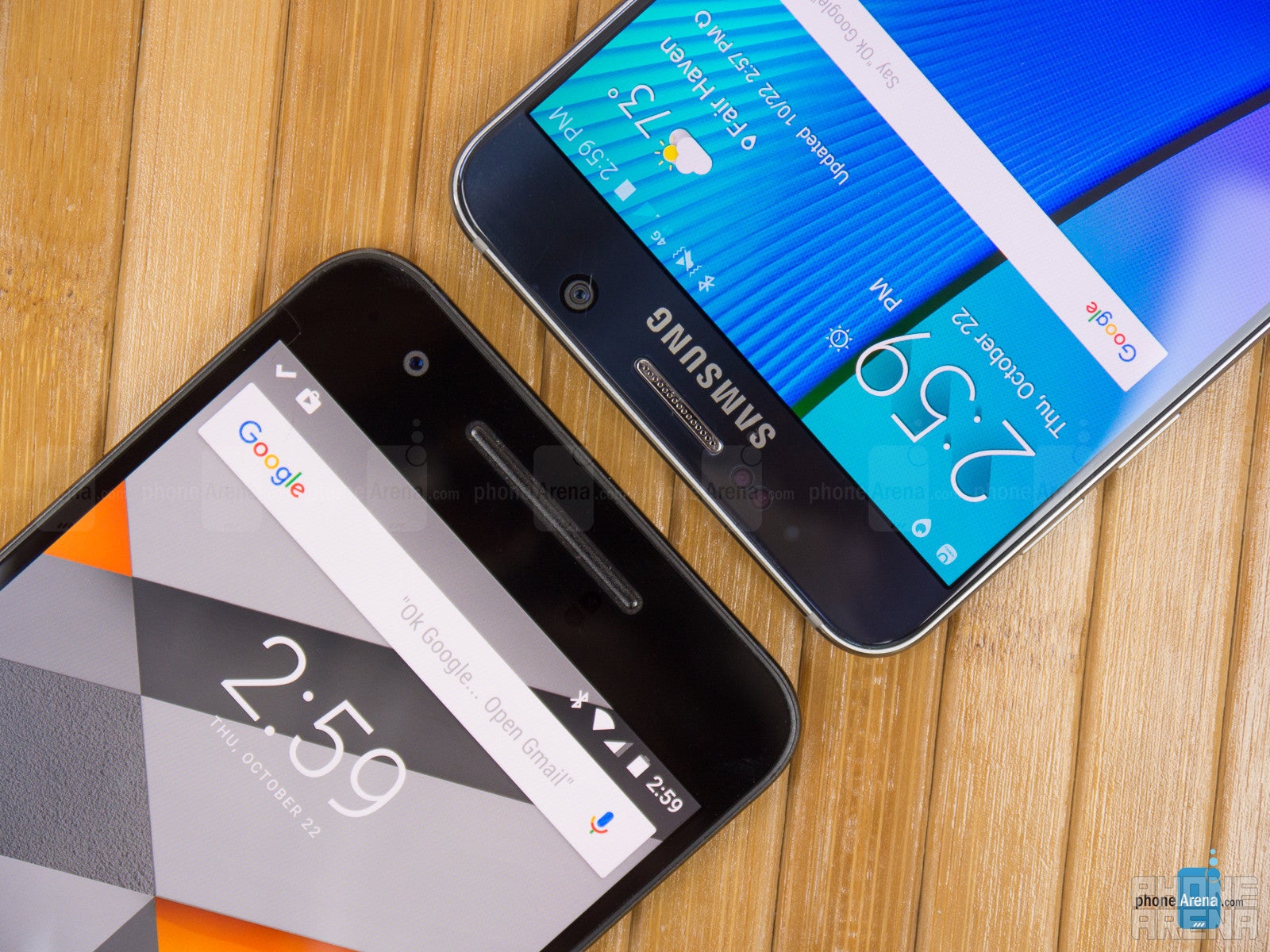
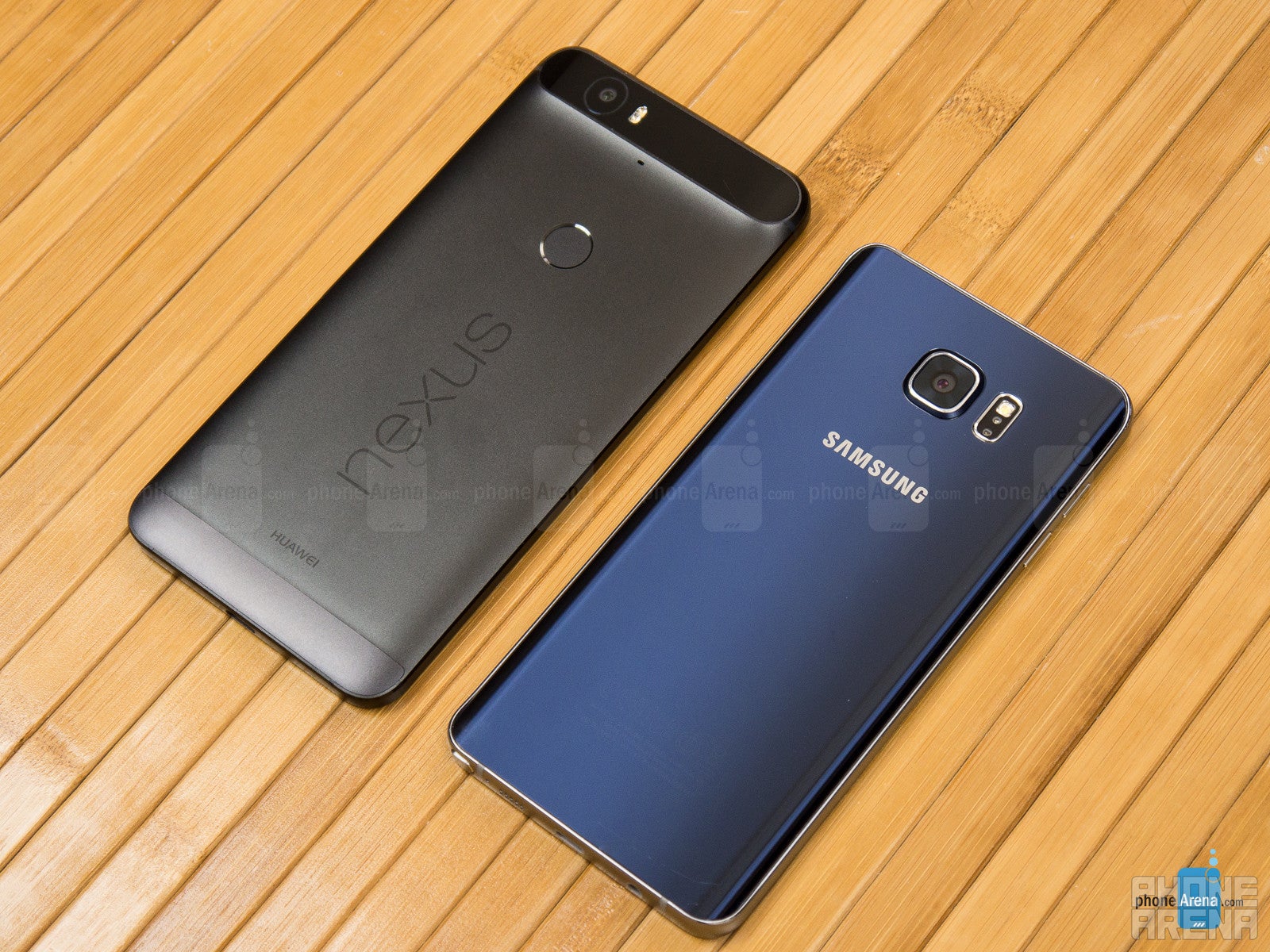
Outstanding! When we think of phones that impress with their designs, these two undeniably have the qualifications – thanks in part to their sturdy constructions, high-quality materials, and slick aesthetics. It’s a battle between the Note 5’s all-glass chassis and metal trim, versus the Nexus 6P’s unibody aluminum metal construction. Not only do they look exceptionally well to attract our eyes from afar, but they also match their visual appeals with their meticulous and solid constructions.
It’s really a tough call on which of the two has the better designs. When it comes to visual appeal and ergonomics, we like the Note 5, but sturdiness and originality goes to the Nexus 6P.

6.27 x 3.06 x 0.29 inches
159.3 x 77.8 x 7.3 mm
6.28 oz (178 g)

6.03 x 3 x 0.3 inches
153.2 x 76.1 x 7.6 mm
6.03 oz (171 g)

6.27 x 3.06 x 0.29 inches
159.3 x 77.8 x 7.3 mm
6.28 oz (178 g)

6.03 x 3 x 0.3 inches
153.2 x 76.1 x 7.6 mm
6.03 oz (171 g)
See the full Google Nexus 6P vs Samsung Galaxy Note5 size comparison or compare them to other phones using our Size Comparison tool.
Display
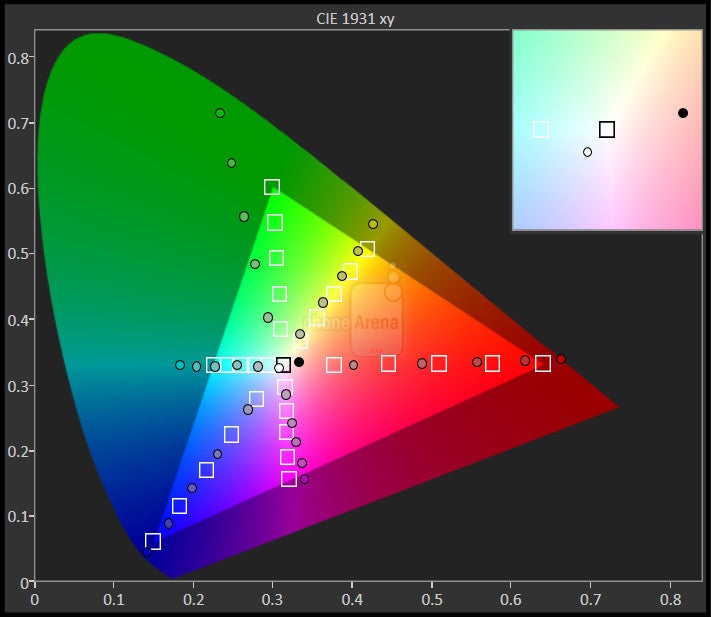
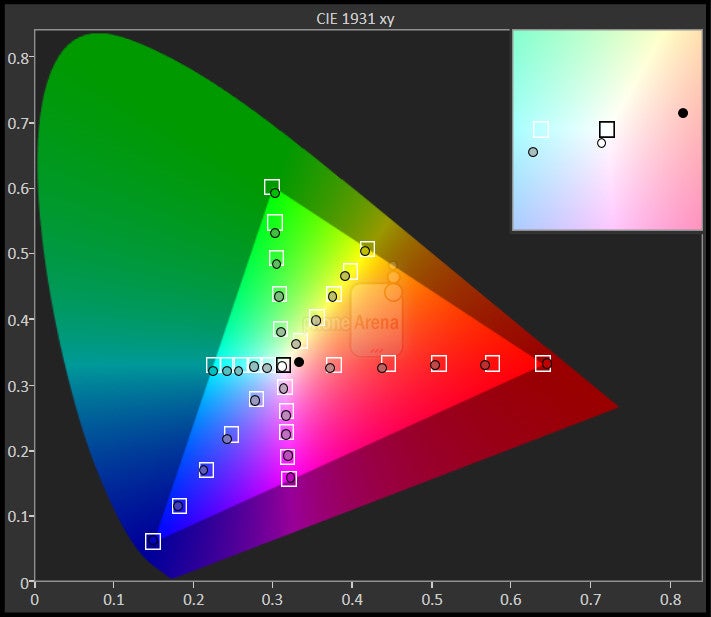
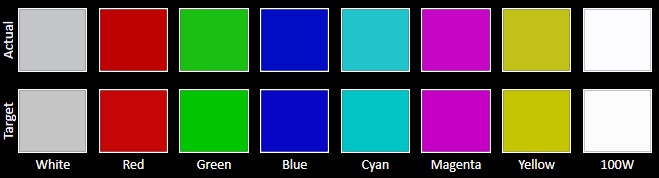
Highly regarded as being at the top of the food chain, both handsets live up to that argument with their Quad-HD displays. The two of them measure up at 5.7-inches, have resolutions of 1440 x 2560 pixels, and employ AMOLED technology. In earnest, they look beautiful in every facet, as they exhibit all the qualities typical of the technology – like their phenomenal clarity at wide viewing angles, high contrast, and true deep black color reproduction.
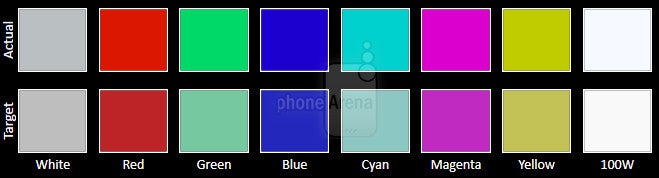
Both phones can produce pumped-up colors, but they can also be set to a more natural-looking state using the appropriate screen modes.


Interface and Functionality
The battle between the Nexus 6P’s stock Android 6.0 Marshmallow experience and the Note 5’s TouchWiz UI on top of Android 5.1.1 Lollipop is an interesting one, mainly because they appeal to specific users. Obviously, you can’t go wrong with the Nexus 6P and its stock, most up-to-date Android 6.0 Marshmallow experience, seeing that it has the simplicity and straightforwardness to cater to almost everyone. The visual appeal is there as well with Material Design’s presence throughout the interface, but the single and most important part about everything is that the Nexus 6P will always be on tap to receive the newest Android updates – way before its rival here.
The Google Nexus 6P runs on the latest Android 6.0 Marshmallow"
Sure, the Note 5 might take longer to get updated, but seeing that it’s such a popular thing, you know Samsung will be working hard in getting it updated ASAP. While TouchWiz’s look and feel isn’t quite as clean as stock Android, it hinges on its productivity-centric features to appeal to users who just need to get more work done on the road. Not only is it the best when it comes to true multi-tasking, but the S Pen adds a whole different dimension to using the handset – one that can’t be matched by the Nexus 6P.
The user interface of the Samsung Galaxy Note5
Each experience has its perks, so it’s a matter of which one appeals to you more. Samsung clearly has a comprehensive experience with TouchWiz, one that’s been fine-tuned and optimized in almost every way imaginable, so it’s a great experience for the professional user. Conversely, though, the Nexus 6P favors an experience that might be light on the multi-tasking features, but it comes without any frustrations or complications.
System Performance
The Samsung Exynos 7 Octa 7420 chipset inside of the Note 5, which is paired with 4GB of RAM, is undeniably a beast when it comes to the benchmarks – where it’s always near the top of the ladder in many tests. Never one to be counted out, the Nexus 6P’s octa-core Qualcomm Snapdragon 810 SoC with 3GB of RAM isn’t one to be messed around with either. Even though it trails the Note 5 in many of the benchmark tests, its real-world performance is a completely different matter.
Over on the graphics processing side, we’re satisfied by how swell these two Quad-HD screen packing phones are able to maintain solid frame rates when the action becomes intense.
Camera
This year, we’ve seen several outstanding camera phones that have impressed us for their performances – these two included! The Note 5 from a specs aspect might appear more attractive, seeing that its 16-megapixel sensor is attached with an f/1.9 aperture lens, BSI, and optical image stabilization. However, as we’ve seen time-after-time, specs alone aren’t indicative of a camera’s potential, which is what’s evident with the Nexus 6P’s 12.3-megapixel camera sensor.
Camera interfaces
Image Quality
Before we dive into the specifics, we have to say that they’re both pretty snappy at taking a shot – so you’ll never miss an opportunity. Onto their performance, we have to admit that it’s a close one. At times, the favor tips the scales towards the Note 5, but in others, it’s the Nexus 6P. We will, however, say that they snap highly detailed and sharp photos when the lighting conditions are good. There’s a difference in their megapixel counts, but the Nexus 6P shows that it’s capable of producing just as much detail, with a slightly better handling of exposure.
It’s honestly a tough call here, since we can’t complain about their phenomenal performances. Not only do they achieve better results than the majority of phones out there, but they continue to handle low light extremely well too. Overall, however, hardcore shutter bugs will probably gravitate to the Note 5 – mainly because its top-notch performance is accentuated by its rich shooting interface.
Google Nexus 6P vs Samsung Galaxy Note5 sample images
Video Quality
When it comes to recording videos, you’ll want to stick with the Note 5, not only because of its stable footage capture, aided by its built-in stabilization, but also because there are more shooting modes and resolutions at its disposal. Without question, there’s plenty of details captured when using both handsets’ 4K UHD modes, but the Note 5 stands above for its stability and quick focus. The quality is almost on par with the Nexus 6P, but it’s clearly just lagging behind by just a smidgen – albeit, it does capture more natural sounding voices with its microphones.
Google Nexus 6P vs Samsung Galaxy Note5 sample images videos
Multimedia
Granted that the Google Play Music app comes preloaded on the two phones, the Note 5 complements it with its very own, homemade TouchWiz music player. Functionally, it suffices, but in the greater scheme of things, it doesn’t necessarily take the punch out of Google’s venerable player.
Between them, we prefer the dual speaker configuration of the Nexus 6P, which are front-firing, but it lacks the substance and depth that the Note 5’s single speaker produces. Yes, the Nexus 6P churns out a higher 78.4 dB of audio power, in comparison to the Note 5’s 70.7 dB tally, but its dual speaker setup just sounds insignificant and light – whereas the Note 5 has a broader appeal with its punchiness.
Music players
Over on the video watching side of things, we have very little complaints about the two, just because their Quad-HD screens are ideal for the situation. On top of that, they handle all sorts of videos and codecs with very little strain to their performances. Still, we need to point out that the Note 5 benefits from having a multi-tasking element in its portfolio – allowing us to continue watching a video in a separate window, while doing something else entirely different.
Call Quality
Battery
For being the one with a lower capacity battery, the Note 5’s 3000 mAh cell delivers superior performance over the Nexus 6P’s beefier 3450 mAh one. That’s quite surprising, honestly, considering that we’d think that stock Android would bear significant optimizations to give the Nexus 6P some serious longevity. At the very least, we get a solid one-day of normal usage out of the Nexus 6P, but the Note 5 can at times get us close to 1.5 days.
Conclusion
Much like anything, a phone’s value and worth hinges a lot on its price, and in this case, there’s more of a compelling argument going for the Google Nexus 6P. And why’s that? Well, for being the newer of the two, while also packing a premium design that’s original, its price of $499.00 for an unlocked model is mind-boggling. Meanwhile, the Samsung Galaxy Note 5 fetches for a premium at roughly around $650 to $750 depending on where you look.
Power users will undoubtedly appreciate what the Note 5 has to offer on the software side, seeing that it comes with the best multi-tasking experience in a smartphone. You can still get plenty of work done when you’re not at your desk with the Nexus 6P, but the Note 5 is remarkably more equipped for the task. Then again, stock Android has its perks as well, so that’s something to remember.
Google Nexus 6P
Pros
- Lower cost
- Stock Android experience
- Original looking design that’s premium
- Incredibly snappy performance in daily use
Samsung Galaxy Note 5
Pros
- Updated premium design that’s comfortable to handle
- Added productivity features
- S Pen for drawing and note-taking
- Built-in wireless charging

Popular stories










Latest News


Things that are NOT allowed:
To help keep our community safe and free from spam, we apply temporary limits to newly created accounts: