Apple iPhone 6s Plus vs Motorola Moto X Pure
Introduction
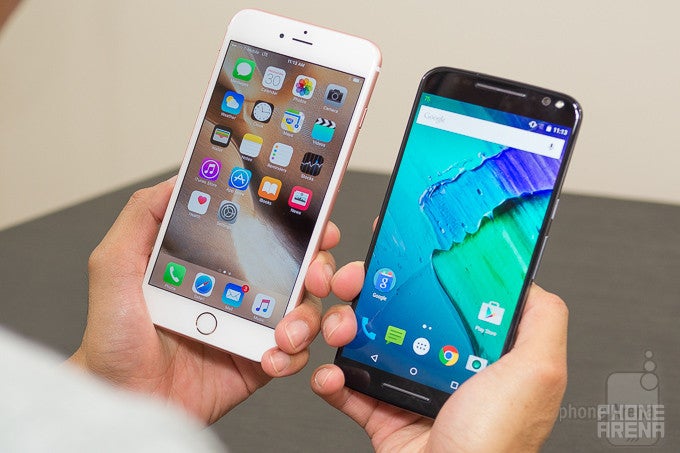
The iPhone 6s Plus takes the torch from its predecessor, Apple's first phablet, and keeps things largely the same externally, but has copious amounts of upgrades on the inside, namely a new 12 MP camera module, a pressure-sensitive 3D Touch display, and a screeching A9 chipset.
Meanwhile, a fresh Motorola batch has arrived, and the Moto X Pure is at the high-end of the new Moto trio, with specs like a 5.7” QHD display, and a 20 MP camera. Which of the two big-screeners mixes things up better? Read on to find out...
Design
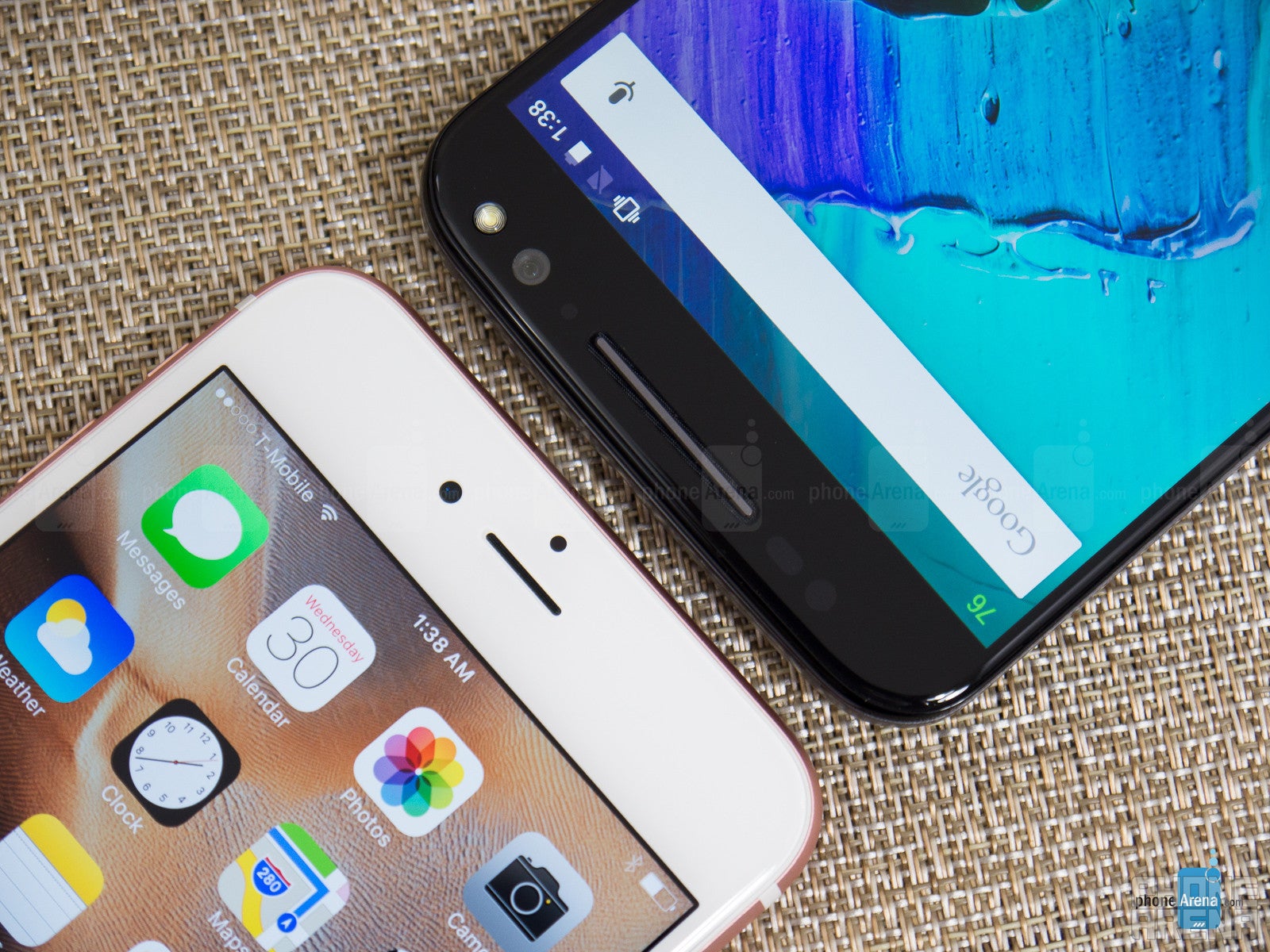
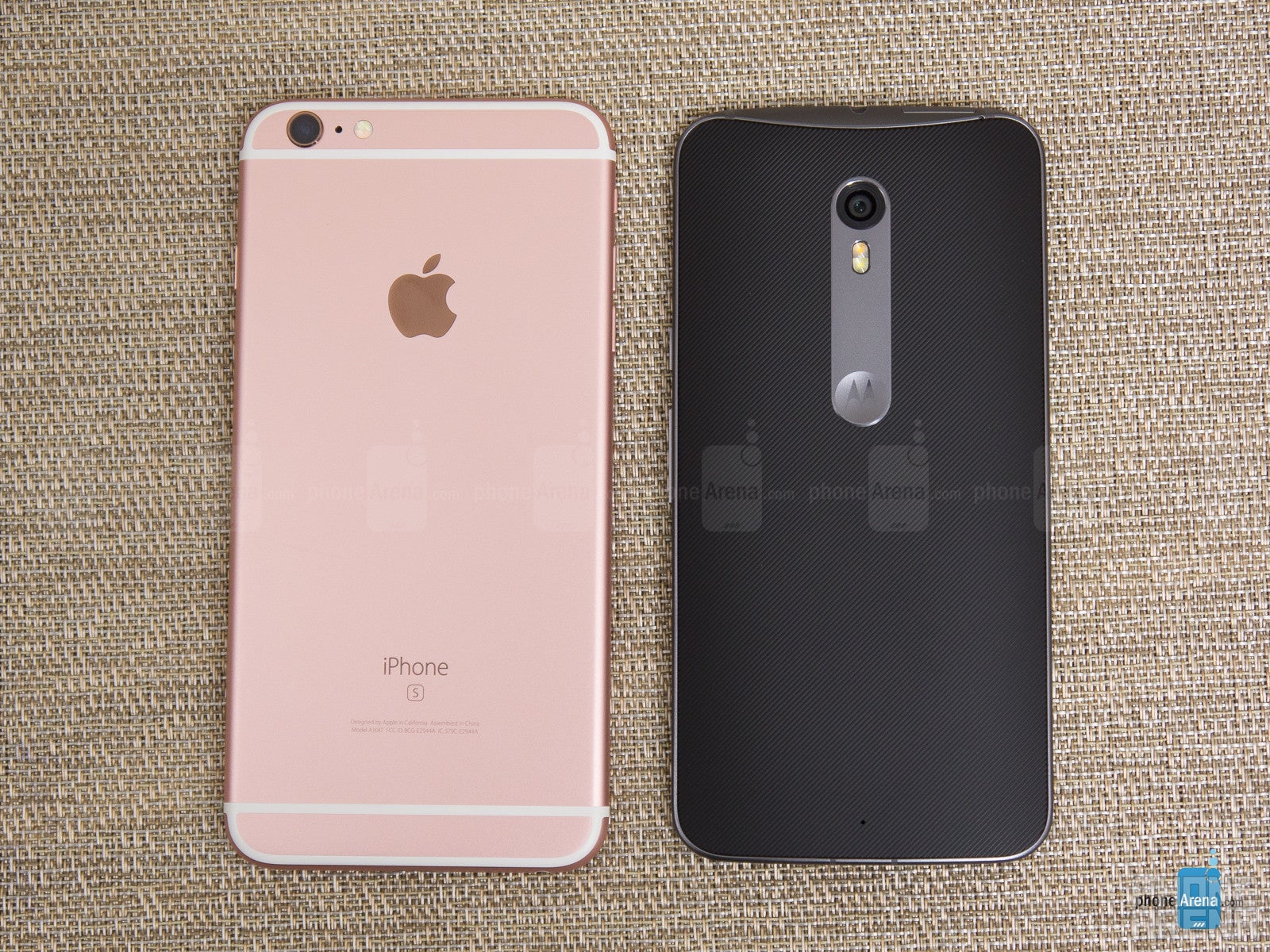
Moto X Pure looks like a work horse to the thin iPhone 6s Plus, yet offers much better screen-to-body ratio.
The iPhone 6s Plus has stayed largely unchanged from its predecessor, with a thin aluminum unibody that is a tad on the large side for the screen's 5.5” diagonal. The aluminum used this time, however, is the highest-grade 7000-series, making the phone more durable, while a new display tech has put on ounces and girth compared to its predecessor. Motorola, on the other hand, didn't go all-premium with the Moto X Pure design, focusing on providing a great 76%+ screen-to-body ratio, and only infusing a touch of classy materials with the metal side frame of the handset. You can use the Moto Maker tool while ordering the Pure, and have the phone tailored to your tastes with numerous combos of front, rear and side frame colors, as well as personalized engravings – all for free, of course.

6.23 x 3.07 x 0.29 inches
158.2 x 77.9 x 7.3 mm
6.77 oz (192 g)

6.06 x 3 x 0.44 inches
153.9 x 76.2 x 11.06 mm
6.31 oz (179 g)

6.23 x 3.07 x 0.29 inches
158.2 x 77.9 x 7.3 mm
6.77 oz (192 g)

6.06 x 3 x 0.44 inches
153.9 x 76.2 x 11.06 mm
6.31 oz (179 g)
See the full Apple iPhone 6s Plus vs Motorola Moto X Pure Edition (2015) size comparison or compare them to other phones using our Size Comparison tool.
Displays
With two big and quality displays in the offing, the phablets won't leave you hunkering for more.
The 5.5” 1080x1920 pixel display on the iPhone now comes with a new pressure-sensing technology that Apple dubbed 3D Touch, and it allows the panel to distinguish between a light tap or hard press, and react accordingly, introducing new horizons for contextual menus.
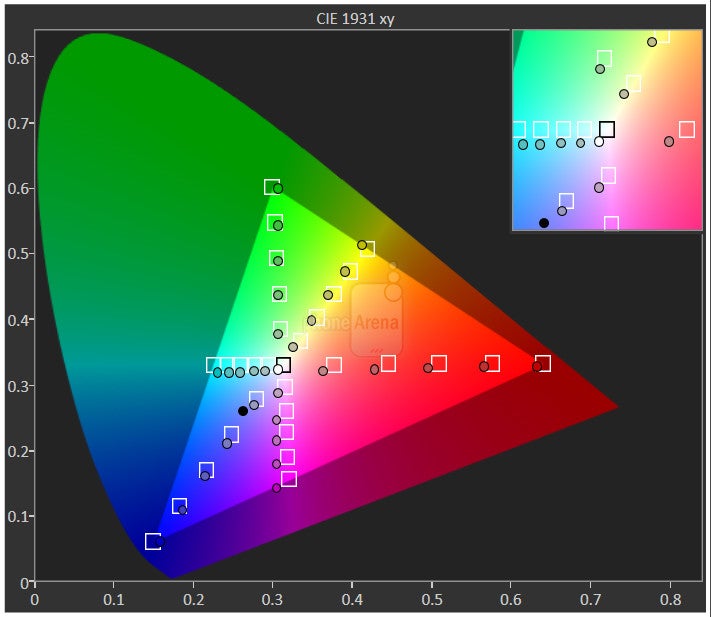
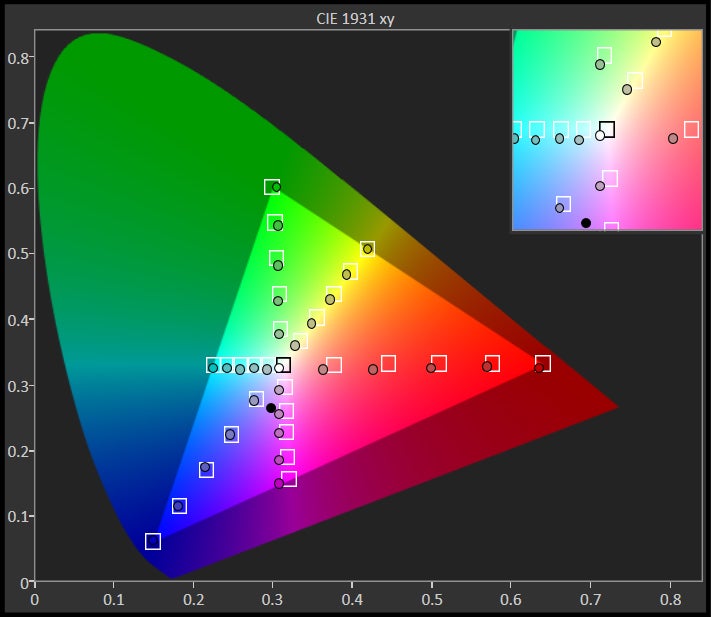
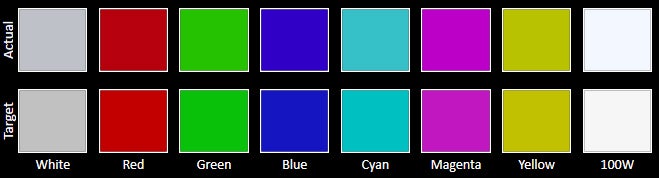
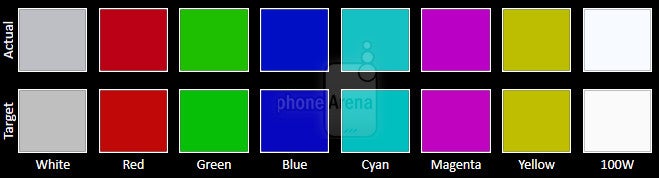
When it comes to colors, the iPhone 6s Plus is a tad on the colder side of the spectrum, but not by much, while the Moto X Pure keeps things closer to the reference 6500K white point, but introduces a hint of green throughout the image. The standard RGB gamut color presentation is great on both handsets, with no oversaturation, though the iPhone 6s Plus has more spot-on red hues than the Moto X Pure.


Interface and functionality
The iPhone 6s Plus boasts Apple's newest iOS 9 out of the box, with its numerous under the hood improvements that keep the functionality from its predecessors, but make it a lean and fast phone-management machine. In addition, the 3D Touch display technology lets you evoke context menus with a harder press, and choose from their options without having to first go into the app, for example; not to mention the influx of cool features that third-party apps are bound to get because of 3D Touch.
The iOS 9 experience with the iPhone 6s Plus
The Moto X Pure, much like its predecessors, runs on mostly stock Android 5.1.1 Lollipop experience, complemented by Moto’s customary, enhanced services. Now, while it’s a straightforward and relatively hassle-free experience, with Material Design’s presence in full effect, there isn’t anything hugely different from what we’ve experienced previously. In particular, Moto Assist, Moto Actions, Moto Voice, and Moto Display are all once again present here. They’re meaningful services that we find extremely useful, while not coming off as being redundant.
A mostly stock Android 5.1.1 Lollipop experience is complemented by Moto’s customary, enhanced services
The only new feature with the experience relates to Moto Actions, where we can now perform a chopping gesture at any time to turn on the LED flash, or shake our palm to start the camera. Besides that, everything that we know and love is still here. Moto Assist helps to manage how the phone behaves at certain places and times, like how it’s automatically placed into silence mode while we’re sleeping – or set to read all incoming texts when we’re at home. Moto Voice is just as intelligent as ever with its always-on listening, allowing us to launch the service at any time by speaking the launch phrase. And, finally, Moto Display eliminates the need for us to constantly press the power button to tell the time, or view some notifications.
Processor and memory
The Apple A9 chipset in the iPhone 6s Plus is a dual-core endeavor, clocked at 1.8 GHz - the same frequency as the processor cores of the Moto X Pure. The A9, however, is built with a superior 14nm production process, compared to the hexa-core Snapdragon 808 in Motorola's phone, and this shows unequivocally in the benchmark results you see below. In reality, the near-stock Android experience that is present on the Moto X Pure doesn't need much processing power to run smooth and zippy, so all is well when it comes to the daily interaction with the two phones.
Internet and connectivity
When it comes to browsing the Internets, these two phones handle it very well, rendering pages quickly and easily, though Safari on the iPhone offers extras like reading modes and built-in ad blocker, while the default Chrome browser on the Moto X Pure feels a tad slower and heavier. Panning around and zooming are fast and easy to perform.
Internet browsing
The iPhone 6s Plus supports no less than 23 LTE bands, which is a record for the phone industry. Other than LTE, the phones also support HSPA+ speeds, Bluetooth (4.2 in the iPhone vs 4.1 for the Moto), and all the wireless radio assortments you might need.
Camera
The Moto X Pure stands its ground outdoors, but when the lights get dim, it's iPhone 6s Plus time.
The iPhone 6s Plus comes with a brand new 12 MP camera sensor, and larger, 1.22 micron pixels than the 1.1 micron ones of the 20 MP unit in the Moto X Pure. The iPhone also sports optical image stabilization, and the so-called Focus Pixels, which make it one of the fastest mobile snappers around. The Moto X Pure uses the new Sony sensor with a Hybrid AF system, which is a marketing speak for a phase-detection autofocus, so it's very fast to focus and take a snap, too.
The camera interfaces boast a plethora of basic options like Panorama and HDR, but the Moto X Pure doubles down on the shooting modes and manual regimes, offering exposure, saturation and ISO adjustments. Apple strikes with the so-called Live Photos mode, which records short clips with each shot, so you can make every snap spring to life afterward as a GIF image of sorts.
Camera interfaces
The images from the iPhone 6s Plus come out a tad warmer and less saturated than the ones from the Moto X Pure, but in general both phones manage to score accurate color representation. Surprisingly enough, the dynamic range of Moto's snaps is almost as good as the stellar one of the iPhone – the sky doesn't get overexposed, for instance, or the shadows too dark and mushy. The iPhone manages to resolve more detail, despite its lower megapixel count, too.
Indoors and in low-light, the iPhone's resolved detail amount becomes even higher, though its images get way warmer than the mostly credible shots that the Moto X Pure is able to produce. The low-light frames from the Moto X Pure, however, look soft and mushy in comparison. At night, the OIS camera of the iPhone definitely has the upper hand, producing usable, decently-lit shots, while the Moto X Pure comes out with a noisy, often overexposed scenes.
Apple iPhone 6s Plus vs Motorola Moto X Pure sample images
When it comes to video recording, both phones perform admirably, with 4K video as an option, but the iPhone 6s Plus offers more stable footage due to its optical image stabilization mechanism. The iPhone comes out with an overall warmer color presentation, but much faster exposure compenstation when panning around. Its continuous autofocus also performs better than on the Moto X Pure, whose focus wanders at times when panning around quickly.
Sample Videos
Multimedia
The big and vibrant displays of the phablets won't leave you longing for more when it comes to picture or video playback in the galleries or with the stock players. The Moto X Pure supports every major format thrown at it, while on the 6s Plus some formats are a no-go, and you can't just copy video to its memory, if you don't go the iTunes way. The stock Motorola gallery, with its flat Material Design, looks less polished than the pretty iOS 9 one.
Galleries
When it comes to music playback, the iPhone's stock player also looks more sophisticated than Google's Play Music effort.
Call quality
Motorola's handsets have always been good in one pretty important for a phone metric – call quality – and the Moto X Pure doesn't disappoint here, too, both in the earpiece, where voices are heard loud and clear, and through the mics, which relay our voice to the other end in a similar manner. Our one minor complaint pertains to how voices have a subtle artificial quality through the earpiece, which doesn’t hinder the overall experience, but is still something we notice.
Battery
The disappointing battery endurance of the Moto X Pure can't be made up for by its rapid charger.
Conclusion
The Moto X Pure blasts off at $399, which is almost half of the iPhone 6s Plus price. If you can live without the innovative interaction options that the 3D Touch display on the iPhone brings, and with worse pictures at night time, Motorola's phone should suffice for most, if not all of your phablet needs. It also lets you customize its appearance while ordering till the cows come home.
Apple iPhone 6s Plus
Pros
- 3D Touch pressure-sensing screen
- Great camera, even in low light
- More polished interface and app ecosystem
- Good battery life
Motorola Moto X Pure Edition (2015)
Pros
- Very good value for the money
- Bright, quality display
- Good pictures and video
- Abundance of design customization options








Popular stories
Latest News


Things that are NOT allowed:
To help keep our community safe and free from spam, we apply temporary limits to newly created accounts: