It's officially December now, and once we throw away the excessive Christmas gift wrap, it'll be January: and that means the Galaxy S26 family is upon us!
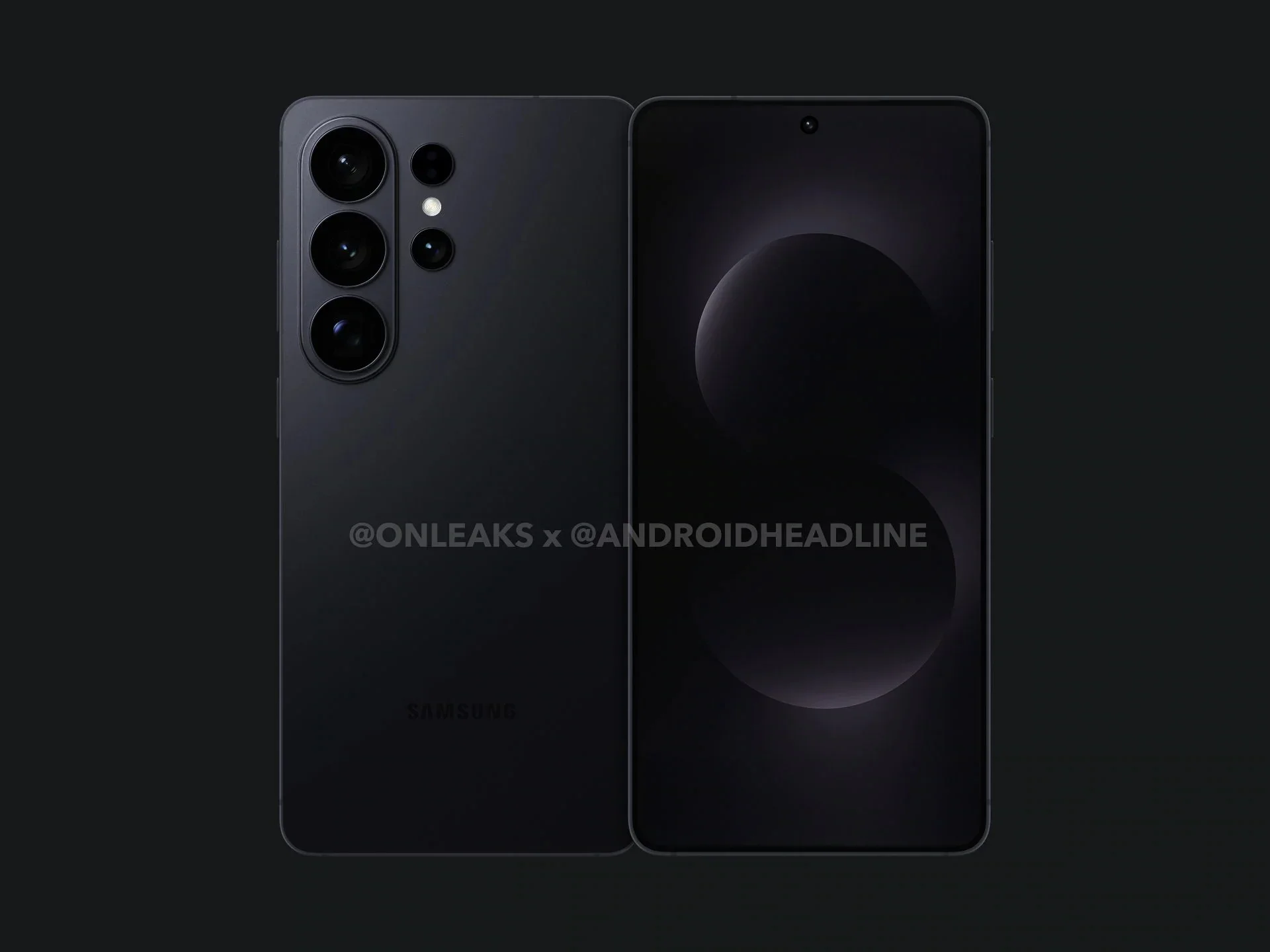
The Galaxy S26 Ultra is the one that everybody expects miracles from, especially now that we've heard about its potential Privacy Display built-in feature. It's exactly what it sounds like: powered by Samsung's Flex Magic Pixel technology, this fancy feature would limit viewing angles to keep content private in public.
As you've probably heard before, the Galaxy S26 Ultra is to utilize the M14 OLED material. The Galaxy S25 Ultra uses M13. Now, M14 is the latest generation of organic material sets developed by Samsung Display for manufacturing high-end smartphone OLED panels.
Its primary advancement is the increased use of deuterium across the host layers (Red, Green, and Blue), which significantly enhances the material's stability, leading to greater power efficiency (reportedly 20-30% better than M13), higher potential peak brightness, and a longer overall lifespan for the display.
Recommended For You
What do you expect out of your flagship screen?
46 Votes
To be bright.
6.52%
To be large.
6.52%
To be extra durable.
2.17%
To come with anti-reflective coating.
8.7%
Great colors and tones!
10.87%
To be power efficient.
10.87%
All of the above, I'm humble like that.
54.35%
That's great, right?
Will the Galaxy S26 Ultra take advantage of all of this? Not quite, says none other than the highly prolific and reputable tipster Ice Universe:
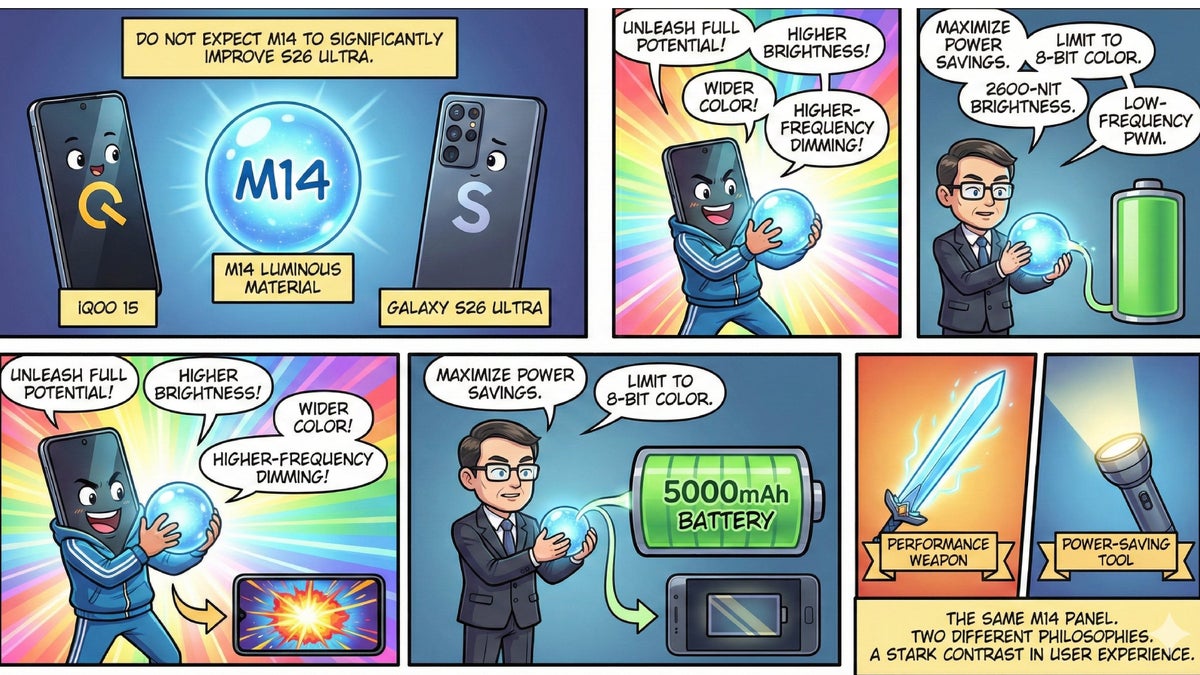
Let me state my point first: do not expect the M14 luminous material to bring any significant improvement to the Galaxy S26 Ultra.
If you do not want to read the detailed explanation below, this single sentence is enough: the Chinese iQOO 15 uses M14 to unleash its full… pic.twitter.com/3YEVgrEWX8
According to their findings, users should not expect the M14 OLED material to bring significant display improvements to the Galaxy S26 Ultra. The core point is that while the M14 panel is premium, Samsung is rumored to use it primarily for power savings rather than maximizing visual performance. The tipster contrasts this with the iQOO 15 phone, which allegedly utilizes the M14 to its "full potential" by achieving higher peak brightness, wider color, and high-frequency dimming.
Allegedly, Samsung is expected to limit the S26 Ultra's display to maintain its 5,000 mAh battery life by restricting it to 8-bit color, 2,600 nits of brightness, and low-frequency Pulse Width Modulation (PWM), effectively turning the M14 into a power-saving tool… instead of a performance upgrade.
Different brands, different approaches
"The two brands take completely different approaches in how they utilize it [the M14 OLED material]", says Ice Universe.
And this difference in approach is where Samsung risks being seen as underachieving with its own, superior technology. By restricting the M14 panel to the same specs of its predecessor, Samsung prioritizes power efficiency to maintain battery life without using a larger cell.
This is great news for endurance, despite not unleashing its full potential. If we're stuck with the same 5,000 mAh capacity on the S26 Ultra, at least we should get a longer battery life. Gotta stay positive, right?
Read more:
The display on your black Galaxy S26 Ultra might not look as modern as you’d like
Free Galaxy A17 5G with Straight Talk
Get a free Galaxy A17 with Straight Talk. To claim this deal, you need to pair the phone with activation on a Silver Unlimited Plan or higher. This tier costs $45 per month. Offer valid through 01/10/27 while supplies last online.
Sebastian is one of PhoneArena’s senior opinionators. A veteran news writer with almost 20 years of experience in media and technology, he not only covers all the hot news about Galaxies and iPhones, but often provides hot takes on industry trends. He’s fascinated with camera-focused flagships from the likes of Oppo and Vivo, as well as foldable phones.
A discussion is a place, where people can voice their opinion, no matter if it
is positive, neutral or negative. However, when posting, one must stay true to the topic, and not just share some
random thoughts, which are not directly related to the matter.
Things that are NOT allowed:
Off-topic talk - you must stick to the subject of discussion
Offensive, hate speech - if you want to say something, say it politely
Spam/Advertisements - these posts are deleted
Multiple accounts - one person can have only one account
Impersonations and offensive nicknames - these accounts get banned
To help keep our community safe and free from spam, we apply temporary limits to newly created accounts:
New accounts created within the last 24 hours may experience restrictions on how frequently they can
post or comment.
These limits are in place as a precaution and will automatically lift.
Moderation is done by humans. We try to be as objective as possible and moderate with zero bias. If you think a
post should be moderated - please, report it.
Have a question about the rules or why you have been moderated/limited/banned? Please,
contact us.





Things that are NOT allowed:
To help keep our community safe and free from spam, we apply temporary limits to newly created accounts: