I used the Galaxy Z TriFold and it has some catching up to do
Samsung's first tri-folding would have been super-impressive, if it wasn't for Huawei's Mate XT.
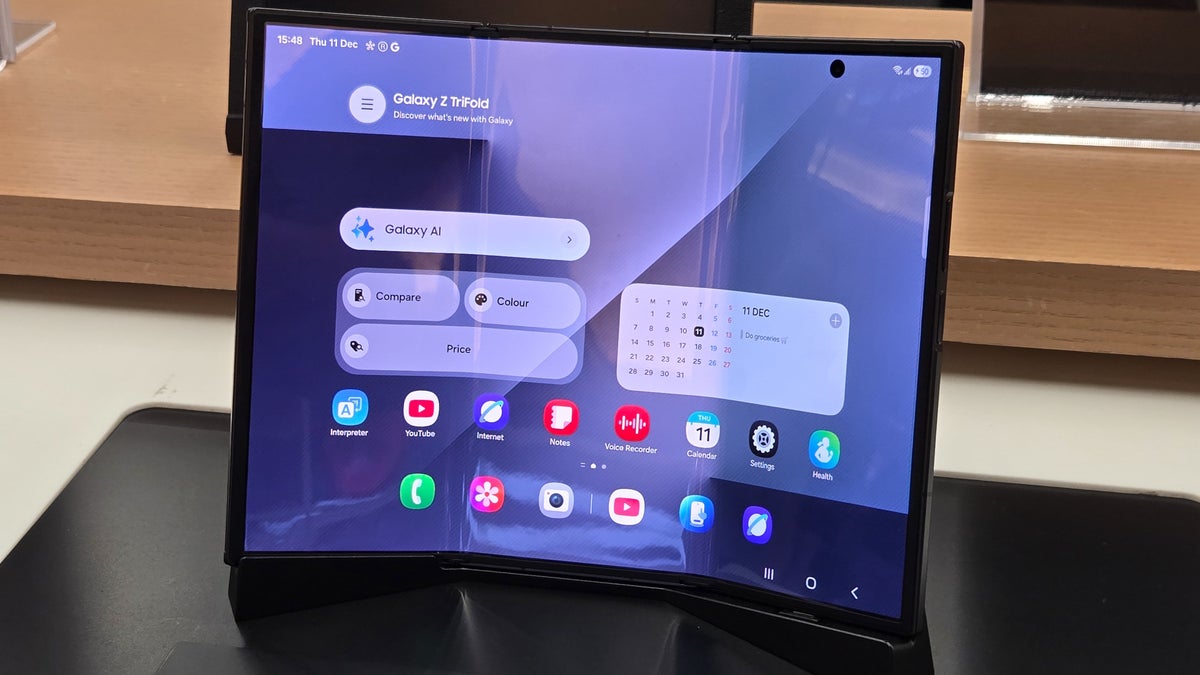
Samsung recently unveiled its first ever tri-fold phone, aptly named Galaxy Z TriFold. While a first for Samsung, the Z TriFold is the world’s second third tri-foldable phone model, following Huawei’s Mate XT and XTs.
Having used Huawei’s pioneering Mate XT for quite some time, I had a pretty solid reference point going into my hands-on time with the Samsung Galaxy Z TriFold. So, which one is better?
Tell you what, if there was no Mate XT, the Galaxy Z TriFold would have been an extremely impressive piece of tech. But having had the Mate XT for a year on the global market, Samsung’s debut on the tri-folding scene, to me at least, didn’t feel like the breakthrough it’s supposed to be.
Remember when Samsung and Huawei first launched their debut foldable phones? Samsung went for the book-style fold, with a large internal screen, and a dedicated cover display for folded operation. Huawei, on the other hand, chose a different form-factor where the display stayed on the outside as you folded the phone — this way, there was no need for a separate cover screen, but left the soft, flexible panel too exposed to the elements.
Eventually, the book-style foldable proved to be the more appropriate form-factor and Huawei switched to it after a few generations.
I feel like the roles have been reversed when it comes to tri-folds, because Huawei’s decision to go for the Z form-factor honestly feels way more practical and optimal.
If you’ve seen images of the Galaxy Z Tri-Fold, you know it uses a different, U shape, and while that shape seems to be better in terms of delivering maximum protection for the internal display, it has some serious limitations.
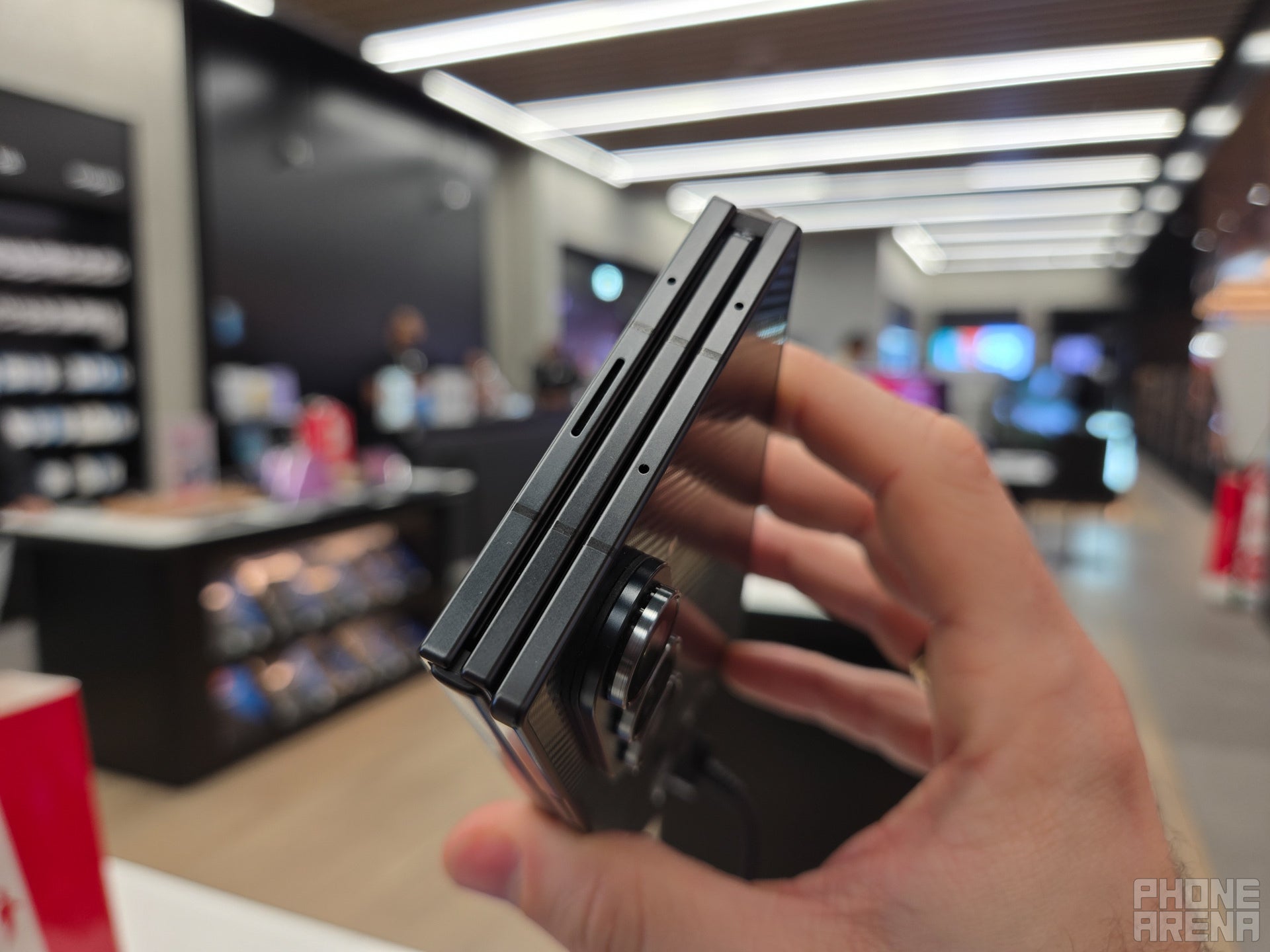
For example, Samsung’s TriFold phone once again needs an additional, cover screen panel to enable operation when folded. This inevitably raises the cost of production even more. It’s just a less efficient design.
The other practical drawback of this design, from a consumer’s perspective, is that you can’t use the Z TriFold as a book-style foldable. You can only use it fully folded (just the cover screen), or unfold it fully to enjoy the full 10” display. There is no mid-way position where you have two thirds of the screen at your disposal, like you have with the Huawei Mate XT.
Samsung’s Galaxy Z Tri-Fold also has considerably thicker bezels around its 10” screen, which is fine, but doesn’t look as sophisticated. Actually, the whole device is a bit thicker and chubbier compared to the Mate XT, not to mention slightly heavier, as well.
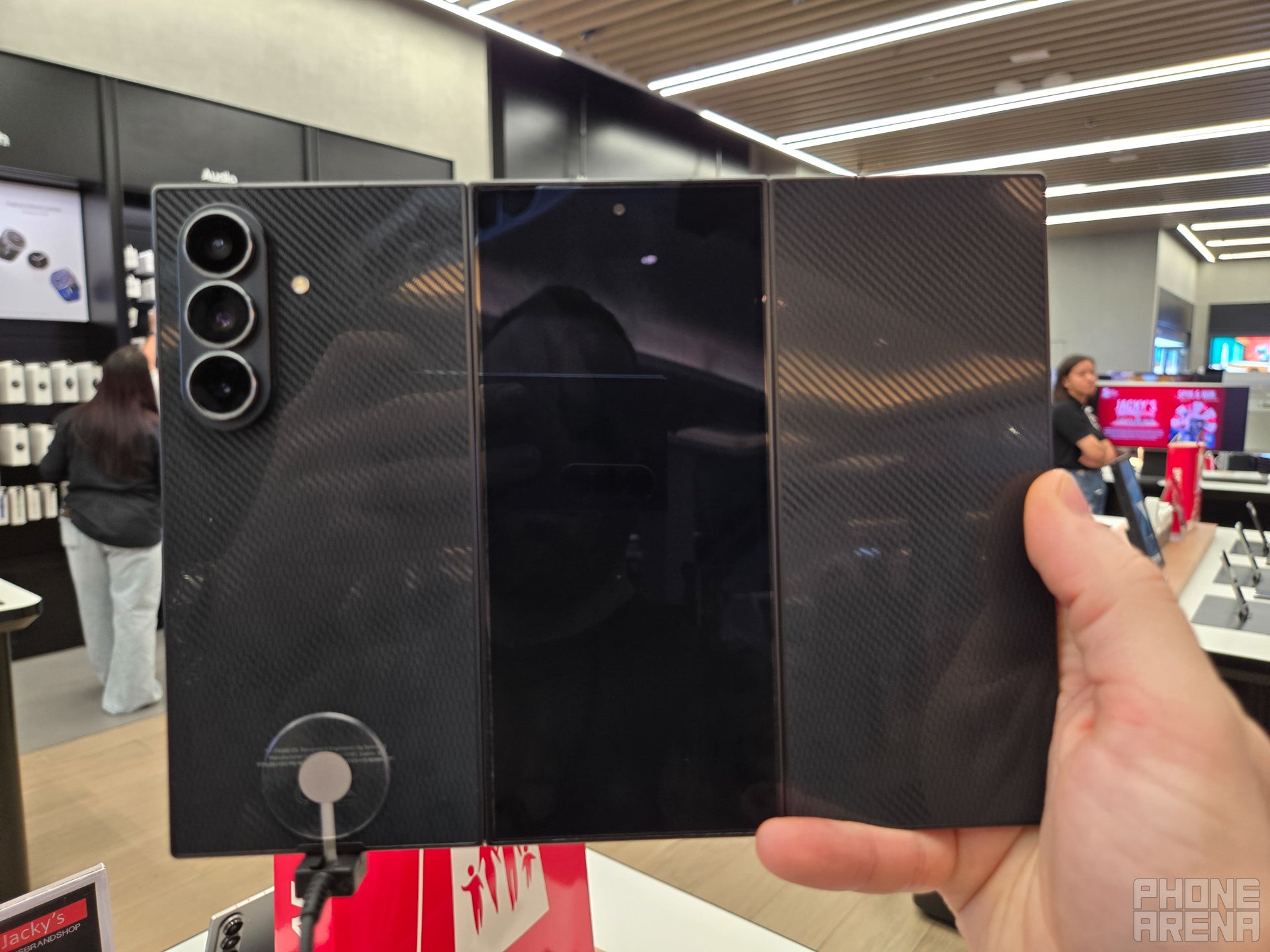
Despite these drawbacks, the Galaxy Z TriFold still looks super-cool and futuristic. Samsung has made sure to give it a unique, classy appearance which looks and feels great, especially the spectacular back panel design.
Obviously, the Z TriFold is super-expensive, but it’s clear these types of phones aren’t aimed at your average Joe. These are high-class, showcase pieces for a very specific group of customers, at least for the time being.
That said, the Z TriFold has a few advantages over Huawei’s Mate XT, namely — the presence of Google apps and services, as well as One UI, which is an extremely powerful software with a ton of useful features.
The other big advantage you get with Samsung is its multi-year (7!) commitment to software support, which is way ahead of Huawei’s. Actually, Huawei doesn’t commit to anything when it comes to software updates, and as a matter of fact, the global, EMUI variant of the Mate XT I’ve been using for the past year hasn’t even received a single software update. It’s got a pretty stable and capable software, but it’s not perfect, so an update or two would have been nice.
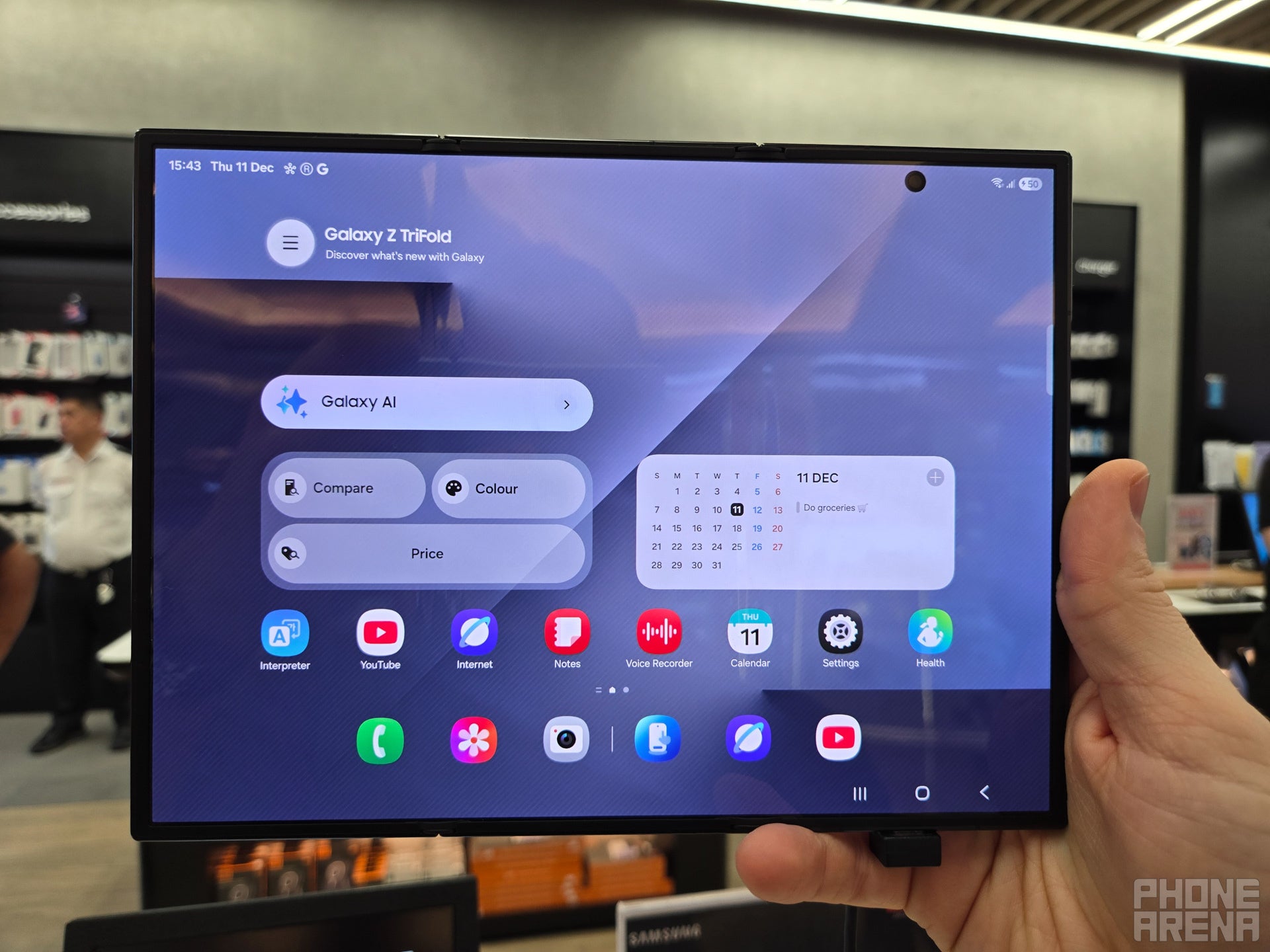
The reality is while these concerns are real, they probably don’t apply too much to these super-expensive, tri-folding phones yet, because these are almost like concept devices — meant to showcase the manufacturer’s vision for the future, as well as to show off its engineering excellence. They aren’t meant to sell in large quantities, like your regular flagships and even book-style foldables.
To sum up my brief time with the Samsung Galaxy Z TriFold (a bit of a mouthful, to be honest): I would have been mega-impressed if I hadn’t already been acquainted with the Mate XT. That said, it’s very possible that the Z TriFold actually many unique and unexpected advantages of its own, so I would not discard it just yet. I’ll wait until I have the chance to do a proper review (hopefully soon), and then I’ll be confident enough to make any conclusions
For the time being, it seems to me that Samsung still has some catching up to do, but at least it’s playing the game now.
Tell you what, if there was no Mate XT, the Galaxy Z TriFold would have been an extremely impressive piece of tech. But having had the Mate XT for a year on the global market, Samsung’s debut on the tri-folding scene, to me at least, didn’t feel like the breakthrough it’s supposed to be.
Also read:
- Samsung Galaxy Z TriFold vs Galaxy Z Fold 7: Main differences
- Samsung Galaxy Z TriFold vs Huawei Mate XT: Main differences
Design conundrums
Remember when Samsung and Huawei first launched their debut foldable phones? Samsung went for the book-style fold, with a large internal screen, and a dedicated cover display for folded operation. Huawei, on the other hand, chose a different form-factor where the display stayed on the outside as you folded the phone — this way, there was no need for a separate cover screen, but left the soft, flexible panel too exposed to the elements.
Eventually, the book-style foldable proved to be the more appropriate form-factor and Huawei switched to it after a few generations.
If you’ve seen images of the Galaxy Z Tri-Fold, you know it uses a different, U shape, and while that shape seems to be better in terms of delivering maximum protection for the internal display, it has some serious limitations.
When folded, the Galaxy Z Tri-Fold is quite a bulky device.
For example, Samsung’s TriFold phone once again needs an additional, cover screen panel to enable operation when folded. This inevitably raises the cost of production even more. It’s just a less efficient design.
The other practical drawback of this design, from a consumer’s perspective, is that you can’t use the Z TriFold as a book-style foldable. You can only use it fully folded (just the cover screen), or unfold it fully to enjoy the full 10” display. There is no mid-way position where you have two thirds of the screen at your disposal, like you have with the Huawei Mate XT.
Despite these drawbacks, the Galaxy Z TriFold still looks super-cool and futuristic. Samsung has made sure to give it a unique, classy appearance which looks and feels great, especially the spectacular back panel design.
The back panel design is really cool and creates a sense of luxury
One UI is the more practical choice for Western users
Obviously, the Z TriFold is super-expensive, but it’s clear these types of phones aren’t aimed at your average Joe. These are high-class, showcase pieces for a very specific group of customers, at least for the time being.
That said, the Z TriFold has a few advantages over Huawei’s Mate XT, namely — the presence of Google apps and services, as well as One UI, which is an extremely powerful software with a ton of useful features.
One UI running on the Samsung Z Tri-Fold
The reality is while these concerns are real, they probably don’t apply too much to these super-expensive, tri-folding phones yet, because these are almost like concept devices — meant to showcase the manufacturer’s vision for the future, as well as to show off its engineering excellence. They aren’t meant to sell in large quantities, like your regular flagships and even book-style foldables.
For the time being, it seems to me that Samsung still has some catching up to do, but at least it’s playing the game now.
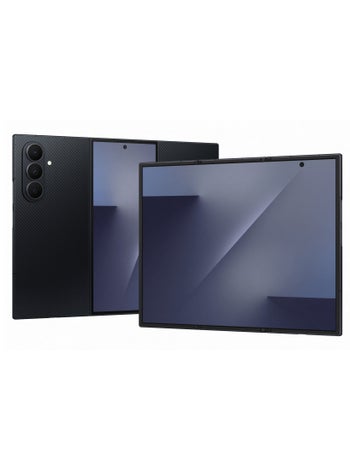
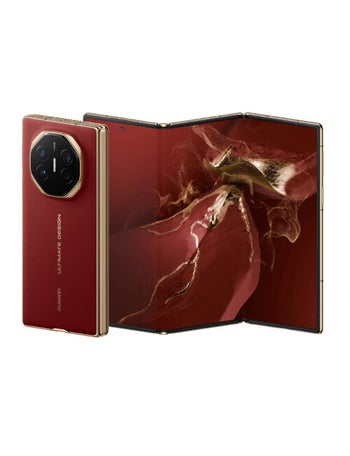
Galaxy Z TriFold vs Mate XT specs comparison
|
|
| Samsung Galaxy Z TriFold | Huawei Mate XT Ultimate Design |
| Dimensions | |
|---|---|
| 159.2 x 214.1 x 3.9 (~9 mm with camera bump) | 156.7 x 219 x 3.6 mm |
| Weight | |
| 309.0 g | 298.0 g |
| Size | |
|---|---|
| 10.0-inch | 10.2-inch |
| Type | |
| Dynamic AMOLED, 120Hz | OLED |
| System chip | |
|---|---|
| Snapdragon 8 Elite SM8750-AC (3 nm) | Kirin 9010 (7 nm) |
| Memory | |
| 16GB (LPDDR5X)/512GB (UFS) 16GB/1TB |
16GB/256GB 16GB/512GB 16GB/1024GB |
| OS | |
| Android (16) | HarmonyOS |
| Type | |
|---|---|
| 5600 mAh | 5600 mAh |
| Charge speed | |
| Wired: 45.0W Wireless: 15.0W |
Wired: 66.0W Wireless: 50.0W |
| Main camera | |
|---|---|
| 200 MP (OIS, PDAF) Aperture size: F1.7 Focal length: 24 mm Sensor size: 1/1.3" Pixel size: 0.6 μm |
50 MP (OIS, PDAF) Aperture size: F4.0/F1.4 Focal length: 24 mm |
| Second camera | |
| 12 MP (Ultra-wide, PDAF) Aperture size: F2.2 Focal Length: 13 mm Sensor size: 1/2.55" Pixel size: 1.4 μm |
12 MP (Ultra-wide) Aperture size: F2.2 Focal Length: 13 mm |
| Third camera | |
| 10 MP (Telephoto, OIS, PDAF) Optical zoom: 3.0x Aperture size: F2.4 Focal Length: 67 mm Sensor size: 1/3.94" Pixel size: 1.0 μm |
12 MP (Telephoto, Periscope, Sensor-shift OIS, PDAF) Optical zoom: 5.5x Aperture size: F3.4 Focal Length: 125 mm |
| Front | |
| 10 MP | 8 MP |
See the full
Samsung Galaxy Z TriFold vs Huawei Mate XT Ultimate Design specs comparison
or compare them to other phones using our
Phone Comparison tool


Popular stories



Latest News

Things that are NOT allowed:
To help keep our community safe and free from spam, we apply temporary limits to newly created accounts: