Benchmarking the Galaxy S26 Ultra vs S25 Ultra: here’s the level-up in gaming performance you can expect
The Galaxy S26 Ultra comes with the latest and greatest Snapdragon chipset, but how does it compare against the older Galaxy S25 Ultra.? We benchmark the pair.
We may earn a commission if you make a purchase from the links on this page.
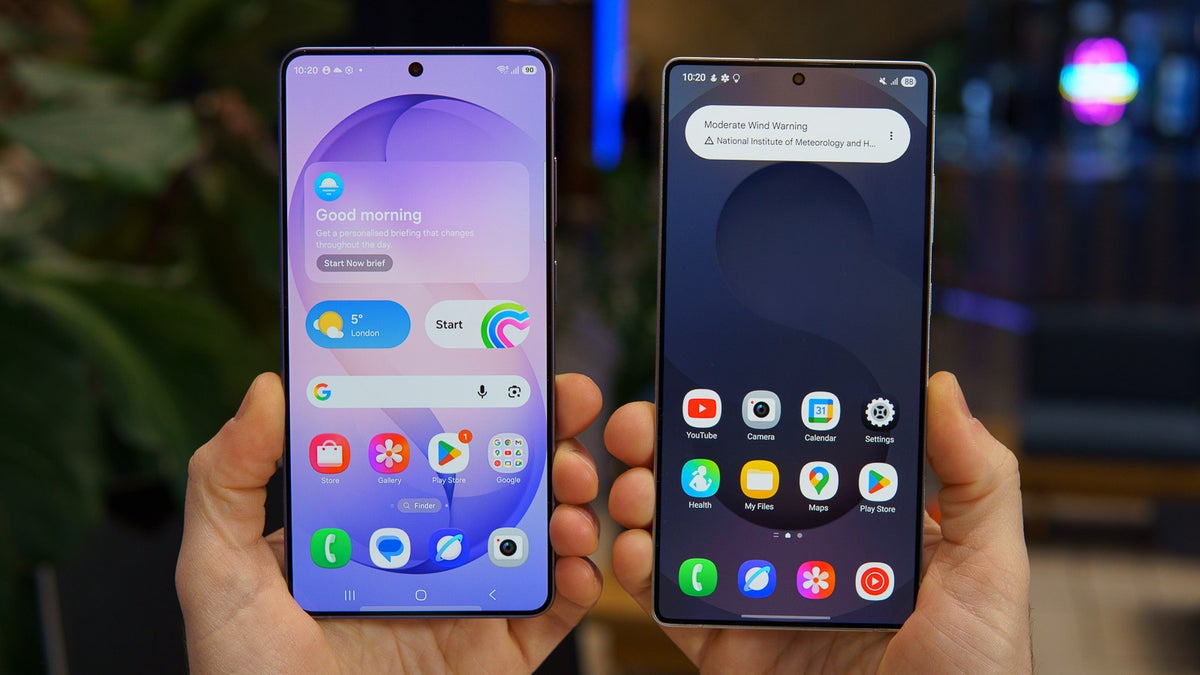
The Galaxy S26 Ultra improves on the Galaxy S25 Ultra in many ways, and performance is one of the key improvements. | Image by PhoneArena
Sponsored content created with Samsung.
Disclaimer
But raw performance is just part of the equation, as there’s much more than meets the eye on the Galaxy S26 Ultra as far as graphics performance goes.
Synthetic benchmarks comparison
Before we head to the gaming comparisons, let's tackle the hardware specs and some general performance benchmarks first.
Now, Galaxy flagships have almost always featured custom versions of Qualcomm’s top Snapdragon chipsets, with higher CPU and GPU clock speeds. This typically ensures a small lead ahead of other Android devices equipped with the regular Snapdragon chipset that year. That’s the case with both the Galaxy S26 Ultra and Galaxy S25 Ultra as well.
While both the Snapdragon 8 Elite Gen 5 and the older Snapdragon 8 Elite have identical core setups, the prime and performance cores of the new chip are clocked higher, ensuring a leg up in CPU-bound performance. The same applies to the Adreno 840 GPU, which runs at 1.3 GHz.
3DMark’s Solar Bay Extreme test is designed to evaluate a device’s ray tracing performance. The Extreme version of this test increases the ray tracing load by 3 to 5 times compared to the original Solar Bay. It adds ray-traced specular reflections for rough surfaces and transparent objects, as well as ray-traced soft shadows.
Here, the Galaxy S26 Ultra beats the Galaxy S25 Ultra by the skin of its teeth.
Overall, in terms of raw performance, the Galaxy S26 Ultra clearly edges past the Galaxy S25 Ultra in all the synthetic benchmarks. Generally, the phone delivers a solid improvement in heavy workloads, but the real improvement here is the efficiency and better thermal management.
[1] Galaxy AI - Samsung account login is required for certain AI features. Galaxy AI features are provided for free. Future releases may include additional advanced features that are offered as part of a paid subscription plan. Different terms may apply for AI features provided by third parties.
Now, Galaxy flagships have almost always featured custom versions of Qualcomm’s top Snapdragon chipsets, with higher CPU and GPU clock speeds. This typically ensures a small lead ahead of other Android devices equipped with the regular Snapdragon chipset that year. That’s the case with both the Galaxy S26 Ultra and Galaxy S25 Ultra as well.
| Specification | Galaxy S26 Ultra | Galaxy S25 Ultra |
|---|---|---|
| Chipset | Snapdragon 8 Elite Gen 5 for Galaxy | Snapdragon 8 Elite for Galaxy |
| Model number | SM8850-1-AD | SM8750-AC |
| Fab size | 3nm | 3nm |
| Prime cores | 2x Oryon V3 @4.74 GHz (+6%) | 2x Oryon V2 @4.47 GHz |
| Performance cores | 6x Oryon V3 @3.63 GHz (+3%) | 6x Oryon V2 @3.53 GHz |
| GPU | Adreno 840 @1.3 GHz | Adreno 830 @1.2 GHz |
How do the two phones perform in some general-use benchmarks? All benchmarks below were taken in similar conditions, with five minutes between tests to ensure that both devices had the chance to take a breather.
Geekbench 6
In the popular Geekbench 6, the Galaxy S26 Ultra flies past the Galaxy S25 Ultra and bests it in both the single- and multi-core tests.
| Geekbench 6 | Galaxy S26 Ultra | Galaxy S25 Ultra |
|---|---|---|
| Single-core test | 3643 (+18%) | 3094 |
| Multi-core test | 10984 (+15%) | 9542 |
Geekbench AI
In the AI-centric Geekbench AI benchmark, the Galaxy S26 Ultra also dominates the older flagship phone. This is mostly due to the major gains in NPU performance, which should greatly help with the on-device AI-processing of all the Galaxy AI[1] features present on the Galaxy S26 Ultra.
| Geekbench AI | Galaxy S26 Ultra | Galaxy S25 Ultra |
|---|---|---|
| Single precision score | 2869 (+3.5%) | 2772 |
| Half precision score | 4775 (+20%) | 3979 |
| Quantized score | 7015 (+33%) | 5262 |
AnTuTu
AnTuTu is one of the most popular complex benchmarks on Android, which measures multi-core CPU performance and general system performance. It has been used as a performance reference for years.
In the AnTuTu test, the Galaxy S26 Ultra easily bests the Galaxy S25 Ultra by a very wide margin.
In the AnTuTu test, the Galaxy S26 Ultra easily bests the Galaxy S25 Ultra by a very wide margin.
| AnTuTu | Galaxy S26 Ultra | Galaxy S25 Ultra |
|---|---|---|
| AnTuTu | 3466090 (+28%) | 2708189 |
PCMark
PCMark is a benchmark that also measures complex system performance as a compound score based on various isolated tests. It incorporates tests that tackle data manipulation, photo editing, video editing, and web browsing.
In the PCMark Work 3.0 test, the Galaxy S26 Ultra has a fairly tiny lead over its predecessor, but it’s a lead nonetheless.
In the PCMark Work 3.0 test, the Galaxy S26 Ultra has a fairly tiny lead over its predecessor, but it’s a lead nonetheless.
| PCMark | Galaxy S26 Ultra | Galaxy S25 Ultra |
|---|---|---|
| Work 3.0 score | 20213 (+1.3%) | 19940 |
Gaming Performance
3DMark Wild Life Extreme
Moving on to the 3D benchmarking, we kick things off with one of the most comprehensive cross-platform tools — 3DMark. It hosts different tests that aim to measure the overall graphics performance.
In particular, the Wild Life Extreme Stress Test aims to measure sustained performance during heavy gaming. The “High” score below indicates the peak performance in the beginning of the test, when the device hasn’t throttled yet, while the “Low” score indicates how the ensuing thermal throttling affects long-term performance.
In this test, the Galaxy S26 Ultra beats the Galaxy S25 Ultra.
In this test, the Galaxy S26 Ultra beats the Galaxy S25 Ultra.
| 3DMark Wild Life Extreme | Galaxy S26 Ultra | Galaxy S25 Ultra |
|---|---|---|
| High | 7801 (+25.7%) | 6208 |
| Low | 3741 (+25.5%) | 2981 |
3DMark Solar Bay Extreme (Ray Tracing)
3DMark’s Solar Bay Extreme test is designed to evaluate a device’s ray tracing performance. The Extreme version of this test increases the ray tracing load by 3 to 5 times compared to the original Solar Bay. It adds ray-traced specular reflections for rough surfaces and transparent objects, as well as ray-traced soft shadows.
| 3DMark Solar Bay Extreme | Galaxy S26 Ultra | Galaxy S25 Ultra |
|---|---|---|
| Score | 1117 (+12.3%) | 995 |
3DMark Solar Bay Extreme Stress Test
Unlike the standard 1-minute Solar Bay Extreme benchmark, the stress test runs the scene in a continuous loop for 20 minutes.
The idea is to measure fluctuations in performance as the device heats up. It outputs high results (typically at the beginning of the test) and low results (typically after throttling), with the contrast between the two indicating how stable the performance is.
The idea is to measure fluctuations in performance as the device heats up. It outputs high results (typically at the beginning of the test) and low results (typically after throttling), with the contrast between the two indicating how stable the performance is.
| 3DMark Solar Bay Extreme | Galaxy S26 Ultra | Galaxy S25 Ultra |
|---|---|---|
| High | 1117 | 1095 |
| Low | 701 | 738 |
| Stability | 62.8% | 62.4% |
The Galaxy S26 Ultra scores a small victory here in the “High” result, which shows the peak performance, but sadly, it slightly lags the Galaxy S25 Ultra in the “Low” result, which means that it has throttled a bit more seriously here.
The likely explanation here has to do with software optimization, as the newer Adreno 840 GPU might still lack the final software touches to squeeze the highest ray tracing performance. It’s also worth noting that the S26 Ultra’s processor reaches much higher clock speeds, generating significant heat, so the system might throttle quicker in this particular case.
We will retest the phone in a few weeks after the first updates arrive, and we expect this performance to improve with time.
We will retest the phone in a few weeks after the first updates arrive, and we expect this performance to improve with time.
Basemark GPU
Moving to the Basemark GPU test, the Galaxy S26 Ultra easily beats the Galaxy S25 Ultra in both total score and maximum framerates achieved.
| Basemark GPU | Galaxy S26 Ultra | Galaxy S25 Ultra |
|---|---|---|
| Official Medium | 41187 (+22.2%) | 33701 |
| Max FPS | 690 (+11%) | 621.9 |
Conclusion
Overall, in terms of raw performance, the Galaxy S26 Ultra clearly edges past the Galaxy S25 Ultra in all the synthetic benchmarks. Generally, the phone delivers a solid improvement in heavy workloads, but the real improvement here is the efficiency and better thermal management.


Popular stories



Latest News




Things that are NOT allowed:
To help keep our community safe and free from spam, we apply temporary limits to newly created accounts: