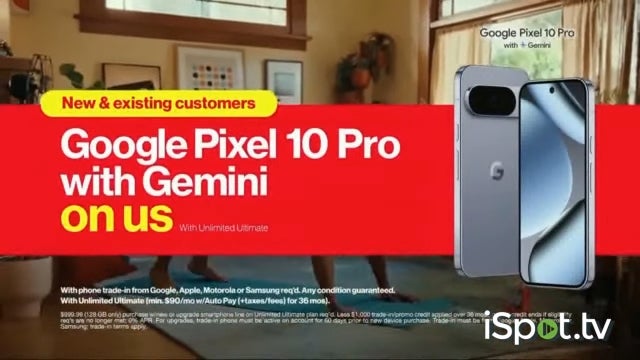
If you’ve ever shopped for a new phone, you know the carrier deals can be a bit of a mess, especially when they throw around the word "free." This time, Verizon got caught in the crossfire. AT&T filed a challenge with the National Advertising Division (NAD) over a Verizon commercial for the new Google Pixel 10 Pro.
According to AT&T, Verizon's ad implied you could get the shiny new Pixel for free on any of their plans. The problem? That wasn't the case. The offer was reportedly only available to customers signing up for Verizon's most expensive plan, the Unlimited Ultimate tier.
Before the NAD, an advertising watchdog, could even dive into the merits of the case, Verizon informed them it was permanently discontinuing the commercial. As a result, the NAD closed the case, which for compliance purposes, is the same as if they had ruled against Verizon.
Although the ad has been officially pulled, you can still (for now) watch the ad here.
Recommended For You
Why this carrier spat matters for you
A snapshot from the Verizon ad in question, which has now been taken off the air. | Image credit — BBC TV 2 YouTube Channel
This isn't just about two telecom giants bickering; it's a perfect example of why you have to be careful with carrier promotions. The word "free" almost always comes with a hefty asterisk. While AT&T played the hero here by calling out a competitor, let's be real—they run the exact same kind of promotions.
These "free phone" deals typically work by applying monthly bill credits over a 24 or 36-month contract. You're required to stick with a specific, often premium, unlimited plan for that entire duration. If you decide to switch carriers or downgrade your plan early, you'll suddenly owe the remaining balance on the "free" phone.
It’s a classic lock-in strategy used by all major carriers to keep you on their most profitable plans. So, while Verizon's ad may have been a step too far in its vagueness, the underlying practice is standard across the industry.
Do you think wireless carriers need a watchdog, like the NAD, to supervise advertising claims?
191 Votes
Yes, otherwise they'd go rogue taking advantage of consumers
96.34%
No, it should be up to the consumers to catch false claims.
3.66%
Always read the fine print
This situation is just another Tuesday in the wireless world. Carrier advertising is often designed to be just enticing enough to get you in the door, leaving the important details buried in the fine print. Verizon pulling the ad was the right move, but it’s a shame it took a legal challenge from a direct competitor to make it happen.
My personal advice? Treat every "free" phone offer with a healthy dose of skepticism. Before you sign anything, calculate the total cost over the entire contract period, including the expensive monthly plan you're tied to. Often, you might find that buying the phone unlocked and finding a more affordable plan actually saves you money in the long run. This incident is just one more reminder that when it comes to carrier deals, you have to be your own best advocate.
2-3 Related Stories (bulleted)
2-3 Related Stories (bulleted)
Free Galaxy A17 5G with Straight Talk
Get a free Galaxy A17 with Straight Talk. To claim this deal, you need to pair the phone with activation on a Silver Unlimited Plan or higher. This tier costs $45 per month. Offer valid through 01/10/27 while supplies last online.
Johanna Romero is a Senior News Writer at PhoneArena, covering mobile technology news across Android, iOS, wearables, and the Google ecosystem she knows best. Drawing on 15 years in IT and tech support from 2007 to 2022, she brings a user-friendly eye for the practical features and lesser-known tricks readers care about. Google named her an official #TeamPixel member in 2022, and she also reviews the latest devices on her YouTube channel, JoJo the Techie.
A discussion is a place, where people can voice their opinion, no matter if it
is positive, neutral or negative. However, when posting, one must stay true to the topic, and not just share some
random thoughts, which are not directly related to the matter.
Things that are NOT allowed:
Off-topic talk - you must stick to the subject of discussion
Offensive, hate speech - if you want to say something, say it politely
Spam/Advertisements - these posts are deleted
Multiple accounts - one person can have only one account
Impersonations and offensive nicknames - these accounts get banned
To help keep our community safe and free from spam, we apply temporary limits to newly created accounts:
New accounts created within the last 24 hours may experience restrictions on how frequently they can
post or comment.
These limits are in place as a precaution and will automatically lift.
Moderation is done by humans. We try to be as objective as possible and moderate with zero bias. If you think a
post should be moderated - please, report it.
Have a question about the rules or why you have been moderated/limited/banned? Please,
contact us.












Things that are NOT allowed:
To help keep our community safe and free from spam, we apply temporary limits to newly created accounts: