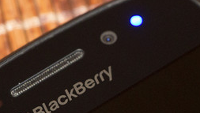
BlackBerry Z10
Verizon - Available (since 22 Mar 2013) AT&T - Available (since 22 Mar 2013) T-Mobile - Available (since 11 Mar 2013)
Pros
- High-resolution display (768 x 1280 pixels)
- Extremely high pixel density screen, over 300ppi (356 ppi)
- High-resolution camera (8 megapixels)
- Dual core processor
- Lots of RAM (2048 MB RAM)
- Fast mobile data support (4G)
- NFC
- HDMI connector for TV-out (Micro HDMI (Type D))
Cons
No consDescription
Design
Display 
- Physical size:
- 4.2 inches
- Resolution:
- 768 x 1280 pixels
- Pixel density:
Pixel density - The pixel density of a display represents the number of pixels over an area of one inch. It’s measured in “pixels per inch”, or ppi. The higher the number, the more detailed and good-looking the display is.
- 356 ppi
- Colors:
- 16 777 216
- Touchscreen:
- Multi-touch
- Features:
- Light sensor, Proximity sensor
Battery
- Talk time (3G):
- 10.00 hours
the average is 9 h (532 min)
- 10.00 hours
- Stand-by time (3G):
- 13.0 days (312 hours)
the average is 24 days (565 h)
- 13.0 days (312 hours)
- Capacity:
- 1800 mAh
Hardware
- System chip:
System chip - Most modern handsets use an advanced chip that includes many of the device’s hardware modules like the processor, Wi-Fi, Bluetooth and sometimes even the wireless radio. This field shows what particular system chip (or System-on-a-Chip) is used in the phone.
- Qualcomm Snapdragon S4 Plus MSM8960
- Processor:
Processor - The processor is the main computing component of a phone and is a major factor when it comes to the overall speed of the device. Some more powerful smartphones use dual-core and quad-core processors designed to deliver greater performance.
- Dual core, 1500 MHz, Krait
- Graphics processor:
- Adreno 225
- System memory:
System memory - System memory, or RAM memory is the type of memory that the device uses to temporarily store data from the OS or currently-running apps. The more RAM available to the device, the better the performance will be when multiple or heavier programs are running.
- 2048 MB RAM
- Built-in storage:
- 16 GB
- Storage expansion:
- microSD, microSDHC, microSDXC up to 64 GB
Camera
- Camera:
- Flash:
- LED
- Aperture size:
Aperture size - The aperture of a camera is the opening through which light travels before it reaches the camera sensor. The smaller the number is, the bigger this opening is, allowing for more light to pass.
- F2.2
- Features:
- Auto focus, Touch to focus, Digital image stabilization
- Camcorder:
- 1920x1080 (1080p HD)
- Features:
- Digital image stabilization
- Front-facing camera:
- 2 megapixels
Multimedia 
- Music player:
- Filter by:
- Album, Artist, Playlists
- Features:
- Album art cover, Background playback
- Filter by:
- Speakers:
- Earpiece, Loudspeaker
Technology
- GSM:
- 850, 900, 1800, 1900 MHz
- UMTS:
- 850, 1700/2100, 1900, 2100 MHz
- LTE:
- 700 MHz Class 17, 850 MHz, 1700/2100 MHz, 1900 MHz
- Data:
- LTE, HSPA (unspecified), UMTS, EDGE, GPRS
- Positioning:
Positioning - This field shows the positioning systems supported by the device. There are three main types: GPS, A-GPS and GLONASS. GPS - This is one of the most widespread global positioning technologies, developed and maintained by the U.S. government. It uses satellites in order to detect your location. Works best in clear weather. A-GPS - A-GPS stands for Assisted GPS and is the industry standard for positioning and navigation. “Assisted” means that it can use local wireless networks, in addition to satellites, for quicker and more precise localization. GLONASS - GLONASS is a global positioning system, developed by the Russian Federation. It’s very similar to GPS, but isn’t so popular in cell phones.
- GPS, A-GPS
- Navigation:
- Yes
Connectivity
- Bluetooth:
- 4.0
- Wi-Fi:
- 802.11 a, b, g, n, n 5GHz
- Mobile hotspot:
- Yes
- USB:
- USB 2.0
- Connector:
- microUSB
- Features:
- Mass storage device, USB charging
- HDMI:
- Micro HDMI (Type D)
- Other:
- NFC, Tethering, Computer sync, OTA sync
Other features
- Notifications:
- Haptic feedback, Music ringtones (MP3), Polyphonic ringtones, Vibration, Flight mode, Silent mode, Speakerphone
- Sensors:
- Accelerometer, Gyroscope, Compass
- Voice dialing, Voice commands, Voice recording, TTY/TDD
Availability
- Officially announced:
- 30 Jan 2013
To see the full specifications with in-depth details click here.
This device is also known as BlackBerry Surfboard, BlackBerry London
Alternative variants
We list only the specs that are different than the main variant
BlackBerry Z10
(Verizon Wireless)- CDMA:
CDMA - Code Division Multiple Access. A technique of multiplexing, also called spread spectrum, in which analog signals are converted into digital form for transmission. For each communication channel, the signals are encoded in a sequence known to the transmitter and the receiver for that channel. The foremost application is digital cellular phone technology from QUALCOMM that operates in the 800MHz band and 1.9GHz PCS band. CDMA phones are noted for their excellent call quality and long battery life.
- 800, 1900 MHz
- GSM:
- 850, 900, 1800, 1900 MHz
- UMTS:
- 900, 2100 MHz
- LTE:
- 700 MHz Class 13
Despite our efforts to provide full and correct BlackBerry Z10 specifications, there is always a possibility of making a mistake. If you see any wrong or incomplete data, please LET US KNOW.
If you are interested in using our specs commercially, check out our Phone specs database licensing page.
Share this page:
Check prices
| Carrier | New Contract | Contract Extension | Add a Line | Phone Only | |
| $49.99 | $99.99 | $49.99 | $619.99 | Buy | |
| $199.99 | $199.99 | $269.99 | $615.99 | Buy |