While the tech world loudly wonders when Samsung will "catch up" and put silicon-carbon batteries in our phones, the reality is a bit more nuanced. Samsung isn't behind the curve—they are just driving on a completely different road. The company is already deep into advanced battery tech for electric vehicles, but for your next Galaxy smartphone, the plan isn't silicon-carbon; it’s a clever internal rearrangement called "stacking" and a future built on solid-state power.
The great silicon misunderstanding
There is a popular narrative floating around that Samsung is lagging behind Chinese competitors when it comes to battery innovation. It’s an easy story to believe when you look at the spec sheets, but it is fundamentally flawed. In reality, Samsung SDI—the division responsible for battery tech—is a juggernaut. They are actively producing high-energy-density products that are frankly incredible; they just aren't putting them in your pocket.
Samsung SDI is currently applying its proprietary Silicon Carbon Nanocomposite (SCN) anodes to heavy-duty products like their prismatic P6 batteries and the cylindrical 46-phi batteries. Think of SCN as a "super-anode" that allows for massive energy storage and faster charging. These aren't just experimental prototypes sitting in a dusty lab; they are real production units.
Samsung has been developing this technology since as early as 2015 and officially announced their proprietary SCN anode back in August 2020. Right now, they have 4-5 active contracts to supply major electric vehicle (EV) manufacturers with these batteries.
So, at the risk of sounding like a "Samsung Knight" (which I am not), I have to admit that the criticism that Samsung is "avoiding" silicon-carbon technology is not completely accurate. They are simply channeling all that innovation into the automotive sector, where the demand for high-density energy—and the profit margins—are much higher.
This distinction matters because it explains why our phones look the way they do, and specifically clears up the confusion surrounding the recently released Samsung Galaxy Z TriFold.
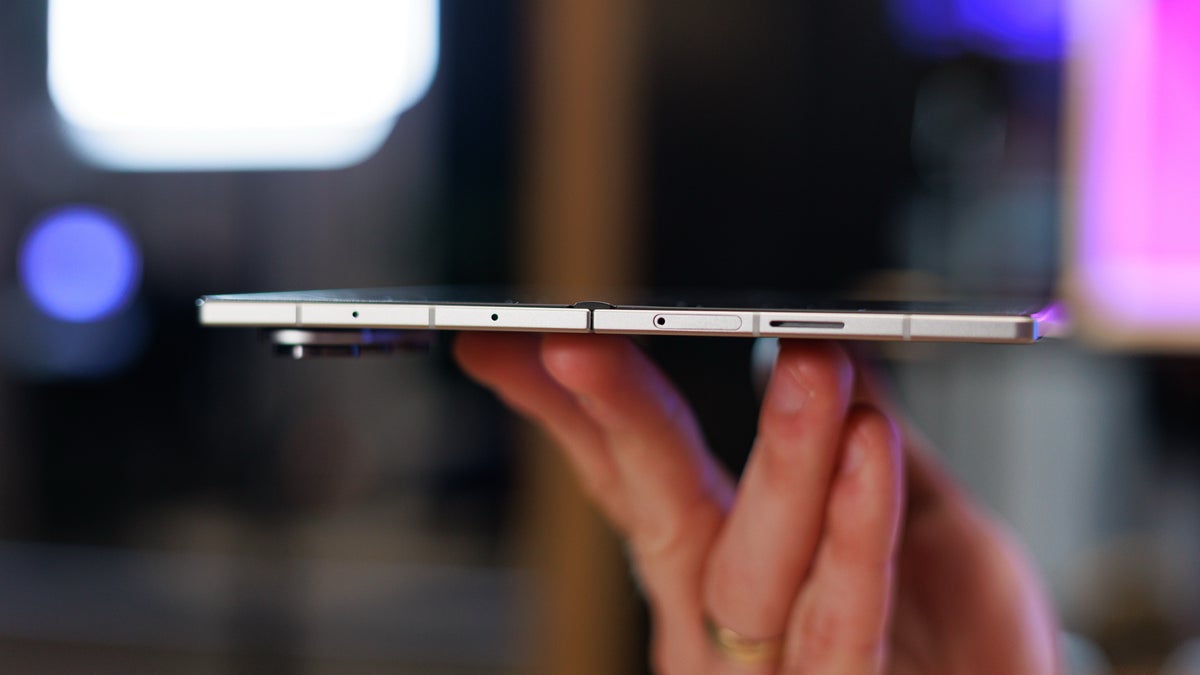
There is a widespread rumor that the TriFold’s massive 5,600mAh capacity is due to silicon-carbon technology. It is easy to see why people think that—Chinese competitors like Honor and Xiaomi do use Si-C to hit those numbers. However, the Galaxy Z TriFold achieves this feat differently. It uses a unique three-cell battery system combined with Samsung's "M-Line" stacking technology.
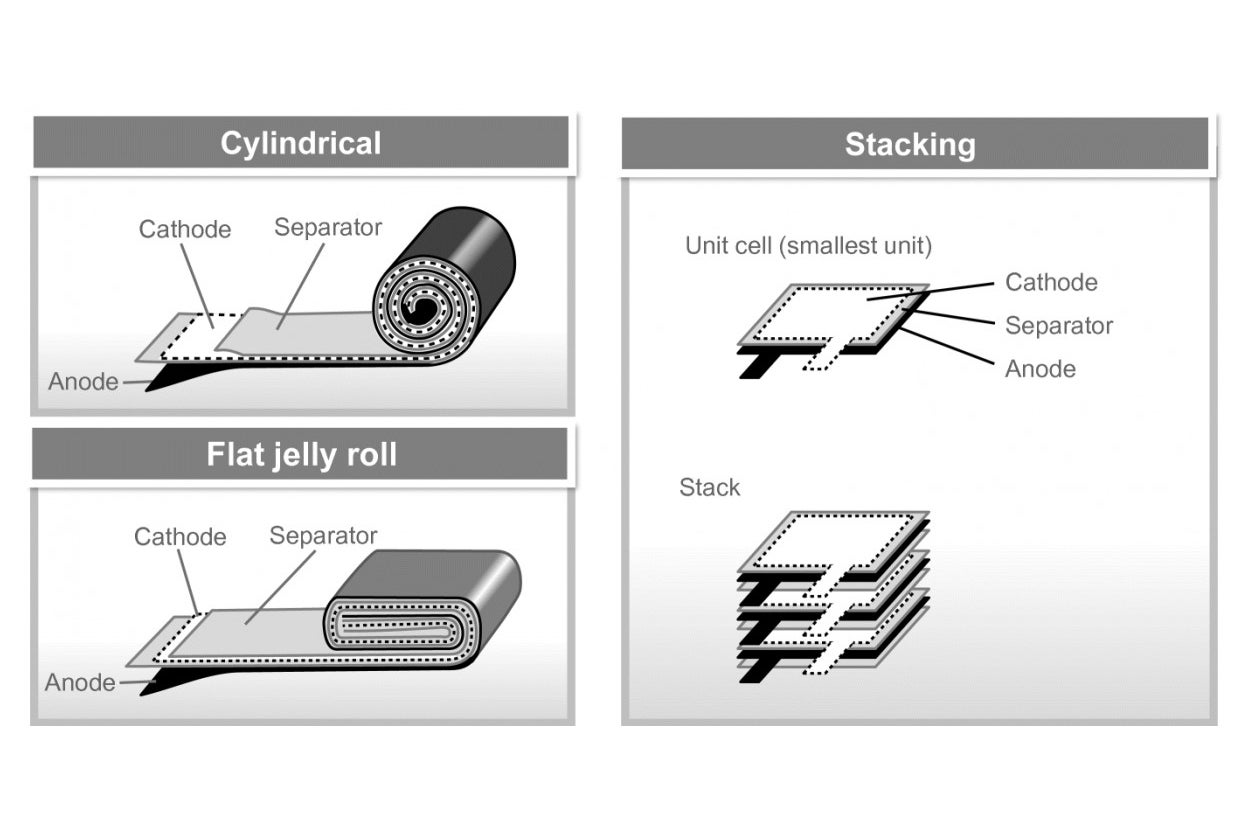
To understand the M-Line, think of packing a suitcase. Traditional batteries are like rolling up your clothes (the "jelly roll" method)—it works, but it leaves gaps of wasted space in the corners. The M-Line uses a "stacking method," which is like folding your clothes perfectly flat and stacking them. You fit more "clothes" (active material) into the exact same suitcase. This increases capacity without making the battery bigger or changing the chemical ingredients inside.
The move to M-Line technology should be a practical upgrade that boosts battery life while respecting Samsung’s strict safety standards. It might not sound as futuristic as "silicon-carbon," but it solves the problem of keeping foldables thin without sacrificing power.
If Samsung uses the "M-Line" stacking method to keep the same 5,000mAh capacity but makes the phone thinner, are you happy?
796 Votes
No. Give me a thicker phone with more battery life!
69.6%
Yes. Phones are getting too big; I prefer thinner, lighter.
19.85%
Only if the charging speed is significantly faster.
10.55%
The solid-state endgame starts with a ring
From my perspective, the tech community needs to stop waiting for a Samsung silicon-carbon phone. The writing has been on the wall for years: Samsung Mobile is skipping that step. Their endgame is what they consider the "Holy Grail" of batteries: ASSBs, or All-Solid-State Batteries.
This makes perfect sense. The Ring is tiny, wears close to the skin, and needs to be ultra-safe. It is the perfect testing ground for this revolutionary tech. If Samsung were planning to bring their EV silicon tech to phones, we would have seen it by now. Instead, they are bridging the gap with the M-Line stacking method until solid-state is ready for prime time.
So, while the Galaxy S26 and Z Fold 8 might not have the trendy specs of their Chinese rivals, they represent a strategy that prioritizes long-term safety and the eventual jump to solid-state. It might be a boring answer for now, but if you are waiting for a battery revolution from Samsung, keep your eyes on the Ring, not the phone.
Get a free Galaxy A17 with Straight Talk. To claim this deal, you need to pair the phone with activation on a Silver Unlimited Plan or higher. This tier costs $45 per month. Offer valid through 01/10/27 while supplies last online.
Johanna Romero is a Senior News Writer at PhoneArena, covering mobile technology news across Android, iOS, wearables, and the Google ecosystem she knows best. Drawing on 15 years in IT and tech support from 2007 to 2022, she brings a user-friendly eye for the practical features and lesser-known tricks readers care about. Google named her an official #TeamPixel member in 2022, and she also reviews the latest devices on her YouTube channel, JoJo the Techie.
A discussion is a place, where people can voice their opinion, no matter if it
is positive, neutral or negative. However, when posting, one must stay true to the topic, and not just share some
random thoughts, which are not directly related to the matter.
Things that are NOT allowed:
Off-topic talk - you must stick to the subject of discussion
Offensive, hate speech - if you want to say something, say it politely
Spam/Advertisements - these posts are deleted
Multiple accounts - one person can have only one account
Impersonations and offensive nicknames - these accounts get banned
To help keep our community safe and free from spam, we apply temporary limits to newly created accounts:
New accounts created within the last 24 hours may experience restrictions on how frequently they can
post or comment.
These limits are in place as a precaution and will automatically lift.
Moderation is done by humans. We try to be as objective as possible and moderate with zero bias. If you think a
post should be moderated - please, report it.
Have a question about the rules or why you have been moderated/limited/banned? Please,
contact us.









Things that are NOT allowed:
To help keep our community safe and free from spam, we apply temporary limits to newly created accounts: