
Editorials · Insider Reaction
The iPhone 18 Pro Max could prove size doesn't matter
iPhone 18 Pro Max will reportedly offer excellent on-screen time even without including a massive battery.
This article may contain personal views and opinion from the author.
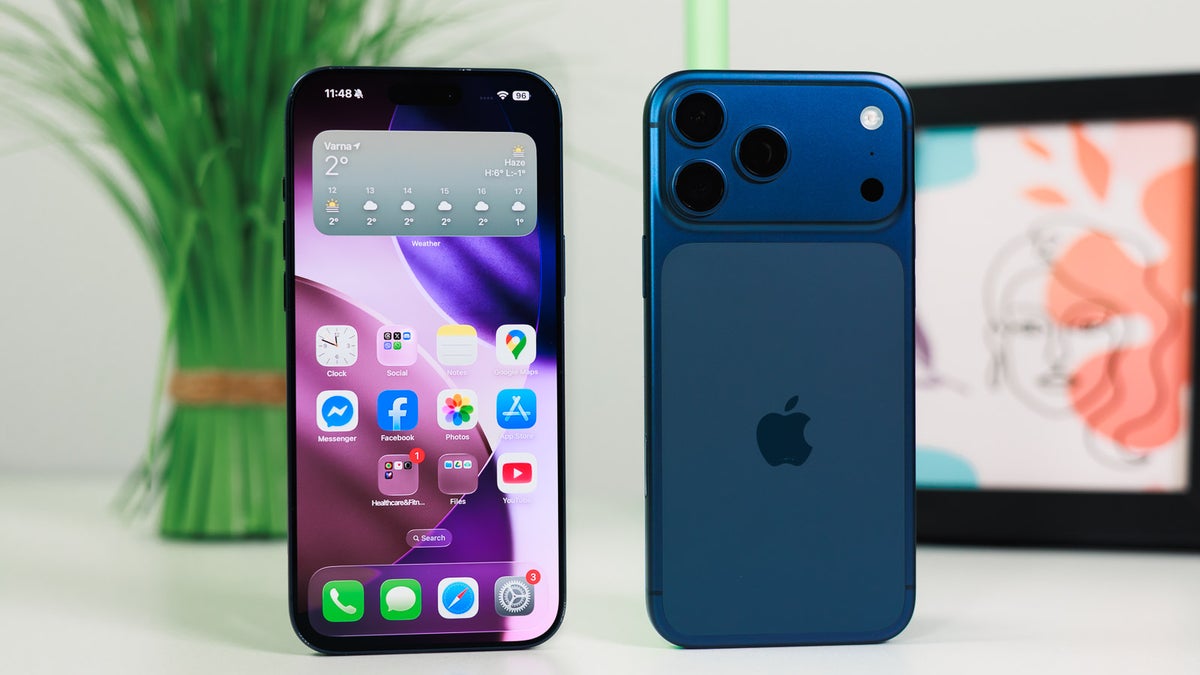
iPhone 17 Pro Max. | Image by PhoneArena
Apple has always been criticized for the battery life of its iPhones. For instance, the iPhone 17 features a 3,692 mAh cell, which is very small when you compare it to flagships of Chinese brands like the OnePlus 15 that comes with a 7,300 mAh battery.
While the chances of the company taking a big leap and touching the 6,000–7,000 mAh mark in the upcoming iPhone 18 series seem very slim, the iPhone 18 Pro Max could actually last for as long as an Android phone with a 7,000 mAh cell. Here's why I think that's actually good news.
A reliable tipster, Ice Universe, claims that the eSIM model and the non-eSIM variant of the iPhone 18 Pro Max will feature 5,567 mAh and 5,391 mAh cells, respectively. This number looks very average when compared to even mid-range Chinese phones like the OnePlus Nord 6.
However, the tipster believes that thanks to the efficiency of the latest A20 Pro chip, optimized iOS, and the new thermal design, the phone will be able to outlast Android phones that feature 7,000 mAh batteries. I think that's actually possible.
While the chances of the company taking a big leap and touching the 6,000–7,000 mAh mark in the upcoming iPhone 18 series seem very slim, the iPhone 18 Pro Max could actually last for as long as an Android phone with a 7,000 mAh cell. Here's why I think that's actually good news.
Bigger isn't always better
A reliable tipster, Ice Universe, claims that the eSIM model and the non-eSIM variant of the iPhone 18 Pro Max will feature 5,567 mAh and 5,391 mAh cells, respectively. This number looks very average when compared to even mid-range Chinese phones like the OnePlus Nord 6.
In our in-house testing, we found that last year's iPhone 17 Pro Max offered a battery life of 7 hours and 46 minutes. In comparison, the Vivo X300 Pro, which has a 6,510 mAh battery, only lasted for 6 hours and 30 minutes. The same has been the story with most iPhones compared with Android devices.
In fact, this is the case between Android phones as well, where phones like the Xiaomi 17 Ultra with a 6,800 mAh cell lasted for more than 9 hours in our testing, whereas the OnePlus 15R with a 7,400 mAh battery died after 8 hours and 47 minutes of usage. The direct comparison of a mid-range and flagship product is definitely not right, but the thing I want to point out here is that a bigger battery doesn't always mean more life. Some phones with even smaller battery capacities could outlast those with bigger battery sizes because of chip efficiency and software optimization.
I believe a similar story could happen with the iPhone 18 Pro Max, as its upcoming A20 Pro chip is rumored to be 30% more power efficient, and iOS 27 is also being optimized more than iOS 26. I strongly think that all these other improvements could easily compensate for the extra 1,500–2,000 mAh cell we see in Android phones. However, I would take all such claims with a healthy dose of skepticism and wait for real-life battery drain tests before coming to a conclusion.
The only reason behind this is the battery technology that Apple is using. It is currently using a lithium-ion battery, whereas Chinese manufacturers like Honor, OnePlus, and more have switched to silicon-carbon technology.
The main benefit of using the latter is that it can store more charge without compromising on battery thickness. This is the main reason why we're seeing 7.98 mm thick phones touching the 10,000 mAh figure. But at the same time, devices like the iPhone 17 Pro that have a thickness of 8.7 mm feature only 3,988 mAh cells.
There's one big concern with using the new battery technology. You see, the size of your smartphone battery grows when it is put on charge, and it then automatically shrinks when the charge drops. In lithium-ion batteries, this change is roughly around 10%; however, in silicon-carbon tech, the battery could expand by up to 300% in volume.
Such massive expansion can lead to serious issues like the battery swelling up. To ensure this doesn't happen, the amount of carbon is increased in the battery, which in turn makes it more stable. However, it's also worth noting that the more carbon used in the silicon-carbon battery, the less energy it will carry.
So, the 10,000 mAh batteries of phones like the Honor Power 2 or Realme P4 Power feature less carbon than the 7,300 mAh battery of the OnePlus 15. That doesn't mean the first two are completely unsafe to use. The technology has evolved a lot in recent times, and any device with such a massive battery goes through rigorous testing before it is made public.
In essence, the technology is still very new, and big brands like Apple, Google, and Samsung might be waiting for more development in it before adopting it in their products.
As you would have guessed by now, I'm a big supporter of real-world screen-on time instead of phones that come with big battery numbers but don't last long because of poor chip efficiency and software optimization. However, I feel thrilled just imagining how great iPhone battery performance would become once Apple adopts silicon-carbon technology.
The 5,391 mAh iPhone 18 Pro Max is already believed to be offering the battery life of 7,000 mAh Android phones. So, if you finally get an iPhone with a 7,000 mAh Si-C battery, then thanks to iOS optimization and the A-series chip, we could expect the phone to easily compete against devices with at least 8,000 mAh cells. Unfortunately, when Apple will indeed start using the new battery tech is still a mystery.
Still, why doesn't Apple offer big batteries?
The iPhone 18 Pro Max will feature a 5567mAh battery, which is already an impressive number by itself.
— Ice Universe (@UniverseIce) July 4, 2026
If we also take into account the expected efficiency improvement of the A20 Pro, the sustained performance gains from the new thermal design, and iOS’s excellent system…
The only reason behind this is the battery technology that Apple is using. It is currently using a lithium-ion battery, whereas Chinese manufacturers like Honor, OnePlus, and more have switched to silicon-carbon technology.
The main benefit of using the latter is that it can store more charge without compromising on battery thickness. This is the main reason why we're seeing 7.98 mm thick phones touching the 10,000 mAh figure. But at the same time, devices like the iPhone 17 Pro that have a thickness of 8.7 mm feature only 3,988 mAh cells.
What one change would you really like to see in the iPhone 18 Pro Max?
109 Votes
Better battery life.
44.95%
Fewer AI features.
7.34%
Return of a titanium body.
15.6%
Lighter weight and thinner than the iPhone 17 Pro Max.
32.11%
What's stopping Apple from adapting silicon carbon tech?
There's one big concern with using the new battery technology. You see, the size of your smartphone battery grows when it is put on charge, and it then automatically shrinks when the charge drops. In lithium-ion batteries, this change is roughly around 10%; however, in silicon-carbon tech, the battery could expand by up to 300% in volume.
Such massive expansion can lead to serious issues like the battery swelling up. To ensure this doesn't happen, the amount of carbon is increased in the battery, which in turn makes it more stable. However, it's also worth noting that the more carbon used in the silicon-carbon battery, the less energy it will carry.
In essence, the technology is still very new, and big brands like Apple, Google, and Samsung might be waiting for more development in it before adopting it in their products.
Imagine Apple optimization combined with silicon carbon tech
As you would have guessed by now, I'm a big supporter of real-world screen-on time instead of phones that come with big battery numbers but don't last long because of poor chip efficiency and software optimization. However, I feel thrilled just imagining how great iPhone battery performance would become once Apple adopts silicon-carbon technology.


Popular stories



Latest News

![The Galaxy SmartTag 3 is here offering an alternative to the AirTag for iPhone users [UPDATED]](https://m-cdn.phonearena.com/images/article/183654-wide-two_350/The-Galaxy-SmartTag-3-is-here-offering-an-alternative-to-the-AirTag-for-iPhone-users-UPDATED.webp)



Things that are NOT allowed:
To help keep our community safe and free from spam, we apply temporary limits to newly created accounts: