
T-Mobile 5G is no longer just for calls and data
T-Mobile's network is undergoing a powerful transformation.
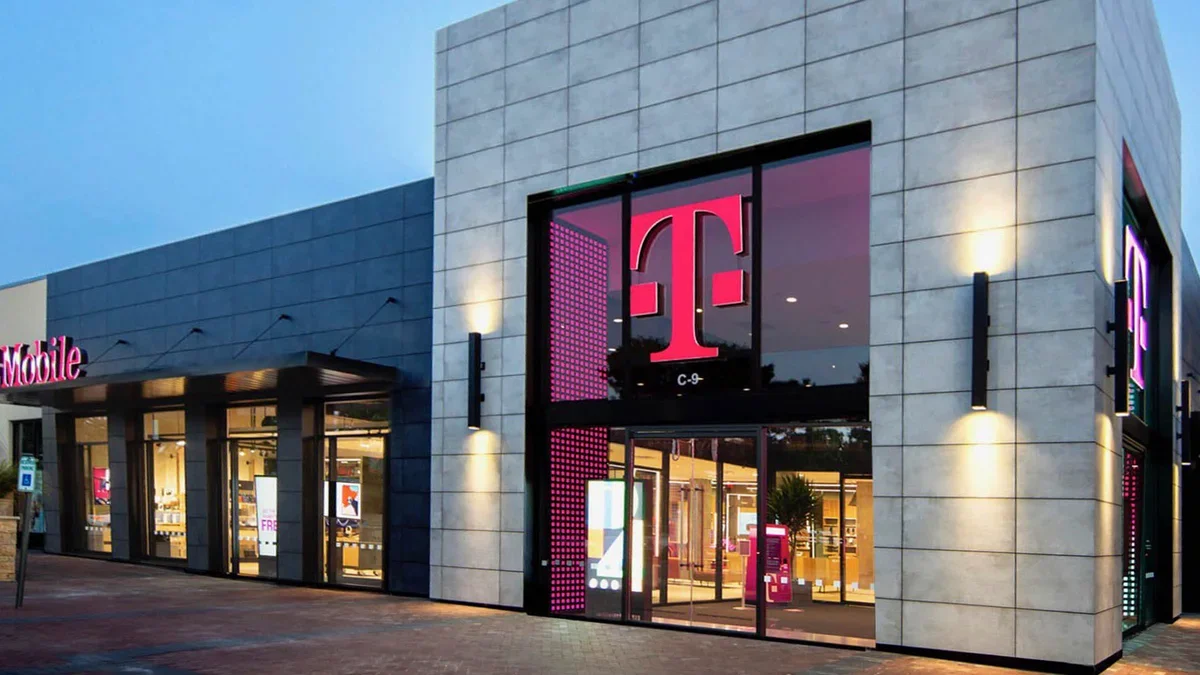
A T-Mobile store in Texas. | Image by Triad
T-Mobile has started pivoting to physical AI — systems that interact with the real world. The carrier is working with Nvidia, Nokia, and developers to execute its vision and turn its network into an AI system.
Instead of relying on data centers, T-Mobile is testing Nvidia's TX PRO 6000 Blackwell Server Edition GPU directly on its cell towers. This proximity makes AI systems faster and more responsive, allowing for complex, real-time actions such as optimizing traffic light timing, scanning power lines for problems, and monitoring dangerous work environments to prevent accidents.
The City of San Jose is already trialing the new tech.
Developers are using Nvidia's Metropolis VSS 3 Blueprint to analyze hours of video instantly to summarize the content, making it easier to identify specific events.
These initiatives align with T-Mobile's broader strategy of transforming its network into an AI computing platform, allowing AI to run in many locations, not just the cloud. T-Mobile's network provides the speed and expansive reach that Wi-Fi lacks to run AI agents.
By offloading tasks to the network, cameras and robots no longer require expensive, powerful hardware, which makes it easier to deploy AI at a massive scale.
Autonomous AI systems require instantaneous feedback, making faraway data centers impractical. As carriers already manage millions of devices and real-time communication, their role is becoming central to the AI era.
While networks won't replace data centers, they will complement them as infrastructure for connecting different AI edge systems.
T-Mobile's effort feeds into its focus on the development of 6G, which will have AI woven into the architecture.
While 6G deployment isn't expected to begin until 2029, T-Mobile's 5G network is already evolving from a simple data pipeline into a computing platform that can support AI workloads. T-Mobile's collaborative effort with Nvidia and Nokia will speed up the deployment of intelligent AI systems across cities and industrial areas, without impacting its 5G service. Their work will serve as a blueprint for AI-powered networks across the world.
Impactful changes
Instead of relying on data centers, T-Mobile is testing Nvidia's TX PRO 6000 Blackwell Server Edition GPU directly on its cell towers. This proximity makes AI systems faster and more responsive, allowing for complex, real-time actions such as optimizing traffic light timing, scanning power lines for problems, and monitoring dangerous work environments to prevent accidents.
Developers are using Nvidia's Metropolis VSS 3 Blueprint to analyze hours of video instantly to summarize the content, making it easier to identify specific events.
These initiatives align with T-Mobile's broader strategy of transforming its network into an AI computing platform, allowing AI to run in many locations, not just the cloud. T-Mobile's network provides the speed and expansive reach that Wi-Fi lacks to run AI agents.
With the first nationwide 5G Standalone and 5G Advanced network, we are uniquely positioned to help power a future where intelligent systems don’t wait on the cloud but rely on intelligent networks that allow them to act in real time.
Srini Gopalan, T-Mobile CEO, March 2026
The path to 6G
Autonomous AI systems require instantaneous feedback, making faraway data centers impractical. As carriers already manage millions of devices and real-time communication, their role is becoming central to the AI era.
While networks won't replace data centers, they will complement them as infrastructure for connecting different AI edge systems.
What changes are you expecting as T-Mobile's network undergoes a transformation?
255 Votes
Another reason to hike rates.
64.71%
The impact is strictly industrial.
10.59%
I am concerned about network congestion.
24.71%
Transforming the 5G network
While 6G deployment isn't expected to begin until 2029, T-Mobile's 5G network is already evolving from a simple data pipeline into a computing platform that can support AI workloads. T-Mobile's collaborative effort with Nvidia and Nokia will speed up the deployment of intelligent AI systems across cities and industrial areas, without impacting its 5G service. Their work will serve as a blueprint for AI-powered networks across the world.


Popular stories


Latest News



Things that are NOT allowed:
To help keep our community safe and free from spam, we apply temporary limits to newly created accounts: