T-Mobile just expanded satellites and drones for emergencies — here's the fine print
Your phone won't develop magical capabilities suddenly, but it's slowly getting there.
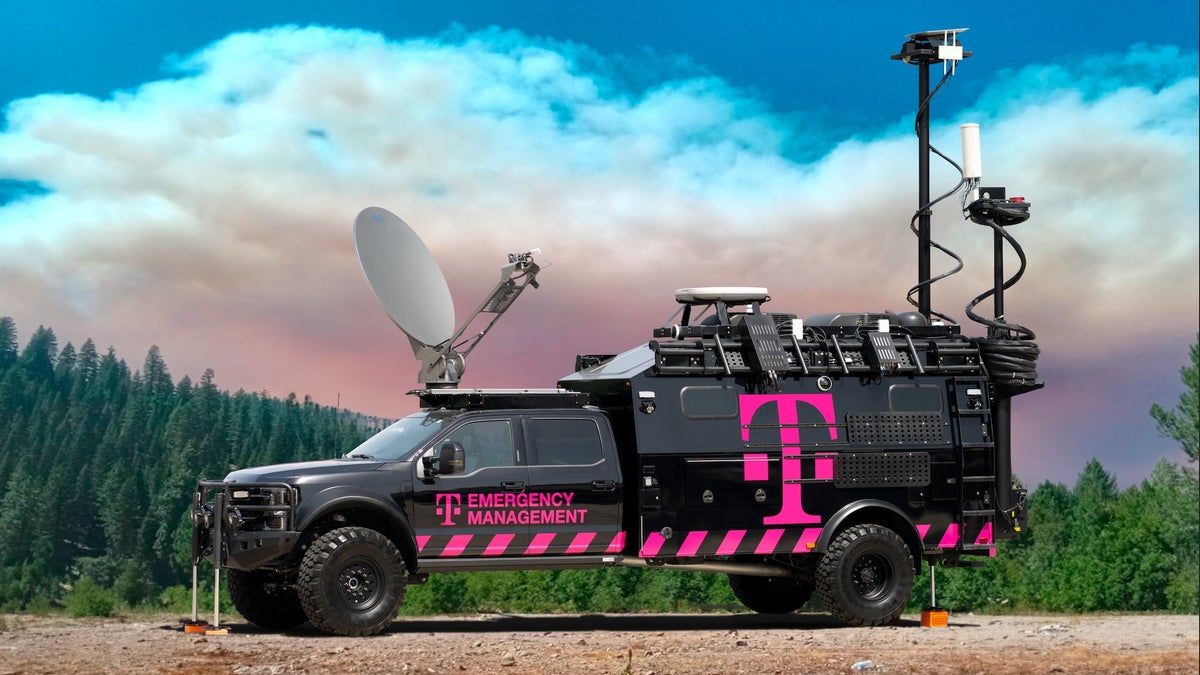
September is around the corner and with it – the National Preparedness Month. That's why T-Mobile is on the topic, explaining how the company is expanding its technology and resources to strengthen connectivity during natural disasters and severe weather events.
The company has broadened its satellite services, increased the number of deployable assets, upgraded community support vehicles and reinforced its physical network. Together, these measures are designed to keep people connected to loved ones, emergency alerts and critical services when it matters most, while also giving first responders stronger tools to coordinate in the field.
One of the most significant additions is T-Satellite, launched earlier this summer in partnership with Starlink. The service is the first of its kind in the United States, automatically connecting most modern smartphones to a satellite network without additional setup. This allows people to send and receive text messages even if traditional cell service is disrupted.
Wireless Emergency Alerts can now also be delivered via satellite, and those with an active subscription have the ability to text 911 in areas where the sky is visible.
The service proved its value during the recent floods in Texas, when nearly 94,000 people relied on T-Satellite to send more than 287,000 messages. T-Mobile has also started supporting limited satellite data, with the latest Google Pixel devices offering early access to apps like Google Maps for use in off-grid situations.
Starting August 28, Pixel 10 devices will be able to use satellite connectivity for WhatsApp voice and video calls, as we told you earlier.
T-Mobile has increased its aerial support capacity by expanding its drone fleet by 50 percent. The drones are designed specifically for disaster conditions, including heavy-lift models that can transport supplies and portable connectivity equipment, as well as search-and-rescue drones equipped with thermal imaging, LiDAR (light detection and ranging) mapping, and one-way broadcast communications.
Tethered drones, which remain connected to the ground, can stay in the air for long periods to create temporary coverage areas of about two miles.
On the ground, T-Mobile has nearly doubled its fleet of deployable assets. This includes more Satellite Cells on Light Trucks (SatCOLTs) and Satellite Cells on Wheels (SatCOWs), with new extra-large versions that provide wider coverage and greater capacity during emergencies.
The company has also expanded its number of Very Small Aperture Terminals (VSATs), which are portable satellite antennas that deliver temporary wireless service. These resources are supported by upgraded community support vehicles, which now offer stronger Wi-Fi connections and higher-capacity device charging.
The company has also continued investing in its physical infrastructure. Across the United States and Puerto Rico, thousands of cell sites have been fortified with additional backup power and greater resilience to wind and flooding. In Florida, a $2 billion project completed in July upgraded more than 1,300 sites and hardened over 1,300 towers.
For first responders, T-Mobile's 5G network now includes T-Priority, a dedicated slice of spectrum designed specifically for public safety agencies. This ensures lower latency, faster speeds and higher priority access across all 5G bands, a feature aimed at giving emergency teams reliable connectivity when every second counts.
The company has broadened its satellite services, increased the number of deployable assets, upgraded community support vehicles and reinforced its physical network. Together, these measures are designed to keep people connected to loved ones, emergency alerts and critical services when it matters most, while also giving first responders stronger tools to coordinate in the field.
Would you trust T-Satellite in the event of a natural disaster?
178 Votes
Yes, I think the system works very well.
39.33%
I'll give it a try regardless of what I think.
52.81%
No, I won't even bother.
7.87%
Wireless Emergency Alerts can now also be delivered via satellite, and those with an active subscription have the ability to text 911 in areas where the sky is visible.
Starting August 28, Pixel 10 devices will be able to use satellite connectivity for WhatsApp voice and video calls, as we told you earlier.
T-Mobile knows that disasters test communities, but connection holds them together. That's why we continue to innovate and expand — including a $2 billion network investment in Florida completed this year — so that whether it's texting a loved one or 911, ensuring first responders have critical connectivity or receiving emergency alerts in real time, people have the peace of mind that comes from staying connected when it matters most.
– Jon Freier, President, T-Mobile Consumer Group
T-Mobile has increased its aerial support capacity by expanding its drone fleet by 50 percent. The drones are designed specifically for disaster conditions, including heavy-lift models that can transport supplies and portable connectivity equipment, as well as search-and-rescue drones equipped with thermal imaging, LiDAR (light detection and ranging) mapping, and one-way broadcast communications.
On the ground, T-Mobile has nearly doubled its fleet of deployable assets. This includes more Satellite Cells on Light Trucks (SatCOLTs) and Satellite Cells on Wheels (SatCOWs), with new extra-large versions that provide wider coverage and greater capacity during emergencies.
The company has also expanded its number of Very Small Aperture Terminals (VSATs), which are portable satellite antennas that deliver temporary wireless service. These resources are supported by upgraded community support vehicles, which now offer stronger Wi-Fi connections and higher-capacity device charging.
For first responders, T-Mobile's 5G network now includes T-Priority, a dedicated slice of spectrum designed specifically for public safety agencies. This ensures lower latency, faster speeds and higher priority access across all 5G bands, a feature aimed at giving emergency teams reliable connectivity when every second counts.


Popular stories


Latest News



Things that are NOT allowed:
To help keep our community safe and free from spam, we apply temporary limits to newly created accounts: