Can a smartphone operate on a sodium battery and give it days of battery life and super fast charging? And what exactly is this salt battery technology we're constantly hearing about in recent days?
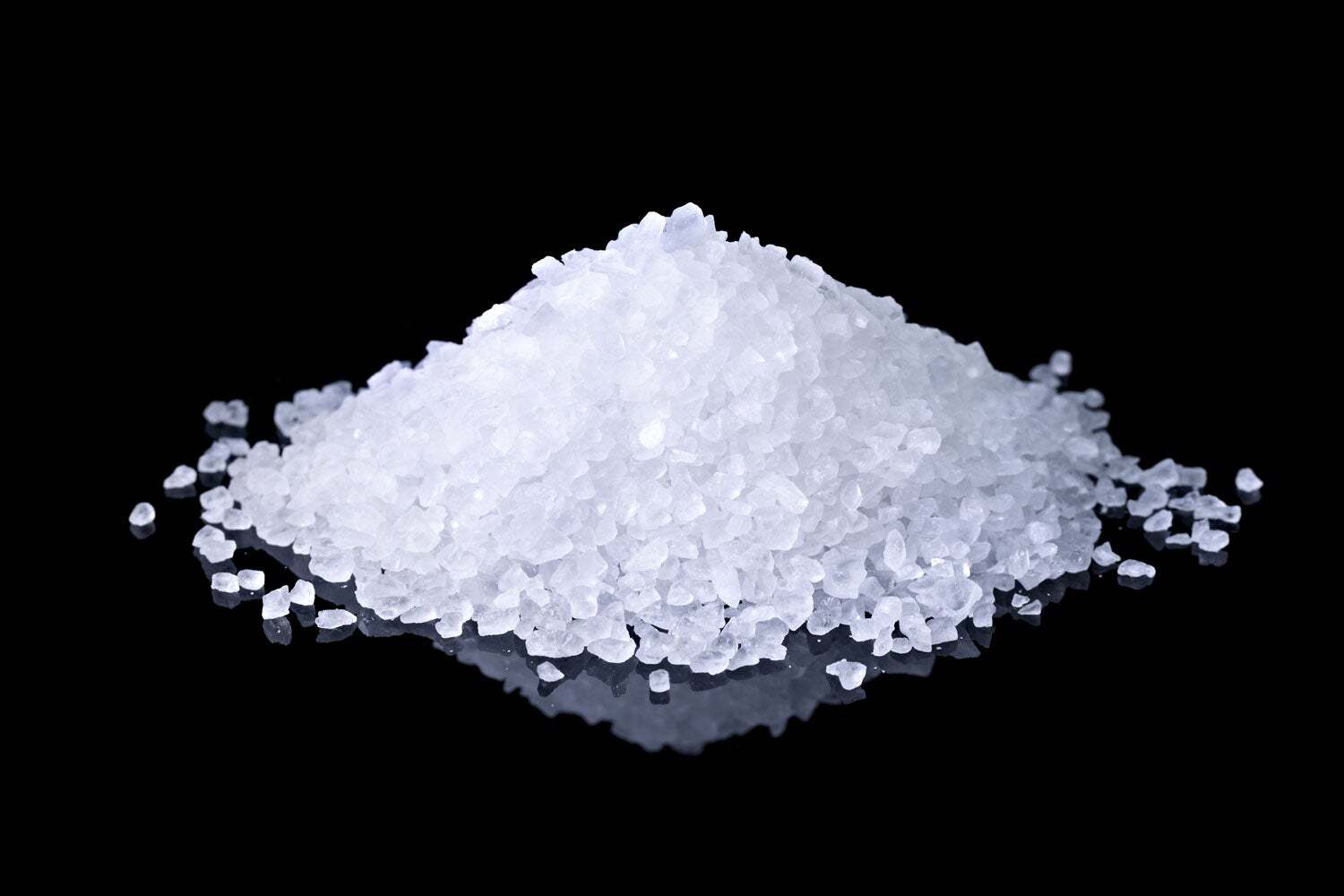
A couple of different technologies that use salt for energy storage | Image by Stanford University
Before we begin, let's make a necessary clarification. There are three different technologies that are all referred to as "salt batteries."
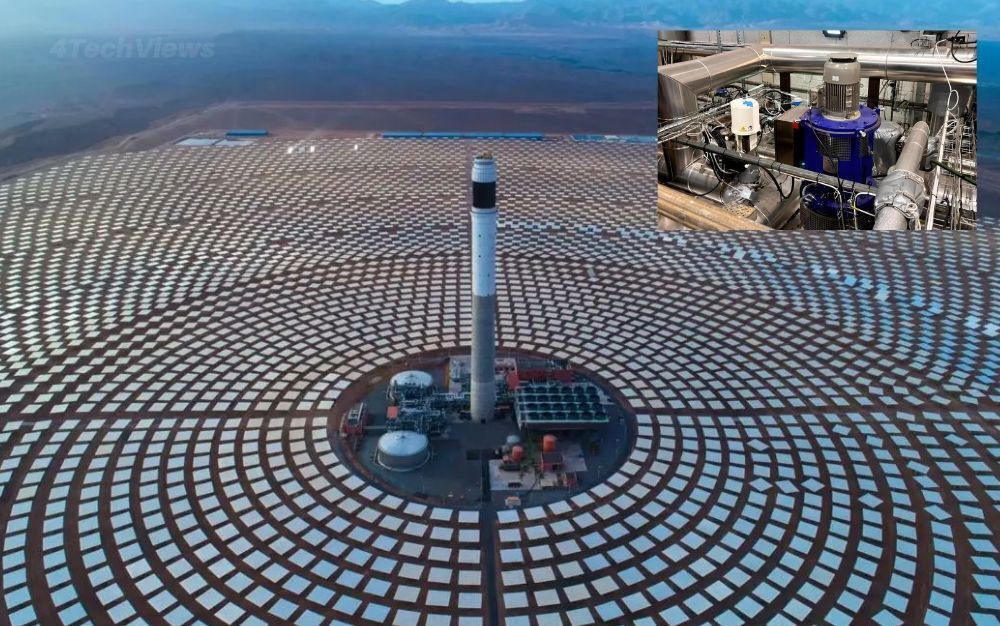
The first one uses molten salt to store energy from the sun as heat in large solar plants, the second one uses salt water as an electrolyte, and the third one swaps lithium with sodium in the typical lithium-ion battery scenario.
This Denmark solar powerplant uses molten salt to store energy | 4TechNews
We're interested in the third one, as the first two have very different applications and scales and just won't ever work in a small gadget like a smartphone.
Saltwater batteries are heavy, they have low energy density, and they are used in grid energy storage.
Molten salt batteries operate at temperatures around 473°F to 1,292°F, which is not something you would want in your pocket.
So, what are sodium-ion batteries, and how do they work?
What is a sodium-ion battery?
Sodium-ion batteries are very similar to lithium-ion ones | Image by New Scientist
Recommended For You
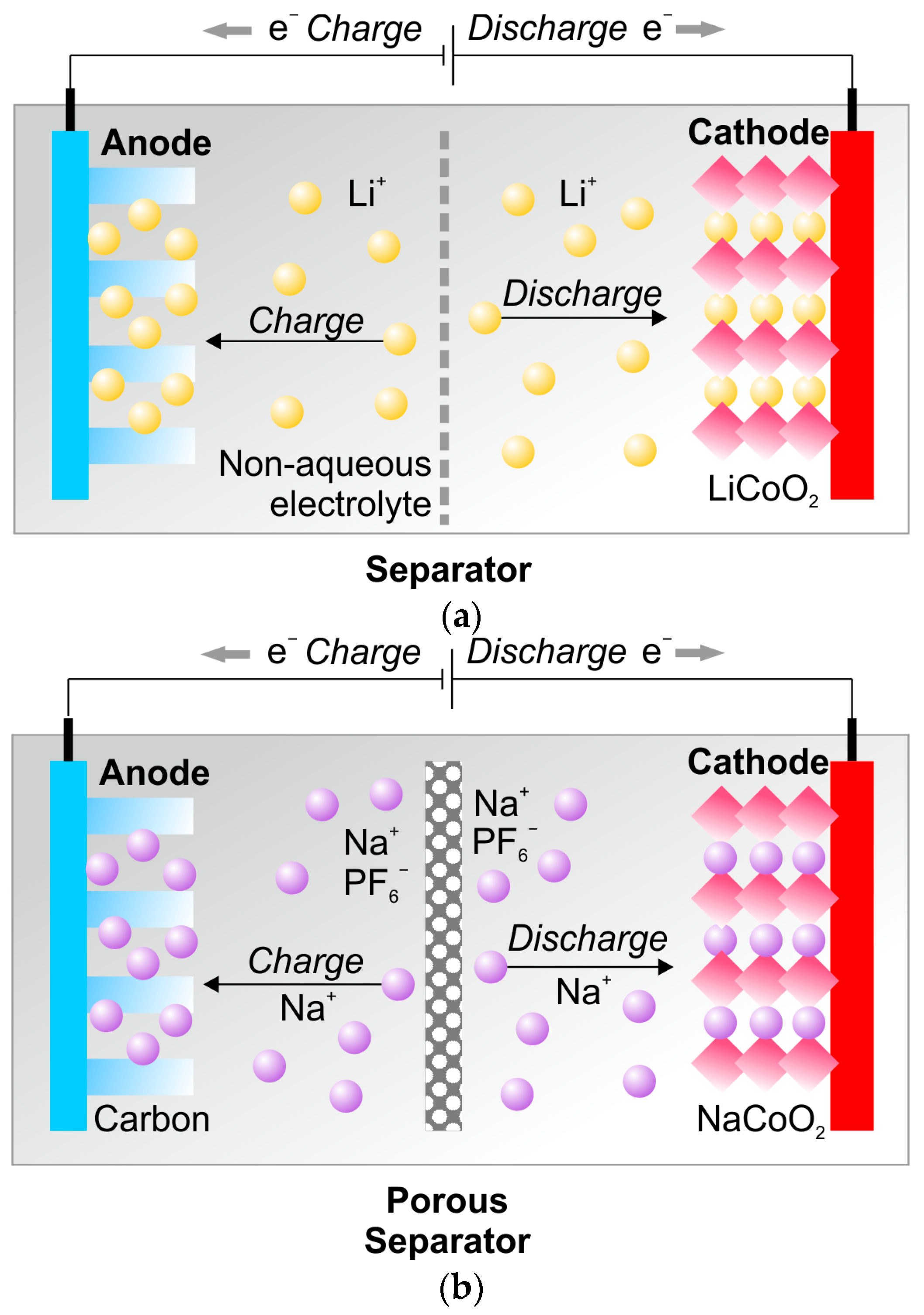
I already mentioned lithium-ion batteries and how they work in my article about solid-state batteries. So, without getting too technical, a sodium-ion battery works on the same basic principle as a standard lithium-ion battery but uses sodium ions instead of lithium ions to carry charge.
In both types, ions move back and forth between a positive electrode (cathode) and a negative electrode (anode) through an electrolyte during charging and discharging. At the same time, electrons move in the opposite direction when there's a device hooked to the battery, providing energy.
Sodium is chemically similar to lithium as well, and the overall battery design and operating mechanism are closely related, even though the specific electrode materials differ. However, there are some key differences between sodium-ion and lithium-ion batteries.
Sodium-ion vs Lithium-ion batteries
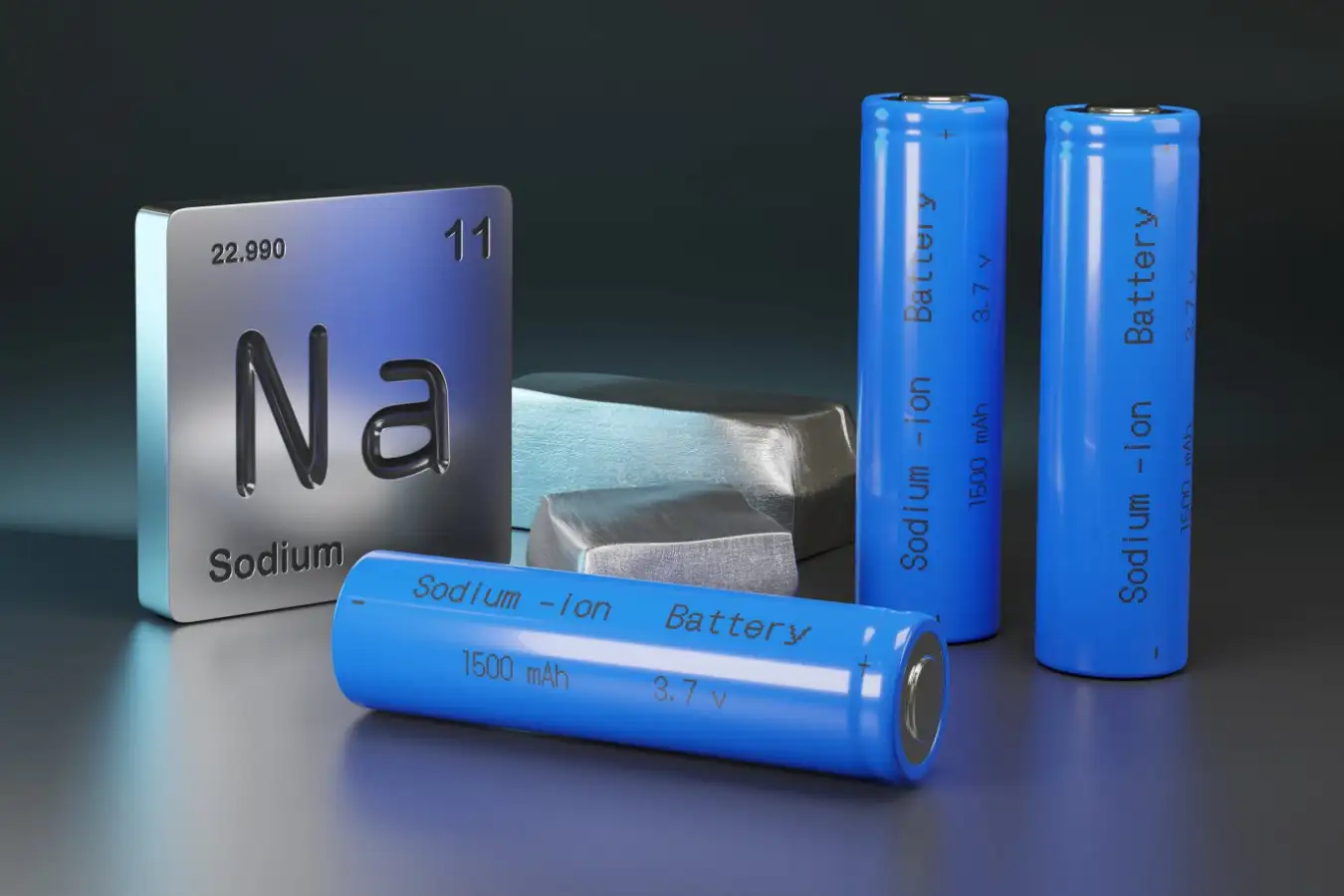
There are certain differences between lithium-ion batteries and their sodium counterparts | Image by Tycorun
The key difference lies in performance and materials. Sodium ions are larger and heavier than lithium ions, which makes it harder to pack as much energy (fewer charged particles) into the same volume or weight. As a result, sodium-ion batteries have lower energy density than lithium-ion batteries.
However, sodium is far more abundant and cheaper than lithium, and sodium-ion batteries can offer advantages in cost, resource availability, and potentially safety and low-temperature performance.
Another potential advantage is that using larger sodium ions for energy transport means sodium-ion batteries can charge very fast, compared to lithium-ion batteries.
There are pocket-size sodium-ion batteries already on the market, but their capacity and performance in general are inferior to their lithium-ion counterparts, at least at the moment.
A salt-battery Galaxy S26? Is it possible?
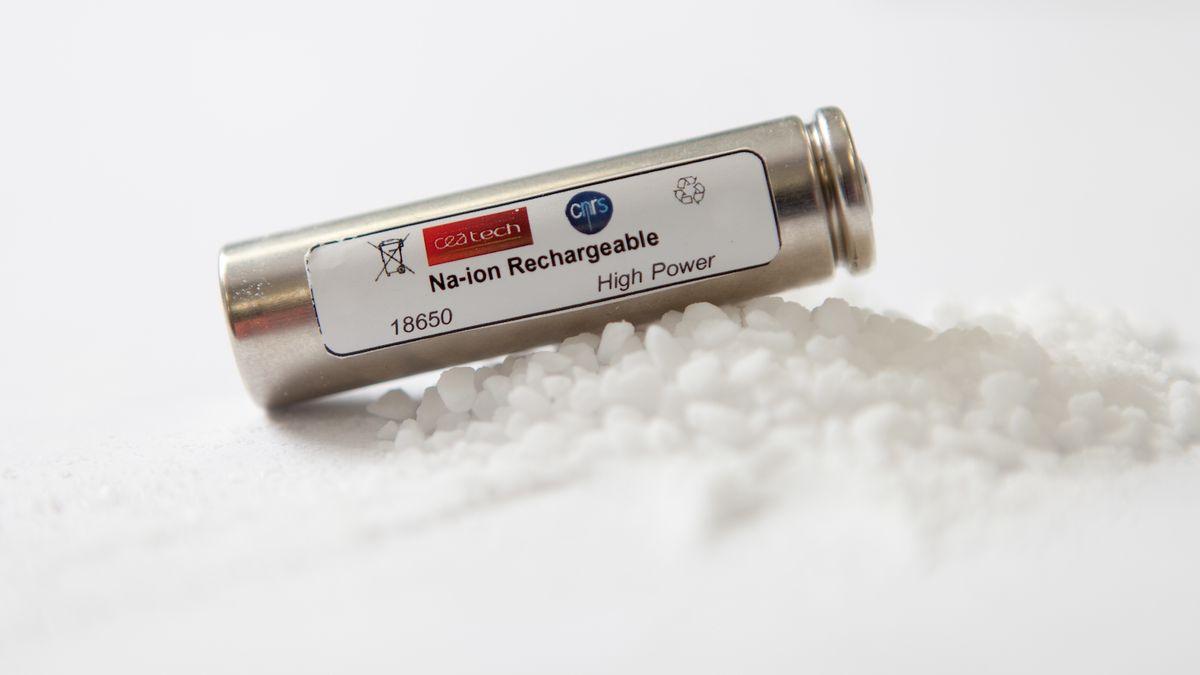
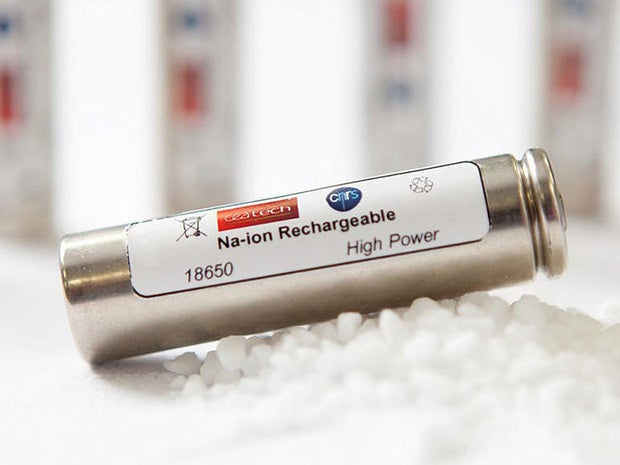
The first sodium-ion battery currently nearing mass production | Image by Atomic Energy Commission
A French team of researchers has developed a sodium-ion battery in 18650 (AA) format that can store up to 90 Wh/kg and can sustain 80% charge after 2000 cycles. These characteristics are very close to early lithium-ion batteries; modern smartphone batteries offer 150–300 Wh/kg energy density, making them superior to sodium-ion batteries.
We won't be seeing a sodium-ion battery smartphone anytime soon, though, let alone a device from the Galaxy S26 series, but there's hope. Sodium is abundant, easy to extract and work with, and has low geopolitical significance compared to lithium.
The only engineering hurdle that has to be overcome is the energy density, and it's a big one. There's a physical constraint beyond which we just can't pack more sodium ions in a certain space.
Sodium-ion batteries will make their way to grid storage, house energy solutions, and other applications where the size of the battery is not that important, but for smartphones, solid-state batteries offer the most promise.
Free Galaxy A17 5G with Straight Talk
Get a free Galaxy A17 with Straight Talk. To claim this deal, you need to pair the phone with activation on a Silver Unlimited Plan or higher. This tier costs $45 per month. Offer valid through 01/10/27 while supplies last online.
Mariyan, a tech enthusiast with a background in Nuclear Physics and Journalism, brings a unique perspective to PhoneArena. His childhood curiosity for gadgets evolved into a professional passion for technology, leading him to the role of Editor-in-Chief at PCWorld Bulgaria before joining PhoneArena. Mariyan's interests range from mainstream Android and iPhone debates to fringe technologies like graphene batteries and nanotechnology. Off-duty, he enjoys playing his electric guitar, practicing Japanese, and revisiting his love for video games and Haruki Murakami's works.
A discussion is a place, where people can voice their opinion, no matter if it
is positive, neutral or negative. However, when posting, one must stay true to the topic, and not just share some
random thoughts, which are not directly related to the matter.
Things that are NOT allowed:
Off-topic talk - you must stick to the subject of discussion
Offensive, hate speech - if you want to say something, say it politely
Spam/Advertisements - these posts are deleted
Multiple accounts - one person can have only one account
Impersonations and offensive nicknames - these accounts get banned
To help keep our community safe and free from spam, we apply temporary limits to newly created accounts:
New accounts created within the last 24 hours may experience restrictions on how frequently they can
post or comment.
These limits are in place as a precaution and will automatically lift.
Moderation is done by humans. We try to be as objective as possible and moderate with zero bias. If you think a
post should be moderated - please, report it.
Have a question about the rules or why you have been moderated/limited/banned? Please,
contact us.





Things that are NOT allowed:
To help keep our community safe and free from spam, we apply temporary limits to newly created accounts: