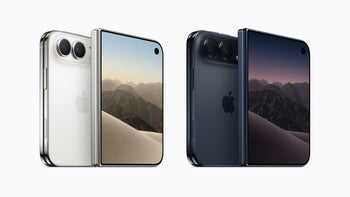
The iPhone Flip is the next hot thing in the smartphone world. I was all hyped and excited about the first Apple foldable, but the news about a clamshell iPhone caught me off guard! And I think this model makes much more sense than a big, expensive, book-style iPhone Fold.
According to Mark Gurman, Apple is looking into the idea of a clamshell iPhone to expand the foldable portfolio of the company when it arrives. This rumor has been corroborated by Korean market research firm Stone Partners.
The alleged iPhone Flip is supposed to offer a more affordable and compact form factor, similar to Android flip phones such as the Galaxy Z Flip and Motorola Razr.
I think going for an iPhone Flip is a brilliant idea, regardless if it's going to support the iPhone Fold or launch separately. Here's why.
A flip iPhone would be much easier to make
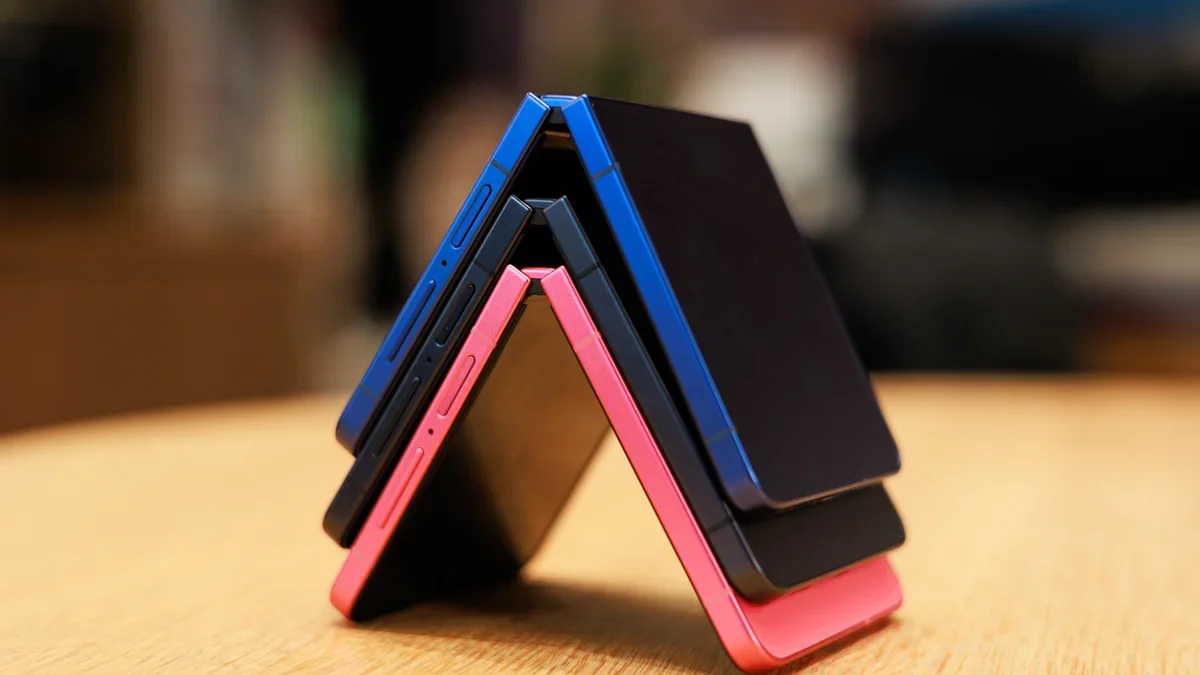
Manufacturing and testing foldable phones is not an easy feat | Image by CNET
Designing a book-style foldable is arguably a much harder task than making a candy bar phone fold in half. You need a new layout for the internals, a new screen with a completely different aspect ratio, and also a new UI to make use of that screen.
Samsung needed several generations of Galaxy Fold devices to get these right, and there's a big chance Apple might not get it right the first time around, either. On the other hand, a flip phone wouldn't require a completely different approach to the hardware—the position of the camera system and the chipset all remain largely in the same place.
Recommended For You
Granted, you need to split the battery into two separate cells, but it's a much easier engineering feat than making a book-style foldable from scratch.
Furthermore, almost no changes to the UI are needed, the screen size and aspect ratios are the same as on a conventional non-folding phone. There's still some work needed to make use of a cover screen for when the flip phone is closed, but again, it's much easier to do than making your UI work on a squareish screen.
The price could be a big factor
Flip phone are significantly more affordable than book-style foldables | Image by PixaBay
The book-style iPhone Fold is believed to be an ultra-premium device rumored to be priced around $2,399. That's expensive even by foldable standards. In comparison, one of the best book-style foldables on the market, the Galaxy Z Fold 7, launched at $1,999. Samsung managed to keep the price under $2K — a psychological threshold many users might not want to cross.
Speaking of ultra-premium first-generation Apple devices, the Vision Pro comes to mind. I wouldn't call it a flop, but adoption is painfully slow, and the future of this gadget is uncertain at the moment. There are many factors at play, but the $3,500 starting price is one of the major ones.
Apple's Vision Pro didn't take off, mainly due to its huge price tag | Image by PhoneArena
Let's take a look at the flip phone market, on the other hand. Flip phones (0.3% market share) have typically outsold fold phones (0.2% market share) in the overall market, mainly due to the lower asking price. According to Counterpoint's growth predictions, the share of flip phones in the global foldable market is expected to increase from 49% in 2024 to 52% in 2025.
The Galaxy Z Flip series devices are half the price of a Galaxy Z Fold, and Motorola offers clamshell foldables at prices as low as $699, matching conventional non-folding phones. If Apple manages to keep the price of the iPhone Flip under $1,000, people would probably buy it in much larger volumes than a $2,399 iPhone Fold.
Better user experience overall
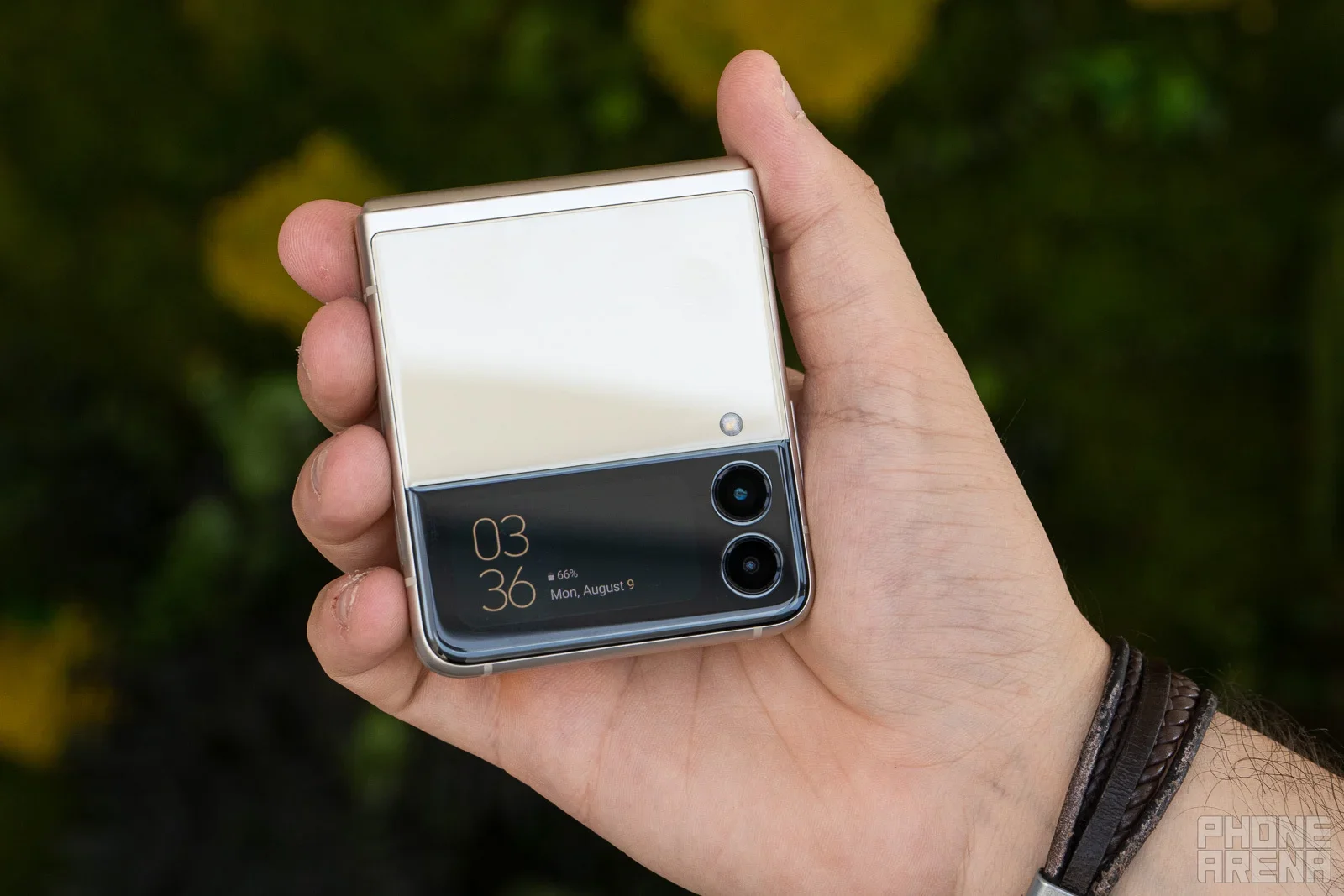
Flip phones are much easier to use with one hand, and they're light and compact, too | Image by PhoneArena
I know this one might sound weird, but let's not forget that Android users had almost a decade to get used to book-style foldables and all the specifics around using one. As trivial as it may sound, when you unfold a book-style foldable the resulting two-handed tablet-like device might not be for everyone.
Book-style foldables require a completely different approach than regular candy bar phones. You can't reliably fold or unfold them with one hand, and using them in an unfolded state almost always requires both hands (and a lot of attention to avoid dropping them).
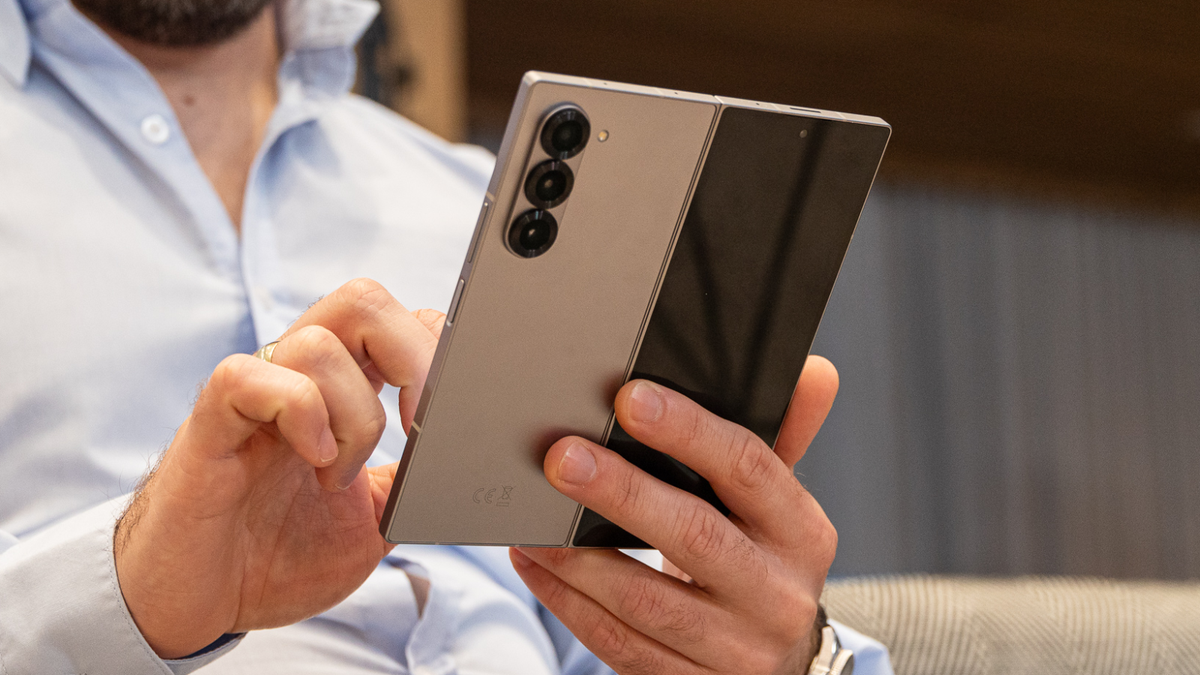
Book-style foldables require two hands most of the time | Image by PhoneArena
Book-style foldables are also much heavier, and even if you're just using the cover screen, the sheer bulk of the device might be cumbersome to many people.
Flip phones, on the other hand, require less effort, both to fold and unfold, and also to carry them around. In many cases the folded flip phone offers better pocketability than a conventional candy bar phone, let alone a big foldable.
The learning curve of using a flip phone is much smoother, and snapping the phone closed with one hand might even be a pleasant and cool experience rather than a nuisance.
iPhone Fold vs iPhone Flip, which one would you buy?
56 Votes
Conclusion
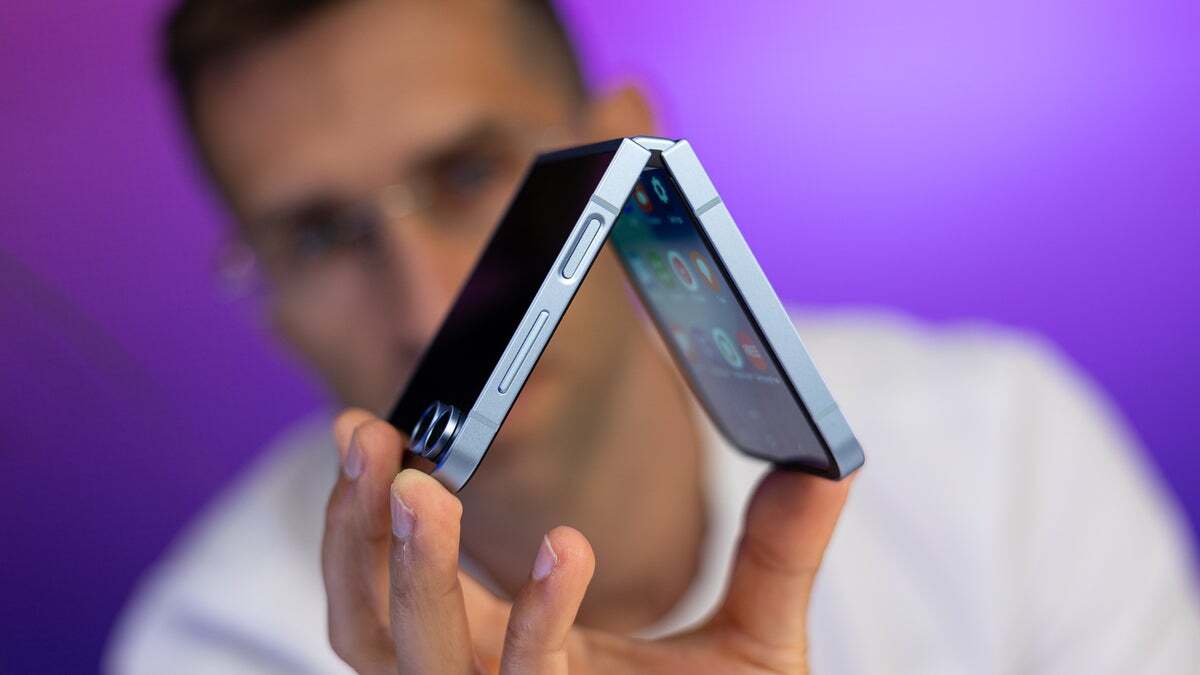
Would you buy a clamshell iPhone Flip? | Image by PhoneArena
So, the iPhone Flip makes much more sense to me, especially for a first-generation Apple foldable. It could be priced more competitively, it would be easier to handle and carry around, and people would enjoy a familiar iOS experience without the need to relearn how to use their phone.
At this point, the iPhone Flip is just a rumor, but I really hope Apple launches both the iPhone Fold and the iPhone Flip. Which one would you prefer?
Trade in your old phone for cash at ecoATM!
Recycle your used phone and get instant cash. Find out how at ecoATM!
Mariyan, a tech enthusiast with a background in Nuclear Physics and Journalism, brings a unique perspective to PhoneArena. His childhood curiosity for gadgets evolved into a professional passion for technology, leading him to the role of Editor-in-Chief at PCWorld Bulgaria before joining PhoneArena. Mariyan's interests range from mainstream Android and iPhone debates to fringe technologies like graphene batteries and nanotechnology. Off-duty, he enjoys playing his electric guitar, practicing Japanese, and revisiting his love for video games and Haruki Murakami's works.
A discussion is a place, where people can voice their opinion, no matter if it
is positive, neutral or negative. However, when posting, one must stay true to the topic, and not just share some
random thoughts, which are not directly related to the matter.
Things that are NOT allowed:
Off-topic talk - you must stick to the subject of discussion
Offensive, hate speech - if you want to say something, say it politely
Spam/Advertisements - these posts are deleted
Multiple accounts - one person can have only one account
Impersonations and offensive nicknames - these accounts get banned
To help keep our community safe and free from spam, we apply temporary limits to newly created accounts:
New accounts created within the last 24 hours may experience restrictions on how frequently they can
post or comment.
These limits are in place as a precaution and will automatically lift.
Moderation is done by humans. We try to be as objective as possible and moderate with zero bias. If you think a
post should be moderated - please, report it.
Have a question about the rules or why you have been moderated/limited/banned? Please,
contact us.









![Another batch of Galaxy S26 series users in the US are getting a nice surprise today [UPDATED]](https://m-cdn.phonearena.com/images/article/183643-wide-two_350/Another-batch-of-Galaxy-S26-series-users-in-the-US-are-getting-a-nice-surprise-today-UPDATED.webp)
Things that are NOT allowed:
To help keep our community safe and free from spam, we apply temporary limits to newly created accounts: