Late last week in Las Vegas, FCC Chairman Brendan Carr made an appearance. Carr spoke with the CEO and vice chairman of the Consumer Technology Association (CTA), Gary Shapiro. The chat was mostly limited to discussions about technology, and when the topic was focused on the use of satellites in telecommunications, Carr expressed his support. The FCC chairman mentioned the technology that would allow signals to be sent directly from a satellite to a smartphone.
FCC Chairman Carr sees U.S. continuing to lead world in direct-to-cell technology
Carr said, "Right now, we're moving into this new type of technology where we can go direct from a satellite right to a smartphone. There's a lot of things you have to do right as a country to promote that happening here. The U.S. is right now leading the world and is going to continue to in this new direct-to-cell technology." The FCC chairman's feelings about this technology have been crystal clear since the summer when he tried to pressure EchoStar into selling some of its spectrum to SpaceX to use for direct-to-cell (D2C) service.
The pressure applied by Carr and EchoStar's poor financial position led EchoStar to sell 30MHz of Mid-band 3.45GHz spectrum along with 20MHz of low band 600MHz airwaves to AT&T for $23 billion. This ended Boost Mobile's run at becoming the nation's fourth facilities-based carrier replacing Sprint. Boost is owned by Dish which was purchased by EchoStar in an all-stock deal finalized on the last day of 2023.
SpaceX picks up the 2GHz spectrum to increase capacity for D2C by 100x
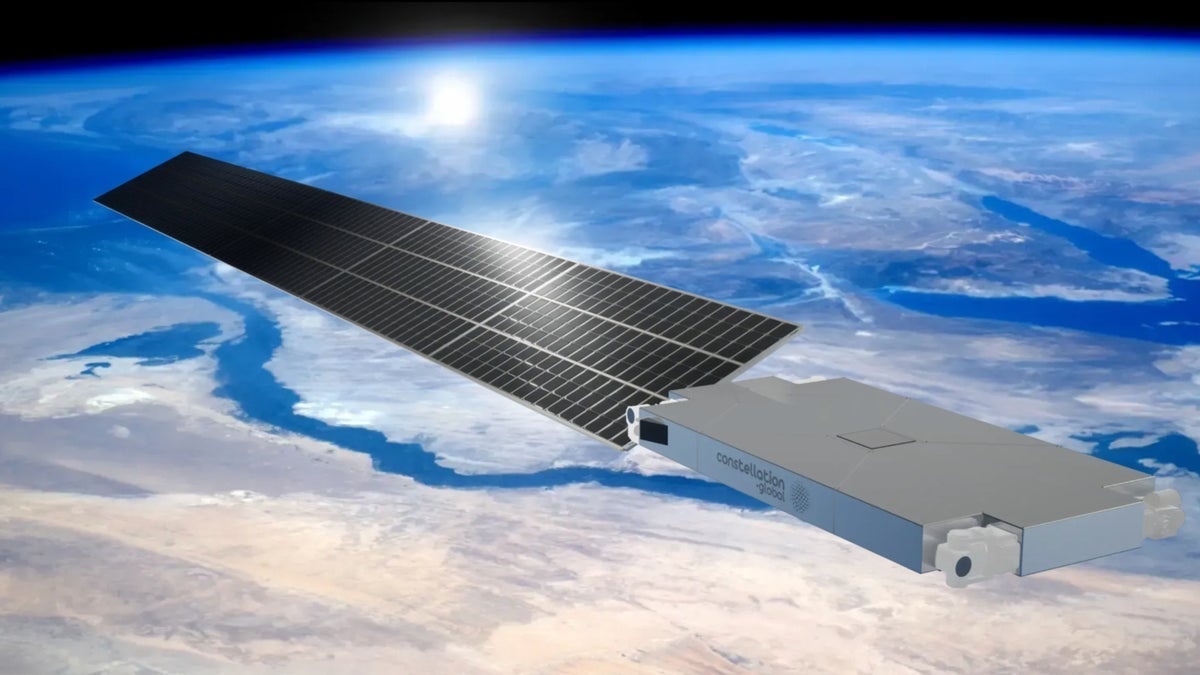
EchoStar followed this spectrum sale with another one approximately two weeks later. This $17 billion transaction involved SpaceX getting the 2GHz airwaves that it wanted as it acquired spectrum in AWS-4 and in the H-block. The purchase will have Starlink prepared for a second-generation satellite constellation ready to service a larger than 100 times increase in capacity compared to what the first-generation D2C satellite system could handle.
While D2C can currently work with 4G LTE connectivity, capability is limited. This transaction between EchoStar and SpaceX gives the latter the capacity and spectrum needed to potentially offer 5G-class service. If this potential is realized, D2C could allow users to send texts, browse online, open and use certain apps, make voice calls and operate some IoT technology.
Recommended For You
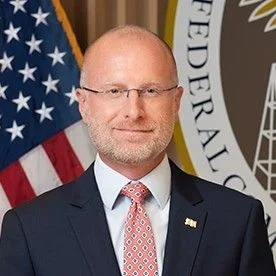
FCC Chairman Brendan Carr. | Image credit-Milken Institute
Carr verbalized his feelings about D2C by stating, "Dish just proposed to move a lot of spectrum over into the hands of SpaceX-Starlink, which can be used to enable direct-to-cell technology. Other providers are looking to offer that. I'm really, really optimistic about what that's going to do for connectivity, driving down prices, for competition. But again, that's an area where we're working at the FCC to make sure that the U.S. does lead the way."
FCC will creative regulatory framework to incentivize investment in direct-to-cell
The FCC chairman said that the U.S. has only two barriers that would prevent it from becoming the leader in satellite based D2C technology. "One, you need to find the spectrum that can be used for direct-to-cell technology, and we're doing some work on that," he said. "Two is, we haven't really built sort of a full regulatory framework about how direct-to-cell is going to work."
Carr added that a D2C framework built by the FCC will incentivize investment in this type of satellite connectivity which led him to add, "So I think over the course of this year, I think you'll see us start to flesh out more of our vision of a regulatory framework for direct-to-cell that will enable those multi-billion-dollar investments."
Carr's strong support for D2C technology makes it pretty clear that the FCC won't be getting in the way here. Carr's close relationship to the president assures the wireless community that they have an open field when it comes to investing in this technology.
Mint Mobile's 6-month plans now cost $10/mo
$10
/mo
$35
$25 off (71%)
Mint Mobile is celebrating its 10-year anniversary with a special offer on its six-month subscription plans. For a limited time, you can get your preferred tier (6GB, 17GB, 23GB or unlimited) for just $10/mo. That saves you between 50% and 71% on the carrier's mobile plans, making it way easier to recommend.
Alan, an ardent smartphone enthusiast and a veteran writer at PhoneArena since 2009, has witnessed and chronicled the transformative years of mobile technology. Owning iconic phones from the original iPhone to the iPhone 15 Pro Max, he has seen smartphones evolve into a global phenomenon. Beyond smartphones, Alan has covered the emergence of tablets, smartwatches, and smart speakers.
A discussion is a place, where people can voice their opinion, no matter if it
is positive, neutral or negative. However, when posting, one must stay true to the topic, and not just share some
random thoughts, which are not directly related to the matter.
Things that are NOT allowed:
Off-topic talk - you must stick to the subject of discussion
Offensive, hate speech - if you want to say something, say it politely
Spam/Advertisements - these posts are deleted
Multiple accounts - one person can have only one account
Impersonations and offensive nicknames - these accounts get banned
To help keep our community safe and free from spam, we apply temporary limits to newly created accounts:
New accounts created within the last 24 hours may experience restrictions on how frequently they can
post or comment.
These limits are in place as a precaution and will automatically lift.
Moderation is done by humans. We try to be as objective as possible and moderate with zero bias. If you think a
post should be moderated - please, report it.
Have a question about the rules or why you have been moderated/limited/banned? Please,
contact us.




Things that are NOT allowed:
To help keep our community safe and free from spam, we apply temporary limits to newly created accounts: