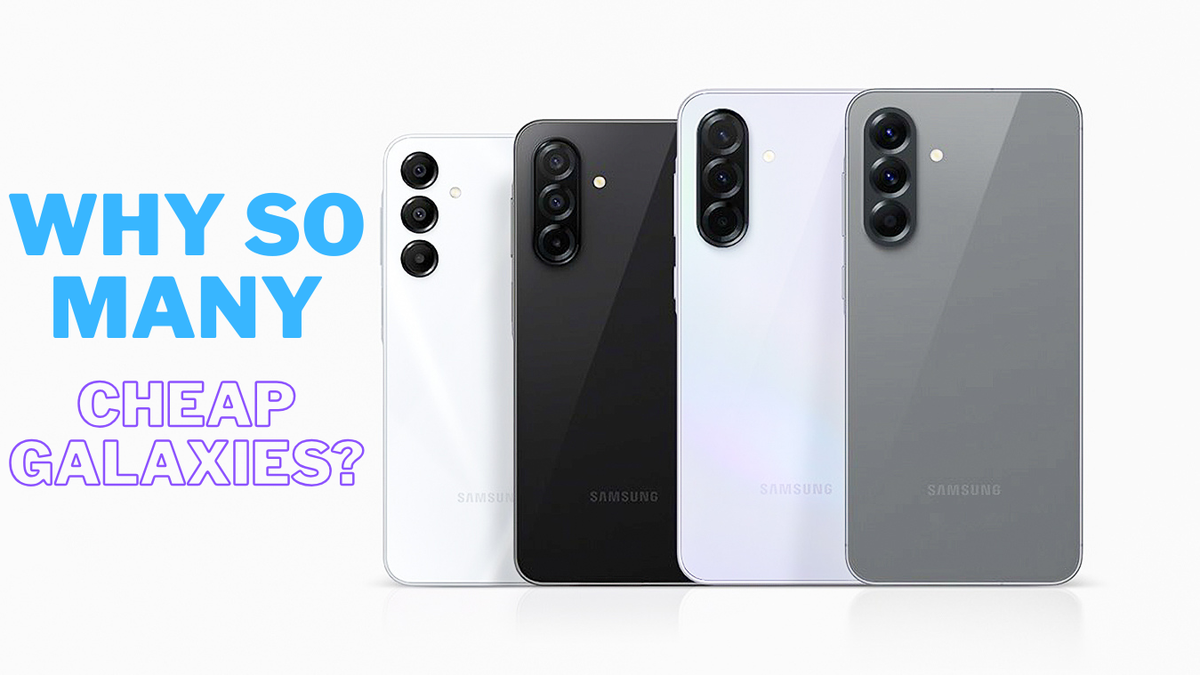
Samsung won big in Q3 2025, but not thanks to its Galaxy S series flagship. No, instead, the company dominated with its affordable galaxy A series. All of Samsung’s best-selling devices during the quarter came from the company’s budget and mid-range phones, which reinforces something we already knew: Samsung owns the mid-range.
That dominance didn’t happen by accident, of course. Samsung has spread the Galaxy A lineup across price tiers, offering a new model roughly every $100. That essentially gives buyers clear choice and flexibility depending on their budget, but I think it also creates a problem.
Once you move past the entry-level Galaxy A16, the Galaxy A26, A36, and A56 start stepping on each other’s toes. In our lab tests and based on my experience with these phones, the differences between them start to rapidly shrink, especially when it comes to the A3x and A5x series.
After noticing this, I asked myself one question: should there be this many models in Samsung’s Galaxy A series?
The Galaxy A16 is unmistakably an entry-level phone. The Exynos 1330 processor delivers a Geekbench 6 multi-core result of 1875 and a 3DMark High result of 367.
Recommended For You
In daily use, that translates to stutters, slower app loading, and limited multitasking. Expectations are low, and the phone meets them.
The Galaxy A26 is a genuine step-up. The Exynos 1380 processor scores 2821 in Geekbench multi-core tests and 796 in 3D Mark Wildlife Extreme tests. There is a significant boost of GPU performance compared to the A16. The A26 is where you start getting a more responsive and smooth experience.
Going up from the A26, though, we immediately start to see diminishing returns.
The Galaxy A36 with the Snapdragon 6 Gen 3 scores 2915 multi-core and 914 in 3DMark High. The Galaxy A56 (Exynos 1580) improves that to 3894 multi-core and 1322 in 3DMark High.
Yes, the A56 is undeniably faster in benchmarks, but the difference in real life is no longer apparent. When it comes to actual use, the A36 is already good enough and doesn’t feel that much different than the A56.
Battery life and charging are no longer differentiators
Image credit — PhoneArena
All four models in the latest Galaxy A series lineup come with the same battery capacity — 5,000 mAh. That results in very similar battery life no matter which one you go for. Here is the estimated battery life we gave for each model based on our tests:
The A56 lasts longer, but not dramatically so. The more important difference here is that the A36 and A56 come with 45W wired charging, letting them reach 55% in 30 minutes and a full charge in about 1 hour and 15 minutes.
That is flagship-level charging on $400-$500 phones — an arguably more impressive feature on the A36 given its price.
Displays: One of Samsung’s strongest areas, and yet another overlap
Image credit — PhoneArena
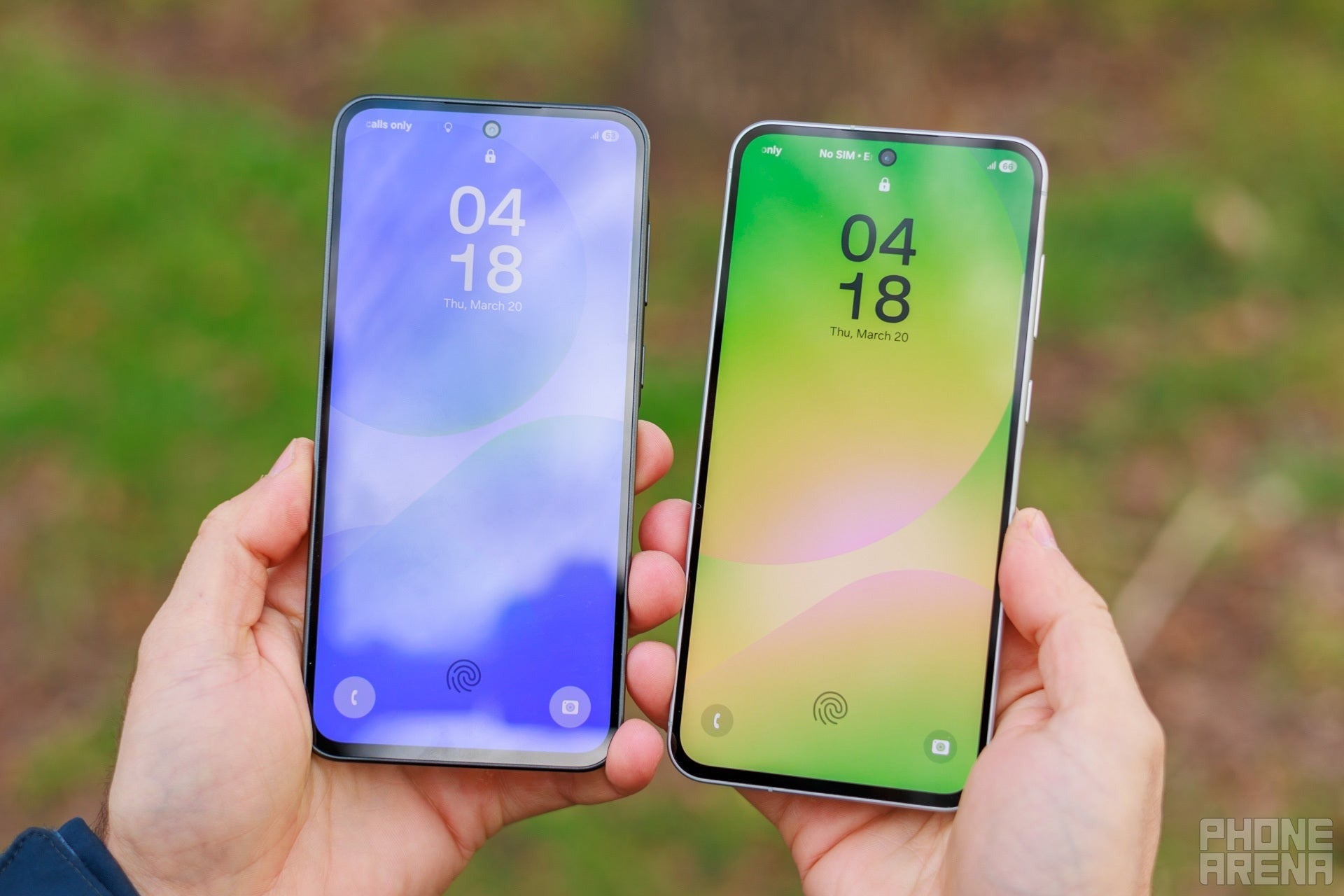
All four phones feature 6.7-inch AMOLED displays, but we see a clear difference when it comes to brightness levels:
In other words, the A36 and A56 displays are effectively equals, and a lot easier to use in bright conditions compared to the A16 and A26.
Cameras: four phones, same ceiling
Image credit — PhoneArena
The camera performance is where things start to get a little awkward. Despite the A36 using a larger main sensor than the Galaxy A16 and A26, and the A56 having an even larger one than that, the image quality is surprisingly similar across all four phones.
Photo
Video
Phone
Camera Score
Photo Score
Main (wide)
Ultra Wide
Selfie
Zoom
Samsung Galaxy A56 5G
122
131
67
20
25
18
Samsung Galaxy A36 5G
120
126
68
17
23
18
Samsung Galaxy A26 5G
122
127
66
19
25
16
Samsung Galaxy A16 5G
124
130
71
17
25
17
Phone
Camera Score
Video Score
Main (wide)
Ultra Wide
Selfie
Zoom
Samsung Galaxy A56 5G
122
113
62
16
22
13
Samsung Galaxy A36 5G
120
114
62
16
22
13
Samsung Galaxy A26 5G
122
117
65
16
21
15
Samsung Galaxy A16 5G
124
118
60
19
24
16
Find out more details about photo and video scores for all phones we have tested on our PhoneArena Camera Score page
Even the A56’s ultrawide camera is not enough to give it any meaningful advantage over the rest of the lineup. Based on our camera scores and sample shots, the supposedly better hardware doesn’t translate into better photos on the pricier models.
< Galaxy A56 main cameraGalaxy A36 main camera >
< Galaxy A26 main cameraGalaxy A16 main camera >
The only noticeable difference between is in how each phone handles the white balance. For example, the A56 and A26 lean towards warmer tones while the A36 and A16 towards cooler ones.
Other than that, though, I find it hard to spot any other differences in image quality. This is, in my opinion, where the $100 jumps for become hardest to justify.
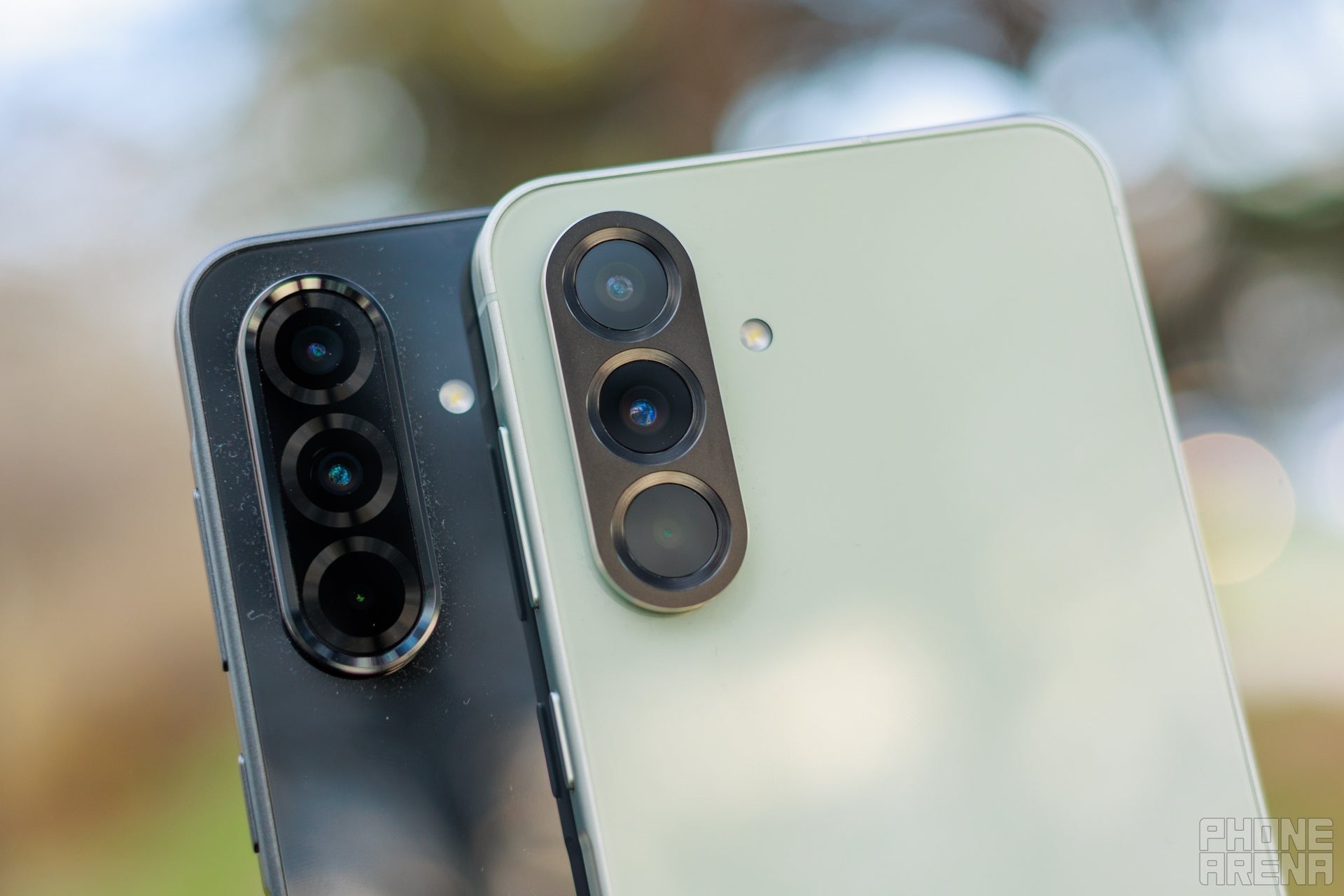
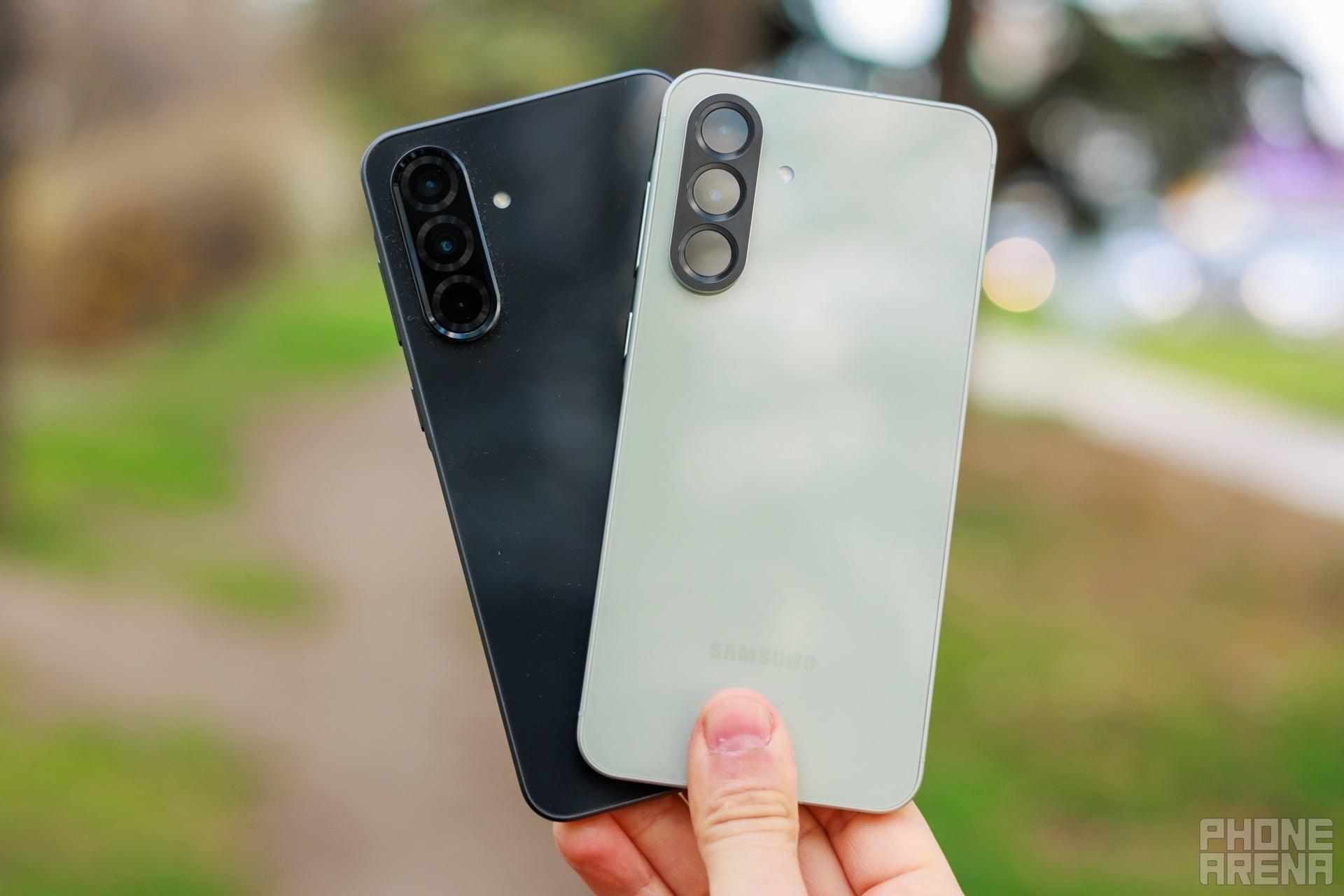
The real problem: A36 vs A56
Image credit — PhoneArena
The Galaxy A36 and Galaxy A56 are separated by roughly $100. On paper, the extra benefits that come with the A56 are:
An aluminum frame
A faster chipset
More RAM
A few extra AI features
However, in practice, both phones:
Charge at the same speed
Use similarly bright displays
Deliver comparable camera quality
Receive long software support
The A56 is better, but not in any meaningful way for most buyers. That is why I think this overlap is unnecessary, and why I think Samsung should go for a different approach instead, at least when it comes to the A3x and A5x series.
The case for one Galaxy A mid-ranger
Samsung could realistically merge the A36 and A56 into a single mid-range model priced around $449.
Drop the useless macro camera and other not, so important features like the aluminum frame. Keep the bright AMOLED displays and 45W charging, and you would have everything you need in that one model.
The Galaxy A2x series can remain as the lower mid-range Samsung phone, while the Galaxy A16 would continue to be the company’s entry-level model.
The result wouldn’t weaken Samsung’s market position — it would strengthen it. One clear, polished mid-ranger is easier to market, easier to recommend, and easier to perfect.
Six-month unlimited plan is now 57% off
$90
$210
$120 off (57%)
Mint Mobile is now allowing you to get whichever plan you like for either three, six, or 12 months for just $15/mo. If you go for the six-month unlimited service, for instance, you'll now have to pay just $90 upfront instead of $210.
Aleksandar is a tech enthusiast with a broad range of interests, from smartphones to space exploration. His curiosity extends to hands-on DIY experiments with his gadgets, and he enjoys switching between different brands to experience the latest innovations. Prior to joining PhoneArena, Aleksandar worked on the Google Art Project, digitizing valuable artworks and gaining diverse perspectives on technology. When he's not immersed in tech, Aleksandar is an outdoorsman who enjoys mountain hikes, wildlife photography, and nature conservation. His interests also extend to martial arts, running, and snowboarding, reflecting his dynamic approach to life and technology.
COMMENTS (3)
COMMENTS (3)
All comments need to comply with our
Community Guidelines
PhoneArena Community Rules
A discussion is a place, where people can voice their opinion, no matter if it
is positive, neutral or negative. However, when posting, one must stay true to the topic, and not just share some
random thoughts, which are not directly related to the matter.
Things that are NOT allowed:
Off-topic talk - you must stick to the subject of discussion
Offensive, hate speech - if you want to say something, say it politely
Spam/Advertisements - these posts are deleted
Multiple accounts - one person can have only one account
Impersonations and offensive nicknames - these accounts get banned
To help keep our community safe and free from spam, we apply temporary limits to newly created accounts:
New accounts created within the last 24 hours may experience restrictions on how frequently they can
post or comment.
These limits are in place as a precaution and will automatically lift.
Moderation is done by humans. We try to be as objective as possible and moderate with zero bias. If you think a
post should be moderated - please, report it.
Have a question about the rules or why you have been moderated/limited/banned? Please,
contact us.













Things that are NOT allowed:
To help keep our community safe and free from spam, we apply temporary limits to newly created accounts: