If Google wants something, Google simply makes it out of thin air. And since it's Google we're talking about, it doesn't really matter what the "something" is. A smartphone, a tablet, earbuds, a smartwatch, an AI model (I won't be surprised if they go on to build a spaceship, too) – you name it.
The Big G has (more than) enough money and talent to make anything happen. It's up to them.
Yet, Google's Pixel phones haven't conquered too many hearts in the US. A big factor in that phenomenon is the almighty iPhone. Then, there's the Galaxy fans – Samsung is just too big of a brand to be ignored like that.
But Google has Google to blame for this situation, too. We've come to the point that it seems that we're about to pay more of our hard-earned cash for the Pixel 11 – a phone that could come with (hold on to your hats!) a slightly smaller battery.
The recent rumors
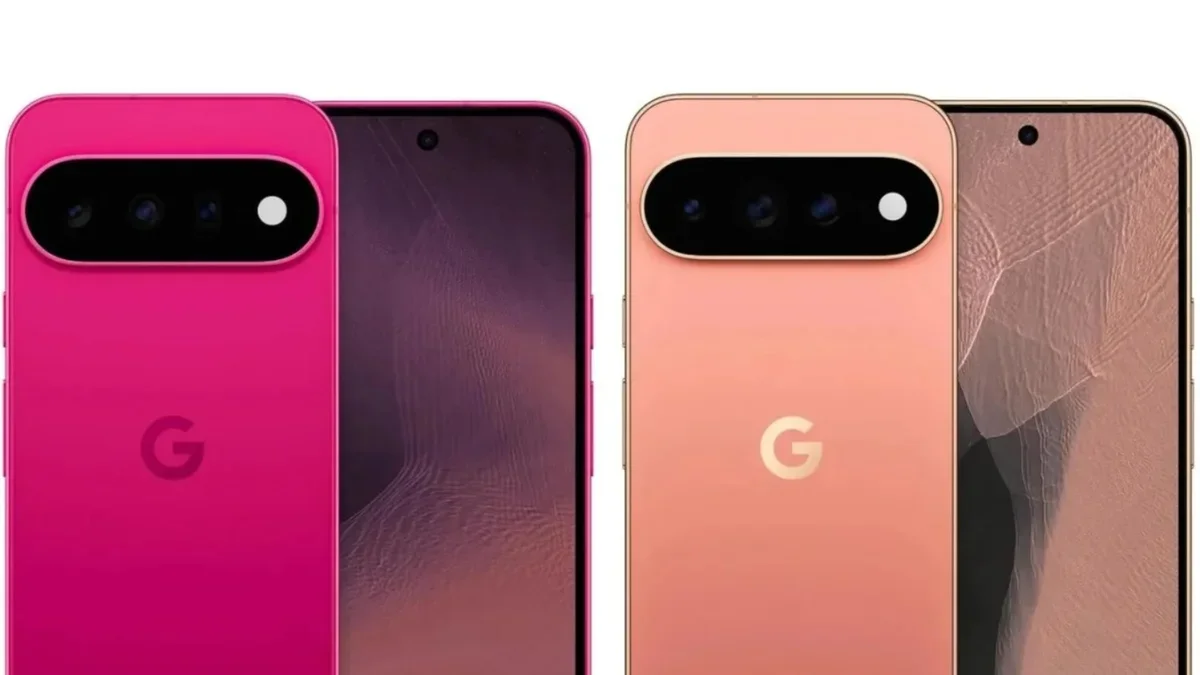
Pixel 11 Pro in two funky colors. | Image by 9to5Google
Since the 2019 era, when Pixel phones were easy and fun to recommend, things did change in a big way. Google got more serious and started acting tough. Instead of looking more like OnePlus and trying to challenge Samsung and Apple, Google has adopted the pose of a big player itself.
The company is now rumored to make a big step, but in the wrong direction.
Recommended For You
It's always wise to take any rumors with a pinch of salt. But given that we're now days away from the big unveiling on August 12, the current leaks about the upcoming devices' batteries could very well turn out to be precise. Which is kind of sad:
Pixel 11 Pro – 4,850 mAh
Pixel 11 Pro XL – 5,115 mAh
Their predecessors did better. The Pixel 10 Pro came with a 4,870 mAh capacity battery and the Pixel 10 Pro XL – with a 5,200 mAh cell.
So much for the "progress" thing, if that leak is true.
But the chipset will help, right?
Not exactly. Google's Tensor chips have always focused more on AI features than raw efficiency and performance and they haven't exactly been known for leading the pack in power management.
But even if the new Tensor G6 became dramatically more efficient, that probably wouldn't change the way many buyers look at battery capacity. A bigger mAh number is simple, easy to understand and looks better on a spec sheet.
In the smartphone realm, a larger battery is often an easier selling point than promises of improved efficiency.
Price hikes start to look like a crime
Everybody's deep in the price hike business these days. Samsung broke the ice with the $100 price hike on the Galaxy S26 earlier this year; last week, the Korean giant introduced the $2,100 Galaxy Z Fold 8 Ultra and a sea of tears was shed by wallets from NY to LA.
None other than Tim Cook promised iPhone 18 Pro price hikes recently, too. I get it. RAM is expensive. Trillion-dollar companies are poor. We'll help them out, no biggie.
Google is playing that game, too. The baseline Pixel 11 could start at $899 (the Pixel 10 was announced at $799 last year). The Pixel 11 Pro XL could cost you $1,300 – the same as the Galaxy S26 Ultra.
Not to Google's advantage
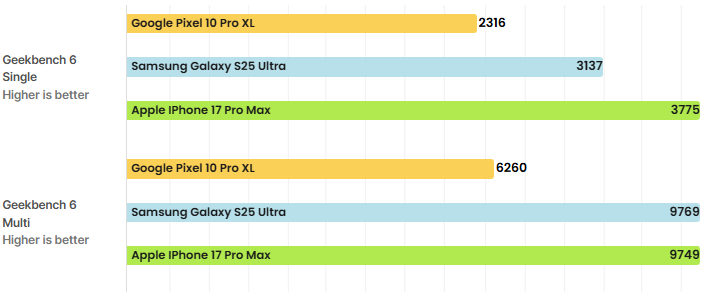
This doesn't look too inspiring. | Image by PhoneArena
When you get the latest iPhone Pro or the latest Galaxy S, you have certain expectations (that spawn directly from the fat paycheck you write the company you're buying from). You expect pristine design, top-notch build quality, large display(s), amazing cameras, big battery (cue in laughter in Mandarin) and, above all, maximum performance.
While all Pixel flagships look good and have great cameras with superb screens, Pixel phones are lagging behind their Qualcomm, Exynos and MediaTek counterparts in terms of raw power. You can thank the Tensor chipset for that and I'd suggest you read about it in detail in Peter's new wonderful article:
Google Tensor promised a Pixel revolution. Five years later, the results are disappointing
But the Pixel phone is more of an AI phone than a standard phone. I get it. But it's easier to accept a sub-par performance at a lower price than, say the iPhone 17 Pro.
Once the Pixel 11 Pro XL hits the $1,300 threshold – another solid rumor, by the way – many will say: "I'm done with Google".
And who could blame them? After all, any flagship can be an AI phone these days. Google needs some software magic for the Pixel 11 to truly make it shine and differentiate it from the competition. What's the point of paying an arm and a leg for a device with a smaller battery if it can't do anything unique?
Here's what Google's been up to lately:
Google has a huge Pixel 11 series problem, and it's probably too late for it to be fixed
Google is betting on Pixel Glow, but the Pixel 11 desperately needs more than that
Google just made the Pixel 11 wait pointless for many buyers
Free Galaxy A17 5G with Straight Talk
Get a free Galaxy A17 with Straight Talk. To claim this deal, you need to pair the phone with activation on a Silver Unlimited Plan or higher. This tier costs $45 per month. Offer valid through 01/10/27 while supplies last online.
Sebastian is one of PhoneArena’s senior opinionators. A veteran news writer with almost 20 years of experience in media and technology, he not only covers all the hot news about Galaxies and iPhones, but often provides hot takes on industry trends. He’s fascinated with camera-focused flagships from the likes of Oppo and Vivo, as well as foldable phones.
A discussion is a place, where people can voice their opinion, no matter if it
is positive, neutral or negative. However, when posting, one must stay true to the topic, and not just share some
random thoughts, which are not directly related to the matter.
Things that are NOT allowed:
Off-topic talk - you must stick to the subject of discussion
Offensive, hate speech - if you want to say something, say it politely
Spam/Advertisements - these posts are deleted
Multiple accounts - one person can have only one account
Impersonations and offensive nicknames - these accounts get banned
To help keep our community safe and free from spam, we apply temporary limits to newly created accounts:
New accounts created within the last 24 hours may experience restrictions on how frequently they can
post or comment.
These limits are in place as a precaution and will automatically lift.
Moderation is done by humans. We try to be as objective as possible and moderate with zero bias. If you think a
post should be moderated - please, report it.
Have a question about the rules or why you have been moderated/limited/banned? Please,
contact us.











Things that are NOT allowed:
To help keep our community safe and free from spam, we apply temporary limits to newly created accounts: