Samsung Galaxy Z Fold 9 release date expectations, price estimates, and upgrades
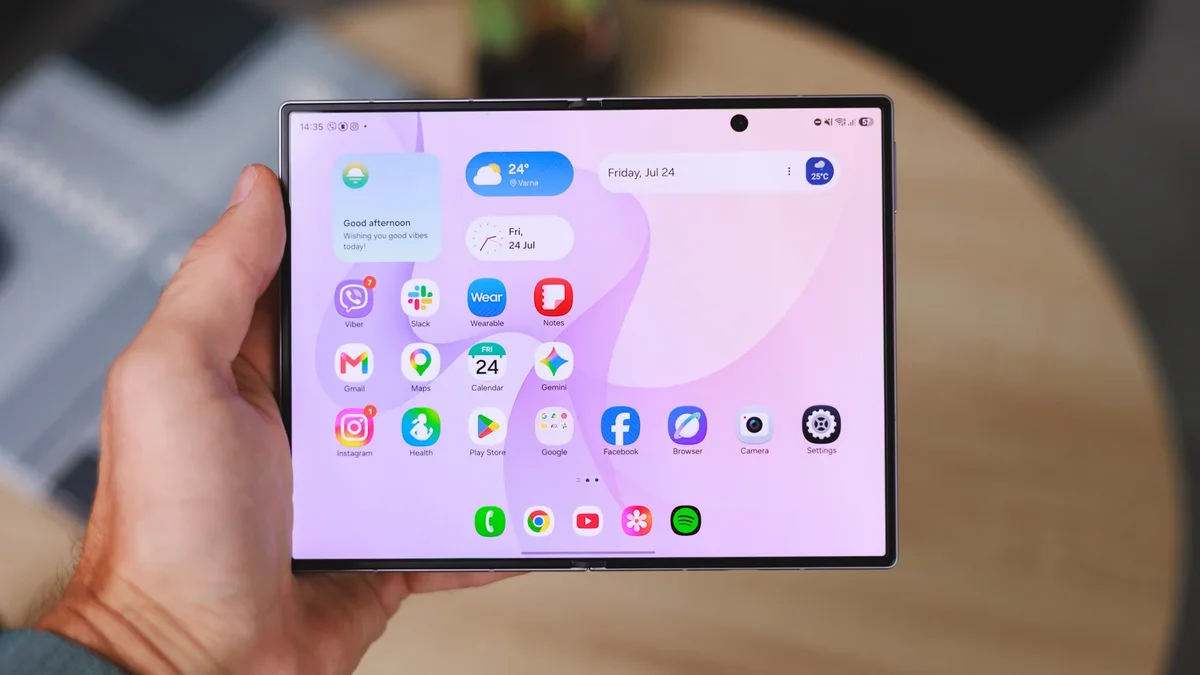
Galaxy Z Fold 8 for illustrative purposes. | Image by PhoneArena
What's expected to change vs Galaxy Z Fold 8:
- Near-creaseless inner display, thanks to Samsung's new Wide View OLED panel technology shown at IMID 2026
- CTG (center-etched thin glass) cover glass, which thins only the central folding section for easier folding and greater overall durability
- Same 4:3 inner display aspect ratio established by the Fold 8 is expected to carry over
- No confirmed processor, camera, or battery upgrades yet
Expected release timeline:
- Samsung has consistently announced its Z Fold lineup in July. Based on that pattern, expect the Galaxy Z Fold 9 to be announced around July 2027.
Expected price:
- No leaks on pricing yet. A price in the $1,899-$1,999 range for the base model seems reasonable to expect.
Jump to:
Galaxy Z Fold 9 release date
- No official date yet – expected announcement around July 2027, release around August 2027
| Device family | Announcement | Market release |
|---|---|---|
| Galaxy Z Fold 9 | July 2027* | August 2027* |
| Galaxy Z Fold 8 series | July 22, 2026 | August 7, 2026 |
| Galaxy Z Fold 7 | July 9, 2025 | July 25, 2025 |
| Galaxy Z Fold 6 | July 10, 2024 | July 24, 2024 |
*Probable dates
Samsung has held its foldable Unpacked events in July for three consecutive years, and there's no reason to expect that to change. The Fold 8 was revealed in London – a departure from the usual US and Korea venues – so 2027 could bring another location surprise. Either way, a summer 2027 reveal is a safe assumption.
Galaxy Z Fold 9 price
- No price leaks yet – around $1,899 starting price expected for the base model
| Galaxy Z Fold model | 256GB of storage | 512GB of storage | 1TB of storage |
|---|---|---|---|
| Galaxy Z Fold 9 | $1,899* | $2,099* | $2,499* |
| Galaxy Z Fold 8 | $1,899 | $2,099 | $2,499 |
*- anticipated prices
With Apple entering the foldable market with the newly announced iPhone Duo, Samsung will face competitive pressure to stay aggressive on pricing. We'd expect the Fold 9 to land at the Fold 8's starting price.
Of course, the memory shortage is still ongoing, so it's not entirely out of the cards that we may see a price hike. The iPhone Duo starts at $1,999, so this pricing could potentially influence Samsung to match it.
Galaxy Z Fold 9 camera
- No camera leaks yet
- Fold 8 used dual 50MP setup – no telephoto
- Telephoto return possible
The Fold 8 moved to a dual-camera system – a 50MP main and a 50MP ultra-wide – dropping the telephoto lens that appeared in the Fold 8 Ultra. That was one of the more polarizing decisions of the Fold 8, and Samsung will be under pressure from its own Ultra model (which kept a telephoto) to reconsider.
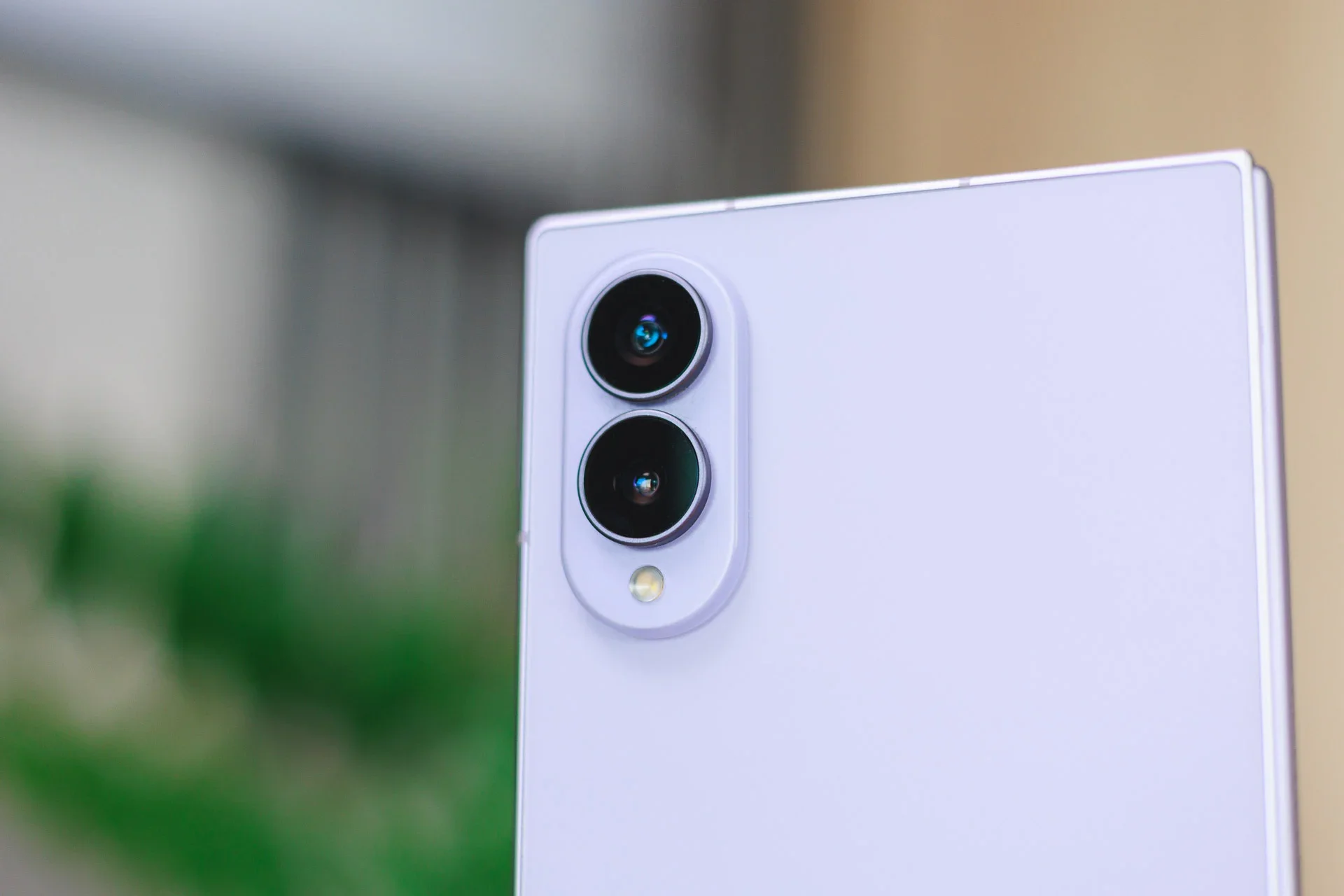
Galaxy Z Fold 8's camera. | Image by PhoneArena
Whether the Fold 9 brings back a third lens or sticks with the dual setup remains to be seen.
Based on the Fold 8's setup, here's what we're working with as a baseline:
Galaxy Z Fold 8 camera setup for reference:
- 50MP main camera, Dual Pixel AF, OIS, f/1.8, 1.0μm pixel size, 85° FOV, 2x optical quality zoom
- 50MP ultra-wide, Quad Pixel AF, f/1.9, 0.7μm pixel size, 120° FOV
- 10MP inner selfie, f/2.2
- 10MP cover selfie, f/2.2
The Fold 8 produced photos with Samsung's characteristically vibrant, saturated colors – pleasing for most users, though not the most technically neutral output. Camera scores on the Fold 8 landed at 141 overall in our benchmark, with its biggest weakness being zoom (21 out of a possible 30), which is exactly what you'd expect from a phone with no dedicated telephoto.
We'd hope to see a zoom lens return in some form for the Fold 9, even if it's just a 3x optical, as that's where the Fold 8 leaves the most on the table.
Galaxy Z Fold 9 storage
- No leaks just yet – 256GB / 512GB / 1TB expected, matching the Fold 8
No storage changes are expected. The Fold 8 offered three tiers – 256GB, 512GB, and 1TB – and Samsung has shown no signs of altering that structure. MicroSD expansion remains absent from recent Samsung foldables and is unlikely to return.
Galaxy Z Fold 9 expected storage capacity:
- 256 GB
- 512 GB
- 1 TB
Galaxy Z Fold 9 design
- No leaked renders yet
- CTG (center-etched thin glass) in development – thins only the folding zone
- 4:3 passport form factor expected to carry over from Fold 8
- S Pen support still unlikely due to titanium inner display structure
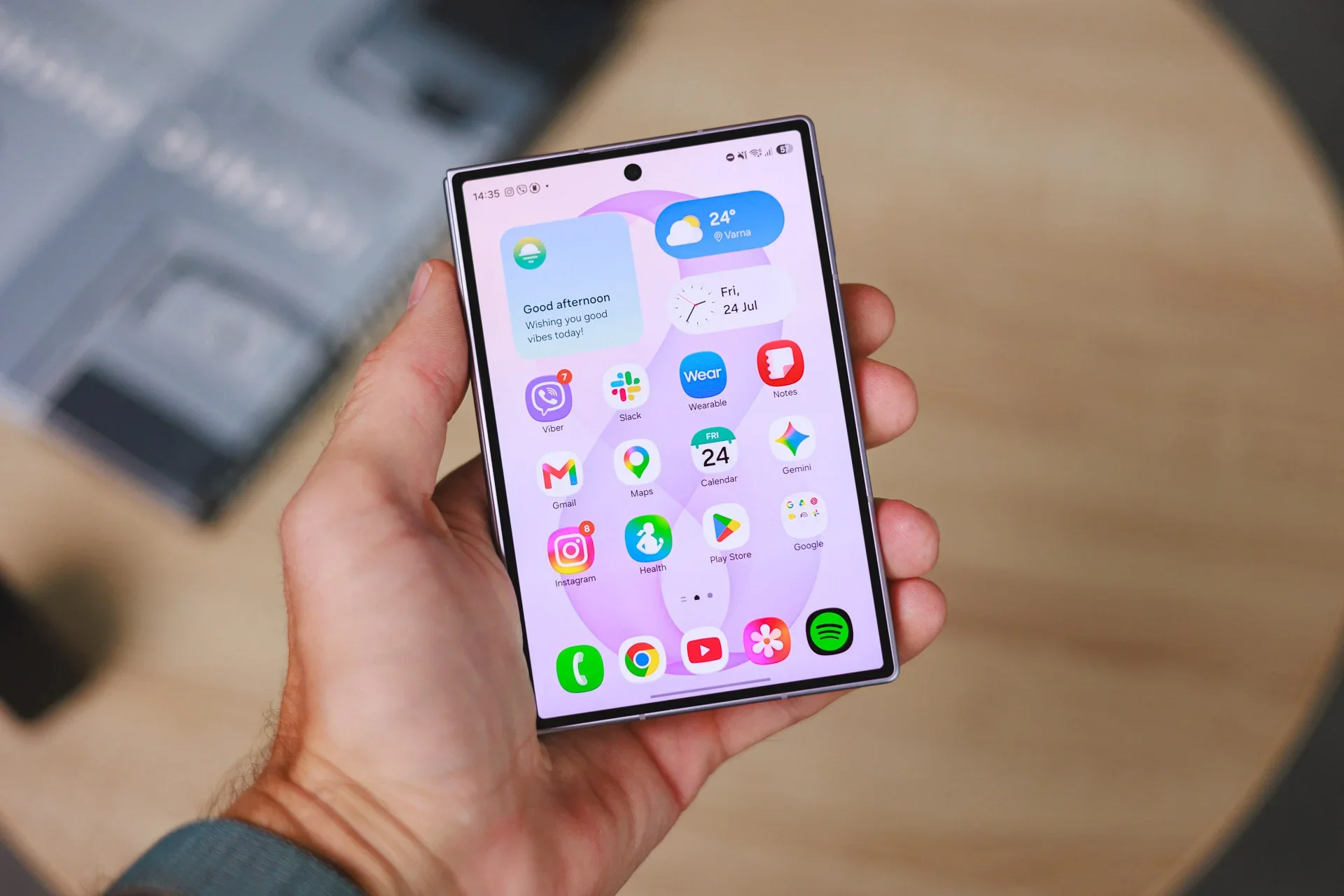
Galaxy Z Fold 8. | Image by PhoneArena
The Fold 8 introduced a significant design shift – moving from the tall, narrow form factor that defined previous Z Folds to a wider, shorter 4:3 inner display. That change was well-received, and the Fold 8 became the lightest Galaxy Z Fold at 201 grams. We'd expect Samsung to keep the 4:3 passport-style design intact for the Fold 9, as it's a defining feature of the current lineup.
What could change is the cover glass construction. Industry sources point to Samsung developing CTG (center-etched thin glass), a technology that thins only the central folding portion of the cover glass. The idea is that a thinner fold zone means less resistance when opening the phone, while the rest of the glass stays full-thickness for durability.
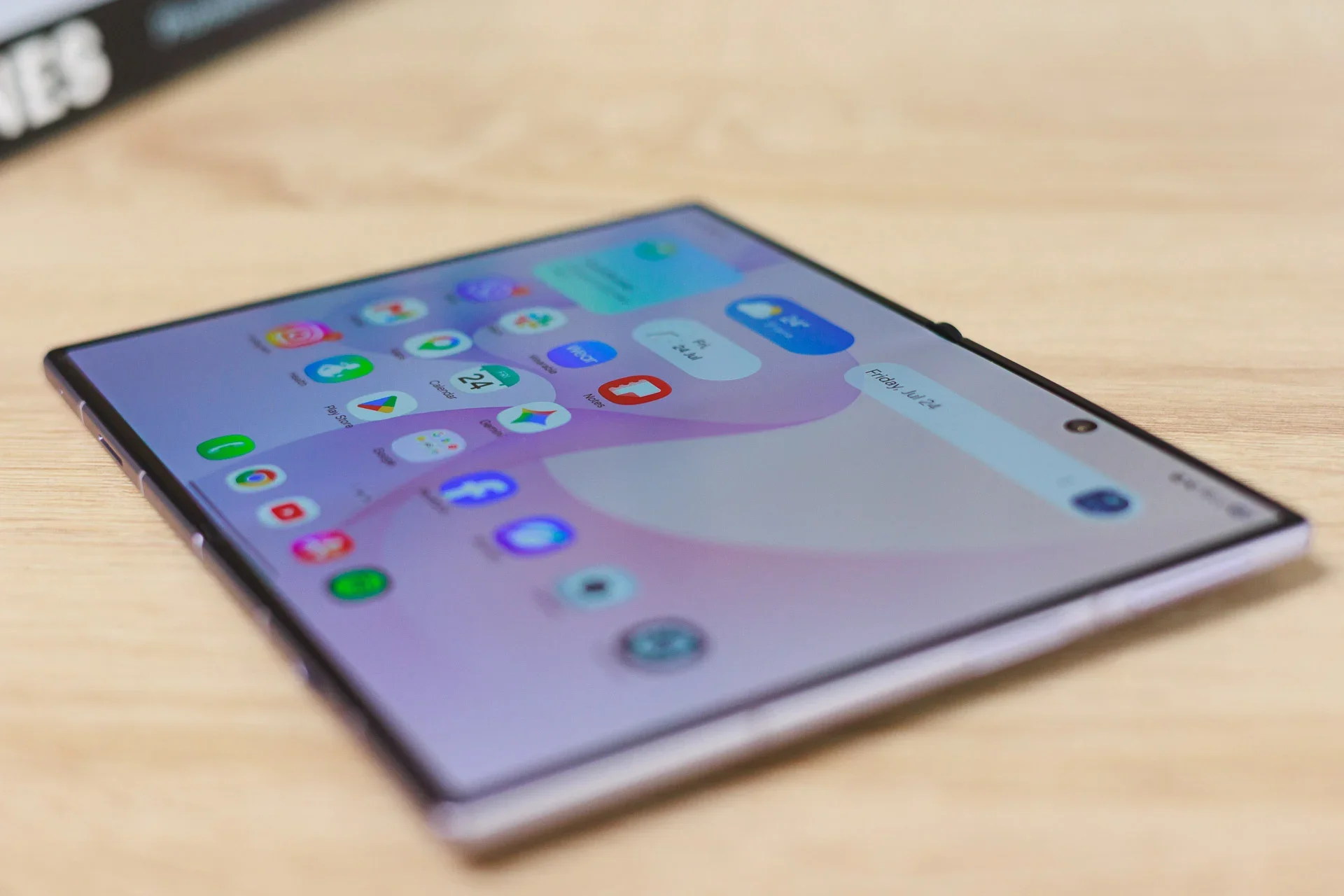
Galaxy Z Fold 8. | Image by PhoneArena
Samsung's own engineers have reportedly flagged mass production challenges – specifically the risk of an uneven surface at the thinned section – so whether CTG makes it into the Fold 9 is still an open question.
On materials, the Fold 8 introduced Flex Titanium as the inner display support structure, reducing crease visibility and stiffening the overall feel. That's likely to carry over.
One confirmed omission from the Fold 8 was the S Pen – titanium and stylus digitizers don't mix. Unless Samsung finds a workaround, expect that to remain the case on the Fold 9.
Galaxy Z Fold 9 display
- No size or resolution leaks yet – 7.6-inch inner display expected, matching Fold 8
- Brightness expected to be at around 3,000 nits
- Wide View OLED panel in development, which solves brightness degradation at the crease
The display department is where things get genuinely exciting. Samsung Display unveiled a Wide View OLED panel at the International Meeting on Information Display (IMID) 2026 in Busan in August 2026 – and the Fold 9 is the obvious candidate to be the first phone to use it.
| Phone | Screen size | Brightness |
|---|---|---|
| Galaxy Z Fold 9 | ~7.6-inch inner, ~5.5-inch cover* | 3,000 nits* |
| Galaxy Z Fold 8 | 7.6-inch inner, 5.5-inch cover | 3,000 nits |
* - anticipated sizes
The problem the new tech solves is real: on current foldable OLEDs, the crease zone outputs only about 40% of the brightness of the rest of the screen. You don't just feel the crease – you can see it as a dimmer stripe across the display. Samsung's Wide View OLED redesigns the organic light-emitting layer entirely to deliver uniform brightness from edge to edge.
The Fold 8's inner display measured close to 3,000 nits in our testing (Samsung claims 3,600 nits under a narrow measurement condition). We'd expect the Fold 9 to match or exceed that.
Galaxy Z Fold 9 battery
- No battery leaks yet – 4,800mAh or larger expected, based on Fold 8
The Fold 8 shipped with a 4,800mAh cell, roughly 9% larger than the Fold 7's 4,400mAh, and delivered around 6 hours 25 minutes of estimated real-world battery life in our testing. That's solid for a device this thin.
Charging topped out at 45W wired and 20W wireless on the Fold 8, an upgrade over the Fold 7's 25W wired ceiling. We'd expect at least those numbers to carry over, and there's some hope Samsung might push wired speeds further – 65W or higher is becoming more common on competing Android flagships.
One thing worth flagging: the Fold 8 has no native magnet ring, so MagSafe-style wireless charging requires a case. If Samsung wants to be more competitive with the foldable iPhone on that front, built-in magnets would make sense on the Fold 9.
Galaxy Z Fold 9 features and software
- No software leaks yet – One UI 10 on Android 18 expected at launch
- Samsung currently offers 7 years of OS and security updates
The AI features from the Fold 8 – Galaxy AI, Gemini Intelligence task automation, Now Brief, Now Nudge, and the AI Assistant Activity dashboard – will almost certainly carry over and expand. Samsung has been aggressive about layering Galaxy AI across its lineup, and the Fold 9's large inner display makes it one of the better canvases for AI-assisted multitasking.
One area worth watching is multitasking. The Fold 8 supports two-app split view but doesn't handle three-app vertical cards well – a limitation we flagged in our Fold 8 review. Android's bubble feature also required too many steps to use comfortably on One UI 9. Improvements here would meaningfully raise the Fold 9's productivity credentials.
Galaxy Z Fold 9 hardware and specs
Galaxy Z Fold 9 expected specs:
- CPU: Snapdragon 8 Elite Gen 6 for Galaxy
- RAM: 12GB (base), 16GB (1TB model)
- Battery: 4,800mAh
- Charging: 45W wired, 20W wireless
- Storage: 256GB, 512GB, 1TB
- Camera: 50MP main (f/1.8, OIS), 50MP ultra-wide (f/1.9), 10MP inner selfie, 10MP cover selfie
- Connectivity: Bluetooth 6.0, Wi-Fi 7
The Snapdragon 8 Elite Gen 6 is shaping up to be a more significant leap than a typical annual chip refresh. Built on a 2 nm architecture – down from the Gen 5's 3 nm – early supply chain reports suggest it draws around 10% less power under heavy load, with even greater efficiency gains during lighter tasks. That matters for a foldable, where thermal headroom is tighter than on a traditional slab phone.
The efficiency gains should translate directly to battery life – the Fold 8 delivered solid but not exceptional screen-on time, so any headroom the new chip frees up would be welcome. Samsung will almost certainly offer a Snapdragon 8 Elite Gen 6 for Galaxy variant, as it has done with every recent Fold generation.
Should I wait for the Galaxy Z Fold 9?
- You should wait for the Galaxy Z Fold 9 if you're currently on the fence about buying a Fold 8 and the crease is a dealbreaker for you. Samsung's Wide View OLED technology, if it makes it into the Fold 9, would be the most meaningful display upgrade foldables have seen in years. Waiting also makes sense if you want a telephoto lens back – the Fold 8's dual-camera setup is the most consistent complaint about an otherwise strong device.
- You should not wait for the Galaxy Z Fold 9 if you're ready to buy now and don't want to sit on a one-year delay for features that aren't yet confirmed. The Fold 8 is a genuinely good device – the lightest Z Fold Samsung has made, with a well-received 4:3 form factor and solid real-world battery life. The CTG glass and Wide View OLED are promising, but both face manufacturing challenges that could push them to the Fold 10 instead. If the Fold 8 is available at a discount through a trade-in, that changes the calculus even further in its favor.


Popular stories


Latest News