Would you hate it if someone were to buy you a free phone? Apparently, many people would.
A couple of days ago, as I was attending various Christmas parties, a close friend told me a peculiar story.
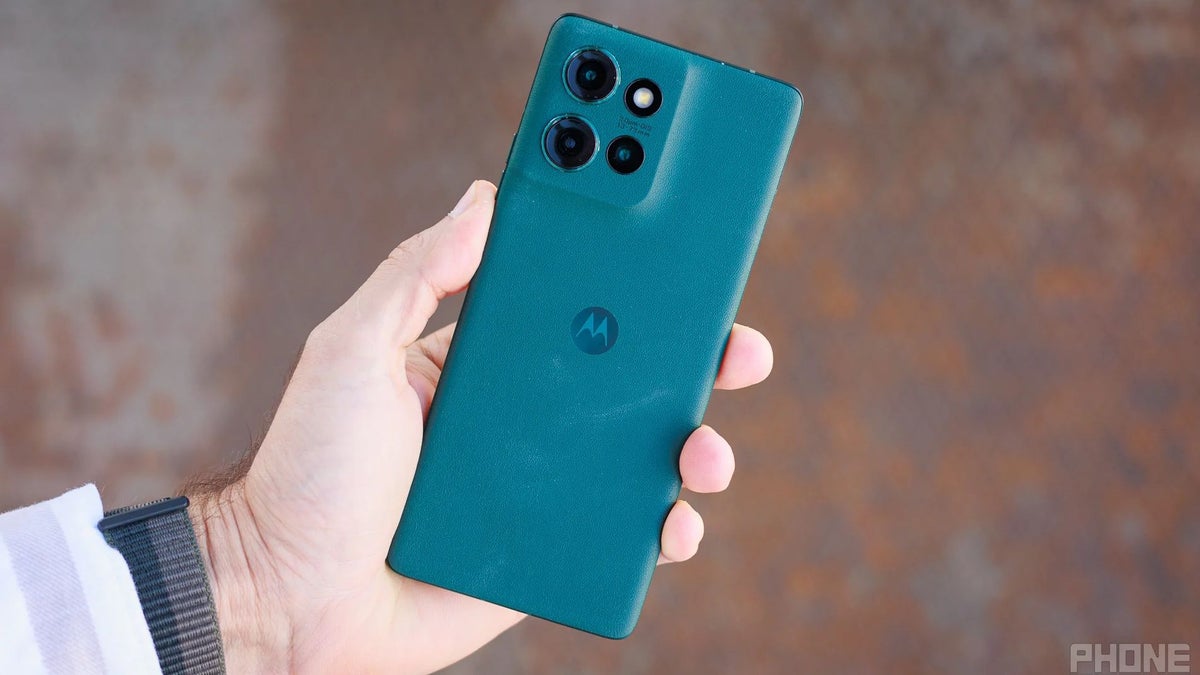
His company had a great 2025 and decided to show gratitude to its employees with an early Christmas gift. Management bought a batch of Motorola Edge 50 phones and made sure every employee got one, completely free of charge.
Here comes the twist: almost all of the employees (around 25 people in total) hated the gift. They were unhappy about the choice. Instead, they wanted an Apple or Samsung device and openly admitted (not to their boss' face, that is) that they would sell their gifts immediately.
The Motorola Edge 50 is a perfectly decent phone, and this little story got me thinking. Are we just a spoiled and ungrateful bunch, or is there something deeper going on, something tied to brand loyalty and perception?
The idea of a “premium” brand and why it matters
When you buy a premium product—like an iPhone, a luxury car, or even jewelry or clothes—you aren't just paying for the hardware. You are paying for a psychological experience that shapes how you view yourself and how others view you.
Companies have worked hard to hammer in the premium model in people's minds, and there are a few key pillars that directly affect your ability for objective comparison and critical thinking.
Recommended For You
Self-signaling
When you buy a premium phone, you associate with and project upon yourself all the key characteristics that this device has (or the company that makes it wants you to believe it has). You say to yourself, "I'm the kind of person who values high-end materials, modern design, performance, and quality."
Owning an iPhone, for example, becomes a tool of self-expression. It doesn't matter if objectively that particular model might be more expensive than other brands offering similar or, in the extreme case - better features.
The Halo Effect
The above is tied to something called the Halo Effect. It's when you extend the qualities of one product over the whole portfolio of a company. Apple does this amazingly well. Steve Jobs successfully convinced everybody that the iPhone is the device with the best design, best features, and best user interface out there.
This might've been true for earlier phones, but nowadays there are arguably better choices. Due to this halo effect, people still project these qualities over not only modern iPhones but also all other gadgets Apple makes.
Status Signaling
This one might be obvious to many of you. Most high-end and premium brands have been a status symbol for ages. The iPhone still is, even though there are plenty of alternatives that match or exceed it in objective tests.
But owning an iPhone is still a signal to others that you're part of a select social elite; you're just like all the famous people and influencers who all use iPhones. This effect extends to other brands as well—owning a Louis Vuitton bag, driving a Porsche, or rocking a Rolex watch is a status symbol more than anything else.
So why did people hate the free Motorola?
This is where the story gets interesting.
These psychological tools seem to be so powerful and etched in our minds that they extend to gifts, too. Those 25 people didn't pay a cent for the Motorola Edge 50 phones, but they were still unhappy about the gift.
They were worried about their own image—"I'm not using a non-premium phone; I'm not that kind of a person." For others, the concern was external, about the perception of their peers and friends — "I don't want to be seen with this midrange phone."
The takeaway
I honestly thought that we had grown out of this.
With so many brands offering great quality, even at the affordable end of the spectrum, it's strange that people are still getting so worked up about brands.
Today, you can get most of the features and even some of the design of the premium brands at a much lower price from other companies.
Shouldn't we be focusing on more meaningful things? Things like how we treat others, what we bring to society, and what we will leave behind once we're gone.
Phones, watches, and expensive clothes—these are just things. And things can't make you happy, not in the long term, especially if you lack the most important ingredient for happiness—genuine human connection.
Six-month unlimited plan is now 57% off
$90
$210
$120 off (57%)
Mint Mobile is now allowing you to get whichever plan you like for either three, six, or 12 months for just $15/mo. If you go for the six-month unlimited service, for instance, you'll now have to pay just $90 upfront instead of $210.
Mariyan, a tech enthusiast with a background in Nuclear Physics and Journalism, brings a unique perspective to PhoneArena. His childhood curiosity for gadgets evolved into a professional passion for technology, leading him to the role of Editor-in-Chief at PCWorld Bulgaria before joining PhoneArena. Mariyan's interests range from mainstream Android and iPhone debates to fringe technologies like graphene batteries and nanotechnology. Off-duty, he enjoys playing his electric guitar, practicing Japanese, and revisiting his love for video games and Haruki Murakami's works.
A discussion is a place, where people can voice their opinion, no matter if it
is positive, neutral or negative. However, when posting, one must stay true to the topic, and not just share some
random thoughts, which are not directly related to the matter.
Things that are NOT allowed:
Off-topic talk - you must stick to the subject of discussion
Offensive, hate speech - if you want to say something, say it politely
Spam/Advertisements - these posts are deleted
Multiple accounts - one person can have only one account
Impersonations and offensive nicknames - these accounts get banned
To help keep our community safe and free from spam, we apply temporary limits to newly created accounts:
New accounts created within the last 24 hours may experience restrictions on how frequently they can
post or comment.
These limits are in place as a precaution and will automatically lift.
Moderation is done by humans. We try to be as objective as possible and moderate with zero bias. If you think a
post should be moderated - please, report it.
Have a question about the rules or why you have been moderated/limited/banned? Please,
contact us.








Things that are NOT allowed:
To help keep our community safe and free from spam, we apply temporary limits to newly created accounts: