Google is making Android phones faster and improving battery life with a new system tweak
Small changes deep in Android could make every phone feel faster.

AutoFDO optimizing the Android kernel for better performance and efficiency. | Image by Google
Phones these days have so many perks and features that we couldn't even dream about a few years ago, but sometimes the best thing to do is go back to the basics. That is precisely what Google seems to be doing behind the scenes.
The company announced that it is bringing something called Automatic Feedback-Directed Optimization (AutoFDO) to the Android kernel. This change has the potential do significantly improve both the performance and efficiency at the very core of Android.
Teaching Android how people actually use their phones
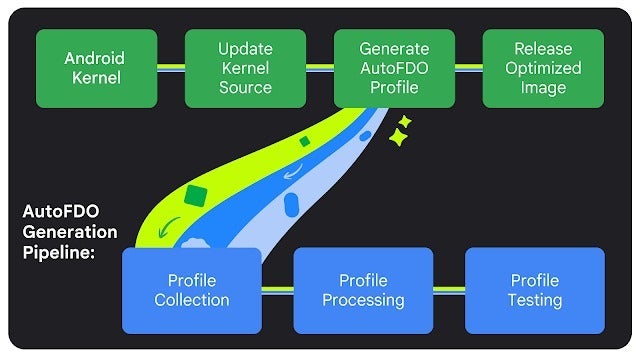
AutoFDO lets Android learn from real usage so the system prioritizes what you actually do most. | Image by Google
Typically, Android has a software compiler that makes those decisions based on general assumptions of how the device might be used next. But that's not how AutoFDO works.
Instead of relying on guesses, Android studies how you actually use your phone. The engineers at Google run popular apps and analyze which parts of the system are used most often, and then they rebuild the software so those frequently used parts run more efficiently.
What this means for your phone
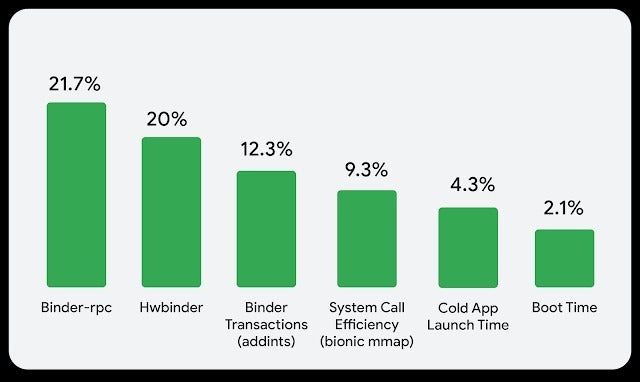
Small numbers, big impact. Optimizing Android’s core can make every phone feel a bit faster. | Image by Google
In early tests, Google says this change produced visible improvements. Some of the results include apps launching about 4.3% faster when opened from scratch and phones starting up about 2.1% faster. Google also states it noticed faster performance in certain system tasks that happen behind the scenes.
Now, at first glance these numbers are far from impressive, but they are enough to affect how snappy your phone feels as you use it throughout the day.
Would a small speed boost (like 4%) make your phone feel noticeably better?
159 Votes
Yes, every bit of speed helps
38.99%
Maybe, depends on the phone
15.72%
No, that’s too small to notice
16.98%
Battery life matters more
28.3%
What's more, since the system also runs more efficiently, Google says that the change can help reduce the work that the processor has to do, therefore improving the battery life of the phone.
In fact, the Android kernel, which is the core part of the operating system, is responsible for a large portion of the work your phone’s processor does. Google says it accounts for roughly 40% of CPU usage on Android devices.
So, by optimizing that core layer, the company can improve performance across the entire system. Essentially, this means every phone that gets this update should feel slightly faster and maybe have better battery life.
So, by optimizing that core layer, the company can improve performance across the entire system. Essentially, this means every phone that gets this update should feel slightly faster and maybe have better battery life.
When you might see it
Google is rolling out this optimization to several versions of the Android kernel, including those used by Android 15, Android 16, and future releases. The company claims that it will result in “a snappier interface, faster app switching, extended battery life, and an overall more responsive device for the end user.”
We can't know whether all of that is true across all devices on those versions of Android. My biggest hope here is this update brings a noticeable improvement to budget phones like the Galaxy A16 and even the more expensive Galaxy A36, as phones of that caliber could definitely use it.


Popular stories






Latest News





Things that are NOT allowed:
To help keep our community safe and free from spam, we apply temporary limits to newly created accounts: